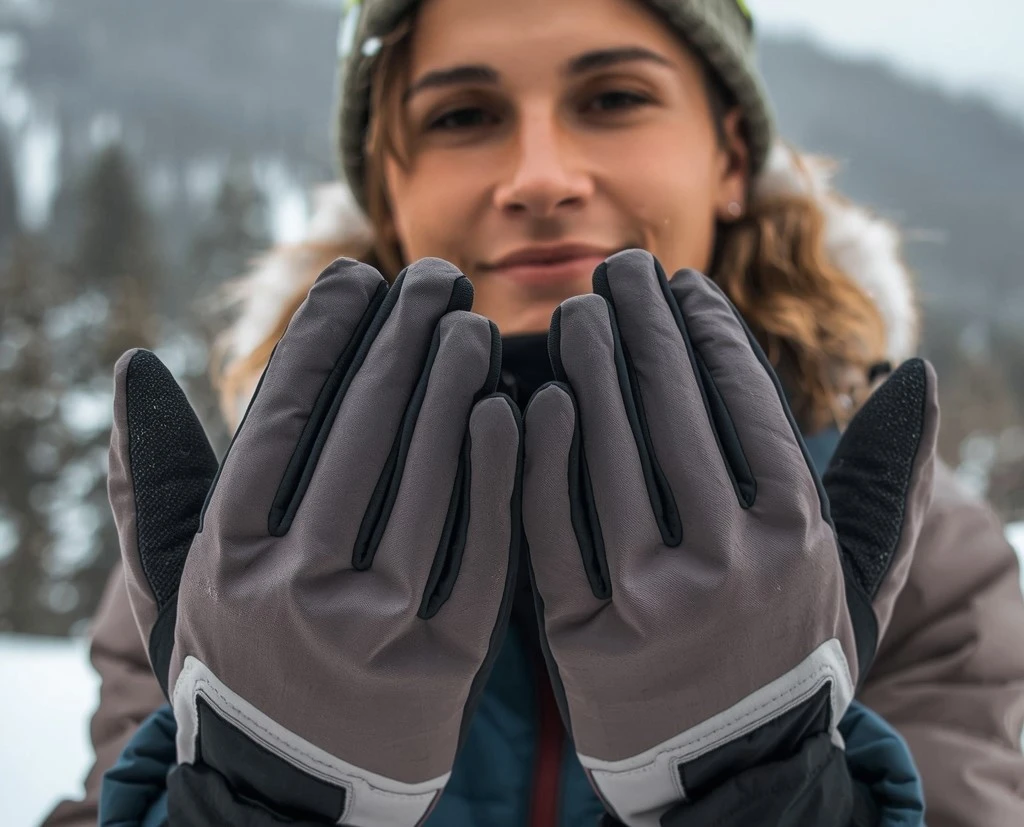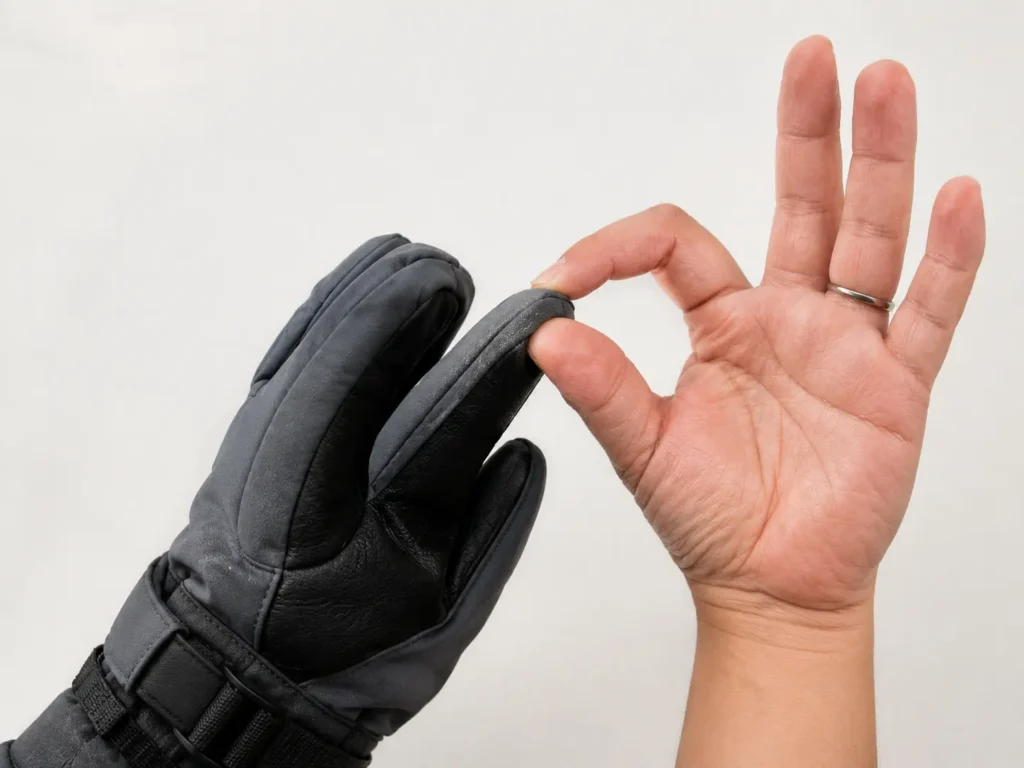
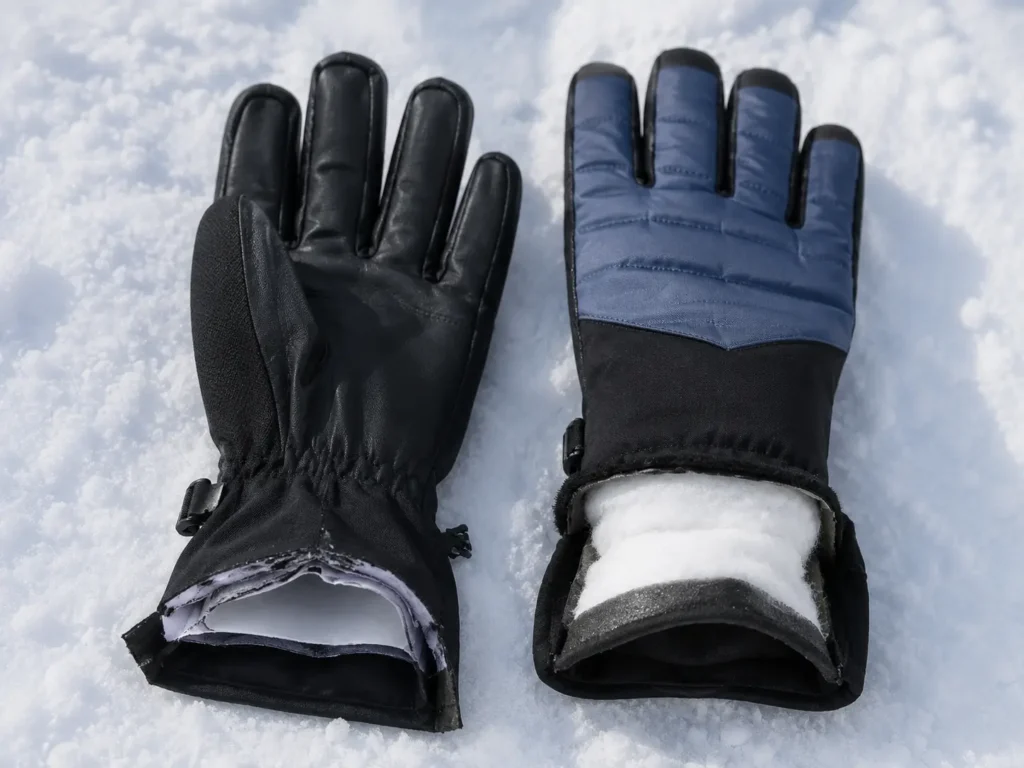
Quick answer: Breathable vs insulated ski gloves comes down to one question — are you generating heat, or are you losing it? Active skiing, skinning, and touring produce enough body heat that a breathable glove manages sweat while your own warmth does the work. Sitting still on chairlifts or standing around in the wind burns through body heat you’re not replacing, and that’s when insulation earns its keep. Most skiers need some of both, not a permanent pick.
If you’d rather skip the reading and get matched to a glove based on your actual conditions, the Ski Glove Finder does that in under a minute.
- How Each Type Actually Works
- Why Sweat Changes Everything
- Breathable or Insulated — the Real Tradeoff
- If You're Here From Ski Touring, Skinning, or Ice Climbing
- When Breathable Gloves Fail
- When Insulated Gloves Fail
- The DWR Coating Matters More Than People Realize
- Test Your Current Gloves in 60 Seconds
- Why Brand Marketing Makes This More Confusing Than It Should Be
- What Fill Weight Numbers Actually Mean
- Common Mistakes When Choosing Between the Two
- Which to Choose, By What You Actually Do
- Where I'd Push Back on the Usual Advice
- Decision Checklist
- Quick Problem Diagnosis
- When Neither Type Alone Is Right
- Frequently Asked Questions
- The Bottom Line
How Each Type Actually Works
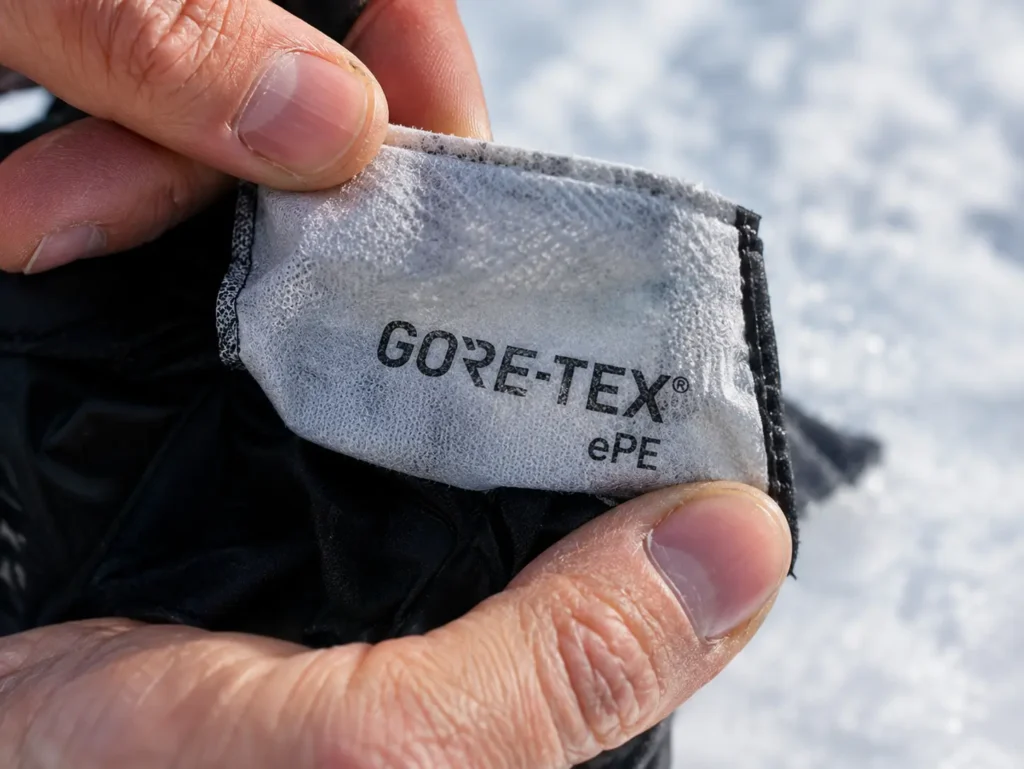
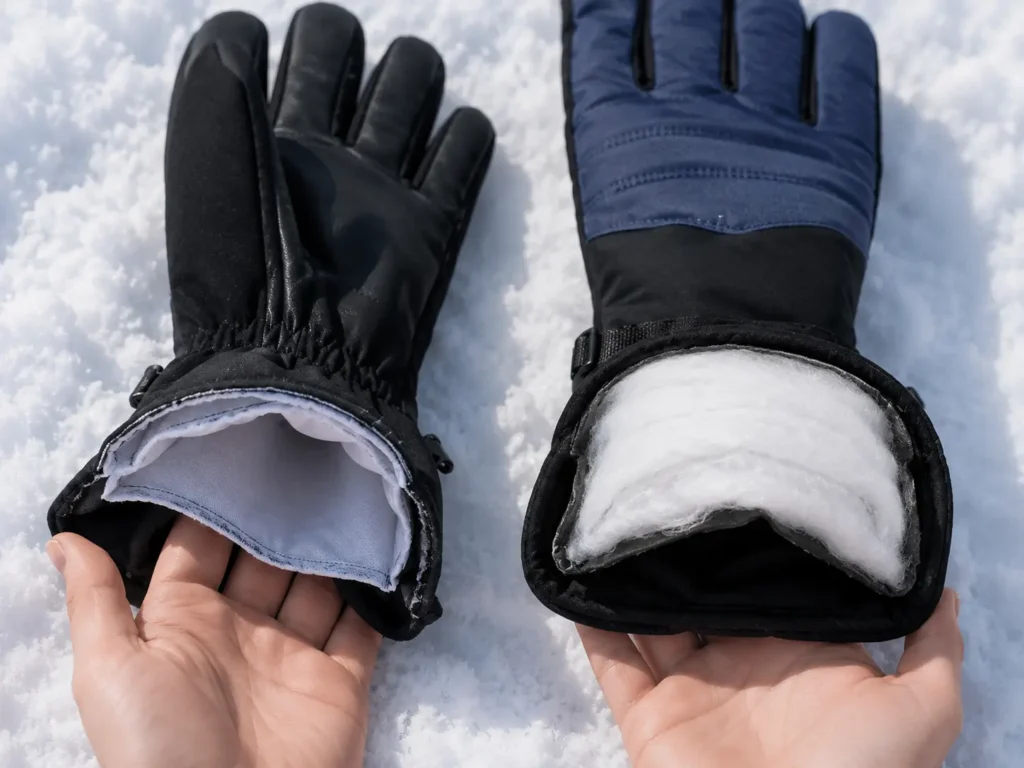
A breathable ski glove is built around a waterproof-breathable membrane, a thin laminated layer sitting between the outer shell and the lining, engineered with pores that block liquid water but let water vapor pass through. Snow stays out. Sweat, once it turns to vapor, gets out. That’s the entire trick, and it’s more elegant than most people give it credit for.
Warmth in this kind of glove is mostly borrowed from you, not manufactured by the glove itself — the membrane’s real job is protecting the heat your body is already generating by keeping the interior from turning damp.
Insulated gloves solve a completely different problem. Instead of managing moisture, they trap still air inside a synthetic fill layer, and because still air is a genuinely poor conductor of heat, that trapped layer becomes a buffer between your hand and the cold outside. More fill, less compression, more trapped air — that’s the whole equation. Moisture management is an afterthought in this design, if it’s considered at all. Gore-Tex’s own technical explanation of how their membrane works goes deeper into the mechanics than any glove product page will.
Why Sweat Changes Everything
Most buying guides skip this part entirely, and it’s arguably the most important thing in this whole comparison: your hands sweat during physical activity even when it’s well below freezing. That’s just how cold-weather physiology works — the sweat response doesn’t fully shut off because the air is cold, it responds to exertion.
So that moisture has to go somewhere. A breathable membrane pushes it out as vapor, driven by a pressure difference between the warm, humid air trapped near your skin and the cold, dry air outside your glove. That pressure gradient stays strong and consistent as long as you’re actually moving.
Take away the membrane, or overwhelm it with more sweat than it can move, and the moisture has nowhere left to go except into the lining, where it sits against your skin. Liquid water conducts heat roughly 25 times faster than the still air insulation depends on. Once that moisture is there, it’s actively working against the very thing that was supposed to keep you warm.
This is the real mechanism behind the glove that felt great at 9am and miserable by 2pm. The insulation isn’t failing — it’s just now operating through a layer of trapped sweat instead of dry air, because nothing in the glove was managing the moisture you were producing the entire time you skied.
Breathable or Insulated — the Real Tradeoff
There’s no version of this comparison where one type simply beats the other. A breathable glove is built to move moisture, works best when you’re actually generating heat through movement, and starts to lose its edge the moment you’re standing still in serious cold — the membrane can’t compensate for a body that’s stopped producing warmth.
An insulated glove flips that entirely: strong on passive warmth, weak on moisture handling, and prone to becoming its own worst enemy on high-output days if there’s no liner intercepting sweat before it reaches the fill.
Neither type is “better” in the abstract — one manages moisture, the other manages heat loss, and picking wrong for your actual conditions is what turns a decent glove into a cold, damp one by early afternoon.
If You’re Here From Ski Touring, Skinning, or Ice Climbing
If you came looking for gloves for climbing or backcountry travel specifically, the breathable side of this comparison is your answer — but the details matter more for you than for a typical resort skier.
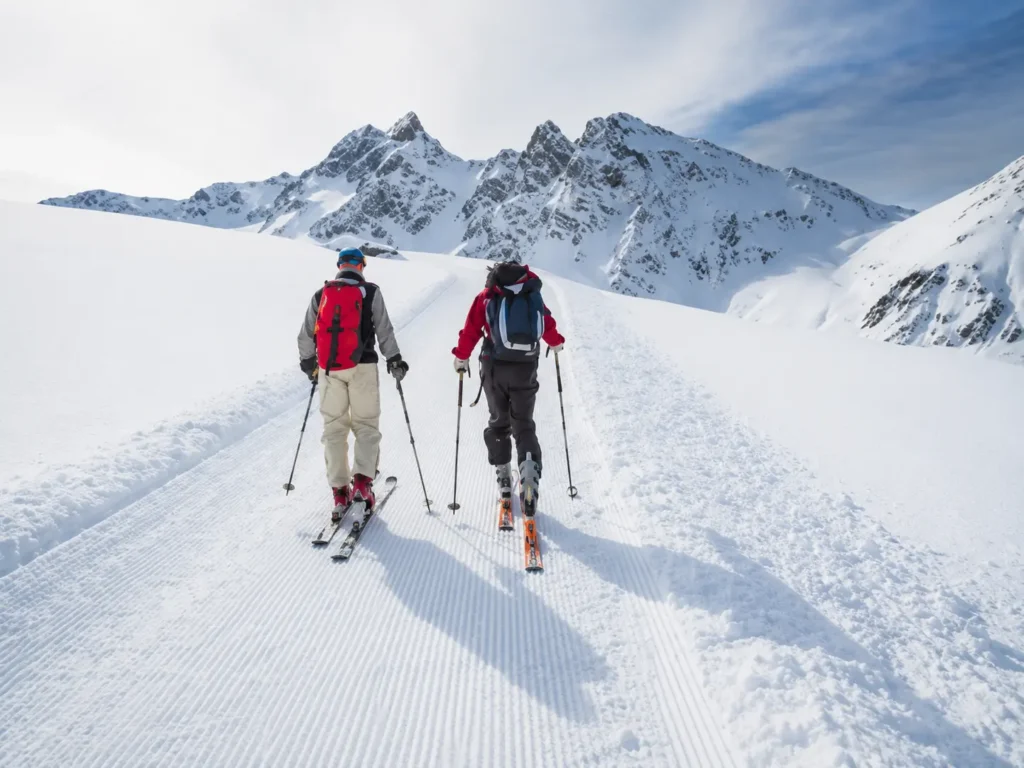
Skinning uphill or bootpacking is sustained aerobic effort. You’re producing heat and sweat continuously, not in bursts, which means a breathable membrane alone sometimes isn’t enough — sweat can outpace even a well-built membrane’s ability to move moisture out during long, hard climbs.
The practical fix used by most ski mountaineers isn’t one glove doing everything. It’s a system: a thin liner glove for high-output climbing and gear handling (skins, buckles, ice tools, rope work), swapped for a warmer insulated shell or mitt during transitions, belays, and the descent. Trying to climb in a heavy insulated glove soaks it with sweat before you’re halfway up. Trying to descend or stand at a belay in a thin breathable-only glove leaves your hands cold fast once you stop generating heat.
Dexterity matters more in this use case too — handling crampons, ice tools, and rope systems requires thin, articulated gloves that a bulky insulated design can’t provide. If that’s your priority, look for a breathable glove built for dexterity first and layer warmth separately rather than hunting for one glove that does both.
When Breathable Gloves Fail
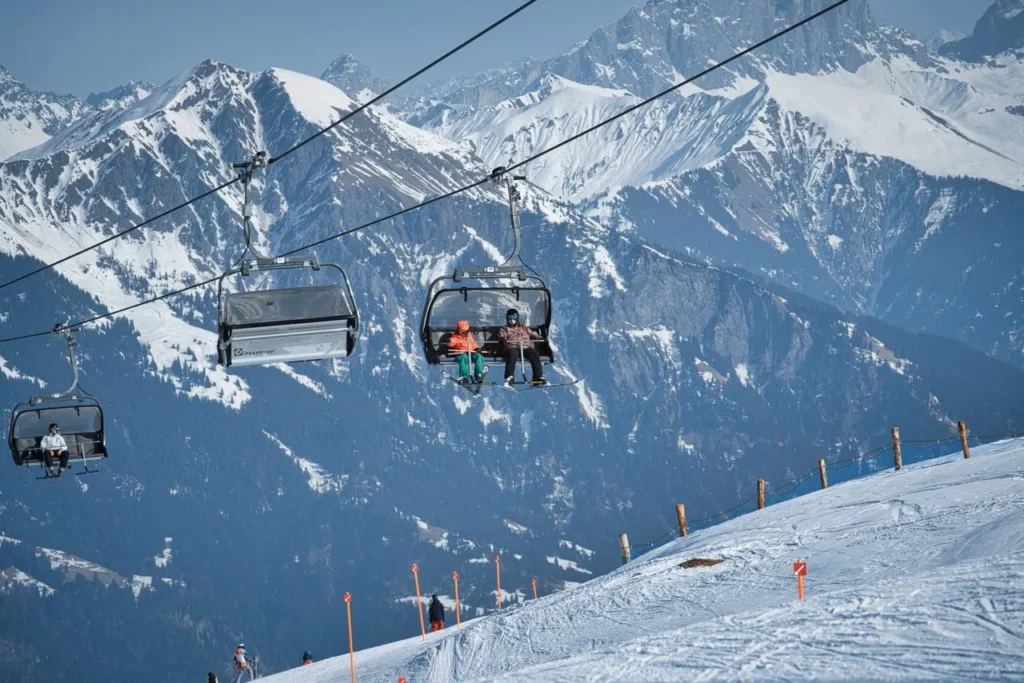
Breathable gloves run into trouble in two specific situations. The first is extended static cold — a long, exposed chairlift ride below about -12°C, especially with wind. Without much body heat being generated, even a glove with a perfectly dry interior can’t prevent heat loss through passive exposure alone.
The second is sustained high-output effort where sweat production outpaces what the membrane can move outward — long backcountry climbs are the clearest example. If moisture is being produced faster than it can exit, even a breathable glove develops the same damp-interior problem an insulated glove has.
When Insulated Gloves Fail
Insulated gloves fail during sustained active skiing without a moisture-wicking liner. Sweat builds in the fill layer over the course of the day, and once that moisture is present, it undercuts the insulation’s ability to trap still air — the exact mechanism it depends on to keep you warm.
Skiers who describe their gloves as “warm in the morning, cold by afternoon” are almost always describing this. It’s not the insulation degrading. It’s the insulation doing its job in conditions — trapped moisture — that it wasn’t designed to handle.
The DWR Coating Matters More Than People Realize
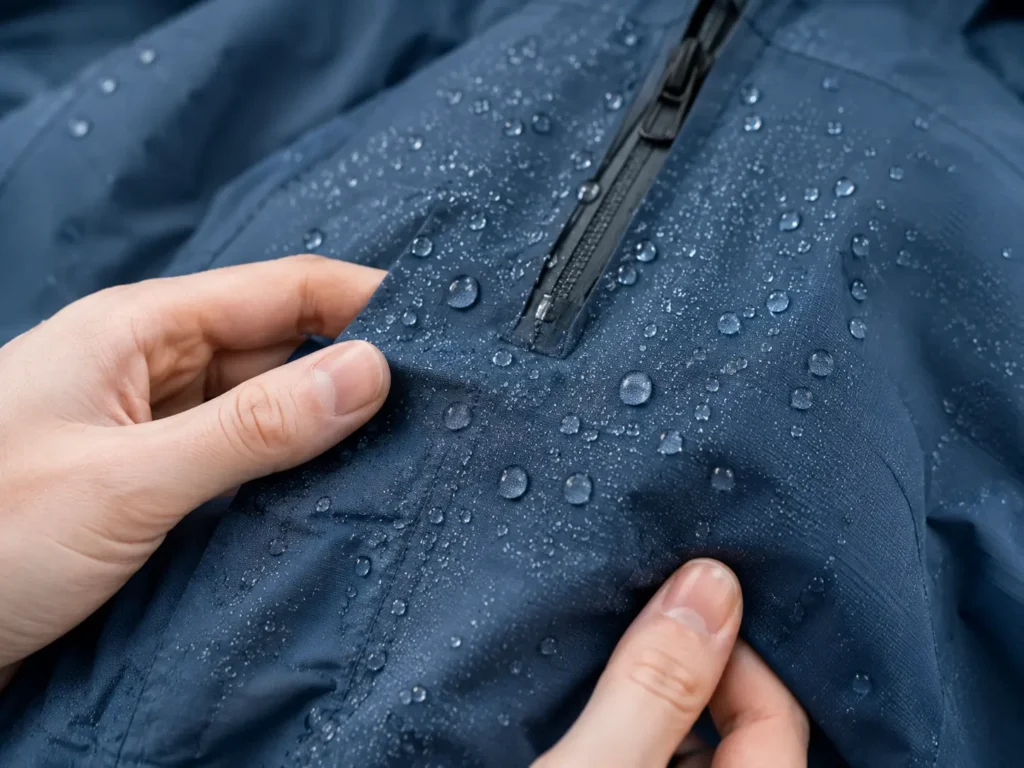
Both types typically have a Durable Water Repellent (DWR) finish on the outer shell, which is what makes water bead up and roll off instead of soaking in. DWR wears down with regular use and washing — it’s a normal part of owning technical gear, not a defect.
Once it fails, the outer shell soaks up water instead of shedding it, which creates a cold, wet bridge straight through to the membrane or insulation underneath — and it drags down performance regardless of which type of glove you’re wearing. REI’s guide to DWR care covers how to test whether your DWR has failed and how to restore it, and the same logic applies directly to glove shells, not just jackets.
If gloves that performed fine last season suddenly feel cold this season at the same temperatures, checking DWR condition before assuming the insulation wore out is worth the two minutes it takes.
Test Your Current Gloves in 60 Seconds
Before buying anything new, this quick check tells you whether your current gloves are actually the wrong type, or just failing for a fixable reason.
Step 1:
After a normal ski session, take the gloves off and press a dry cloth or paper towel firmly against the inside lining, especially around the fingers.
Step 2:
Check the cloth. If it comes away noticeably damp, moisture is the problem — not necessarily the glove type. That’s a liner-and-drying issue before it’s a buy-new-gloves issue.
Step 3:
If the cloth stays dry but your hands are still cold, the issue is heat retention, not moisture. That points toward needing more insulation, not better breathability.
Step 4:
Note when the cold started. Cold from the first chairlift ride onward points to insufficient insulation for static exposure. Cold that builds up gradually through active skiing points to moisture accumulation over the course of the day.
This test takes less time than reading a single product review, and it tells you which half of this comparison actually applies to your situation instead of guessing.
Why Brand Marketing Makes This More Confusing Than It Should Be
Part of why this distinction is hard to shop for is that glove brands rarely label products cleanly as “breathable” or “insulated.” Most gloves are some blend of both, and marketing copy tends to lead with warmth ratings or temperature claims rather than explaining the actual mechanism inside the glove.
A product page listing “-20°F rated” tells you almost nothing about whether that glove is built for active use or static exposure. Two gloves can carry similar cold-weather ratings while performing completely differently — one because it’s genuinely well-insulated for standing still, the other because it pairs light insulation with strong moisture management for active use.
The practical fix is ignoring the temperature rating as the primary decision factor and looking instead for two specific details: the presence (or absence) of a named waterproof-breathable membrane, and the fill weight in grams if insulation is present. Those two numbers tell you far more about how a glove will actually perform than a marketing temperature claim does.
What Fill Weight Numbers Actually Mean
Insulated gloves often list a fill weight in grams — something like 100g or 200g. This refers to the weight of insulation per square meter of material, not the total weight of the glove.
Lighter fill (60-100g) suits active use where you want some passive warmth without sacrificing too much dexterity or breathability. This range works well paired with a breathable membrane for skiers who move consistently but still want backup warmth for occasional stops.
Mid-range fill (100-150g) is the most common choice for general resort skiing — enough insulation for moderate chairlift exposure without making the glove too bulky for normal use.
Heavy fill (150g+) targets static cold exposure — long lift lines, ski instructors standing around, extremely cold climates. Dexterity drops noticeably at this range, and without a liner, moisture accumulation during any active periods becomes more likely simply because there’s more material for sweat to saturate. For context on how quickly cold, static exposure affects extremities, the CDC’s guidance on cold stress covers the general risk factors worth knowing if you’re regularly exposed to long static cold, like a lift-op job or all-day instructing.
Matching fill weight to your actual activity pattern, rather than defaulting to the highest number available, avoids both the “too cold” and the “sweaty and then cold” failure modes covered above.
Common Mistakes When Choosing Between the Two
Choosing based on temperature alone
Temperature is only half the equation. Activity level determines how much heat your body is actually generating, and that changes which type is correct even at the exact same temperature. Aggressive groomed-run skiing at -10°C and slow, lift-heavy skiing at -10°C call for different gloves, because the body’s heat output is completely different between the two.
Assuming more insulation always means warmer
A heavily insulated glove without sweat management can end up colder by afternoon than a lighter insulated glove that stays dry, simply because trapped moisture beats out fill weight every time. If your hands are progressively cold through the day, check for dampness before buying a warmer glove.
Wearing a breathable glove in conditions that need passive warmth
Breathable gloves depend on your body producing heat for the glove to protect. In genuinely cold, static conditions where you’re not generating much heat, a breathable-only glove is managing moisture correctly but still won’t feel warm enough, because moisture management was never the missing piece.
Treating DWR as permanent
Every technical shell needs this reapplied eventually. Skipping it is one of the most common, least obvious reasons a glove’s performance drops off over a season or two of use.
Buying insulated gloves a size too small to “keep them snug”
A tight-fitting insulated glove compresses its own fill layer, which reduces the still air it can trap — the exact mechanism that makes insulation work. A glove that fits too snugly can end up colder than a properly sized one with less fill, simply because compression defeats the insulation’s purpose.
Ignoring how the two types interact with liners
Adding a liner glove under an insulated shell is a common warmth boost, but only works if the outer glove was sized to accommodate it. Adding a liner to a glove that already fit snugly compresses the insulation the same way a too-small glove does, which can make the combination perform worse than the insulated glove alone.
Which to Choose, By What You Actually Do
Active resort skiing between roughly -5°C and -12°C with continuous movement calls for a breathable glove with light-to-moderate insulation — your body is doing enough of the work that heavy fill just traps sweat you don’t need trapped. Flip that to a lift-heavy day where you’re riding more than skiing, and the same temperature range now favors insulated with a liner, because standing still burns through body heat you’re not replacing.
Backcountry skinning or touring splits the difference by phase rather than by day — breathable for the climb, an insulated shell carried for the descent and any stops. Spring skiing above -5°C barely needs insulation at all; breathable with minimal fill is usually enough once the air itself isn’t fighting you.
Two situations override the general rule regardless of activity level. If you’re a cold-handed skier — genuinely cold at temperatures other people find fine — insulated with a liner is the safer default even on active days, because passive warmth margin matters more for you than it does for average cold tolerance. And below roughly -15°C, insulated with a liner and higher fill weight becomes close to non-negotiable no matter how active you are; at that point the air itself is cold enough that moisture management alone can’t compensate.
Mixed days — active mornings sliding into slow, cold afternoons — are best served by an insulated glove sized generously enough to fit a liner, since that combination flexes better across a changing day than either pure type does.
Where I’d Push Back on the Usual Advice
Most gear sites tell beginners to just buy the warmest-rated glove they can afford “to be safe.” I’d push back on that pretty hard. A heavily insulated glove on an active beginner — someone taking lessons, moving around a lot, working up a sweat just from nerves and effort — is often the wrong call, not the safe one. Without a liner, that glove gets damp by midday and ends up colder than a lighter breathable option would have been. “Safe” and “warm-rated” aren’t the same thing here, and retail advice that conflates them is optimizing for return-rate anxiety, not actual comfort on the mountain.
The other place I’d disagree with common advice: chasing the highest fill-weight number as a proxy for quality. It’s an easy number to market and an easy one for buyers to compare, but a 200g glove with no liner and no membrane will lose to a 100g glove with both in any day that involves real movement. If a product page leads with its temperature rating and says nothing about a membrane or liner compatibility, that’s usually a sign the rating is doing more marketing work than the actual construction supports.
Decision Checklist
- Hands feel damp and cold by early afternoon? → Moisture accumulation. Add a liner to your insulated glove, or switch to breathable with appropriate fill.
- Cold mainly on chairlifts, fine while skiing? → Insulation is insufficient for static exposure. Increase fill weight or switch to insulated with a liner.
- Sweat heavily during active runs even when it’s cold out? → Prioritize the breathable membrane over maximum insulation.
- Mostly slow resort cruising with a lot of chairlift time? → Insulated with a liner. Low activity won’t generate enough heat for breathable-only gloves in real cold.
- Warm early, noticeably colder later in the day? → Press the interior with a dry cloth. Damp means add a liner. Dry means the fill weight doesn’t match your coldest exposure.
- Skiing consistently below -12°C? → Insulated is close to mandatory regardless of activity level. Add a liner to handle active-day sweat.
- Backcountry skinning or sustained uphill travel? → Breathable for the climb, carry an insulated layer for the descent and any stops.
Quick Problem Diagnosis
| What You’re Experiencing | Likely Cause |
| Warm first hour, damp and cold by afternoon | Sweat trapped in insulation — add a liner |
| Cold only on chairlifts, fine while moving | Insulation too light for static exposure at your temperature |
| Cold in wet spring snow, fine in dry cold at the same temperature | DWR has likely failed — reapply |
| Cold fingertips specifically, palm feels fine | Compression in the finger tubes, often from adding a liner without sizing up |
| Breathable glove cold on long chairlift rides | Correct glove, wrong situation — body isn’t generating enough heat; switch to insulated with a liner for lift-heavy days |
| Insulated glove cold despite thick fill | Insulation is likely wet — check with a dry-cloth press test before assuming you need more fill |
When Neither Type Alone Is Right
Full days that combine sustained aerobic effort (skinning, bootpacking) with cold, exposed descents don’t suit either type on its own. The climb generates enough sweat to challenge even a good breathable membrane, and an insulated glove picks up that same moisture and then has to perform through a cold descent while wet. The practical answer for this pattern is a lighter breathable glove for the climb and a separate insulated shell carried for the descent, not one glove trying to cover both jobs.
Frequently Asked Questions
Can a glove be both breathable and insulated at the same time?
Yes — most ski gloves aren’t purely one or the other. A glove can have both a breathable membrane and a fill layer. The real question isn’t which feature is present, it’s which one dominates the design: is the fill layer thick enough to prioritize warmth over moisture movement, or is it thin enough that the membrane is doing most of the work?
Do mittens change this comparison?
The same breathable-vs-insulated logic applies to mittens, and mittens typically run warmer than five-fingered gloves at the same insulation weight because fingers share heat instead of each losing it independently. That makes mittens a reasonable insulated-side choice for static cold exposure, though at some cost to dexterity.
Is a thicker glove always more insulated?
Not necessarily. Thickness can come from bulky outer fabric or padding that isn’t actually trapping still air efficiently. Fill weight (grams of insulation) is a more reliable indicator of actual warmth than overall glove thickness.
How do I know if my membrane has failed versus my DWR?
A failed membrane means water gets through to your skin — genuinely soaked gloves during normal use. A failed DWR means the outer fabric soaks up water and feels heavy and cold, but the interior stays mostly dry longer. If your gloves feel cold and heavy on the outside before your hands actually feel wet, check DWR first — it’s the more common and cheaper fix.
Does color or outer material affect which type I need?
No — shell color and outer fabric choice are cosmetic and durability factors, not indicators of breathable-vs-insulated performance. Don’t use outer appearance as a proxy for what’s happening inside the glove.
If I can only afford one pair, which type should I buy?
If forced to pick one glove for a full season of mixed conditions, an insulated glove sized to fit a thin liner is usually the safer single choice. You can remove the liner on warm, active days for more breathability, but you can’t add insulation to a purely breathable glove that wasn’t built with a fill layer. Starting warmer and adjusting down is easier than the reverse.
The Bottom Line
Breathable versus insulated isn’t a brand preference or a warmth-rating contest — it’s a question about what your hands are actually doing on a given ski day. Producing heat through movement calls for a glove that manages sweat. Losing heat through inactivity calls for a glove that traps it.
Most skiers aren’t purely one type or the other across a full season, which is why the liner-and-shell combination shows up so often as the practical answer rather than a single “best” glove. Test what you already own with the dry-cloth check before assuming you need something new — a surprising number of “cold hands” problems turn out to be moisture problems wearing a warmth-problem disguise.
For more on adding a liner to an existing insulated glove — which solves most of the “warm morning, cold afternoon” problem on its own — see how to layer ski gloves for extra warmth. And if you’re deciding between fill types within the insulated category — synthetic versus down versus wool — that comparison is covered separately in our insulation guide, since fill material and the breathable-vs-insulated choice are two different decisions that both affect warmth.