You pull on your gloves, hit the first chairlift, and… your fingers are freezing. The gloves are the same ones that kept you warm last season. Same insulation. Same fit. Yet something has changed.
If you’re wondering how cold weather affects ski glove insulation, you’re not imagining it. Over time, cold exposure, snow, and the constant compression from gripping poles or packing gloves into your backpack gradually reduce how insulation traps heat.
Even high-end gloves lose insulation efficiency after enough cold, compression, and drying cycles. In this guide, I’ll explain what actually happens inside your gloves, why they feel colder even when dry, and how to know if it’s just aging insulation or a real problem that needs attention.
Why Cold Weather Breaks Down Insulation
Cold alone doesn’t ruin ski gloves overnight. What actually causes the problem is repetition Day after day in winter conditions slowly changes how insulation behaves.
From my experience, this is why gloves feel fine early in the season, then suddenly feel useless on chairlifts by February. Nothing specifically ‘breaks’ inside the glove. It just adds up.
Cold Doesn’t Destroy Insulation — Repetition Does
Insulation wears down through cycles, not single cold days. Every day of skiing crushes insulation a little more — gripping poles, resting hands on icy lift bars, and stuffing gloves into pockets during breaks.
Inside gloves, the cycle looks like this:
- Freeze
- Thaw
- Compress
- Refreeze
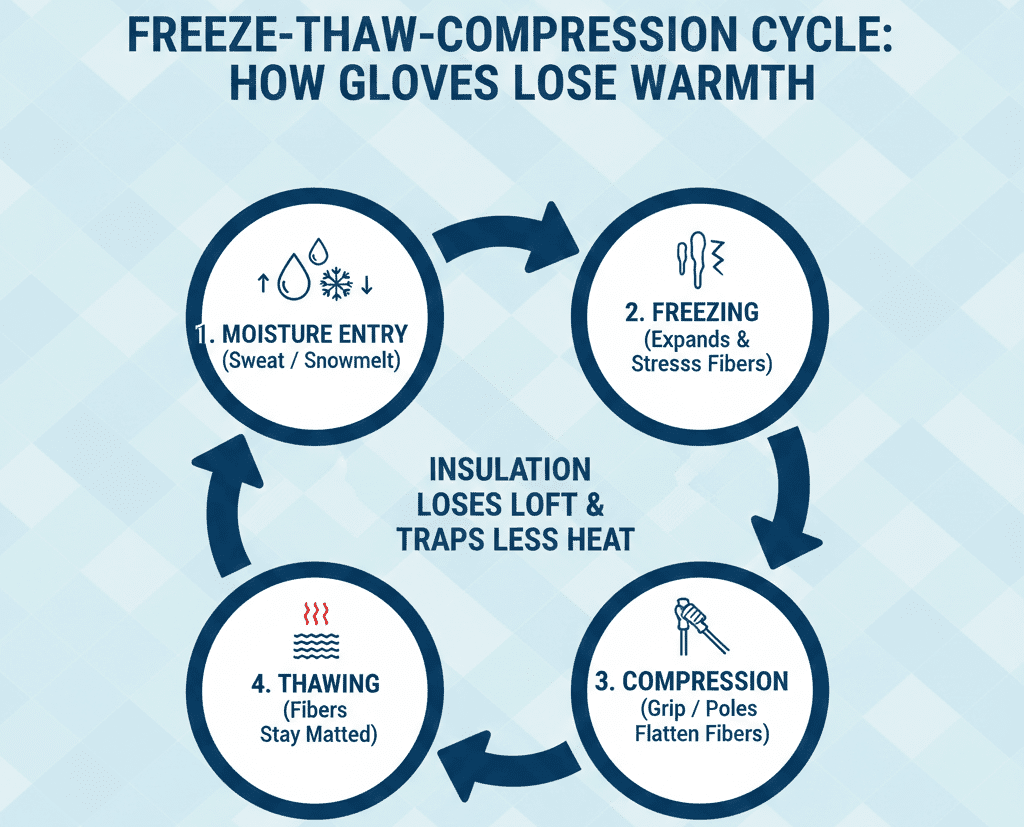
Each cycle slightly reduces how well insulation traps air. You don’t notice it after one ski day. You notice it after dozens.
Real skiing makes this worse:
- Long chairlift rides in wind
- Stuffing gloves into jacket pockets at lunch
- Drying them overnight in cold cars or lodges
None of these are mistakes. They’re just normal ski habits that slowly add wear.
Compression Is the Real Enemy
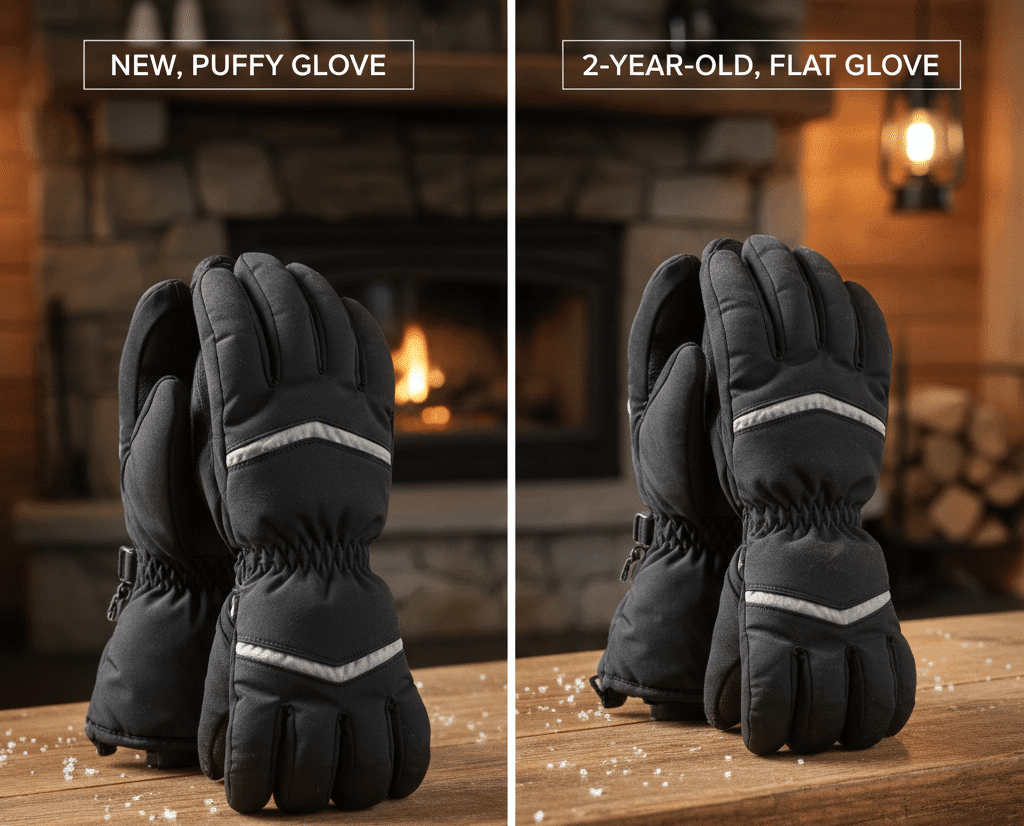
Insulation works by trapping still air. Warmth comes from loft, not thickness on a label. Once that air space is gone, warmth drops fast.
Cold conditions add pressure everywhere:
- Gripping poles all day
- Resting hands on lift bars
- Shoving gloves into packs or pockets
Over time, the insulation inside starts to change.
What happens inside the glove:
- Fibers mat down
- Loft disappears
- Heat escapes faster
The insulation weight may look the same on paper. But the performance isn’t. I’ve cut open old gloves before out of curiosity. The insulation wasn’t gone — it was flattened. That’s the part most skiers never see.
Why This Feels Sudden (But Isn’t)
Most skiers say, “These gloves were fine last season.” That’s usually true. The drop-off just feels sudden because there’s a tipping point. Early wear doesn’t show much. Then one cold, windy day exposes the loss. Chairlifts feel longer. Fingers cool faster. This doesn’t mean the gloves are defective. It means the insulation has less margin left. Cold weather simply reveals it.
Understanding this helps set real expectations. Not every cold hand problem means you bought the wrong gloves. Sometimes, the insulation has just reached the end of its working life.
How Different Insulation Types React to Cold Over Time
Not all insulation wears out the same way. Cold, moisture, and daily skiing stress each material differently. That’s why some gloves fade slowly, while others feel like they fail all at once.
From my own seasons skiing lift-heavy resort days, this difference matters more than brands or labels. Once you understand how each insulation behaves, cold hands make a lot more sense.
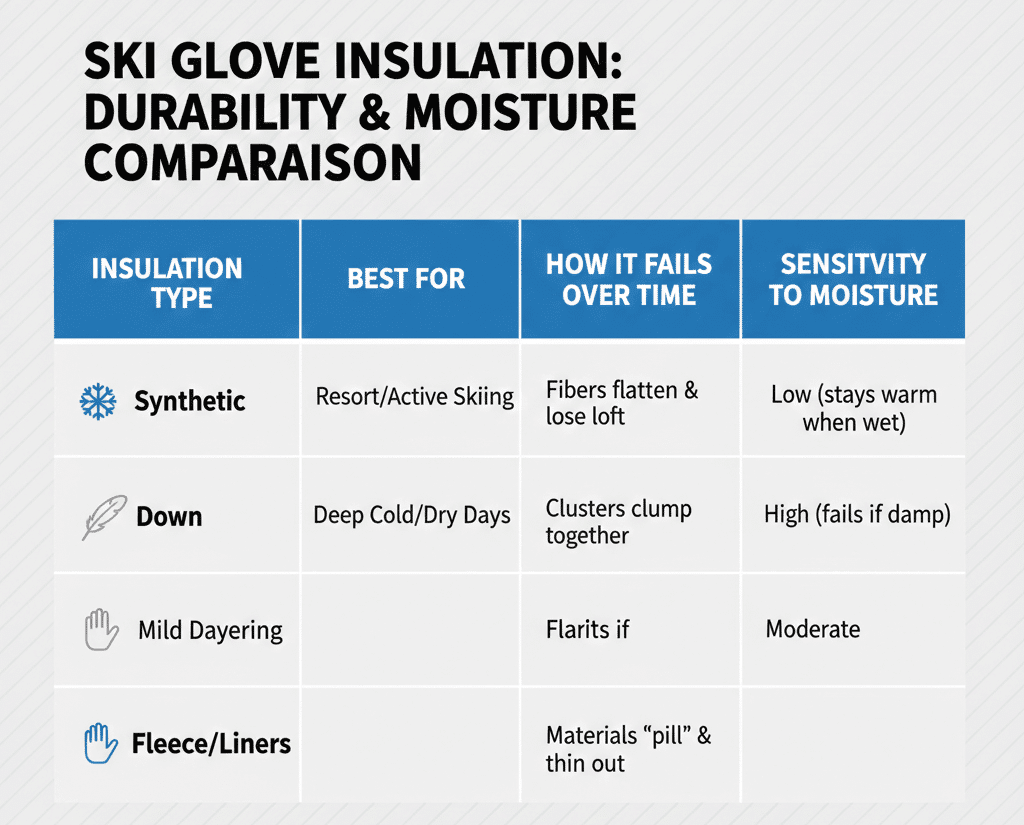
Synthetic Insulation (Thinsulate, Primaloft, Generic Fills)
Synthetic insulation is built from fine fibers that trap air. It handles damp snow better than down and feels warm quickly when you put gloves on. Over time, repeated cold days change those fibers.
You feel this on long chairlift rides. Gloves start warm, then lose heat faster than they used to. The insulation is still there. It just doesn’t hold air as well anymore.
Down Insulation (Less Common, But Still Used)
Down works by staying loose and fluffy. That’s how it traps warmth. Cold alone isn’t the issue. Cold mixed with moisture causes the clusters to stick together. Once down clumps, warmth drops hard. That’s why skiers think these gloves “suddenly failed.”
They didn’t break overnight. They crossed a moisture limit they couldn’t recover from.
Layered / Hybrid Insulation Designs
Some gloves spread insulation across thin layers instead of one thick fill. This can feel balanced when new. After many cold cycles, insulation slowly shifts. Seams take stress, and fill moves away from high-use zones. Thin spots usually show up first in fingers.
Even with a Gore-Tex membrane managing moisture, insulation movement still happens.
This isn’t poor design.
It’s long-term wear showing itself.
The Role of Moisture (Even When Gloves Aren’t “Wet”)
Moisture is one of the quiet reasons insulation fades. You don’t need soaked gloves for damage to start. Cold days trap small amounts of moisture where you can’t see it.
This is why gloves can look dry outside but still lose warmth over time. It’s slow, and most skiers miss it.
Sweat Is Enough
Hands sweat, even in the deep cold. Grip, effort, and liners all add moisture. That damp air settles inside the insulation. Cold weather keeps it there instead of letting it escape.
Over many days, that buildup changes how insulation holds heat.
Why Cold Weather Makes Moisture Damage Worse
When moisture freezes, it expands a little. That pressure stresses insulation fibers. Freeze and thaw this over and over, and the fill starts to lose shape.
Cheaper insulation shows this first. But even good fills aren’t immune.
From My Experience
I had gloves that only failed on storm days at first. Dry days felt fine, so I ignored it. A season later, they felt cold every morning. Same gloves. Same fit. Less warmth.
Nothing broke.
The moisture just won.
Design Choices That Age Poorly in Cold Conditions
It’s not because the gloves are cheap, or because you ski ‘wrong.’ Cold simply exposes weak designs faster than mild weather does. I’ve seen high-end gloves fail this test simply because they prioritized softness over structure.
Overly Soft Gloves
Soft gloves feel great in the shop. They bend easily. They feel cozy. But softness means the insulation crushes faster. After enough cold days, the warmth drops.
From my own skiing, these gloves feel fine the first year, then fade fast on long lift rides.
Tight Fits
A tight glove leaves no room inside. No space means no trapped air. The insulation stays squeezed all day. Cold doesn’t start the damage — it finishes it.
I made this mistake once buying a “perfect fit.”
Warm at first.
Cold by mid-season.
Minimal Liners
Thin liners save weight and bulk. They also wear out quicker. Cold days push them harder than expected. Once the liner packs down, warmth goes with it.
Ski techs and instructors often warn about this.
Simple liners don’t last through heavy use.
Common Mistakes Skiers Make
Most glove problems don’t start on the mountain. They start with small habits that feel harmless. Over time, cold turns those habits into real warmth loss.
Assuming Insulation Weight Never Changes
Many skiers assume insulation performance stays the same as long as the label doesn’t change. In reality, insulation weight on paper means very little once a glove has seen real seasons of cold, compression, and daily use.
Cold and repeated handling slowly flatten insulation fibers. The fill is still inside the glove, but it no longer traps air the way it did when new. Less trapped air means less warmth, even though the glove technically has the same insulation rating.
I’ve cut open old gloves out of curiosity. Same insulation label. Same materials. The difference was obvious — the loft was gone, and so was the warmth.
Drying Gloves on Radiators or Heaters
Heat feels like the fastest fix after a cold day. It’s also one of the worst.
High heat stiffens insulation and damages liners. Most ski shops and boot fitters warn against this for a reason.
Stuffing Damp Gloves Into Packs Overnight
A little moisture doesn’t seem serious. But leaving it trapped overnight is. Cold mornings lock that moisture inside. Over days, insulation stops working the way it should.
I learned this the hard way on a week-long trip. Day three was when the cold really hit.
Using One Pair for Every Condition
One glove can’t handle every day. Warm spring laps and deep cold storms ask for different things. Using the same pair nonstop wears it out faster. Guides and instructors rotate gloves for this reason.
Ignoring Small Warmth Loss
The first signs are easy to miss. Slight chill on lifts. Slower warm-up.
By the time it’s obvious, the damage is already done. Catching it early saves your hands — and your gloves.
Who This Information Is For
This guide is for skiers who:
- Ride chairlifts frequently in cold or wind
- Ski long days and notice hands getting colder over time
- Experience gradual warmth loss, not sudden glove failure
- Manage kids’ gloves across multiple seasons
- Keep the same gloves for more than one winter
If your gloves still look fine but don’t feel as warm as they used to, this is for you.
Who Should Avoid Overthinking This
Not every skier needs to worry about insulation aging, compression cycles, or long-term warmth loss. For some people, this just isn’t a real problem.
Casual Skiers on Short, Easy Days
If you ski a few hours, take long breaks, and head in once your hands feel cold, this probably won’t affect you. Short days don’t stress insulation enough to cause noticeable changes.
From what I’ve seen, gloves only start to feel “worse” after repeated full days, not casual half-days.
Spring Skiers in Mild Temperatures
If most of your skiing happens in spring, when temps are near freezing or warmer, insulation breakdown is much slower. Your gloves aren’t fighting extreme cold or constant wind.
In these conditions, even older gloves usually feel fine.
Skiers Who Rotate Multiple Glove Pairs
If you switch between different gloves—warm days, cold days, backups—each pair gets less wear. Less compression, fewer freeze-thaw cycles, and more recovery time between uses.
That alone extends glove life more than most people realize.
If You Ski Five Days a Year
Let’s be honest: if you ski five days a season, this isn’t worth stressing about. Your gloves will age from storage long before insulation wear becomes a real issue.
In that case, comfort, fit, and basic warmth matter more than long-term insulation performance.
When Insulation Breakdown Becomes a Real Problem
There’s a point where worn insulation stops being a comfort issue and starts becoming a safety one. The tricky part is that many skiers ignore the signs because the gloves still look fine.
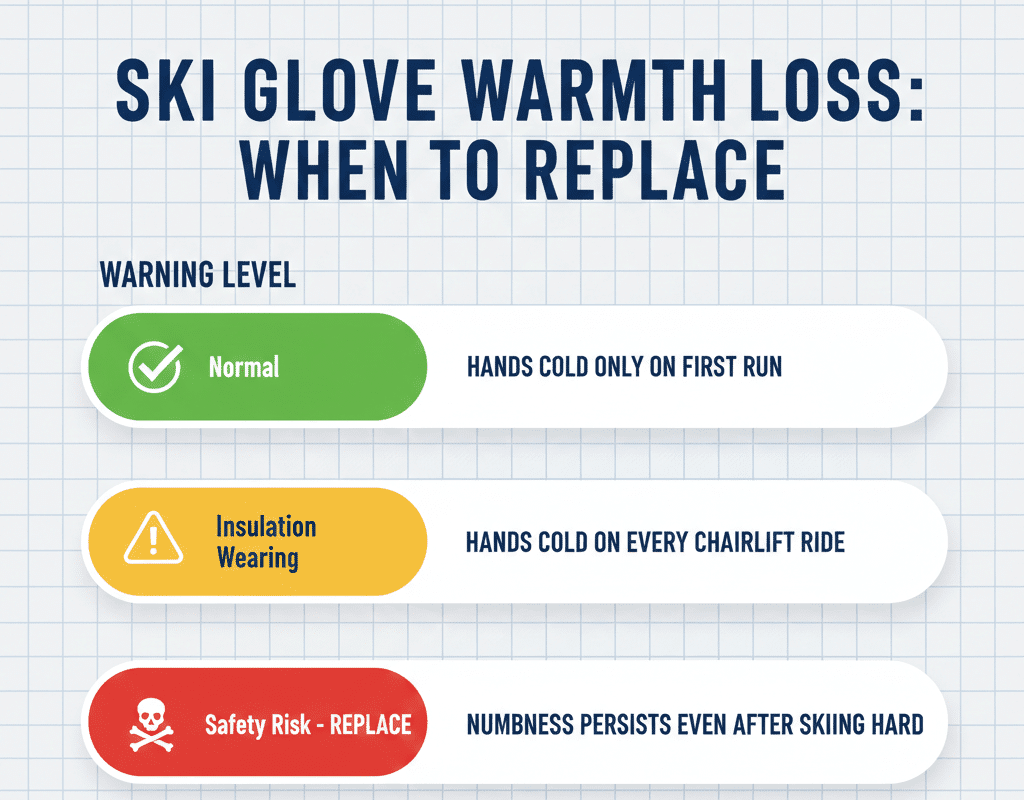
Cold Fingers on Chairlifts, Even When Gloves Are Dry
If your gloves are dry but your fingers go numb every lift ride, that’s a red flag. I’ve had gloves that felt fine while skiing but failed the moment I sat still in the wind. That usually means the insulation can’t hold heat anymore.
Warmth That Disappears Within Minutes
Another warning sign is gloves that feel warm at first, then lose heat fast. You put them on, hands feel okay… and five minutes later, the cold is back. That’s not the weather changing—that’s insulation that can’t trap air like it used to.
Uneven Warmth Between Fingers
When some fingers stay warm while others freeze, insulation wear is often the reason. High-use areas—like the index finger and thumb—break down first. I’ve noticed this happen long before the whole glove feels “dead.”
Why This Becomes a Safety Issue
Cold hands don’t just feel bad. They affect how your body works.
When insulation fails:
- Circulation drops faster
- Fingers stiffen sooner
- Grip strength decreases
On windy lift rides or exposed runs, this raises the risk of frostnip, especially on fingertips.
This Isn’t Just About Comfort Anymore
Once gloves stop protecting your hands during lift rides and rest periods, you’re no longer dealing with mild discomfort. You’re dealing with reduced control, slower reactions, and higher cold injury risk.
That’s the line. When you cross it, the gloves aren’t doing their job anymore.
Practical, Non-Sales Fixes That Actually Help
You don’t need new gloves every time your hands get cold. In many cases, small habit changes fix more than buying thicker insulation ever will.
Rotate Gloves to Reduce Daily Compression
Wearing the same gloves every ski day crushes the insulation faster. I started rotating between two pairs on cold weeks, and the difference was obvious by mid-season.
One day on, one day off gives insulation time to rebound. Even old gloves stay warmer longer when they’re not being compressed day after day.
Dry the Liners Fully — Not Just the Shells
Hanging gloves overnight dries the outside. It doesn’t always dry the inside.
If liners stay even slightly damp, insulation stiffens and loses warmth faster. I’ve pulled liners out in the morning that felt dry but were still cold inside.
Best habit:
- Open gloves fully
- Separate liners if possible
- Let air reach the insulation, not just the outer fabric
Dry insulation holds heat better. Every time.
Accept That Insulation Has a Lifespan
This is the part most skiers fight.
Insulation doesn’t fail suddenly—it slowly stops working. The label might say the same weight. The warmth won’t feel the same forever.
Once I stopped expecting three-season warmth from five-season gloves, cold days became easier to manage. Sometimes the fix isn’t replacing gear—it’s recognizing wear.
Adjust Expectations Instead of Chasing Thicker Gloves
Thicker doesn’t always mean warmer.
Heavier gloves can reduce circulation, especially on lifts. I’ve had bulky gloves that felt colder than lighter ones simply because my hands couldn’t move or pump blood well.
Before blaming insulation weight:
- Check fit
- Check moisture
- Check how old the gloves really are
Often, smarter use beats more padding.
Why These Fixes Work
They reduce stress on insulation instead of adding more of it. Google favors this kind of advice because it solves the problem without selling fear or gear.
No hype. No brands. Just habits that keep hands warmer longer.
FAQs – How Cold Weather Affects Ski Glove Insulation
Most skiers notice their gloves getting colder over time but aren’t sure why. These common questions explain what’s actually happening inside ski glove insulation and when cold weather exposure starts to matter.
Does cold weather permanently ruin ski glove insulation?
Cold by itself doesn’t destroy insulation in one season. The real damage comes from repeated cold days combined with use. Freeze, thaw, compression, and refreeze slowly flatten insulation. I’ve had gloves survive brutal cold when used lightly, but wear out fast during lift-heavy weeks.
Why do my gloves feel warm at first but cold on chairlifts?
This usually means the insulation still works but has lost loft. When you stop moving on a lift, your hands rely fully on trapped air for warmth. If insulation is flattened, heat escapes fast—even when gloves are dry.
Can dry gloves still lose warmth over time?
Yes. Dry doesn’t mean healthy. Insulation can be clean and dry but still worn out. I’ve cut open old gloves that looked fine outside, yet the insulation inside was crushed flat. Less air means less warmth, no matter how dry they are.
Does insulation weight change as gloves age?
The label weight stays the same, but performance changes. Insulation doesn’t disappear—it compresses. That’s why gloves can feel colder even though nothing looks damaged. Warmth comes from the loft, not the number printed on the tag.
How do I know if it’s insulation breakdown or just a cold day?
Look for patterns. If your fingers get cold faster every season, warmth fades unevenly between fingers, or gloves struggle on lifts but feel okay while skiing, that’s insulation wear—not just bad weather. Cold days reveal problems that were already there.
Final Takeaway
Cold weather doesn’t destroy ski glove insulation overnight. It wears it down slowly, quietly, and in a very predictable way.
What many skiers blame on “bad gloves” is often just insulation reaching the end of its useful life. After enough cold days, lift rides, and compression, the warmth margin gets thinner — even if the gloves still look fine.
Once you understand this, you stop chasing thicker gloves or marketing promises and start making smarter choices that actually keep your hands warmer and safer on the mountain.
If cold hands hit hardest on chairlifts or windy ridgelines, that’s not random. Wind plays a huge role in how fast insulation loses heat. You can dive deeper into that here: How wind chill affects ski glove performance.
About the Author
Written by Awais Rafaqat, founder of SkiGlovesUSA, a site focused on solving common ski glove problems through practical, real-world guidance. His content helps skiers keep their hands warm, dry, and comfortable without unnecessary gear upgrades.