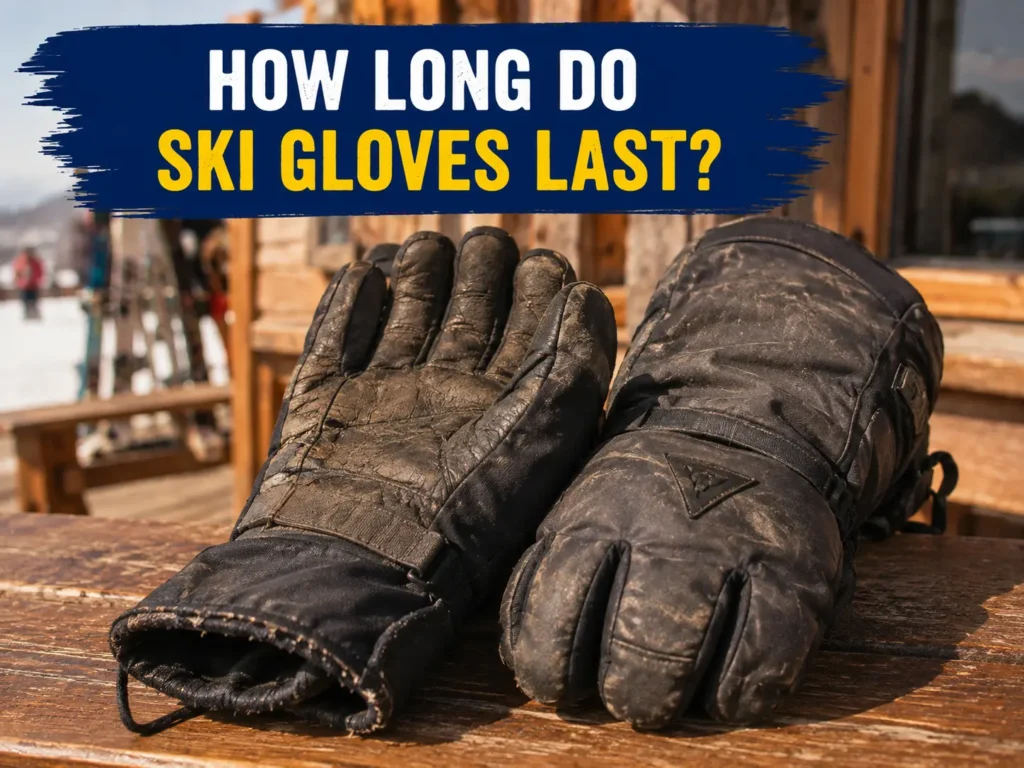
Quick answer: Most ski gloves hold up for 3 to 5 seasons of regular resort use, but that number swings hard depending on the glove’s materials, how many days a year you actually ski, and how you dry and store them between trips. A budget synthetic pair used hard every weekend might only make it through two winters, while a well-made leather-palmed pair that gets proper care can push past 8. If you’re not sure which category your gloves fall into, the ski glove finder tool can help you figure out what you’re actually working with before you decide anything about replacing them.
- What Actually Determines Glove Lifespan
- How Climate and Snow Conditions Change the Number
- How Many Seasons Should You Expect
- Why Insulation Ages Even When the Shell Looks Fine
- Material Durability, Compared Honestly
- A Simple Way to Track Wear Over a Season
- Signs Your Gloves Are Actually Done
- The Repair-vs-Replace Decision
- Common Mistakes That Shorten Lifespan Early
- Who Should Expect Shorter or Longer Lifespans
- The Bottom Line on Replacement Timing
- FAQ
What Actually Determines Glove Lifespan
There’s no single number that applies to every pair. What determines how many seasons a glove survives comes down to three things layered on top of each other: how many days a year it gets used, what it’s made of, and how it’s treated between those days.
Days on snow matter more than years owned. A pair that sits in a closet for eleven months and gets 10 days of use a season is barely aging at all, mechanically speaking. A pair used 40 days a season is going through roughly four times the flexing, gripping, and moisture cycling in the same calendar year.
Material quality changes how much abuse the glove can absorb before it shows it. Full-grain leather palms resist abrasion far longer than bonded or synthetic leather, but only if the oils in that leather are maintained. Synthetic shells resist water better initially but degrade under UV exposure in a way leather doesn’t.
Care habits are the multiplier on top of both. Two identical pairs used the exact same number of days can age at completely different rates depending on how they’re dried, whether they’re crushed into a bag wet, and whether they’re left near direct heat.
There’s also a weight-versus-durability trade-off worth knowing about upfront. Lighter gloves, built with thinner shell fabric and less padding, are more pleasant to wear but generally show wear faster than a heavier, more reinforced pair. That’s not a flaw in the lighter glove — it’s a design choice, and it means a featherweight spring-skiing glove and a heavy-duty all-mountain glove simply aren’t playing by the same durability rules, even at a similar price point.
How Climate and Snow Conditions Change the Number
Two skiers with identical gloves and identical days on snow can still end up with very different lifespans if they ski in different places. Dry, cold climates like the interior Rockies are relatively gentle on gear — the snow itself is drier and less abrasive, and there’s less freeze-thaw cycling on the glove shell.
Wet, coastal snow, the kind common in the Pacific Northwest or the Sierra, is harder on gloves in a specific way: it saturates the shell and liner more often, which means more full dry-out cycles per season, and more chances for a glove to get stuffed away still damp. Moisture cycling is one of the fastest ways to break down both leather oils and insulation loft.
Road salt and de-icing chemicals matter more than people expect, too, especially for anyone driving to the mountain and handling gear in a parking lot. Salt residue left on leather draws out moisture and accelerates the same cracking pattern that dry heat causes, just through a different chemical pathway.
How Many Seasons Should You Expect
Here’s a realistic breakdown based on usage pattern and glove tier, not a single blanket number.
| Skier Type | Days/Season | Budget Synthetic | Mid-Range | Leather/Premium |
| Occasional (5-10 days) | Light use | 3-4 seasons | 5-6 seasons | 7+ seasons |
| Regular weekend skier (15-25 days) | Moderate use | 2-3 seasons | 3-5 seasons | 5-7 seasons |
| All-day, all-season (35+ days) | Heavy use | 1-2 seasons | 2-3 seasons | 3-5 seasons |
| Backcountry/ice climbing crossover | Heavy + abrasive | 1 season | 1-2 seasons | 2-4 seasons |
Backcountry use shortens lifespan across every tier because it adds rope handling, rock scrambling, and ski edge contact on top of normal resort wear — abrasion sources a lift-served skier rarely encounters.
Racing and high-impact use is its own category. Gloves that see repeated gate contact or hard falls take structural damage (torn seams, punctured shells) that has nothing to do with gradual material aging, and that kind of damage means replacing regardless of how many seasons the glove has left in theory.
Why Insulation Ages Even When the Shell Looks Fine
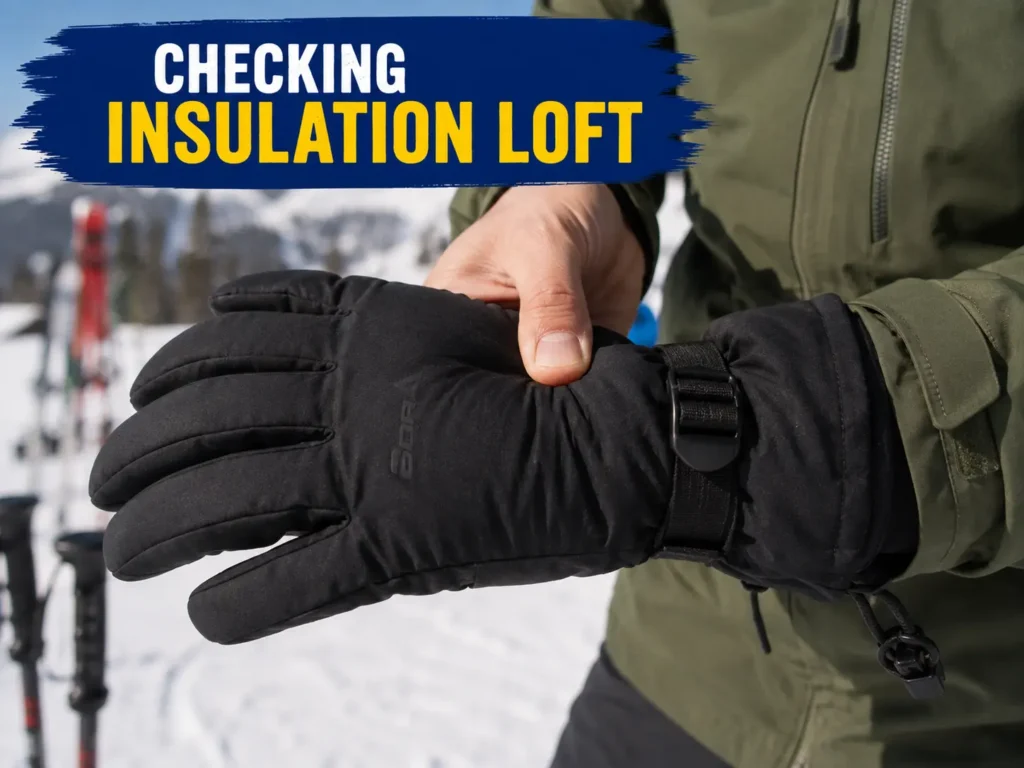
The outside of a glove can look almost new while the inside has quietly lost a meaningful chunk of its warmth. Synthetic insulation loses loft every time it gets compressed, and skiing compresses it constantly — gripping poles, closing your hand around a rail, stuffing gloves into a jacket pocket.
Independent lab testing on synthetic insulations found that each compression cycle causes a small but real loss in loft and thermal performance, on the order of roughly 1-2% depending on the insulation type. That sounds tiny per cycle, but a season of daily skiing runs through thousands of compression cycles, and the loss compounds. This is why a three-year-old glove can measure noticeably colder than a new one of the identical model, even with zero visible shell damage.
Down-style natural insulation behaves differently — it loses loft dramatically when wet but tends to recover better than synthetics when it dries out fully between uses, which is one reason it’s rare in ski gloves despite performing well in dry jackets.
Material Durability, Compared Honestly
Palm material is usually the first thing to fail, because it takes direct, repeated abrasion against poles, chairlift bars, and zippers. The textile industry actually has a standard way to measure this kind of wear: the Martindale abrasion test, which rubs a fabric sample against an abrasive surface in a controlled pattern and counts how many cycles it survives before breaking down. It’s the same test method used across furniture and apparel manufacturing to rate durability, and it’s a useful mental model even without lab access — full-grain leather and tightly woven synthetic leather both hold up far longer under repeated friction than thin, loosely woven fabrics.
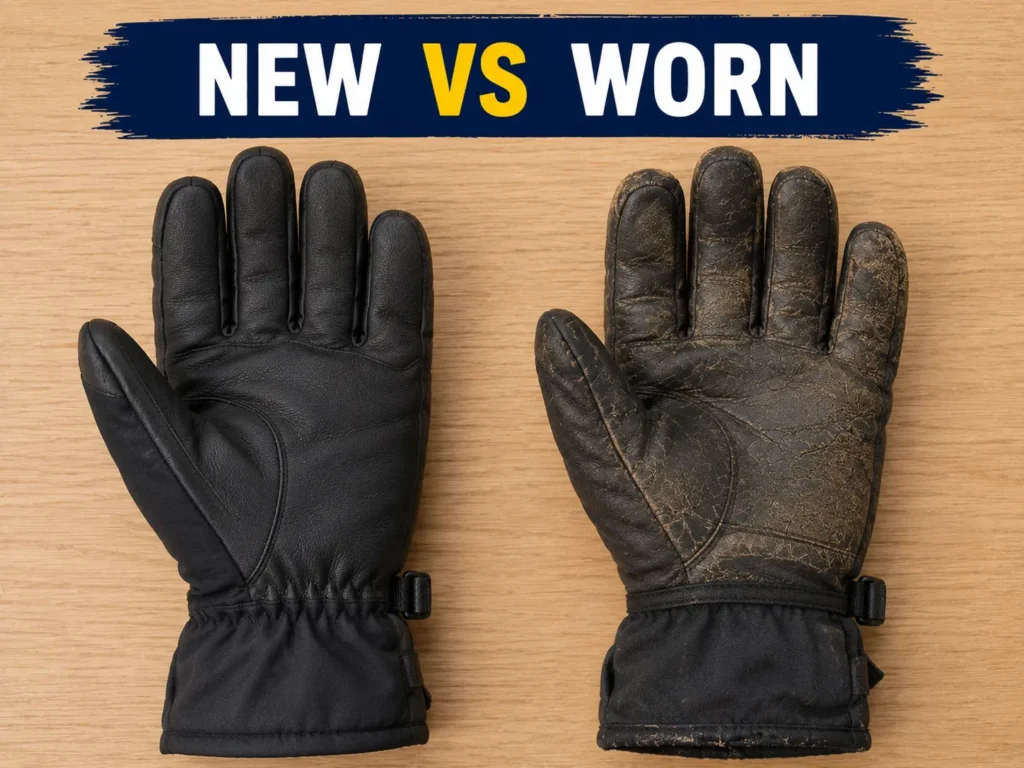
Full-grain leather palms are the most durable option long-term, but only with maintenance. Left dry, leather cracks along the same flex lines every time you close your hand, and once that cracking starts it doesn’t reverse.
Synthetic leather (PU-coated) palms resist water better out of the box and need no conditioning, but they don’t self-heal the way leather does. Once the coating cracks or peels, that spot is permanently weaker.
Shell fabric, usually nylon or polyester, degrades mainly from UV exposure and salt exposure rather than direct wear, since it isn’t gripping anything directly. This is the same fading and weakening mechanism covered in more depth elsewhere on the site if you want the full breakdown.
Waterproof membrane laminates (the layer bonded inside the shell on higher-end gloves) fail differently again. The membrane itself rarely wears out from friction since it’s protected inside the shell, but the bond between layers can weaken with repeated flexing and heat exposure over years, which shows up as slowly leaking through a shell that still looks completely intact from the outside. This is why a glove can pass a visual inspection and still soak through — the failure is happening in a layer you can’t see.
A Simple Way to Track Wear Over a Season
Most people only think about glove condition once something goes wrong, which makes it hard to tell whether a problem is new or has been building for months. A quick habit that helps: at the start of each season, take thirty seconds to flex the palm, check both cuffs, and press a thumb into the back of the hand to feel how much give the insulation still has.
Do that same check again mid-season and you’ll actually notice change instead of guessing. It’s a lot easier to catch a hairline palm crack in December than to discover a full crack in March after months of skiing on it, and it turns “when should I replace these” from a vague feeling into something you can actually track.
Signs Your Gloves Are Actually Done
Not every worn-looking glove needs replacing, and not every glove that looks fine is actually fine. Here’s what separates cosmetic wear from functional failure.
| Sign | Cosmetic (Keep) | Functional (Replace) |
| Palm surface | Light scuffing, color fading | Cracks that flex open, coating peeling away |
| Seams | Slight fraying at edges | Threads visibly separating, gaps forming |
| Warmth | Feels slightly less warm on mild days | Cold within 20 minutes on days it used to handle fine |
| Water resistance | Occasional damp fingertip | Consistently soaked through mid-run |
| Dexterity | Slightly stiffer than new | Can’t grip a pole or zipper reliably |
The warmth test is the one people miss most often, because it happens gradually. If you find yourself reaching for hand warmers on days that never used to require them, that’s the insulation loft loss described above, not just “getting older.”
The Repair-vs-Replace Decision
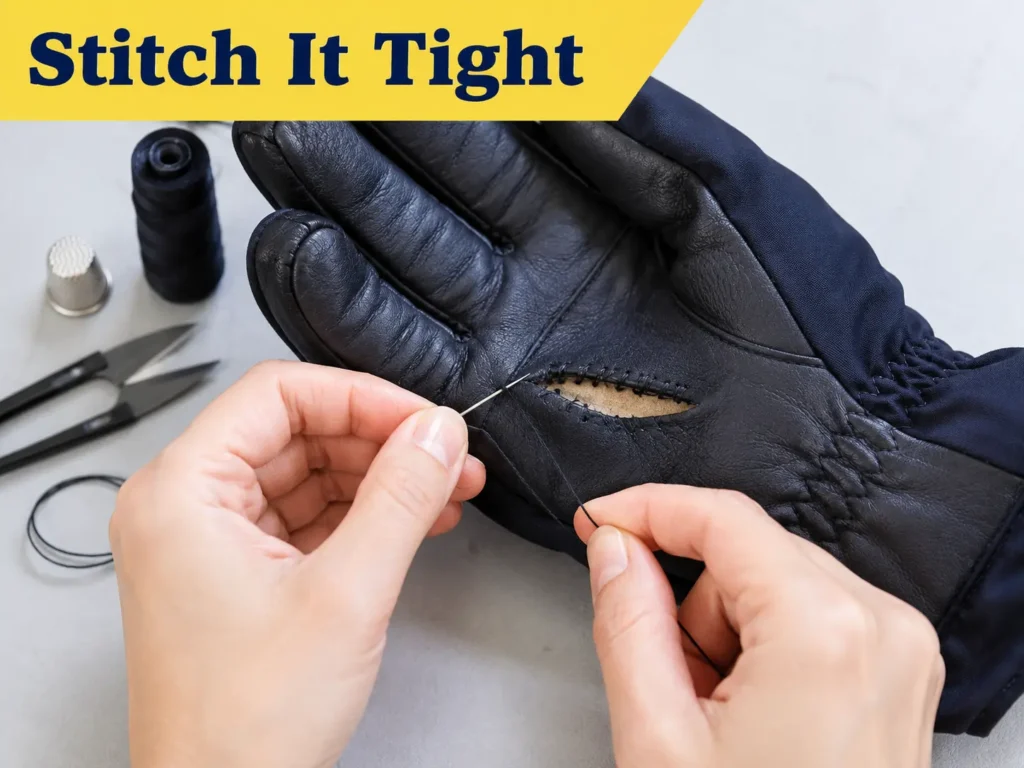
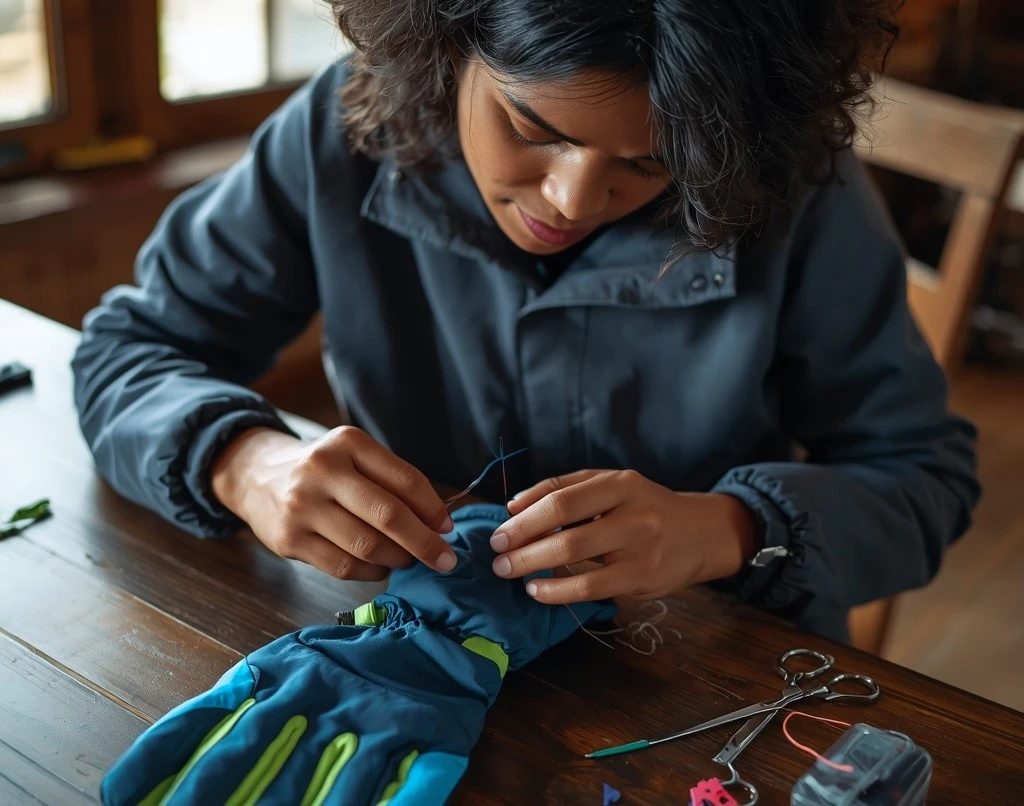
Before writing a pair off, it’s worth checking whether the actual failure is fixable. A cracked palm on an otherwise sound glove is often a candidate for a palm patch or reconditioning, not a full replacement. A single blown seam is a five-minute hand-stitch fix. A liner that’s gone thin from repeated washing isn’t repairable in any meaningful way, and that’s usually the point to actually retire the pair.
Use this quick framework:
| Situation | Recommendation |
| Shell intact, palm cracked | Repair or recondition |
| One seam failing, rest solid | Repair |
| Insulation compressed, warmth noticeably down | Replace |
| Multiple failure points at once | Replace |
| Still under a manufacturer warranty | Check warranty before either |
If you’re weighing whether to spend on a repair kit or just buy new, it helps to think in cost-per-use rather than sticker price alone. Peer-reviewed research on cost per wear found that framing a purchase this way — total price divided by number of uses — consistently shifts people toward the more durable option once they actually see the number, because a $150 pair worn 100 times costs less per day on snow than a $40 pair replaced every single season. If budget is the main constraint, there are solid options that hold up reasonably well without the premium price tag on the under-$50 list.
Common Mistakes That Shorten Lifespan Early
A few habits account for most premature glove failure, independent of how good the glove actually is.
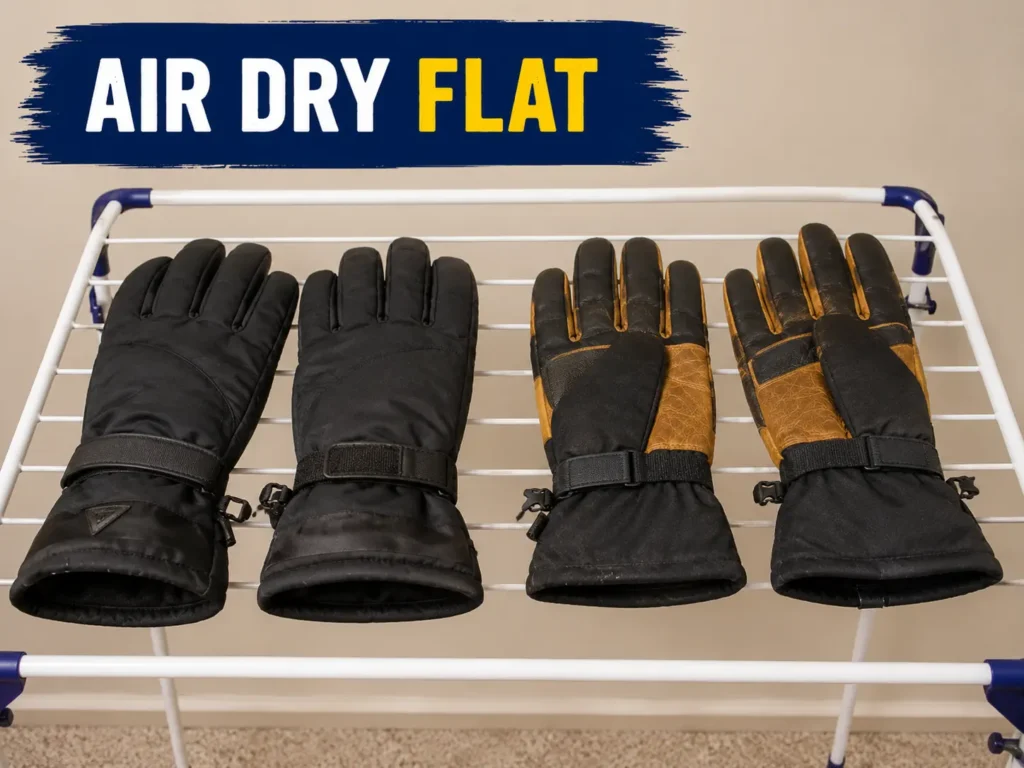
Drying gloves on or near a heater is the single biggest one. Direct heat dries out leather oils fast and can warp synthetic coatings, cutting years off a glove that would otherwise have lasted.
Storing gloves damp, even overnight in a gear bag, encourages the kind of moisture cycling that breaks down both leather and insulation faster than normal use ever would.
Washing more often than needed strips the factory water-repellent coating repeatedly, which speeds up the exact wear you’re trying to prevent.
Ignoring early warning signs is a quieter mistake but a costly one. A small seam fray left alone for a season usually turns into a full seam failure, and a palm crack that starts as a hairline eventually spreads across the whole grip surface. Catching either early, while it’s still a five-minute fix, is what separates a glove that lasts eight seasons from one that lasts three.
Using the wrong glove for the conditions also wears gear out faster than it should. A lightweight glove built for resort groomers pushed hard into wet spring slush or backcountry scrambling will show abrasion and saturation damage far ahead of schedule, not because the glove is poorly made, but because it’s being used outside what it was built for.
Who Should Expect Shorter or Longer Lifespans
Cold-sensitive hands often push people toward heavier insulation, and heavier insulation compresses and ages the same way lighter insulation does — it just starts from a bigger warmth cushion, so the drop-off is less noticeable at first. For anyone with circulation issues that make hands run cold generally, that bigger starting cushion is worth factoring in when deciding whether a glove’s warmth has actually declined or whether conditions that day were just colder than usual.
Budget buyers replacing every season aren’t necessarily doing something wrong. If a $35 pair genuinely gets someone through a season of casual skiing, that’s a reasonable trade some people make deliberately, as long as it’s a choice and not a surprise.
Frequent skiers logging 30+ days a season should budget for real durability from the start, since the compounding wear described above hits that usage level hardest, and a cheap pair simply won’t survive a full season of that kind of volume.
Racing and high-impact skiers are the exception to almost everything above, because their gloves usually fail from a single hard event (a gate strike, a fall onto rocks) rather than gradual wear. For that group, lifespan planning is less about seasons and more about inspecting gear after every hard impact, regardless of how new the glove is.
There’s also a genuine exception worth naming honestly: not every premium glove outlasts every budget glove. A poorly designed expensive pair with weak seam construction can fail faster than a simple, well-stitched budget pair. Price is a reasonable proxy for durability, but it isn’t a guarantee, which is exactly why the warning-signs table above matters more than the receipt.
The Bottom Line on Replacement Timing
If your gloves are still warm, still grip, and the only issue is cosmetic fading or light scuffing, there’s no reason to replace them yet. If warmth has dropped noticeably, a seam has actually opened up, or the palm is cracking in a way that keeps spreading, that’s the point where repair stops making sense and replacement does.
None of this needs to be a guessing game season after season. Run the palm-flex and insulation check above once at the start of the year, watch for the specific warning signs in the table rather than general “they look old” impressions, and use the repair-vs-replace framework before assuming a worn pair is automatically a dead pair.
Most gloves give plenty of warning before they actually fail — the trick is knowing what to look for instead of waiting for a cold, wet hand to tell you. For the deeper mechanical reasons gloves wear out in the first place — friction, flex fatigue, and UV exposure — the site’s breakdown on wear causes covers that side in full.
FAQ
How many seasons should ski gloves last?
For most regular skiers, 3 to 5 seasons is realistic for a mid-range pair. Heavy users see less, occasional users often get more.
Can I extend a glove’s life once it starts wearing?
Yes, in many cases. Leather reconditioning, seam repair, and simply changing drying habits can add real seasons to a pair that isn’t yet structurally failing.
Is it normal for gloves to feel less warm over time even without visible damage?
Yes. Insulation compresses gradually with use, and that loss in loft happens well before any damage is visible on the shell or palm.
Do expensive ski gloves always last longer than cheap ones?
Usually, but not automatically. Price generally tracks material quality and construction, but a poorly built expensive pair can still fail before a well-made budget pair. Checking the actual warning signs matters more than trusting the price tag alone.