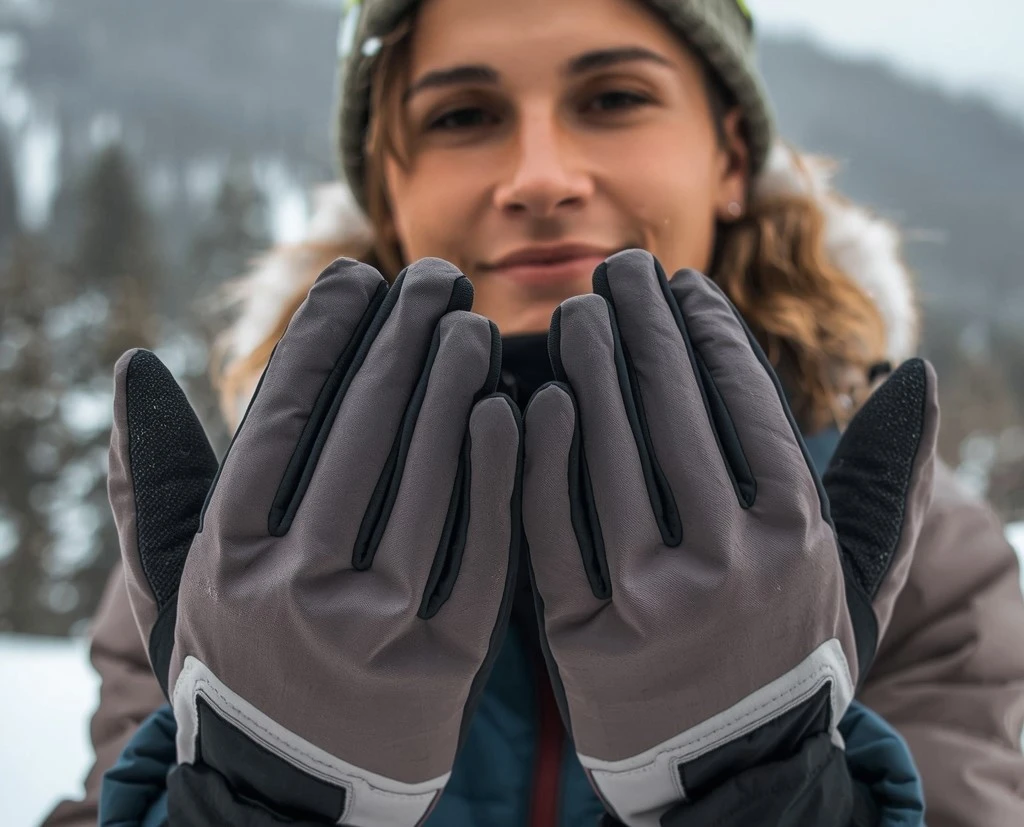
Quick answer: Gloves lose warmth mainly because moisture builds up faster than most skiers realize, and wet insulation simply can’t trap heat the way dry insulation does. Compressed insulation, a fading windproof layer, and gloves that fit too tight all make it worse, but moisture is the driver behind most of it.
If you’re dealing with this in gloves that are already a few seasons old, it’s worth checking whether the Ski Glove Finder points you toward a build that actually holds warmth for your specific conditions, rather than assuming your technique or the weather is the problem.
Most explanations for cold hands stop at “it’s cold outside” and miss what’s actually happening inside the glove. Here’s the real mechanism, one piece at a time.
- Moisture Is the Main Reason Warmth Disappears
- How Insulation Actually Breaks Down
- Wind Chill Steals Heat Even Through a "Warm" Glove
- Sweat Is Working Against You Even When You're Not Overheating
- Fit Matters More Than People Expect
- Construction Quality: The Factor Spec Sheets Don't Show
- Altitude, Duration, and Activity Level Change the Math
- Matching the Explanation to Your Actual Conditions
- Who Notices This First — and Who Should Care Most
- When the Problem Isn't Fixable Anymore
- Two Assumptions Worth Correcting
- FAQ
- The Takeaway
Moisture Is the Main Reason Warmth Disappears
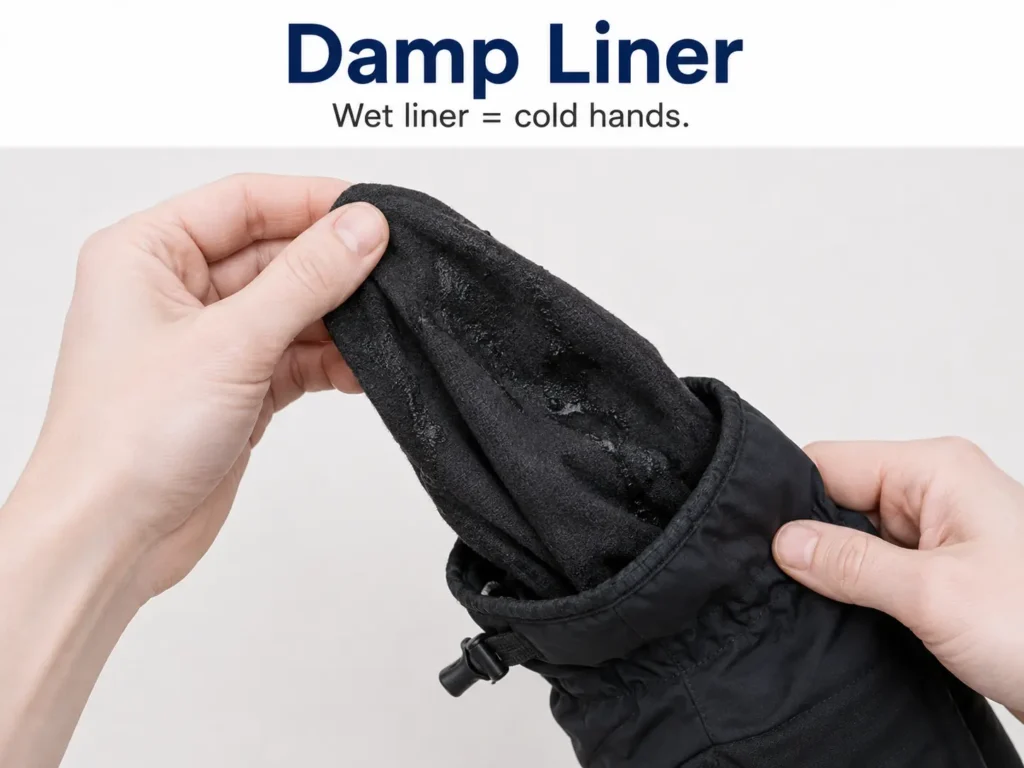
Insulation works by trapping still air — that trapped air is the actual insulator, not the fibers themselves. Water conducts heat roughly 25 times faster than still air, which means even a small amount of moisture inside a glove undermines the entire system. It doesn’t take a soaked glove to feel the effect; a liner that’s just damp from a few hours of hand sweat already performs noticeably worse than a dry one.
This is why gloves so often feel fine in the morning and disappointing by early afternoon. The temperature usually hasn’t dropped that much. What’s changed is that hours of hand sweat, and possibly some melted snow at the cuff, have worked their way into the insulation and started collapsing the air pockets that were doing the actual warming.
OSHA’s cold stress guidance makes this point directly for the body as a whole: dampness, including from sweat, meaningfully speeds up heat loss regardless of the air temperature around it. The same physics apply at glove scale — a hand doesn’t need to be in freezing water to lose heat fast, it just needs to be damp inside an enclosed space losing that moisture to the surrounding cold.
How Insulation Actually Breaks Down
Insulation doesn’t fail all at once — it loses effectiveness gradually as the material itself changes, separate from moisture entirely.
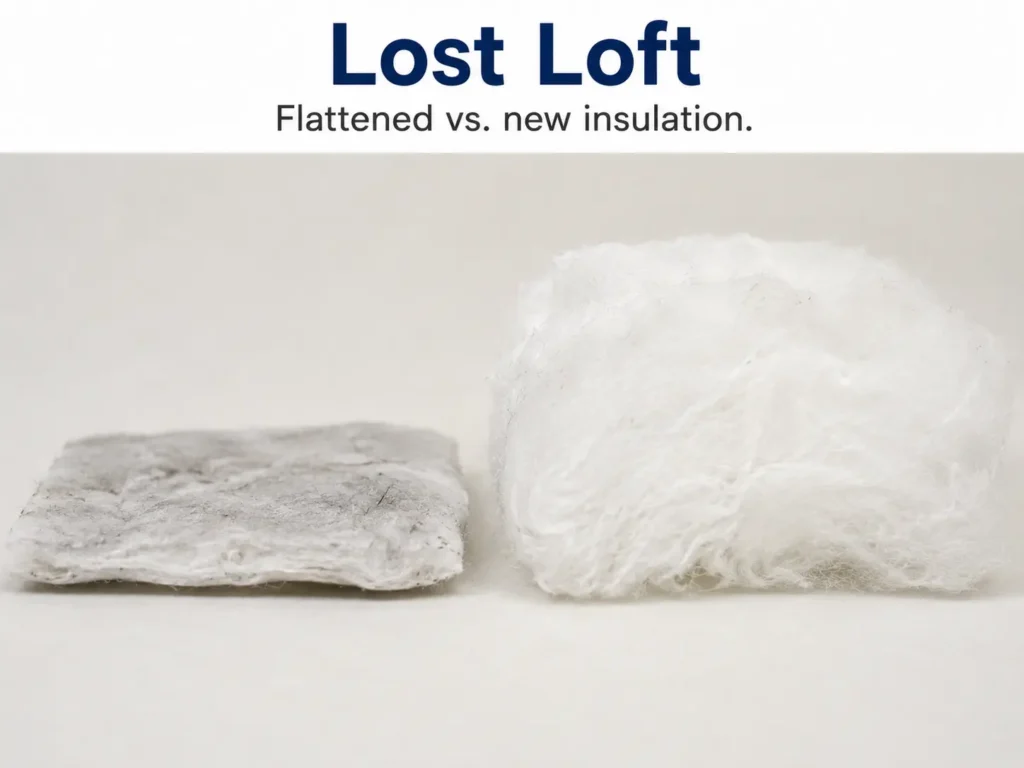
Synthetic insulations like Thinsulate and PrimaLoft work by trapping air between thousands of fine fibers. 3M’s Thinsulate insulation technology is built specifically to maximize that trapped-air ratio while staying thin enough for dexterity, but the fibers themselves compress permanently over repeated use — gripping poles, stuffing gloves into a bag, seasons of general wear. Once fibers stay flattened, the air pockets they used to create don’t fully return, and the glove holds less heat than it did new, even if it still looks intact from the outside.
Palms and fingertips compress faster than the back of the hand simply because that’s where grip pressure and repeated flexing concentrate. That’s why a glove often goes cold at the fingertips well before the rest of the hand feels any different — it’s not always a design flaw, it’s the natural wear pattern of where the insulation takes the most repeated pressure.
Wind Chill Steals Heat Even Through a “Warm” Glove
A glove’s insulation rating usually gets tested in still air, which means real-world wind performance depends heavily on a separate factor: whether the outer shell actually blocks moving air. Wind pulls heat away from any surface far faster than still air at the same temperature, and a shell that’s lost its wind-blocking ability lets that effect reach the insulation directly, even if the insulation itself is in good shape.
This explains a pattern a lot of skiers notice without connecting the dots: hands that feel fine while skiing but go cold fast on a chairlift. Skiing generates body heat and keeps hands moving. Stationary hands on an open lift lose that advantage and take the wind’s full effect at the same time — which is exactly the setup where a fading windproof shell shows itself.
Sweat Is Working Against You Even When You’re Not Overheating
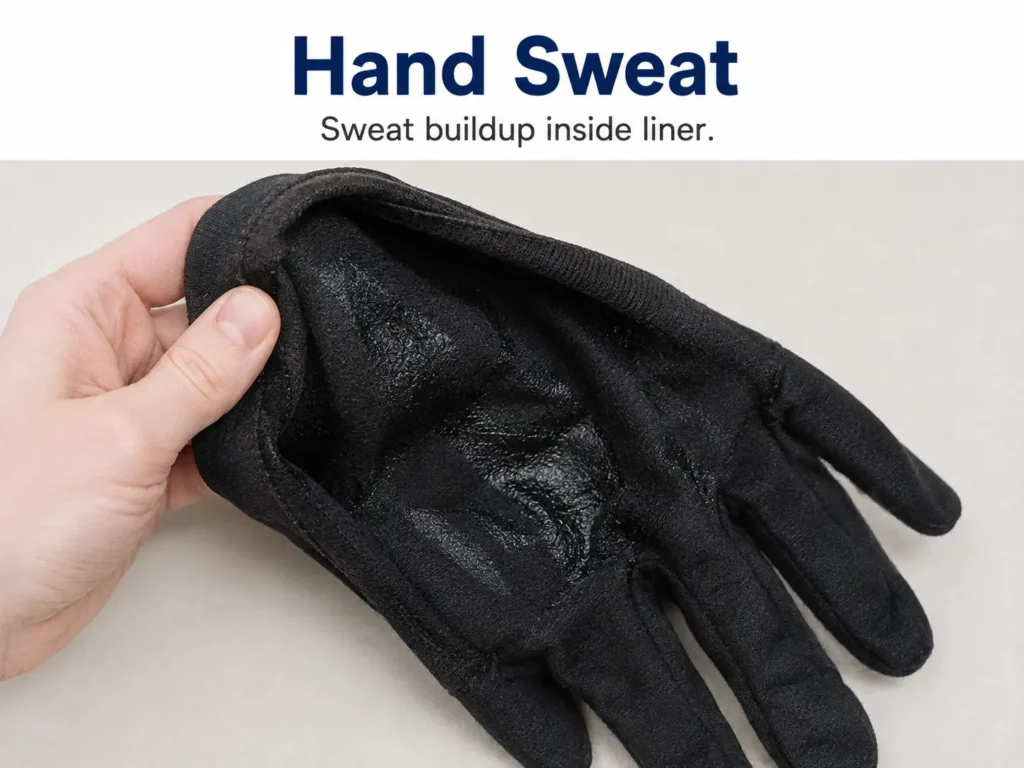
Hands sweat during exertion regardless of how cold it feels outside, and that moisture has nowhere obvious to go once it’s trapped inside a sealed glove. Unlike a jacket where sweat can migrate outward and evaporate, a glove liner sitting against skin tends to just accumulate it over the course of a day.
This is part of why liner choice matters more than most skiers expect. A liner that manages moisture well pulls sweat away from skin and lets it move outward toward the shell, where it has more chance to evaporate or vent. A liner that just soaks it up and holds it against skin does the opposite — it keeps the moisture exactly where it does the most damage to warmth.
Grip pressure compounds this. Skin under sustained pressure, like a hand gripping a pole for an extended stretch, sweats more and circulates blood less efficiently at the same time — a combination that speeds up heat loss right in the area doing the most work.
Fit Matters More Than People Expect
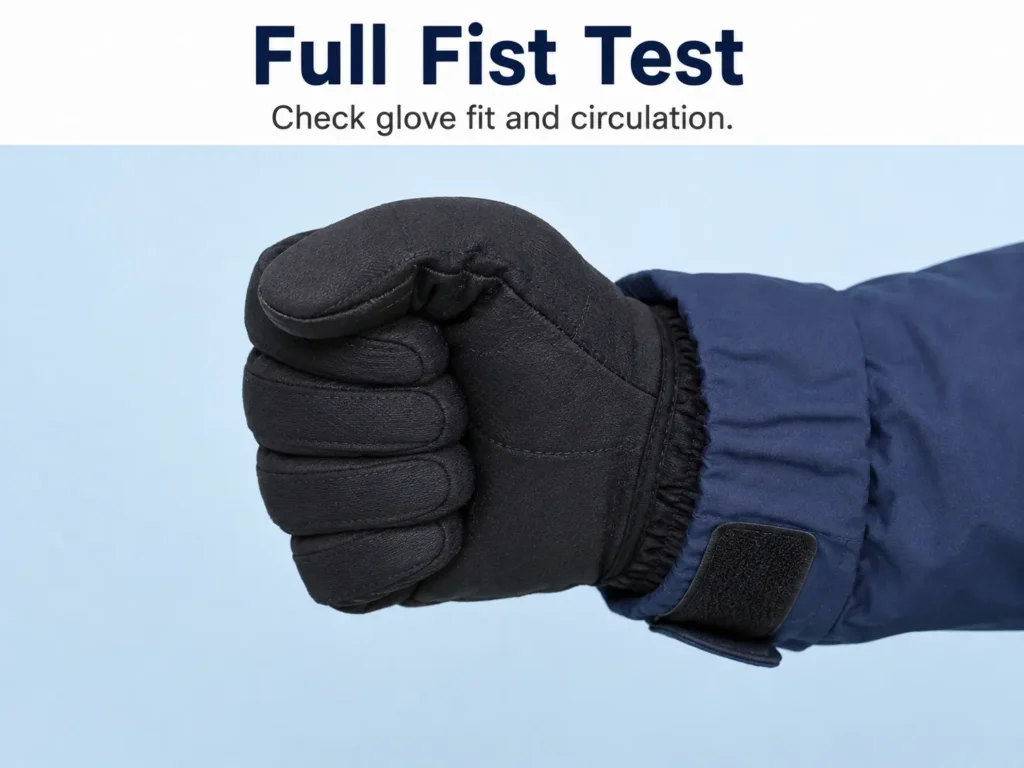
A glove that’s slightly too tight restricts blood flow, and blood flow is what actually carries heat into your fingers in the first place. Insulation only works with a supply of warm blood behind it — squeeze that supply down, even mildly, and no amount of fill will fully compensate.
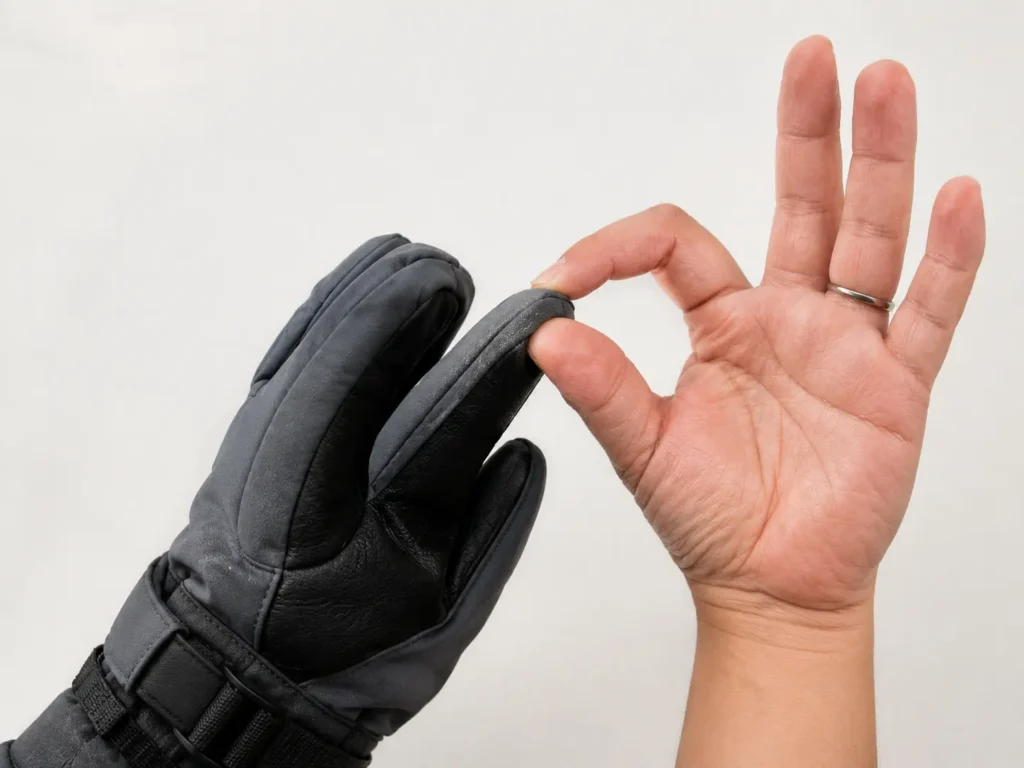
The simplest check is a full fist. If making a complete fist inside the glove feels tight or restricted at the knuckles, blood flow is likely being compromised during exactly the activity — gripping poles — that skiing requires most. A glove that fits well but has average insulation often ends up warmer in practice than a tightly-fitted glove with premium fill, because the fill can’t do its job without adequate circulation behind it.
Construction Quality: The Factor Spec Sheets Don’t Show
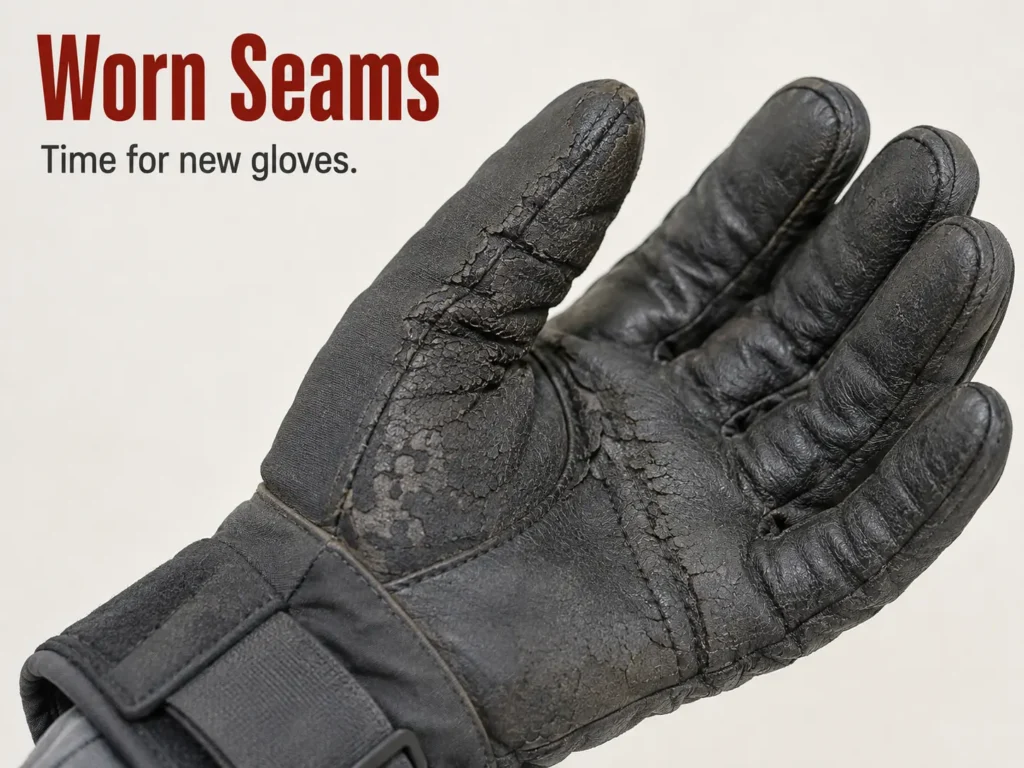
Two gloves can list identical insulation weights and still perform very differently, because construction quality determines how much of that insulation actually stays where it’s supposed to. Seam placement matters here — a seam that runs directly across a high-flex point, like the base of the thumb, wears and lets moisture in faster than a seam positioned away from constant movement. Cheaper gloves often route seams for manufacturing convenience rather than durability, and that shows up as a warmth problem well before the insulation itself is actually worn out.
Panel construction affects this too. A glove built from multiple smaller panels flexes more naturally with hand movement, which sounds like a comfort feature but actually protects warmth indirectly — less resistance to natural hand movement means less repeated stress concentrated on any one seam or insulation zone. A stiffer, fewer-panel glove forces more flex through fewer points, and those points compress and wear faster as a result.
If you’re evaluating gloves partly on how well they’re likely to hold warmth over multiple seasons rather than just their day-one insulation rating, our guide to the best ski gloves across budget tiers breaks down construction quality alongside price, which matters more for long-term warmth retention than the insulation number alone.
Altitude, Duration, and Activity Level Change the Math
The mechanisms above don’t apply evenly across every ski day. Altitude increases wind exposure and typically drops temperature further than trailhead conditions suggest, which means the same glove that performed fine on a groomed base-area run can underperform noticeably on an exposed ridge a few thousand feet higher. Wind speed tends to increase with elevation too, compounding the effect on any shell that’s already lost some of its wind-blocking ability.
Duration matters independently of temperature. A two-hour morning session rarely gives moisture enough time to meaningfully compromise insulation, while a full eight-hour day gives sweat, and possibly snow contact, hours to accumulate. This is part of why full-day skiers report warmth problems that half-day skiers on the same gear, same mountain, same conditions never notice — the gear isn’t different, the exposure time is.
Activity level plays a role too. Aggressive, high-output skiing generates more body heat and more hand sweat simultaneously, which can mean warmer hands early in the day and colder hands later, once that extra moisture has had time to work against the insulation instead of helping it.
Not drying gloves fully between days
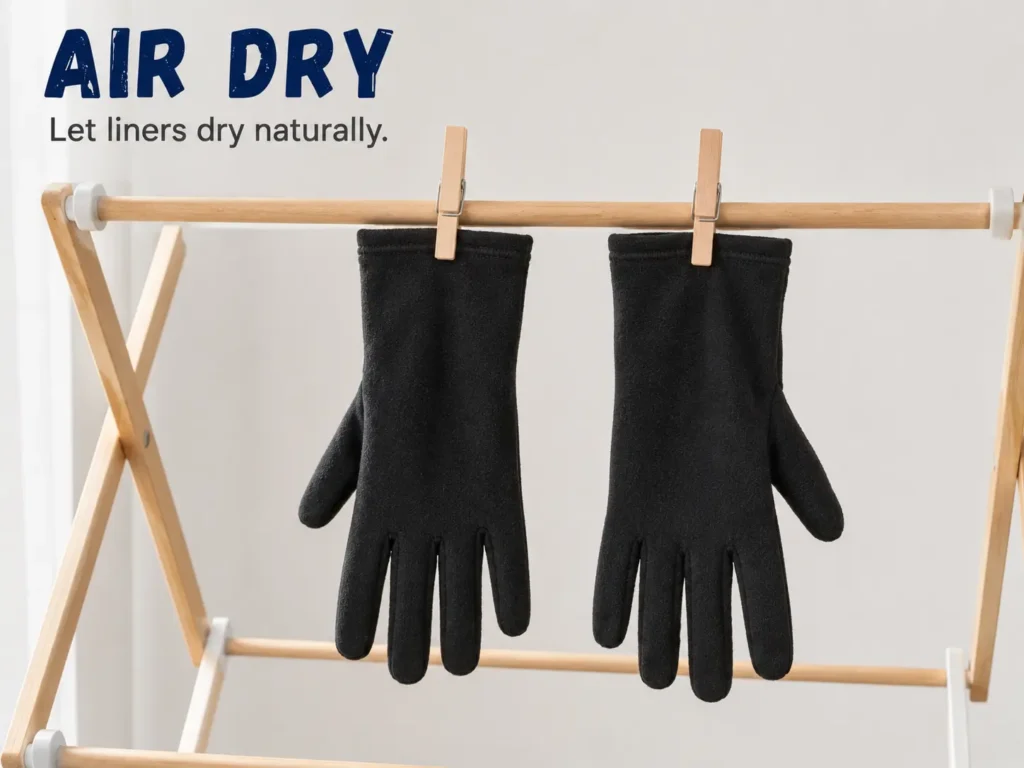
A liner that goes back on damp starts the next ski day already behind, and moisture that accumulates across multiple days without full drying compounds faster than a single day’s sweat would on its own.
Drying gloves directly on a heater
This feels like the obvious fix but often does real damage — high, direct heat can break down synthetic insulation fibers and degrade waterproof membranes, permanently reducing the glove’s performance in the process of trying to dry it out. Air drying at room temperature, or a low-heat boot dryer, protects the materials while still getting the job done.
Buying based on insulation weight alone
A thicker glove isn’t automatically warmer if the fit compresses that insulation or the liner traps sweat against skin. Warmth is a system — shell, insulation, liner, and fit all working together — not a single number on a spec sheet.
Ignoring a worn DWR coating
Once the durable water repellent finish on the outer shell wears down, water stops beading and starts soaking in, which brings moisture into contact with the insulation from the outside as well as from sweat on the inside. This is often mistaken for “old insulation” when it’s really a maintenance issue that a reproofing spray can fix in minutes.
Matching the Explanation to Your Actual Conditions
Not every case of cold hands has the same cause, and figuring out which one applies to you saves time compared to guessing.
Hands cold within the first hour:
This points toward fit or a genuinely worn-out shell rather than moisture, since sweat hasn’t had time to accumulate yet. Check the full-fist test first.
Hands fine in the morning, cold by afternoon:
This is the classic moisture pattern — sweat has had hours to build up and start collapsing the insulation’s air pockets. Liner choice and mid-day drying habits matter most here.
Hands cold specifically on lifts, fine while skiing:
This points to wind chill reaching a compromised shell rather than an insulation problem — the glove may test fine in a still-air check but fail against moving air.
Hands cold every session regardless of what you try:
At this point, insulation compression or shell degradation from age is the likely cause, and no amount of drying or fit adjustment will fully reverse that.
Who Notices This First — and Who Should Care Most
Skiers who grip poles hard, ride lifts often in windy conditions, or spend full days out rather than a few runs will notice insulation compression and moisture buildup sooner than someone skiing a couple of hours on a mild day. The mechanism affects everyone equally, but exposure time and grip intensity determine how quickly the effects become noticeable.
People with reduced circulation for any reason feel the fit-related warmth loss more acutely, since their fingers are already working with a smaller margin before cold becomes uncomfortable or risky. For that group, checking fit carefully matters more than it does for the average skier, and it’s worth treating tingling or numbness as a signal to loosen up rather than push through — the same restricted circulation that speeds up ordinary warmth loss is also a contributing factor in frostbite risk, so persistent numbness deserves more attention than a simple comfort issue would.
When the Problem Isn’t Fixable Anymore
Drying habits, reproofing, and liner upgrades solve a lot of warmth-loss cases, but not all of them. If insulation stays visibly flattened even after time away from use, if the outer shell soaks through no matter how recently it was reproofed, or if cold hands show up on mild, dry days with no moisture involved at all, the glove has likely reached the point where the materials themselves have degraded beyond what maintenance can fix.
At that point, the honest move is replacement rather than another round of troubleshooting. Gloves that are otherwise fine in fit and style but consistently cold are usually telling you the insulation has permanently compressed past the point of trapping meaningful warmth — a real and expected end-of-life pattern, not a sign that something was done wrong along the way. Trying one more reproofing spray or one more liner swap on a glove that’s genuinely at this stage tends to waste money without meaningfully changing the outcome.
Two Assumptions Worth Correcting
“More insulation always means warmer”
Past a certain point, added bulk works against you if it compresses easily under grip or restricts the first test described above. A moderately insulated glove with a good fit and a functioning windproof shell regularly outperforms a heavily insulated glove that’s slightly too tight — the fit and the shell are doing more of the actual work than the fill weight suggests.
“If my hands are cold, my gloves must be too thin”
Thickness is only one variable among several, and it’s often not the one that’s actually failing. A thick glove with a compromised DWR coating, a compressed palm, or a liner that’s been damp for two days straight can underperform a thinner glove that’s dry, well-fitted, and properly maintained. Diagnosing which factor is actually at fault — using the pattern-matching in the section above — saves money compared to assuming the fix is always a thicker glove.
FAQ
Can a glove that felt warm when new lose warmth without any visible damage?
Yes. Insulation compression and DWR breakdown both happen without leaving obvious signs on the outside. A glove can look completely intact while performing meaningfully worse than it did a season or two earlier.
Does a thicker liner always add warmth?
Not necessarily. A liner that’s too thick for the glove’s fit can compress the insulation around it and restrict circulation, which can leave hands colder than a well-matched thinner liner would.
How fast can moisture actually affect warmth?
Faster than most people expect. Since water conducts heat dramatically faster than still air, even a lightly damp liner measurably underperforms a dry one — this is why the afternoon cold-hands pattern is so common and so consistent.
Is it normal for fingertips to get cold before the rest of the hand?
Yes. Fingertips have less surface area relative to their exposure and take the most repeated grip pressure, both of which accelerate localized insulation compression compared to the back of the hand.
The Takeaway
Warmth loss almost always comes down to moisture working against insulation that was never designed to perform wet, compounded by compression, fit, and a wind-blocking layer that may not be doing its job anymore. None of that means the glove — or the skier — did anything wrong. It means the system needs the same basic maintenance any technical gear needs: dry it properly, check the fit honestly, and know the difference between a fixable dampness problem and a glove that’s genuinely reached the end of its useful life.
Getting this right starts with ruling out the simplest cause first. If tightness turns out to be part of what’s going on, our full breakdown of how ski gloves should fit walks through the checks that matter — because no amount of drying or reproofing fixes a warmth problem that’s actually a circulation problem in disguise.