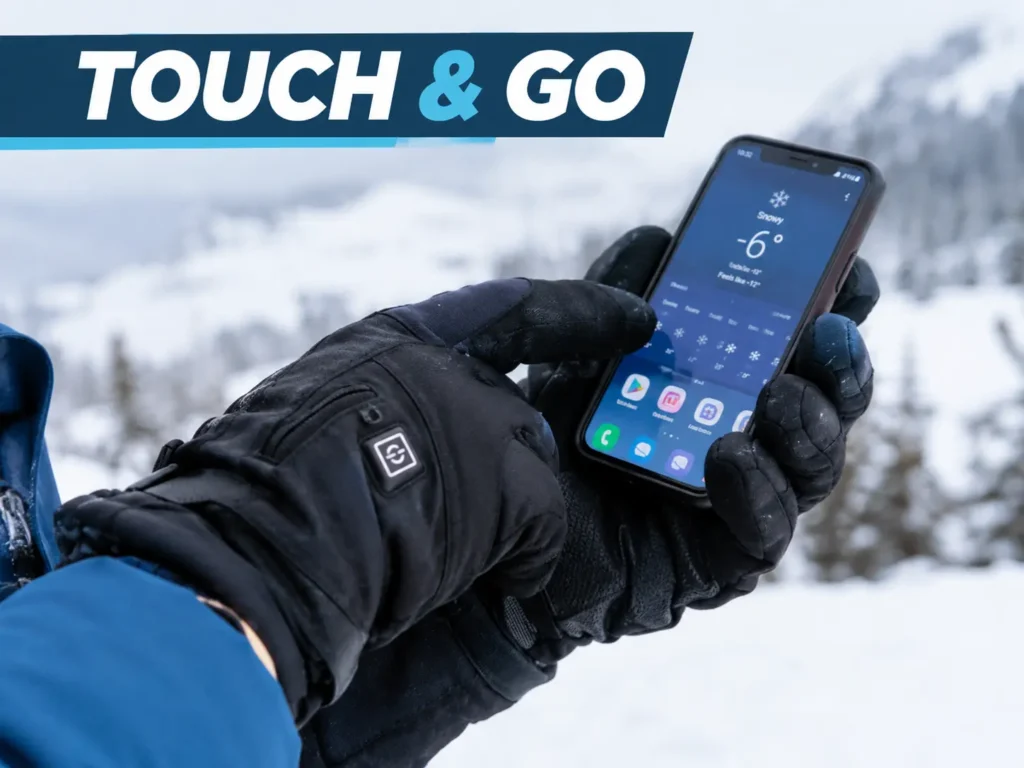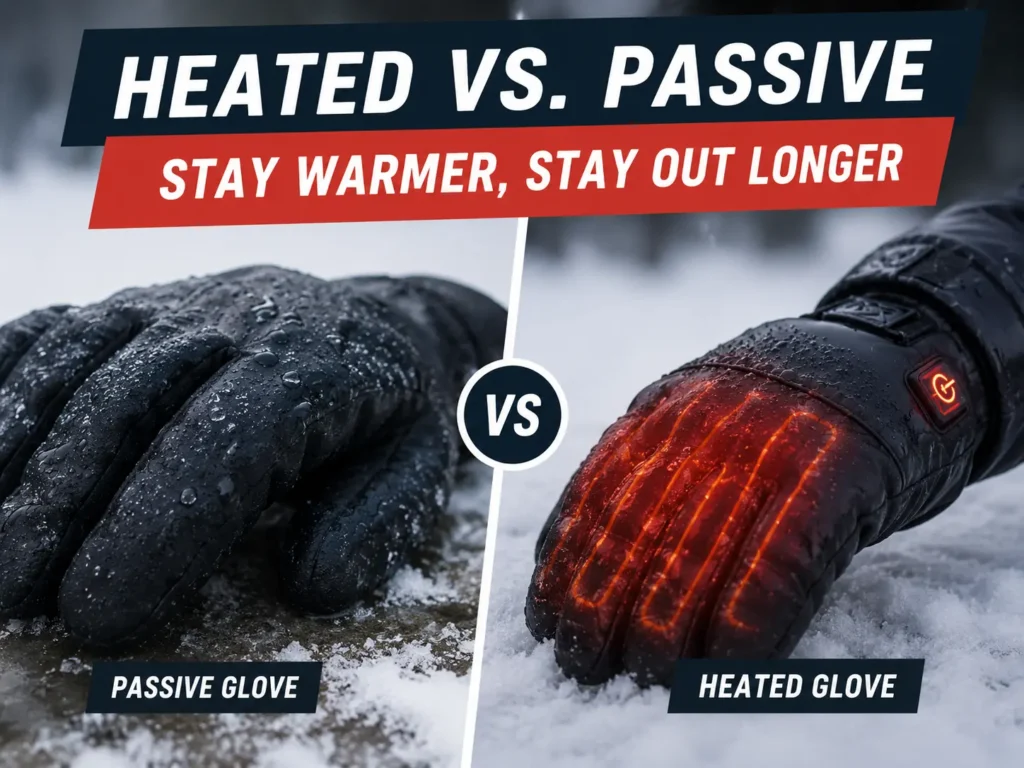
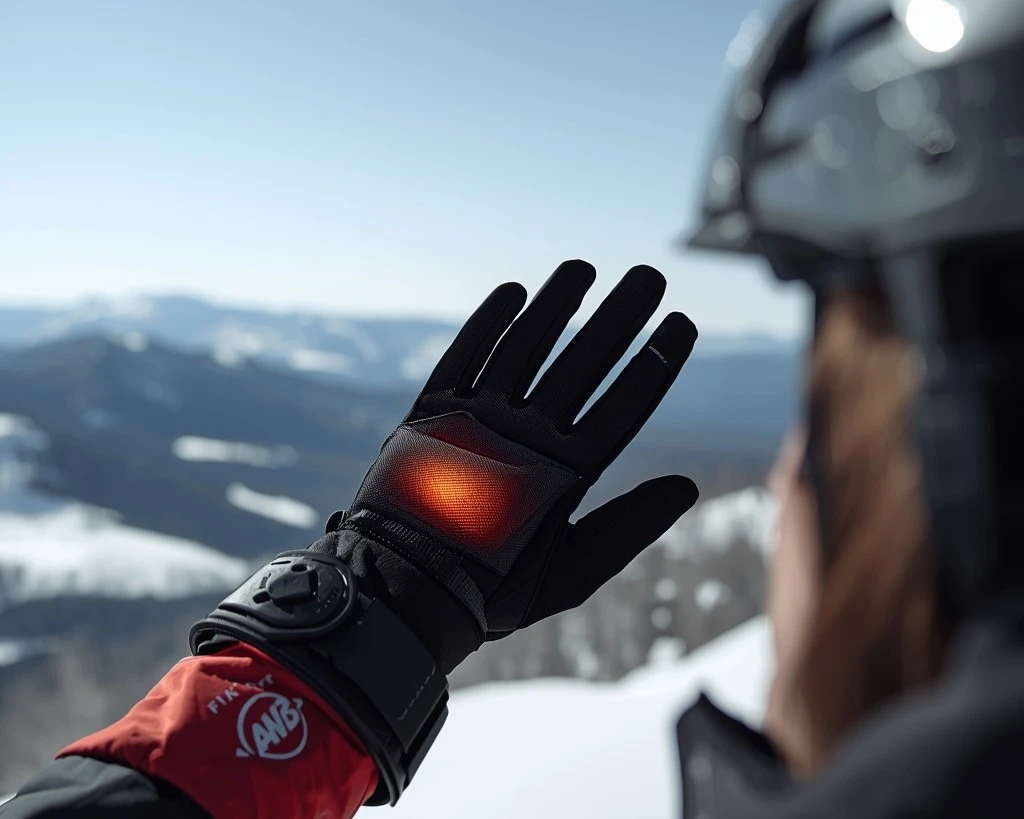
Quick answer: Heated ski gloves work by running electricity from a small rechargeable battery through thin heating wires sewn into the fingers and back of the hand, which warm up the way a toaster coil does, just at a much lower, skin-safe temperature. That’s the whole system. The part that actually matters for deciding if they’re worth buying is how well that heat reaches your fingertips, how long the battery holds up in real cold, and what happens once the battery runs out mid-afternoon. If you’re trying to figure out whether a heated pair fits how you actually ski, ski glove finder is a faster way to check than reading spec sheets.
- The Basic System, Explained Simply
- Why Heat Doesn't Reach Your Fingertips Evenly
- The Battery Side of Things
- What the Heat Settings Actually Change
- Real Scenarios Where Heated Gloves Actually Help
- Common Mistakes People Make With Heated Gloves
- Maintenance That Actually Extends a Heated Glove's Life
- Cold Exposure and Why Heated Gloves Matter for More Than Comfort
- Why Heated Gloves Cost So Much More Than Regular Ones
- How Heated Gloves Compare to Just Wearing a Warmer Regular Glove
- What Happens When a Heated Glove Fails Mid-Season
- Are Heated Gloves Actually Worth It for You
- FAQ
The Basic System, Explained Simply
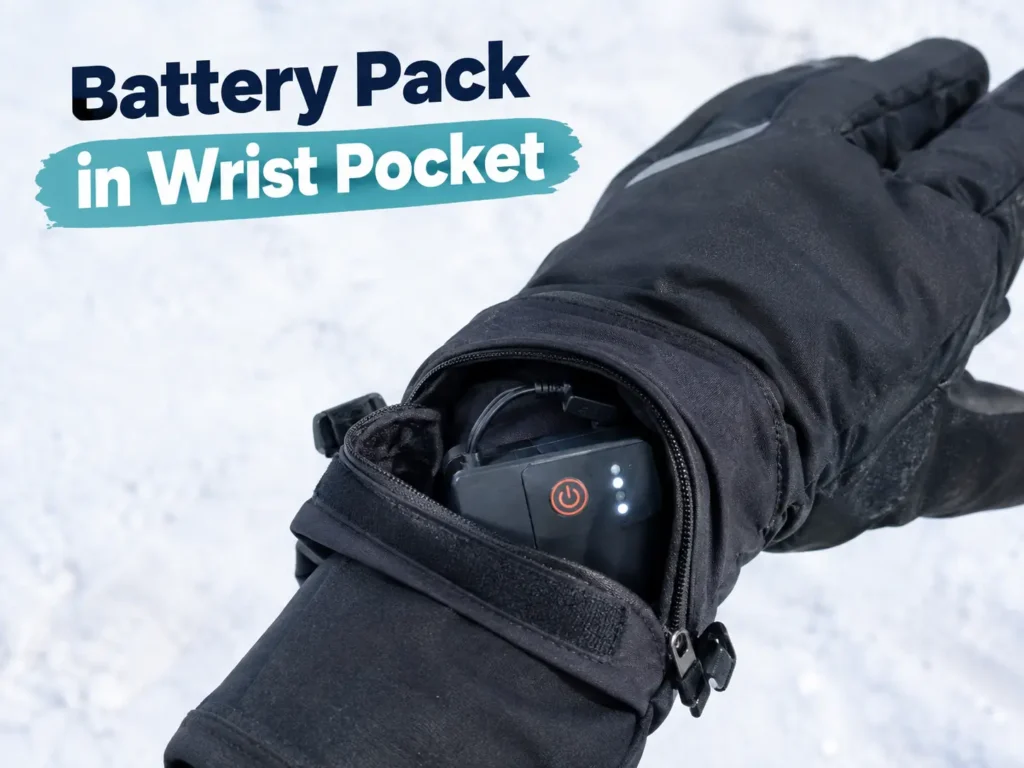
Every heated ski glove has three parts working together: a battery, a heating element, and a controller. The battery is usually a small lithium-ion pack that sits in a pocket on the back of the wrist or hand. The heating element is a thin wire or carbon fiber strip sewn into the glove lining, mostly across the back of the hand and sometimes down into the fingers. The controller is the button or dial that turns the heat on and lets you pick a setting.
When you press the button, electricity flows from the battery through the heating wire. That wire has just enough electrical resistance that pushing current through it generates heat, the same basic idea as an electric stove burner or a toaster, scaled way down to something safe to wear against skin. The heat spreads out from the wire into the glove’s lining and into your hand.
That’s really the entire mechanism. There’s no chemical reaction, no special “warming gel,” nothing exotic. It’s a battery, a wire, and a switch, built into a glove.
Why Heat Doesn’t Reach Your Fingertips Evenly
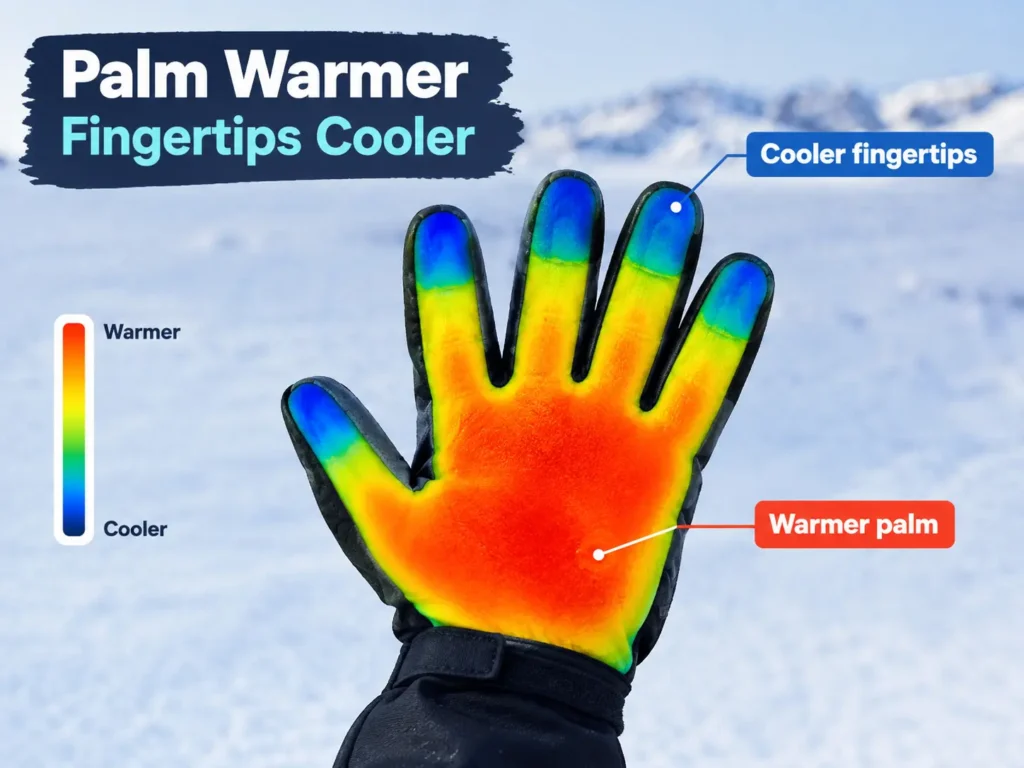
This is the part most people don’t expect, and it explains a lot of the mixed reviews you’ll see on heated gloves. Most heating wire runs across the back of the hand because that’s the easiest, flattest place to sew it in without restricting movement. Fewer gloves run wire all the way down each finger, because a wire that has to bend every time you make a fist is more likely to break over time.
That means the back of your hand often warms up fast and noticeably, while your fingertips warm up slower and less completely, just from heat spreading through the fabric and your own hand rather than direct contact with a wire. If your fingertips are the part that actually gets cold and numb first, a glove with heating elements that only cover the back of the hand solves less of your actual problem than the marketing suggests.
Better-built heated gloves use carbon fiber heating elements rather than plain metal wire specifically because carbon fiber is thinner and bends more easily without breaking, which matters at a finger joint that flexes constantly. According to The Warming Store, a heated gear retailer, carbon fiber heating panels distribute heat more evenly and hold up to repeated flexing better than older wire-based designs, which is part of why higher-end heated gloves increasingly use it even though it costs more to manufacture.
Better-built heated gloves run heating elements into the fingers directly, not just the back of the hand, and that’s worth checking specifically before buying rather than assuming “heated” means uniformly warm everywhere.
The Battery Side of Things
The battery is genuinely the limiting factor in this whole system, more than the heating wire itself. Rechargeable heated gloves almost always use lithium-ion batteries because they’re compact and hold a decent charge for their size. According to RELiON, a battery technology company, lithium batteries generally retain most of their rated capacity in cold air on their own, but that number describes a battery just sitting there in the cold. It doesn’t describe a battery actively powering a heating circuit while it’s cold, which drains noticeably faster than the “rated” runtime printed on the box.
This is why a battery advertised as lasting eight hours on paper often feels more like five or six on an actual cold, windy chairlift day. The advertised number usually comes from a lab test at a comfortable room temperature with the heat running continuously on a low or medium setting, not a real ski day where you’re cranking it too high on a cold morning and the battery is fighting the cold at the same time it’s trying to power the glove.
Charging habits matter more with heated gloves than with a normal battery-powered gadget too. Charging a lithium battery in a genuinely cold room, like an unheated garage or a cold car, is harder on the battery than charging it at room temperature, and doing it repeatedly over a season can shorten how much capacity the battery holds long-term. Bringing the battery pack inside to a normal room temperature before charging it overnight is a small habit that actually extends how many seasons a heated glove’s battery lasts.
What the Heat Settings Actually Change
Most heated gloves offer two or three heat levels, and understanding what’s actually happening when you switch between them helps you use the battery smartly instead of just guessing. A higher setting doesn’t make the wire itself hotter in some dramatic way — it increases how much current flows through the wire, which increases both the heat output and how fast the battery drains, roughly in proportion.
This is why the practical advice from experienced heated-glove users is almost always the same: start on a lower setting and only bump it up when you’re actually cold, usually at the start of the day or while sitting still on a lift. Running high heat constantly through an entire ski day burns through battery capacity fast for warmth you often don’t need once you’re moving and generating your own body heat from actual skiing effort.
Some higher-end gloves include a temperature sensor that automatically adjusts output based on how cold it detects things are, which is a genuinely useful feature if you tend to forget to manually adjust the setting throughout the day. It’s worth checking for specifically rather than assuming every “3-setting” glove works the same way underneath.
Real Scenarios Where Heated Gloves Actually Help
An early, cold chairlift morning is where heated gloves earn their price most clearly. Your hands haven’t warmed up from actual movement yet, ambient temperature is at its coldest point of the day, and wind chill on the lift adds another layer of cold exposure. A battery running strong at 7 a.m. delivers real, noticeable relief in exactly this scenario.
A long, cold, high-elevation day is a different test entirely. This is where battery drain from the previous section actually catches up with people — a glove that felt great in the morning can be running on a dying battery by early afternoon, right when a second round of cold-weather exposure hits as temperatures often drop again with elevation or as the sun gets lower.
Backcountry touring is a scenario where heated gloves often make less sense than they seem to on paper. Sustained uphill effort generates real body heat on its own, and carrying the extra weight of a battery pack for a feature you may not need until the descent is a real trade-off worth thinking through before assuming heated automatically means better.
Wet, slushy spring conditions test the system in a way cold, dry powder doesn’t. Moisture and electronics don’t mix well, and while quality heated gloves are built with sealed battery compartments specifically for this reason, a glove with a compromised seal or a worn zipper on the battery pocket introduces real risk in sustained wet conditions that a dry, cold January day doesn’t.

Common Mistakes People Make With Heated Gloves
Expecting the advertised battery life to match real ski-day performance is the single most common source of disappointment, for the reasons covered above. Planning your day assuming a shorter real-world runtime than the box claims avoids the surprise of a dead battery at 2 p.m.
Storing the battery pack fully depleted at the end of the season is a mistake that shows up the following winter as noticeably reduced capacity. Lithium batteries hold up better in long-term storage when they’re left at a partial charge, roughly 40 to 50 percent, rather than completely empty or completely full.
Buying based purely on the number of heat settings without checking where the heating elements actually run inside the glove leads to the fingertip-warmth disappointment covered earlier. A 3-setting glove that only heats the back of the hand solves a different problem than a 2-setting glove with wire running into each finger.
Forgetting to check the battery before a trip, rather than the night before, is a small habit that prevents a surprisingly common problem — a battery that seemed fine when last used but had quietly drained further than expected sitting unused in a gear bag for weeks.
Maintenance That Actually Extends a Heated Glove’s Life
Keeping the glove itself dry matters more here than with a standard glove, specifically because of the electronics inside. A quick check that the battery compartment’s zipper or seal is fully closed before every session is a small habit that prevents the slow moisture creep that eventually corrodes wiring connections.
Checking that the heating element still warms evenly at the start of each season, before you’re relying on it on the mountain, catches a developing cold spot from a weakening internal connection before it becomes a fully dead zone mid-season. A quick test at home — gloves on, heat on high, a minute or two to feel for any section that isn’t warming — takes almost no time and avoids finding out on the lift instead.
If you’re weighing whether your current gloves are worth this kind of ongoing attention or if it’s time to move on, it’s worth checking general signs your gloves have reached the end of their useful life before assuming a heating glitch is worth troubleshooting versus just replacing the pair outright.
Cold Exposure and Why Heated Gloves Matter for More Than Comfort
Cold hands aren’t just uncomfortable — sustained exposure genuinely affects how well your hands function, and it’s worth understanding why heated gloves solve a real problem rather than a purely cosmetic one. According to the CDC, prolonged exposure to cold temperatures can affect coordination and increase the risk of frostbite, particularly on extremities like fingers that lose heat faster than the body’s core.
This is the practical safety argument underneath the comfort argument for heated gloves, especially for skiers with circulation issues or anyone spending long days in genuinely extreme cold. A heated glove that’s working correctly isn’t just about feeling nicer — it’s actively working against a real physiological risk that standard insulation alone doesn’t fully address once temperatures get low enough.
That said, a heated glove with a dead battery provides zero benefit over this risk, which loops back to why realistic battery planning matters as much as the heating technology itself.
Why Heated Gloves Cost So Much More Than Regular Ones
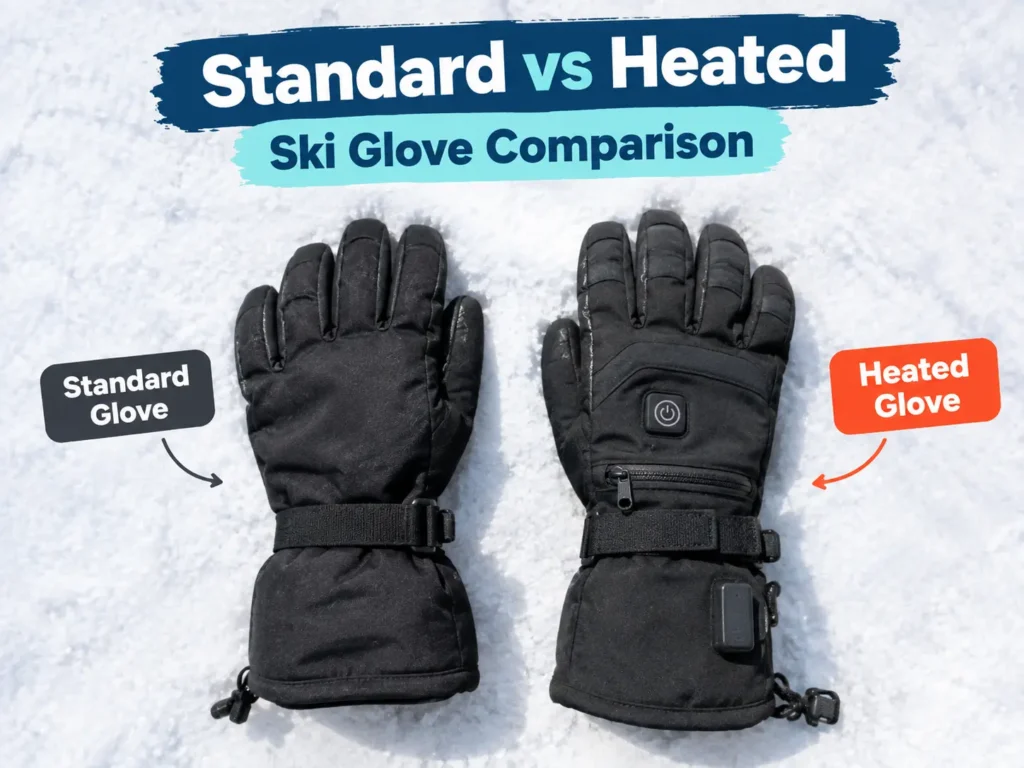
A jump from a $50 insulated glove to a $150 or $200 heated one isn’t really a jump in shell quality or warmth rating on its own — most of that added cost is the battery, the heating wire, the controller, and the engineering required to seal all of that against moisture without making the glove stiff or bulky.
This matters when you’re comparing two heated gloves that look similar on paper. A cheaper heated glove and a premium one might use nearly identical outer shell material and insulation, with the real price gap coming from battery capacity, how well the electronics are sealed, and how much the manufacturer spent developing a heating element that doesn’t fail after a season of flexing at the knuckles.
It also explains why a heated glove’s realistic lifespan can be shorter than a well-built regular glove, even when the shell and stitching would have easily lasted longer on their own. A wiring fault or a battery that no longer holds a useful charge often isn’t something you can economically repair, which means the electronics inside can become the limiting factor on how long the whole glove stays useful.
How Heated Gloves Compare to Just Wearing a Warmer Regular Glove
It’s a fair question. The honest answer: it’s about which specific problem you’re trying to solve. A thicker, more heavily insulated regular glove traps more of your own body heat, which works fine as long as your body is actually generating enough heat to trap in the first place.
Heated gloves solve a different problem: they add heat from an external source rather than just trapping what you already produce. That distinction matters most for people whose hands run cold regardless of insulation thickness — poor circulation, Raynaud’s-type sensitivity, or just naturally cold-running hands — where more insulation alone doesn’t fix the underlying issue the way active heat can.
For a skier who runs warm and just wants standard cold protection, a well-insulated regular glove usually does the job without the added weight, cost, and charging routine that comes with a heated system. The honest way to think about it: insulation manages heat you already have, and heated gloves add heat you don’t have enough of on your own.
What Happens When a Heated Glove Fails Mid-Season
Heated gloves fail in a few predictable ways, and knowing what each one looks like helps you tell a minor fixable issue from a glove that’s done. A cold spot in one finger that the rest of the glove doesn’t have usually means a broken connection in the wiring at that specific point, often right at a flex point like the knuckle where the wire bends most often.
A glove that won’t turn on at all, when the battery shows a full charge, points to either a failed connector between the battery and the glove itself, or a failure in the controller switch. This is sometimes a loose-connection issue you can check yourself by making sure the battery is fully seated in its port, rather than a dead heating element.
A battery that used to last most of a day and now dies within an hour or two has usually just reached the end of its useful charge cycles, which is normal lithium battery aging rather than a defect. Most rechargeable batteries lose a meaningful amount of their original capacity after a few hundred charge cycles, and a battery used for one heated glove pair every ski day across a few seasons can realistically hit that point.
Are Heated Gloves Actually Worth It for You
If you’re weighing whether the heating technology described throughout this post is worth the added cost, weight, and charging routine, that’s a genuinely separate question from how the technology works — and it deserves its own honest breakdown of when heated gloves make sense and when they don’t rather than trying to answer it as an afterthought here.
FAQ
How hot do heated ski gloves actually get?
Most heated gloves top out somewhere around 110 to 130 degrees Fahrenheit at the heating element on the highest setting, which is warm enough to feel a real difference against skin but well below a level that would cause burns with normal use. The heat you feel is milder than that number suggests, since it’s spreading through glove lining and fabric before reaching your skin.
Can I feel the heating wires inside the glove?
With a well-built glove, no — the wire is thin and flexible enough to be unnoticeable during normal use, similar to how you don’t feel individual threads in regular fabric. A glove where you can distinctly feel a wire or a stiff strip usually indicates a cheaper, less flexible heating element.
Do heated gloves work if the battery gets cold before I put them on?
Yes, but expect somewhat reduced performance right at the start until the battery itself warms up slightly from being worn and from its own operation. Keeping the battery pack in an inside jacket pocket before a session, rather than in a cold car, helps it perform closer to its rated output from the first few minutes.
Is it normal for one glove to feel warmer than the other?
A slight difference is common and usually just reflects normal manufacturing variation in the heating wire or a slightly different fit on each hand. A significant, consistent difference — one glove barely warming at all — usually points to a developing wiring fault rather than something you should just accept as normal.