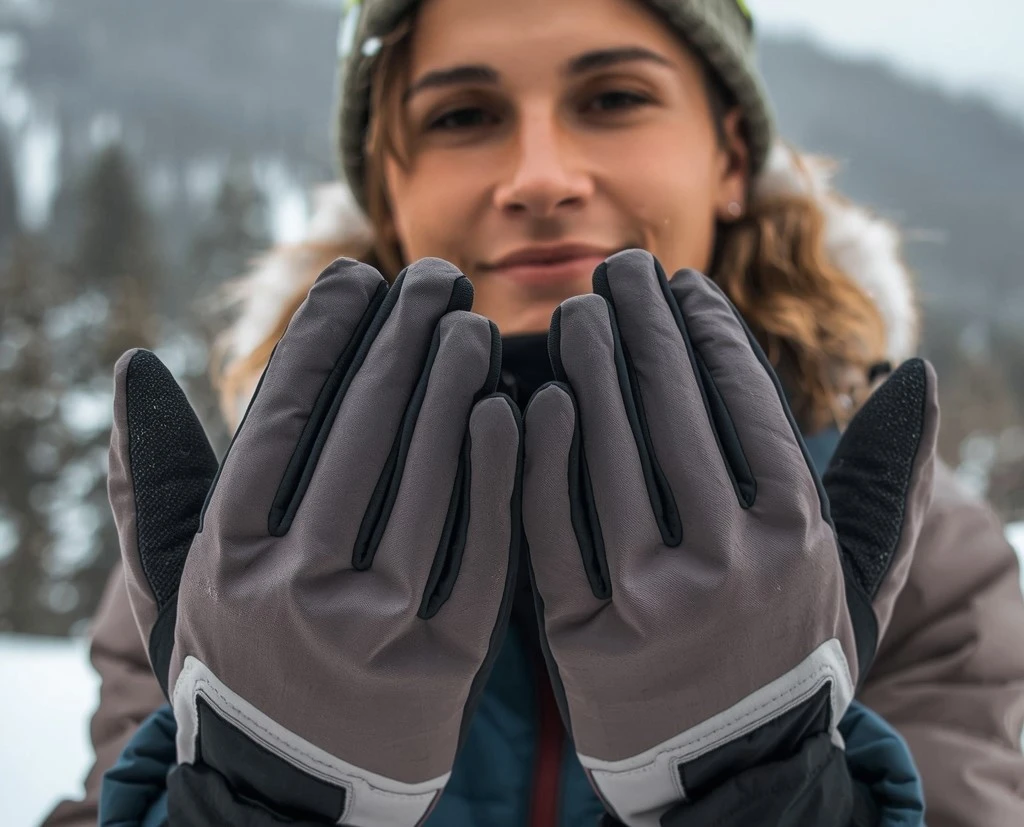
I still remember the coldest day of my life. It was a Tuesday in January at Lake Louise, Alberta. The temperature was -20°F (-29°C), and the wind was howling. I was wearing expensive, five-finger technical gloves. By 10:00 AM, my fingers hurt so bad I couldn’t unzip my jacket to get my car keys. I had to ask a stranger to fish them out of my pocket for me.
That day changed how I view handwear.
In my 15 years on the slopes—from the wet concrete snow of the Pacific Northwest to the dry, deep freeze of the Rockies—I have learned that the debate of mittens vs ski gloves isn’t about style. It is a battle between physics (warmth) and anatomy (dexterity).
I have wasted hundreds of dollars on gear that promised “magical” warmth and failed. I have also used duct-taped mittens that kept me toasty for three seasons.
If you are standing in a ski shop right now, holding a glove in one hand and a mitten in the other, put them down for a second. You need to understand how your body loses heat before you swipe your card.
Here is the unfiltered truth about what works, what fails, and why.
The Core Physics: Why Your Hands Get Cold
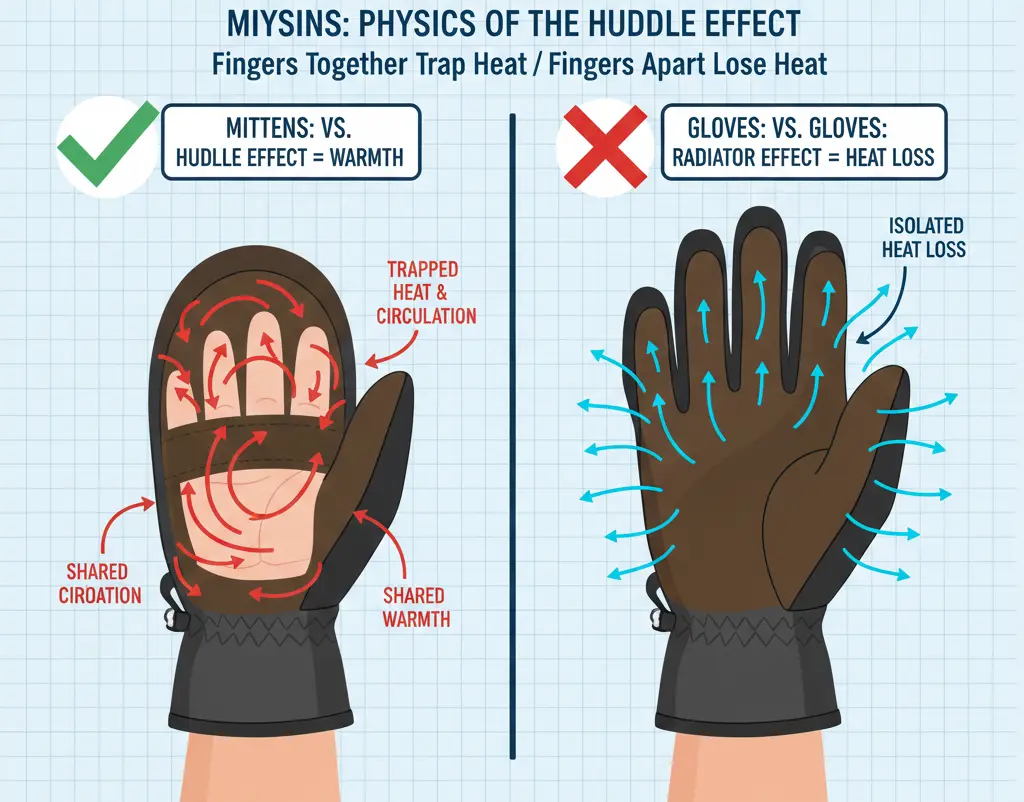
To pick the right gear, you have to understand the enemy. Your hands get cold for two reasons: Surface Area and Circulation.
1. The Surface Area Problem (Why Gloves Lose)
Think of a glove like a radiator. A radiator has many fins to increase surface area and dump heat into the room. A glove does the same thing. It separates your fingers, wrapping each one in cold fabric. This maximizes the surface area exposed to the freezing air. Your index finger is alone, fighting the cold on all sides.
2. The Circulation Problem (Why Mittens Win)
Your body is smart. When your core temperature drops, your body pulls blood away from your extremities to protect your heart and lungs. Your fingers are the first to lose blood flow.
- In a Glove: Once the blood leaves your pinky finger, that finger is isolated. It has no source of heat. It effectively becomes an ice cube.
- In a Mitten: Your fingers are grouped together in a shared air pocket. They act like pack animals huddling for warmth. If your pinky gets cold, the heat radiating from your middle finger and palm helps keep it warm.
The Bottom Line: If warmth is your only metric, mittens win every single time. Physics dictates it.
The “Zipper Test”: The Real Cost of Mittens
If mittens are warmer, why doesn’t everyone wear them? Because skiing isn’t just about standing still. It’s about adjusting buckles, zipping vents, checking trail maps, and unwrapping granola bars.
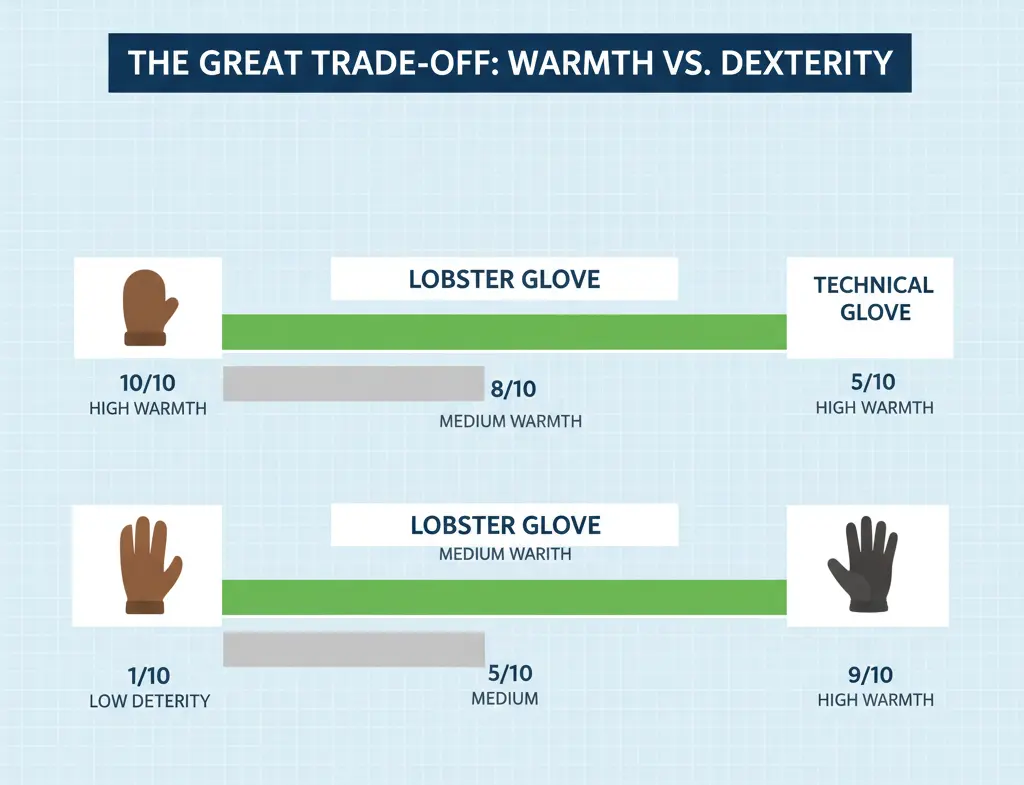
This is where the Dexterity Tax comes in.
The “Mitten Fumble”
I once wore heavy down mittens on a day where I was skiing with my young niece. Every five minutes, she needed help. Her goggles were foggy. Her boot hurt. She needed a tissue.
Every single time, I had to pull my mitten off with my teeth, exposing my bare hand to the freezing wind to help her. By the third time, my hands were colder than if I had just worn gloves.
My Rule of Thumb:
- Wear Gloves If: You are the “group leader,” a parent helping kids, or someone who constantly fiddles with gear (adjusting bindings, zippers, phones). The ability to use your fingers without exposing your skin is worth the slight loss in raw warmth.
- Wear Mittens If: You are focused on the ride. If you put your gear on in the parking lot and don’t touch it until lunch, you don’t need dexterity. You need heat.
How I Pick My Gear: The “90/10” Method
Readers often ask me, “What do you actually wear?”
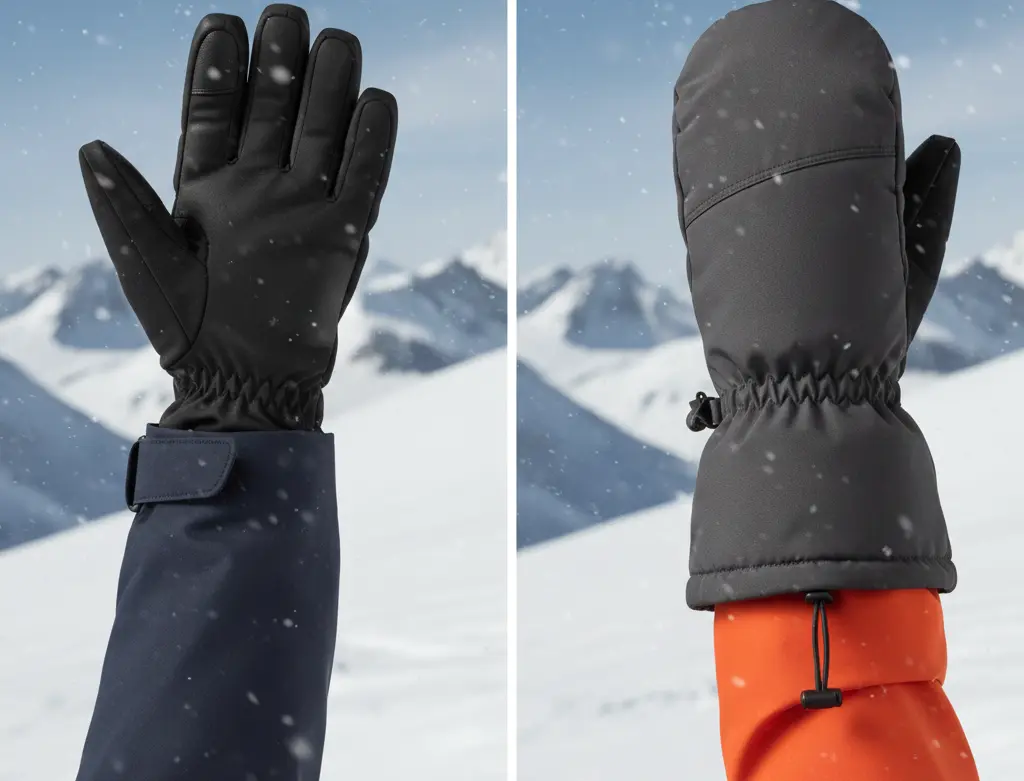
I don’t wear just one thing. I use a strategy I call the 90/10 Rule.
For 90% of my skiing:
I wear a high-quality leather 5-finger glove.
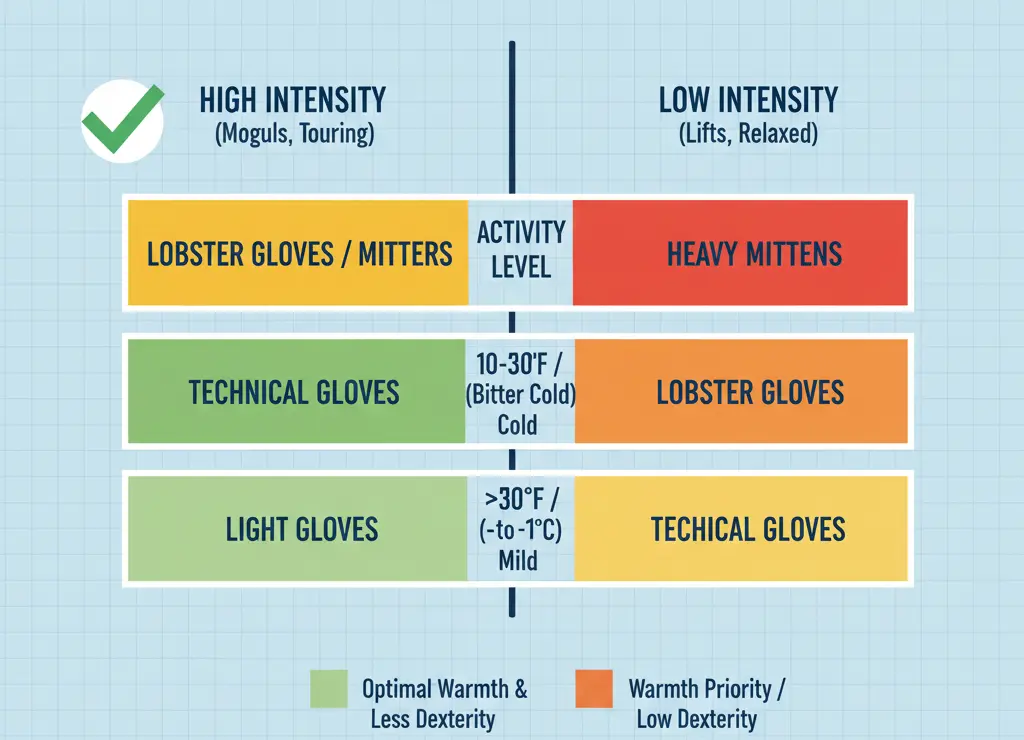
- Why? Most ski days are between 20°F and 32°F (-6°C to 0°C). In this range, a good glove is warm enough. I value the grip. I like feeling the contours of my ski pole handle. I like being able to grab a zipper without looking like a bear trying to open a jar of honey.
For the coldest 10% of days:
When the temperature drops near single digits (0°F / -18°C) or the wind chill is severe, I switch to heavy leather mittens.
- Why? On these days, dexterity doesn’t matter. Survival matters. I am willing to be clumsy if it means I don’t get frostnips.
The “Hybrid” Option (Lobster Claws)
If you refuse to buy two pairs, look at the 3-finger “Lobster” glove. It groups your pinky and ring finger (the coldest fingers) together for warmth, but leaves your index finger free to grab zippers.
- My Experience: I used a pair of Hestra Lobster claws for a season in Japan. They are ugly, but they are the best functional compromise on the market.
Real-World Comparisons: A Head-to-Head Test
A few years ago, I ran a personal experiment during a trip to Vermont. It was a brisk 15°F (-9°C) day. I wore a $150 technical glove on my left hand and a basic $50 mitten on my right hand.
Here is what happened hour by hour:
| Time | Left Hand (Expensive Glove) | Right Hand (Cheap Mitten) |
| 9:00 AM | Comfortable. Good grip on poles. | Warm, but felt bulky holding poles. |
| 11:00 AM | Fingertips starting to tingle on the chairlift. | Toasty warm. Actually sweating slightly. |
| 1:00 PM | Numb pinky. Had to swing arms to force blood flow. | Still warm. Liner was slightly damp from sweat. |
| 3:00 PM | Uncomfortably cold. Grip strength reduced. | Comfortable. No issues. |
The Takeaway: The expensive technology in the glove could not beat the simple design advantage of the mitten. The cheap mitten was warmer than the pro-level glove.
5 Ways Skiers Ruin Their Hands (and Their Gear)
In 15 years on the mountain, I have seen people make the same expensive mistakes over and over again. Choosing between mittens vs ski gloves is only half the battle—how you use them is the other half.
Here is how to avoid the most common failures I see in the lodge:
1. The “Death Grip” Fit
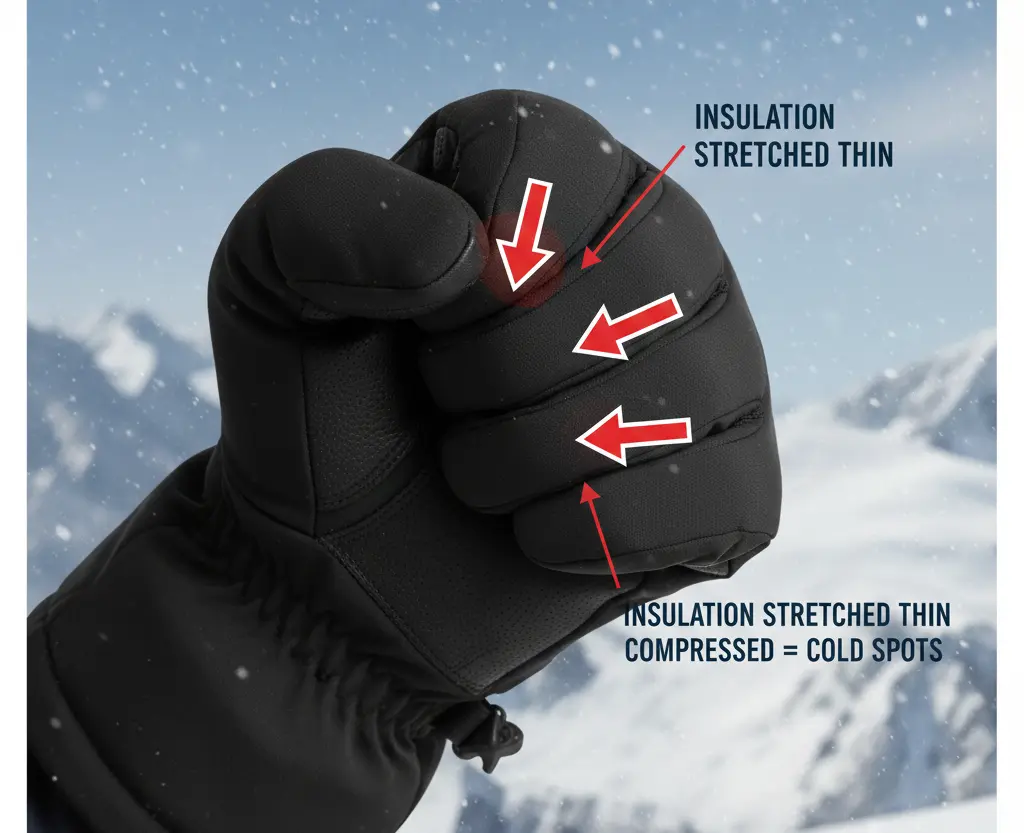
Most people buy gloves that are too tight. They think a snug fit means better control.
- The Reality: Warmth comes from trapped air. If your glove is tight against your skin, you are squeezing out the warm air pocket and cutting off blood circulation to your fingertips.
- The Fix: You should be able to pinch about a quarter-inch (0.5 cm) of fabric at the end of your fingertips. If your knuckles turn white when you make a fist, size up.
2. The “Radiator” Method
I once ruined a $150 pair of leather gloves by putting them directly on a baseboard heater to dry overnight.
- The Reality: High heat cooks the leather, making it stiff and brittle. It also melts the waterproof membranes (like Gore-Tex) inside, causing them to delaminate.
- The Fix: Air dry your gear. Pull the liners out (if removable) and stand them up near a fan. Never put them in the dryer or on a radiator.
3. The “Sweat Trap”
You buy the warmest, thickest down mittens for a sunny, 35°F (2°C) spring day.
- The Reality: Your hands sweat inside the insulation. The sweat can’t escape fast enough. Once the sun goes behind a cloud, that sweat turns cold, and your hands freeze from the inside out.
- The Fix: Don’t wear expedition-level mittens in spring. Carry a thin pair of “pipe gloves” or liners for warm afternoons.
4. The “Wet Hands” Myth
“My gloves are leaking!” I hear this constantly.
- The Reality: Unless you have a visible hole, modern gloves rarely leak from the outside. 90% of the time, your hands are wet because you are sweating, and the moisture is trapped.
- The Fix: If you have sweaty hands, avoid cheap “PU leather” or rubberized palms. You need a breathable membrane (like Gore-Tex or eVent) that lets steam escape while keeping snow out.
5. The “Nose Wipe” Disaster
This sounds gross, but it happens. You use your glove thumb to wipe your runny nose in sub-zero temps.
- The Reality: The moisture from your nose freezes on the glove material, creating an ice block right next to your thumb.
- The Fix: Look for gloves with a “soft flocking” or suede patch on the thumb. It is designed specifically for this (we all do it), and it resists icing up better than standard nylon.
The “Material” Trap: Leather vs. Synthetic
Once you decide on the shape (glove or mitten), you have to pick the skin. This is where people waste money.
Synthetic (Nylon/Polyester)
These are the colorful gloves you see everywhere.
- Pros: They breathe well. If you sweat, they dry out fast. They are usually cheaper.
- Cons: They are weak. Ski edges are razor sharp. I have sliced open brand-new $80 synthetic gloves just by carrying my skis from the car to the lodge. Once the fabric is cut, the waterproofing is gone forever.
Goat Leather (The Gold Standard)
- Pros: Leather is naturally windproof. It is incredibly tough. I have a pair of leather gloves that are 8 years old. They look beat up, but they are still warm.
- Cons: They require maintenance (balm/wax). If they get soaking wet, they take a long time to dry.
My Advice: Always buy leather palms. Even if the back of the hand is synthetic, the palm—where you hold your sharp skis—must be leather.
Scenario Guide: Who Should Choose What?
Do not buy what your friend bought. Buy what fits your specific situation.
Scenario A: The “Cold Hands” Sufferer
You are the person who is cold when everyone else is fine. You might have poor circulation or Raynaud’s.
- Recommendation: Down-filled Mittens.
- Why: You need maximum heat retention. Down insulation (feathers) is warmer than synthetic insulation.
- Warning: Do not get these wet. Down loses all warmth when wet.
Scenario B: The Parent / Instructor
You are constantly helping others. Wiping noses, adjusting bindings, holding two pairs of skis.
- Recommendation: Gore-Tex Gloves with Wrist Leashes.
- Why: You need fingers to work. The Gore-Tex keeps you dry when you are digging in the snow to find a lost ski. The wrist leashes (“idiot straps”) are vital—so when you take off a glove to tie a kid’s shoe, you don’t drop it off the chairlift.
Scenario C: The Backcountry Tourer
You hike up the mountain to ski down.
- Recommendation: The Layering System.
- Why: You will sweat buckets on the way up. Wear a thin “liner glove” for the hike. Keep a heavy pair of “Shell Mittens” in your pack. Put the mittens on over the liners for the ski down.
Scenario D: The Spring Skier
It’s April, sunny, and 45°F (7°C).
- Recommendation: “Pipe Gloves” or Work Gloves.
- Why: Standard ski gloves are too hot. Your hands will sweat, the sweat will stay inside, and your hands will turn into a swamp. You need thin, uninsulated gloves just to protect your skin from the snow.
Decision Checklist: The 30-Second Selector
Answer these questions honestly to find your match.
- Is warmth your #1 priority, above all else?
- Yes $\rightarrow$ Mittens
- No $\rightarrow$ Next Question
- Do you ski with young children who need help?
- Yes $\rightarrow$ Gloves (You need the dexterity)
- No $\rightarrow$ Next Question
- Do you hold your phone on the chairlift?
- Yes $\rightarrow$ Gloves (Mittens are a drop risk)
- No $\rightarrow$ Next Question
- Do you ski in wet climates (Pacific NW) or dry cold (Rockies)?
- Wet $\rightarrow$ Synthetic Gloves (Dry faster)
- Dry $\rightarrow$ Leather Mittens (Warmer)
Problem Diagnosis: Why Is My Gear Failing?
Sometimes, you buy the right gear, but it still feels wrong. Here is how to troubleshoot common issues I see on the mountain.
Problem: “I bought the warmest mittens, but my hands are freezing and clammy.”
- The Cause: You are sweating. The mittens are too warm or don’t breathe. The sweat is trapped next to your skin, turning cold.
- The Fix: Wear a thin silk liner inside the mitten. It will wick the sweat away from your skin.
Problem: “My fingertips are numb in my gloves.”
- The Cause: Your gloves are likely too tight. A glove needs a layer of “dead air” between your skin and the insulation to work. If it’s tight, you are compressing the insulation and cutting off blood flow.
- The Fix: Size up. You should be able to pinch a quarter-inch of fabric at the tip of the fingers.
Problem: “My leather gloves are stiff as a board.”
- The Cause: You dried them on a heater. This cooks the natural oils out of the skin.
- The Fix: Apply a leather balm (like Sno-Seal) immediately to rehydrate the leather.
When to Choose NEITHER (The Third Option)
There is one specific scenario where neither a standard glove nor a mitten will work.
If you have Raynaud’s Disease (a condition where blood vessels narrow excessively in the cold), no amount of insulation will help. Insulation only traps heat; it does not create it. If your body stops sending blood to your hands, a mitten is just a cold bag.
The Solution: You must buy Battery Heated Mittens.
They are expensive ($250+), but they are the only thing that works for Raynaud’s. They actively generate heat to keep the blood vessels open. I have seen these save the ski careers of people who thought they would have to quit the sport.
Conclusion: The “One Pair” Strategy
If you are only going to buy one pair of handwear to last you the next five years, here is my recommendation:
Buy a high-quality Leather Glove with a Removable Liner.
- Versatility: On cold days, the liner adds warmth. On warm days, you can take the liner out or swap it for a thinner one.
- Drying: You can pull the liner out to dry it over lunch (something you can’t do with fixed-lining gloves).
- Durability: The leather will survive carrying skis and adjusting bindings.
Don’t overthink fashion. When the wind chill hits -10 degrees, nobody cares what your hands look like. They only care if you can still feel them.
Still Not Sure Which Pair to Buy?
Deciding between mittens and gloves is just step one. Now you need to figure out the details: Cuff style (under or over the jacket?), insulation weight (grams?), and sizing (how to measure your hand correctly).
I’ve broken down the exact process I use to find the perfect fit in my next guide.
[Read Next: How to Pick the Perfect Ski Gloves (My 5-Step Guide)]
About the Author
Awais Rafaqat has over 15 years of experience testing ski gear in some of the harshest conditions across North America, from the dry sub-zero peaks of the Rockies to the wet, freezing slopes of the Pacific Northwest. He specializes in real-world gear testing to help skiers find equipment that keeps them warm, dry, and performing at their best on every run.