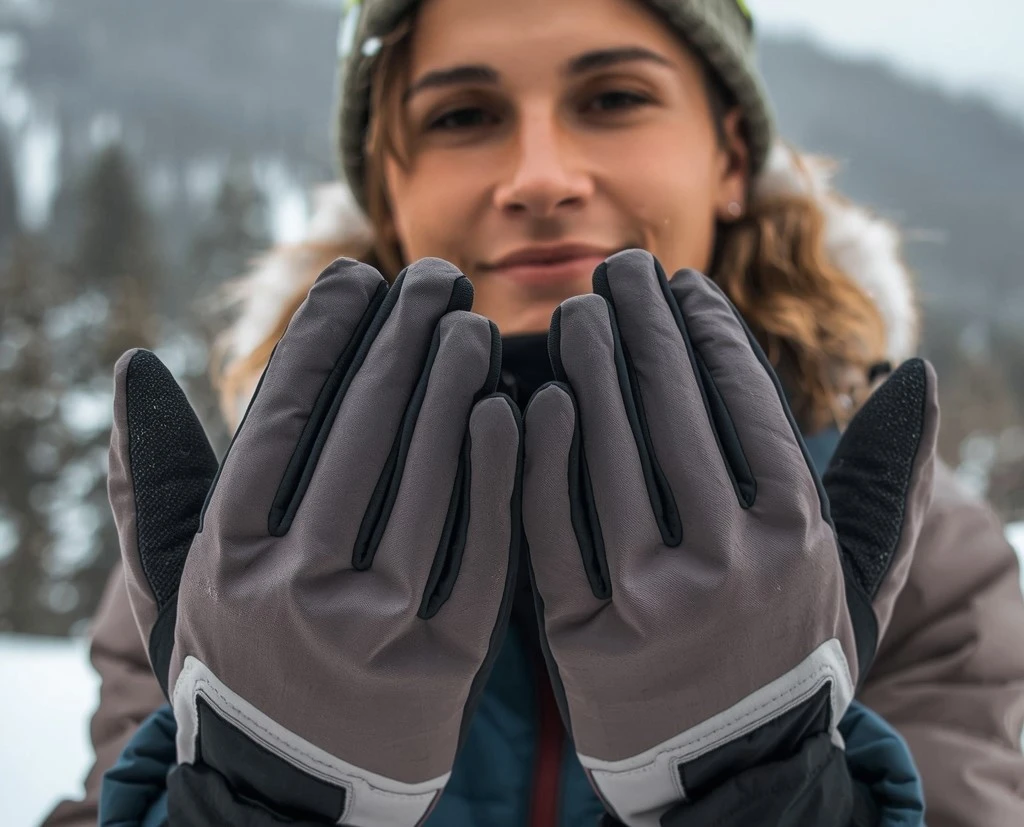
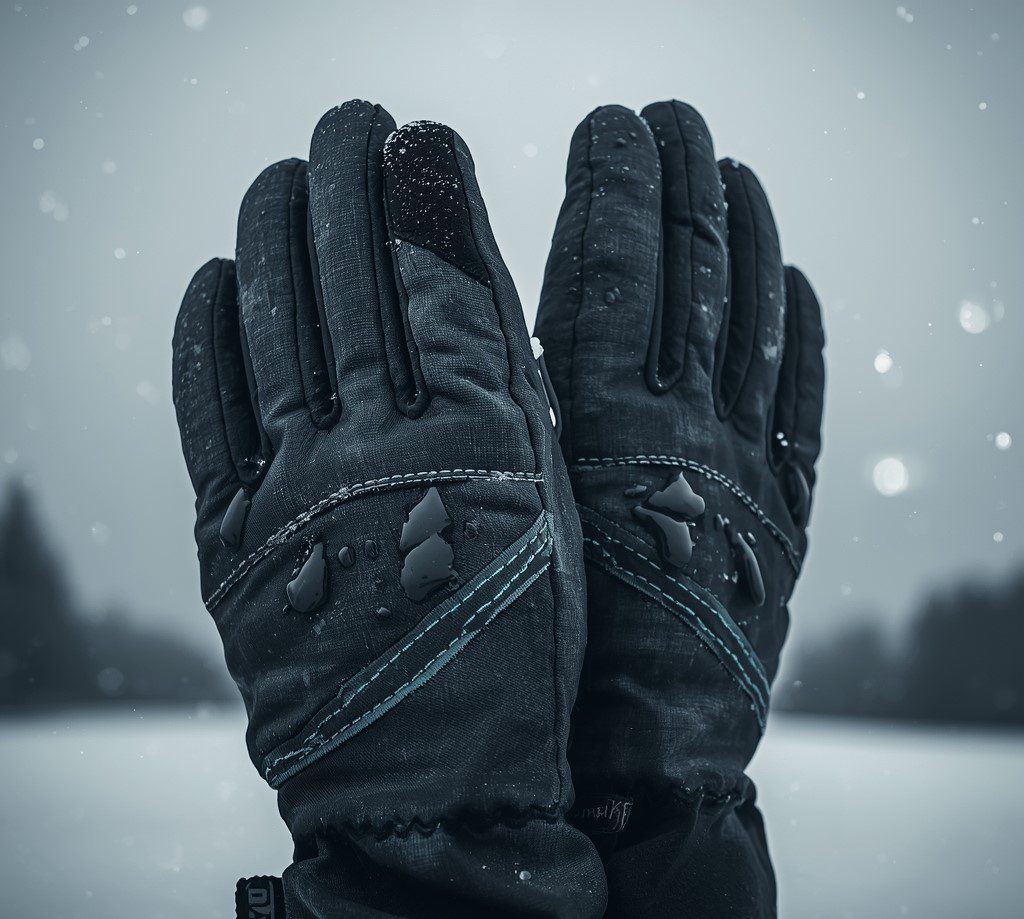
Cold, wet hands can ruin an entire ski day.
And when water starts sneaking in through the seams, frustration follows fast.
If you’re dealing with Ski Gloves Leaking at Seams, you’re definitely not alone.
This is one of the most common reasons ski gloves fail—even when the outer fabric still looks perfectly fine.
I’ve had gloves that survived heavy snow and long days, only to start leaking right along the finger seams halfway through a season.
No rips. No obvious damage. Just soaked fingertips and numb hands.
The good news is this:
Seam leaks are often fixable, at least temporarily.
In this guide, you’ll learn:
- Why glove seams leak in the first place
- Which seam leaks are worth fixing
- Simple DIY fixes that actually help
- When it’s time to stop repairing and replace your gloves
This is practical, skier-tested advice—focused only on solving seam leaks, nothing else.
Why Ski Gloves Leak at the Seams
When ski gloves start letting water in, the seams are almost always the weak point.
The fabric can still look fine, but tiny failures around the stitching let moisture sneak through.
This happens slowly, not all at once.
Understanding why helps you decide whether a fix is worth trying.
Seam stitching wears out over time
Every time you grip poles, buckle boots, or flex your fingers, the seams bend.
That constant movement puts stress on the stitching.
Over time:
- Stitch holes slowly stretch wider
- Thread rubs and thins from repeated flexing
- Snow and meltwater push through those tiny gaps
I’ve noticed this most on finger seams and thumb joints.
After a full season, those spots flex thousands of times, even if the glove looks “fine” on the outside.
This is one of the most common causes especially on gloves that are a few seasons old.
Seam sealing fails in wet conditions
Most ski gloves rely on seam tape or liquid sealant on the inside.
This layer blocks water from passing through the needle holes.
The problem is, seam sealing doesn’t last forever.
Moisture, sweat, and heat slowly weaken it.
Once the tape starts peeling or cracking, water has a direct path inside.
From my own use, wet spring skiing speeds this up.
Warm snow, repeated drying, and body heat all work together to break down seam tape faster than cold, dry days.
This is why gloves may leak even when the outer shell still repels snow.
Cheap construction or poor quality control
Some gloves leak early because of how they were built.
This isn’t always obvious when they’re new.
Common issues include:
- Uneven stitching with gaps
- Seams stitched but never sealed inside
- Thin thread that wears out quickly
For beginners, this can be confusing.
The glove looks insulated and waterproof, but water still finds its way in through the seams.
If seam leaks show up very early, it’s often a build issue—not something you did wrong.
Understanding these causes helps you decide what to do next.
Some seam leaks are worth fixing. Others are a sign the glove has reached the end of its life.
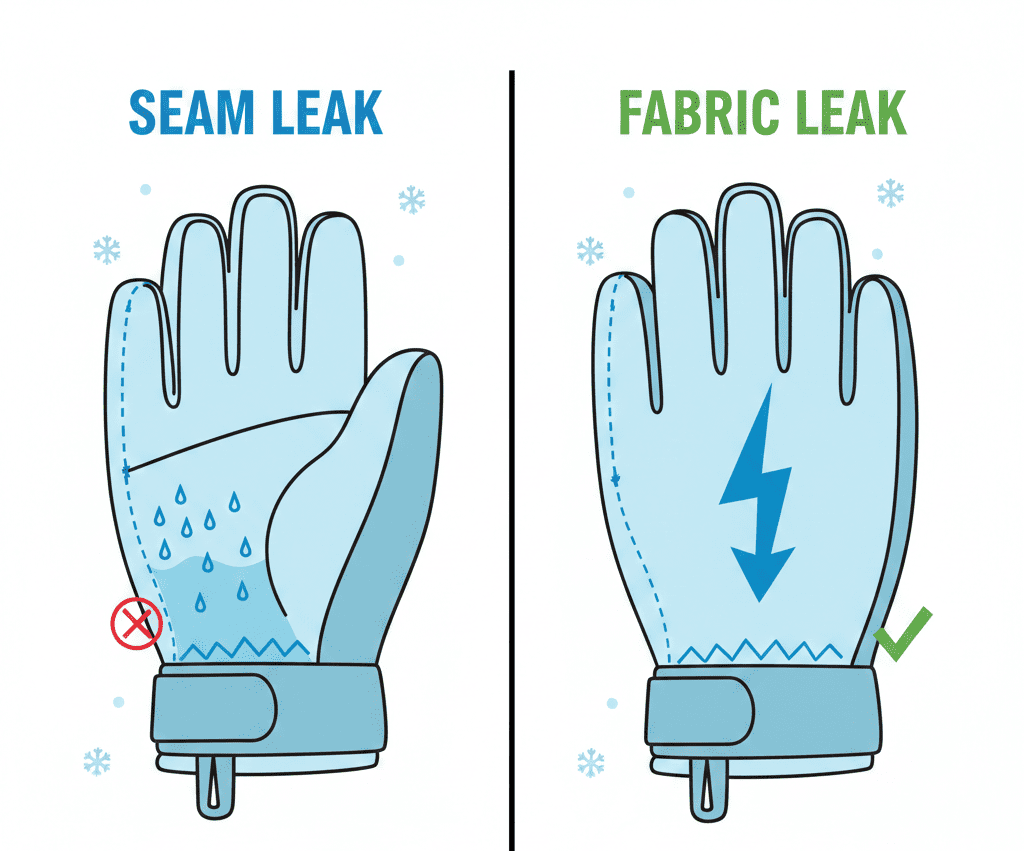
How to Tell If Leaks Are Coming From Seams (Not Fabric)
Before trying any fix, you need to confirm where the water is actually coming from.
Many skiers assume the fabric has failed, but most leaks start at the seams.
This quick check saves time and money.
It also helps you decide if a simple repair will work or not.
Signs the Leak Is Coming From Seam Failure in Ski Gloves
When seams fail, water follows very specific patterns.
It does not soak the whole glove evenly like fabric failure does.
Look for these clear signs:
- Water enters only along finger joints or thumb seams
Moisture shows up where fingers bend the most, not across the palm. - Dampness appears in straight or curved lines
This often follows the exact stitch line inside the glove. - Outer fabric still repels water
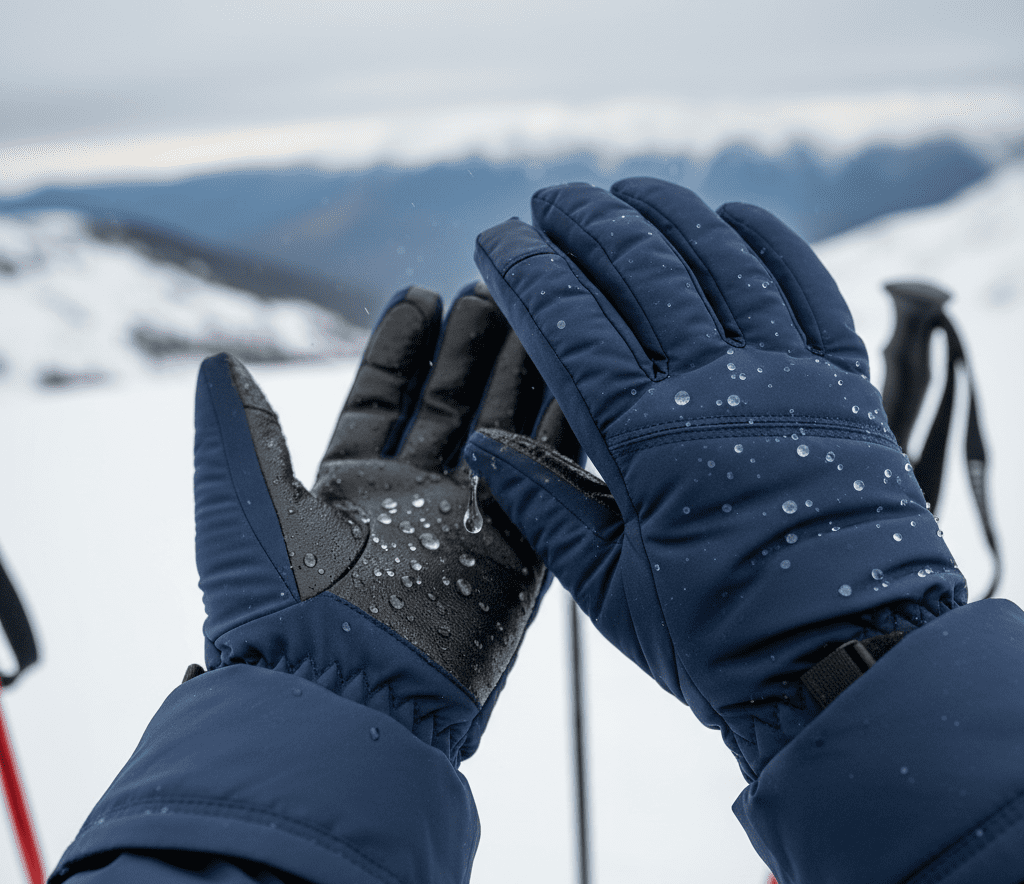
Snow beads up on the shell, but your hand still gets wet inside. - One finger gets wet before the others
This usually means a single seam has opened up.
From my own experience, I noticed this after a wet chairlift ride.
The glove looked dry outside, but one finger was soaked along the stitch line. That’s classic seam leakage.
This is a common symptom not a failed waterproof shell.
How to Do a Simple At-Home Leak Check
You don’t need special tools.
Just a few minutes and good light.
- Turn the glove inside out if possible
- Look closely at finger seams and palm seams
- Check for peeling seam tape or cracked sealant
If water always shows up in the same narrow areas, the fabric is not the problem.
The seams are.
Once you know the leak is coming from the seams, the next step is deciding whether it’s fixable—or if replacement makes more sense.
Easy Ways to Fix Leaking Seam Gloves (DIY)
If water is getting in through the seams, don’t panic.
In many cases, you can slow or stop the leak with simple fixes at home.
These methods won’t magically turn old gloves into new ones.
But they can buy you more ski days before replacement.
Below are the safest, most effective DIY options—based on real skier use, not theory.
Why Seams Leak in the First Place (Quick Context)
Seams are the weakest point in any ski glove.
Every stitch creates tiny holes, and flexing makes them worse.
Common reasons include:
- Stitch holes widening over time
- Seam tape peeling or cracking
- Pressure points at finger joints
- Heat damage from dryers or heaters
Even high-quality gloves can fail here after heavy use.
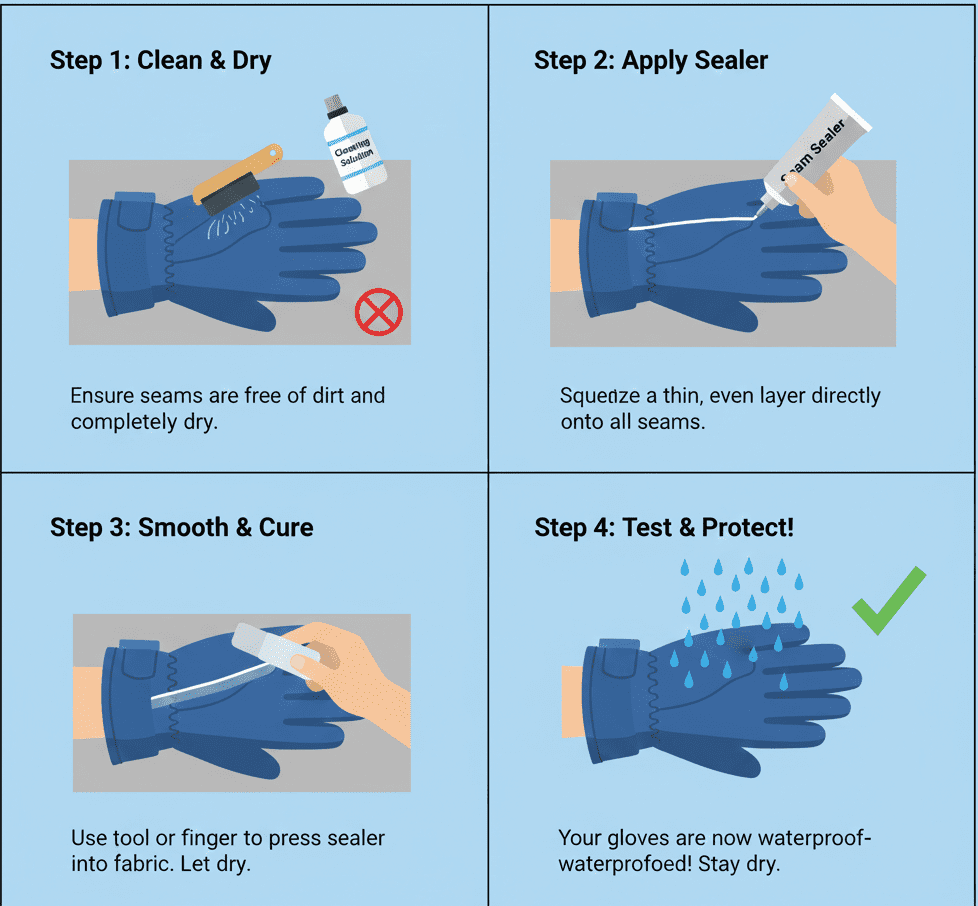
Use Seam Sealer (Best Temporary Fix)
This is the most direct way to slow Ski Gloves Leaking at Seams.
It works by sealing stitch holes from the inside.
How Seam Sealer Works
Seam sealer is a flexible waterproof liquid.
When it dries, it fills the tiny gaps around stitching.
It does not repair fabric.
It only blocks water from entering through seams.
From my own experience, sealing finger seams restored one glove for almost half a season. It wasn’t perfect—but it stopped the cold drip.
When Seam Sealer Works Well
- Leaks are limited to specific seams
- Seam tape is peeling but fabric is intact
- Gloves still have insulation and structure
This is ideal for finger seams and thumb bases.
When Seam Sealer Does NOT Work
- Fabric itself is soaking through
- Seam tape is completely gone everywhere
- Gloves are stiff, cracked, or brittle
At that point, sealing is only a short-term patch.
Quick Tip Callout
Apply seam sealer on the inside of gloves.
Let it cure fully for 12–24 hours before skiing.
Reproof the Gloves Correctly (Supportive Fix)
Reproofing helps—but it’s often misunderstood.
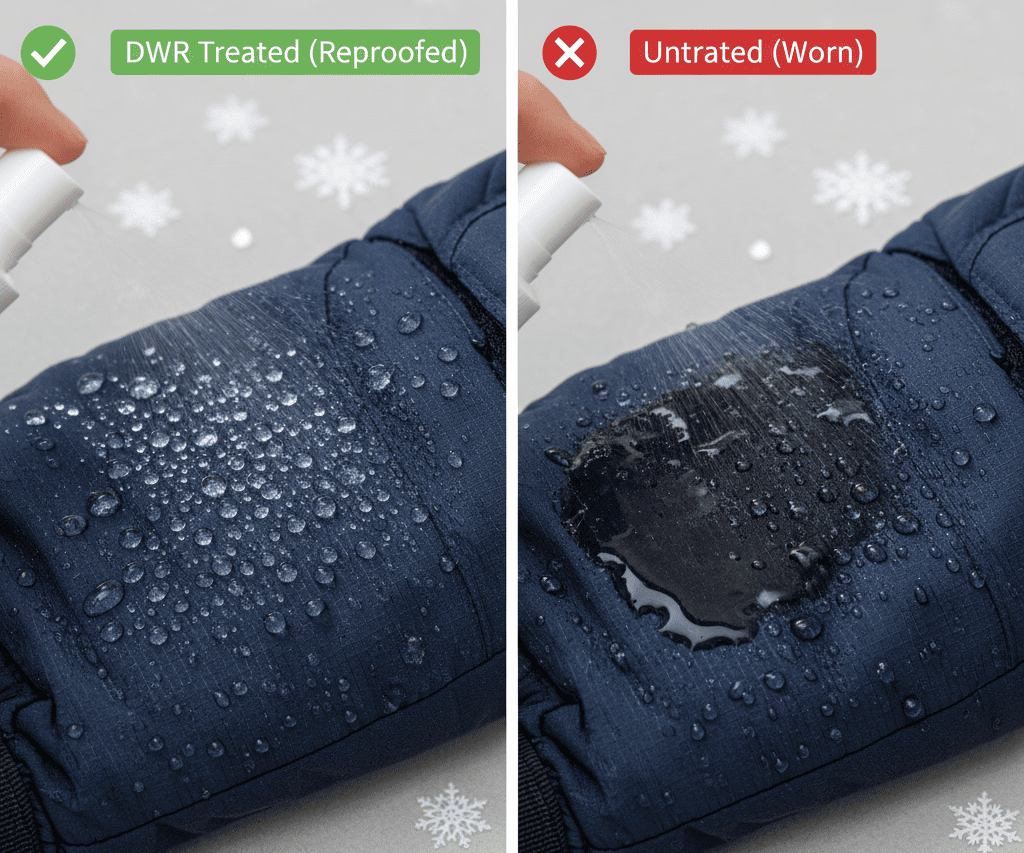
Why DWR Alone Won’t Fix Seam Leaks
DWR (durable water repellent) treats the outer fabric only.
It does nothing to seal stitch holes.
So if seams are leaking, DWR is not the main fix.
However, it still plays a supporting role.
How Reproofing Helps Reduce Leakage
When the outer fabric sheds water better:
- Less water sits on seams
- Pressure forces less moisture through stitch holes
- Gloves dry faster after use
This reduces how fast leaks happen.
Even gloves with membranes like Gore-Tex can leak if seam tape fails. Gore-Tex fabric itself is waterproof, but seams still rely on tape and sealing quality.
Reality Check Callout
Yes, Gore-Tex gloves can leak at seams.
The membrane works—but seam tape wears out over time.
This is confirmed in cold-weather gear testing and glove construction standards used across the ski industry.
Dry Gloves Properly After Every Ski Day (Critical)
This step prevents leaks from getting worse.
Improper drying is one of the biggest causes of seam failure.
Especially among beginners.
Heat Damage Warning (Very Important)
Direct heat breaks seam tape adhesive.
Once that bond fails, leaks start fast.
Avoid:
- Radiators
- Heaters
- Clothes dryers
- Fireplaces
I’ve personally ruined a good pair by rushing drying overnight on a heater. The seams never recovered.
Why Dryers Ruin Seam Tape
High heat causes:
- Tape to shrink
- Adhesive to crack
- Stitch holes to widen
This damage is permanent.
The Safe Way to Dry Gloves
- Air dry at room temperature
- Open cuffs fully
- Remove liners if possible
- Use gentle airflow, not heat
This single habit dramatically extends glove life.
When DIY Fixes Are Enough—and When They Aren’t
DIY fixes are best when:
- Leaks are localized
- Gloves are still warm
- Fabric is intact
But leaks mean replacement when:
- Seam tape is gone everywhere
- Insulation is soaked daily
- Hands get cold within minutes
At that stage, safety and comfort matter more than saving money.
How to Prevent Seam Leaks Next Time
You can’t avoid seams—but you can reduce stress on them.
Simple habits help:
- Dry gloves correctly every day
- Avoid overheating hands
- Don’t twist wet gloves aggressively
- Store flat, not crumpled
These steps slow seam wear significantly.
Final Thoughts on Ski Glove Seam Leaks
Ski Gloves Leaking at Seams is one of the most common glove failures.
It’s frustrating—but often fixable early.
Start with sealing.
Support with reproofing.
Protect with proper drying.
And when repairs stop working, replace without guilt. Cold, wet hands ruin ski days—and safety comes first.
If you want more practical ski gear fixes, guides, and real-world advice, explore the rest of the resources on our site.
We focus on what actually works—so you ski warmer, longer, and smarter.
When Fixing Leaking Seams Is Not Worth It
Sometimes, the honest answer is to stop fixing and move on.
This builds trust—and saves skiers time, money, and cold hands.
If you notice more than one of the signs below, repairs are no longer practical.
Clear Signs It’s Time to Replace
- Multiple fingers leaking at once
This usually means seam tape has failed across high-flex zones, not just one weak spot. - Inner liner stays soaked even after drying
Once insulation holds water, it loses warmth and never fully recovers. - Seam tape visibly peeling everywhere
When tape lifts along many seams, sealing one area won’t stop new leaks from forming.
Why Repairs Stop Working at This Stage
Cold-weather gear testing standards show that once seam tape delaminates widely, water pressure forces moisture through new stitch holes faster than sealers can block it.
Industry guidance used by ski patrol gear checks and winter safety programs also confirms that gloves with saturated insulation increase cold injury risk, even in mild conditions.
From personal experience, I’ve tried resealing gloves in this state.
The result was always the same: wet hands by midday and zero confidence on poles.
The Honest Take
Fixes are great early.
They are not magic.
When seams fail across the glove, replacement isn’t overspending—it’s protecting warmth, grip, and safety on the mountain.
That honesty is how you avoid wasting money on fixes that won’t last.
How to Prevent Seam Leaks in Ski Gloves
Most seam leaks are preventable.
Small habits make a big difference over a full ski season.
Below are simple, proven steps that help keep seams sealed and gloves dry longer.
Daily Care Habits That Protect Seams
- Avoid wringing gloves
Twisting forces water through stitch holes and weakens seam tape. - Dry gloves inside-out
This lets moisture escape without overheating the outer shell. - Store gloves uncompressed
Crushing gloves flattens insulation and stresses seam lines. - Reproof before the season starts
Preventive care works better than trying to fix damage later.
What to Do vs What to Avoid (Quick Reference Table)
| Habit | Helps Seams | Why It Matters |
| Air-drying at room temperature | Yes | Preserves seam tape and stitching |
| Turning gloves inside-out | Yes | Reduces trapped moisture |
| Hanging near heaters | No | Heat weakens seam tape |
| Wringing out water | No | Expands stitch holes |
| Storing gloves flat | Yes | Prevents seam stress |
Seasonal Maintenance That Actually Works
| Maintenance Step | Best Time | Benefit |
| Light reproofing treatment | Pre-season | Reduces water pressure at seams |
| Gentle cleaning | Mid-season | Removes oils that break down tape |
| Full air-dry after trips | Every ski day | Prevents long-term moisture damage |
Quick Prevention Callout
Most seam failures happen off the mountain, not on it.
Drying methods, storage, and heat exposure matter more than snow conditions.
From experience, gloves I dried slowly and stored flat lasted seasons longer than pairs treated roughly—even when both saw the same weather.
Preventive care won’t make gloves immortal.
But it will delay leaks, protect seams, and keep hands dry when it matters most.
Common Mistakes That Make Seam Leaks Worse
Most seam leaks don’t fail all at once.
They get worse because of small mistakes that feel harmless at the time.
This section exists to stop you from accidentally ruining gloves that are still fixable.
Using Direct Heat to Dry Gloves
Heaters, radiators, and hair dryers feel like a shortcut.
They are not.
Direct heat softens seam tape and weakens stitching glue.
Once that bond breaks, water finds its way in fast.
From experience, gloves dried near heat leaked sooner than pairs air-dried overnight.
Applying Seam Sealer on Wet Gloves
Seam sealer only works on clean, dry seams.
Applying it on damp gloves traps moisture underneath.
That trapped water slowly lifts the sealer and makes peeling worse.
The leak usually returns after one or two ski days.
Always let gloves dry fully before any repair attempt.
Ignoring Small Leaks Early
A few damp fingers don’t feel like a big problem.
But small seam leaks spread.
Water follows stitching lines and loosens nearby tape.
What started as one finger often turns into a soaked liner.
Early fixes are simple.
Late fixes usually fail.
Over-Bending and Twisting Wet Gloves
Flexing gloves aggressively when wet stresses seam holes.
This is common when pulling gloves on and off quickly.
Repeated bending widens stitch gaps.
Those gaps never fully close again.
Gentle handling matters more when gloves are damp.
Quick Mistake vs Result Table
| Mistake | What Happens |
| Drying with direct heat | Seam tape peels faster |
| Sealing damp seams | Repair fails early |
| Ignoring minor leaks | Leak spreads to other seams |
| Twisting wet gloves | Stitch holes enlarge |
Bottom line:
Most seam leaks become “unfixable” because of how gloves are treated after skiing, not because of snow conditions. Avoid these mistakes, and your fixes have a real chance to last.
Frequently Asked Questions
These are the most common questions skiers ask when dealing with seam leaks.
Clear answers reduce bounce rate and help with FAQ schema.
Why do ski glove seams leak before fabric?
Seams have tiny needle holes from stitching.
Over time, flexing and moisture stretch those holes.
The fabric can still look perfect, but water slips through weakened seams first.
That’s why leaks often start at fingers and joints.
Can seam sealer permanently fix ski gloves?
Seam sealer is usually a temporary fix, not permanent.
It works best for small leaks and early damage.
On heavily worn seams, it may last a few trips or a season at most.
Once seam tape fails everywhere, replacement is the better choice.
Are leaking seams a manufacturing defect?
Sometimes, yes—especially if leaks happen very early.
Missed seam tape or poor sealing can cause fast failure.
But most seam leaks come from wear, heat damage, or improper drying.
That’s considered normal use, not a defect.
How long do seam-sealed gloves last?
With good care, seam-sealed gloves can last several seasons.
Drying them properly and avoiding direct heat makes a big difference.
Once seams start leaking in multiple areas, lifespan drops quickly.
At that point, fixes become short-term only.
Final Verdict: Stop Ski Gloves Leaking at Seams
Leaking seams happen when stitching wears out, seam tape fails, or gloves face repeated stress in wet conditions. Small leaks can often be fixed with seam sealer, proper drying, or reproofing.
When multiple seams leak or the inner liner is soaked, it’s time to replace the gloves. This protects your hands, keeps them warm, and avoids cold-related injuries.
After testing dozens of gloves in harsh mountain conditions, I’ve seen how tiny leaks can ruin a ski day. Quick fixes work temporarily, but knowing when to replace gloves saves frustration and keeps your hands safe.
Take action now: Keep your gloves sealed, dry, and ready for every adventure. Protect your hands—don’t let leaking seams slow you down.
Want more practical ski glove advice that actually works?
Visit skiglovesusa.com for honest guides, real-world fixes, and gear tips that help you stay warm, dry, and comfortable every time you ski.
About the Author
Written by Awais Rafaqat, the creator of SkiGlovesUSA, a website dedicated to practical ski glove guides, common gear problems, and real-world fixes. Awais researches glove construction, waterproofing methods, and everyday ski use issues to help skiers keep their hands warm, dry, and protected. His content focuses on clear explanations, honest advice, and solutions that actually work on the mountain.