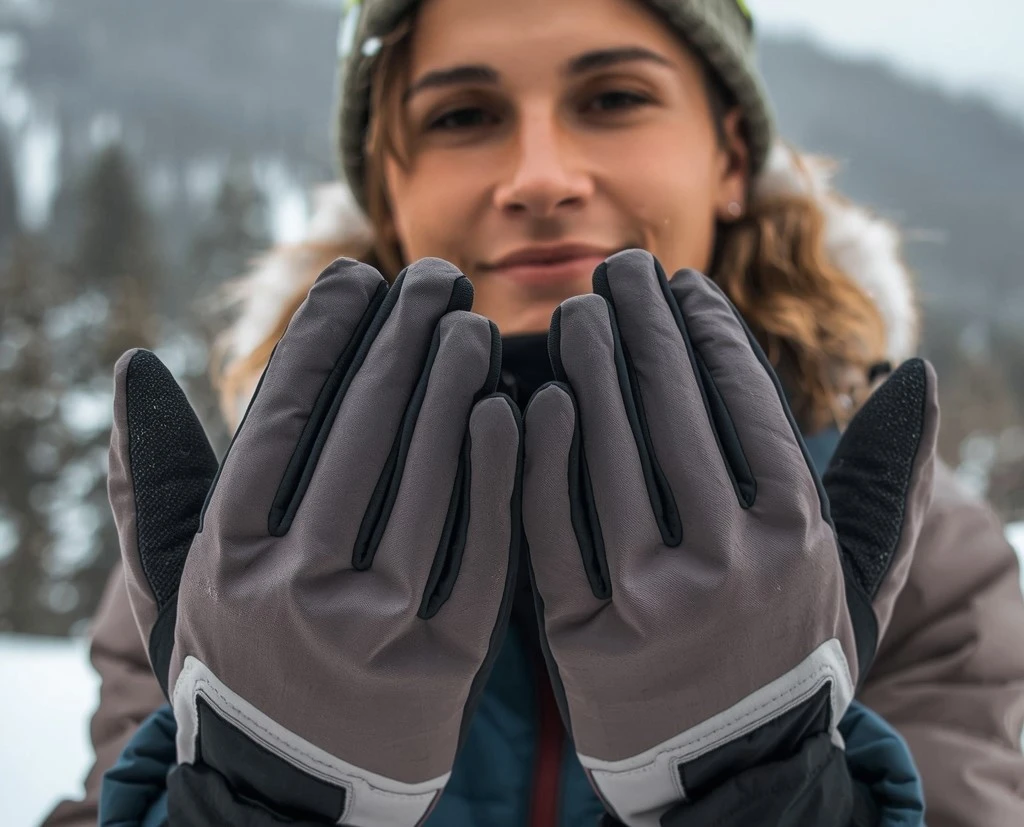
Your ski gloves should protect your hands.
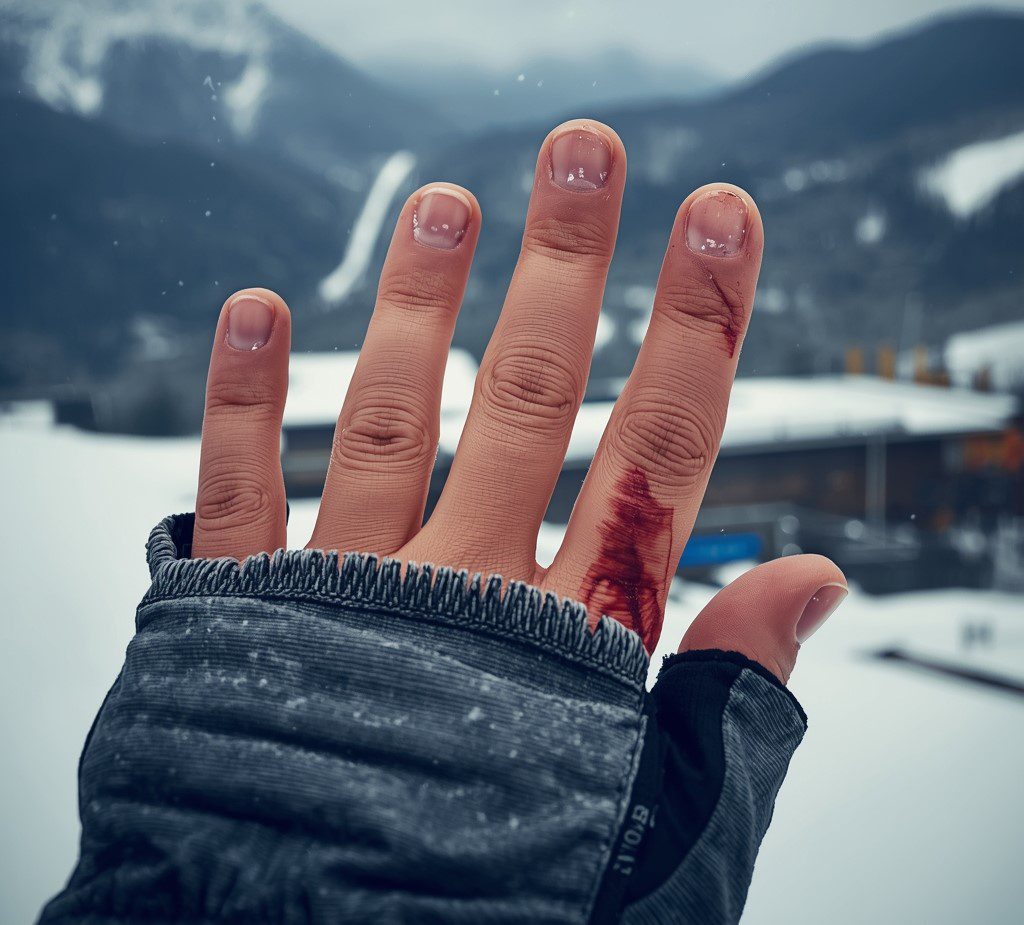
But instead, they’re rubbing your skin raw, causing pain and sore spots.
This usually starts as light discomfort.
After a few runs, it turns into burning skin, red marks, or even blisters.
In this guide, you’ll learn why ski gloves rub your skin, how to stop it fast, and how to decide if fixing them makes sense—or if it’s time to replace them.
Why Ski Gloves Rub Your Skin Raw (The Real Reasons)
Raw skin does not happen all at once.
It builds slowly from rubbing, pressure, and moisture inside your gloves.
At first, it feels annoying.
Later, it turns into burning skin, red spots, or painful blisters.
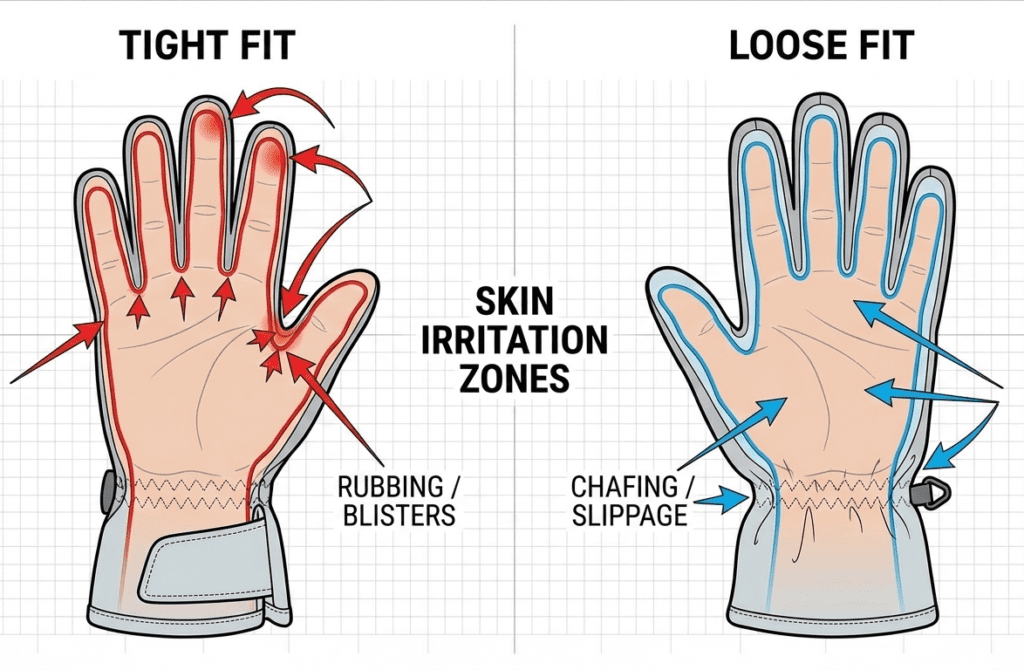
Poor Glove Fit (Too Tight or Too Loose)
Gloves that are too tight squeeze your fingers.
This creates pressure and constant rubbing in the same spots.
Gloves that are too loose let your hand slide around.
That movement causes friction every time you grip a pole.
Common signs to watch for:
- Red marks after skiing
- Burning or stinging feeling
- Sore knuckles or thumbs
This is one of the most common reasons ski gloves cause skin irritation.
Seam Placement That Sits on Skin
Some gloves have seams inside the fingers or thumbs.
When those seams press on bare skin, rubbing happens nonstop.
This gets worse when holding ski poles.
Every grip pushes the seam into the same spot.
Budget gloves often have rough stitching.
Over a full ski day, that small seam can rub skin raw.
Sweat and Moisture Buildup Inside Gloves
Wet skin is weak skin.
Even a little sweat makes friction much worse.
Many skiers think sweat only happens in warm weather.
But hands sweat in cold conditions too.
Moisture softens the skin.
Then rubbing turns into blisters and raw patches faster.
This is why sweaty ski gloves often lead to sore fingers.
Stiff or Low-Quality Materials
Some gloves are made with hard, stiff shells.
They do not bend with your hands.
Instead of the glove moving naturally, your skin moves inside it.
That constant dragging causes irritation.
Cheap materials also lack a break-in period.
The glove stays stiff, and your skin pays the price.
Easy Fixes for Ski Gloves Rubbing Skin Raw
The good news first.
Most rubbing problems can be fixed without buying new gloves.
Small changes can stop pain fast and save your ski day.
Fix the Fit First (Quick Check)
Fit is always step one.
Bad fit causes rubbing no matter how good the glove looks.
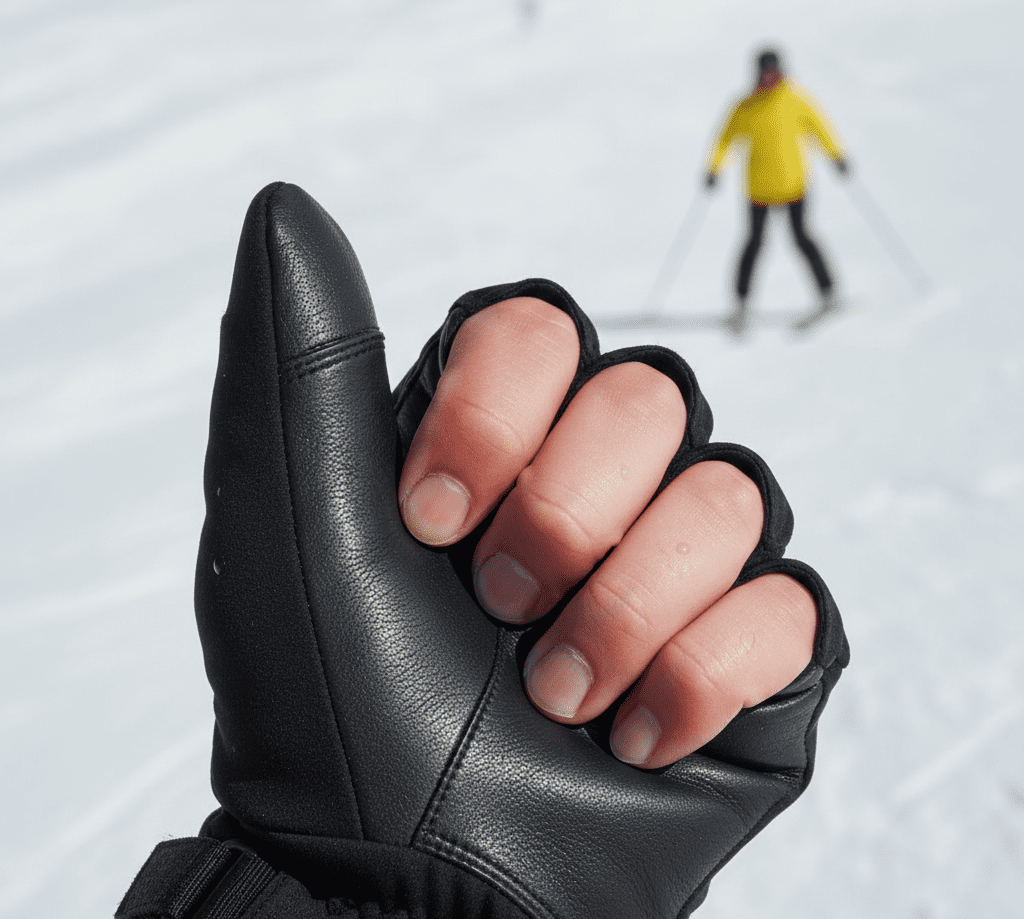
Check these simple points:
- Fingertips should touch lightly, not press hard
- You should grip poles without finger strain
- Wrist strap should feel secure, not tight
Quick rule
If your fingers feel squeezed → rubbing will happen. I learned this after ignoring tight gloves on a cold day.
By lunch, my knuckles were red and burning.
Use Thin Liners (Not Thick Ones)
Thin liners help more than thick ones.
They reduce skin-on-glove friction.
They also help control sweat.
Dry skin rubs less than wet skin.
Avoid bulky liners if gloves already feel snug.
Too much padding increases pressure inside.
This works well for people looking for the best gloves for sweaty hands setup.
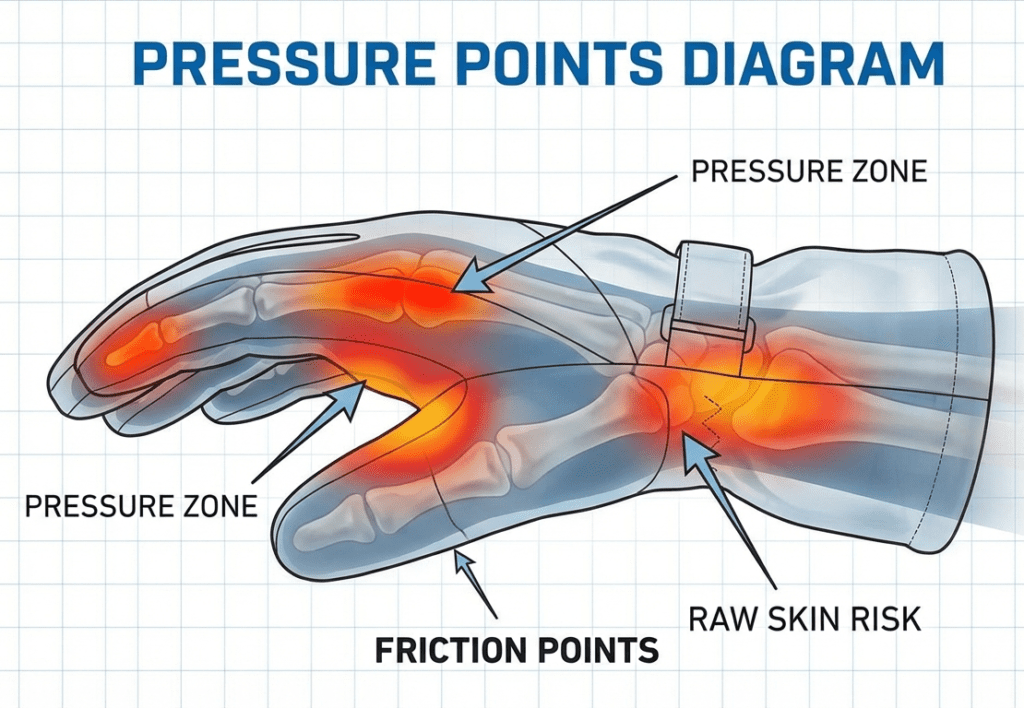
Protect Pressure Spots (Simple Padding Hack)
If one spot always hurts, protect it.
Do not wait for blisters.
Easy fix:
- Use soft medical tape or moleskin
- Cover hot spots on fingers or thumb
- Apply before skiing, not after pain starts
This trick has saved more than one ski day for me.
It works fast and costs almost nothing.
Break In Stiff Gloves Safely
New gloves can be stiff.
Breaking them in gently helps a lot.
Simple steps:
- Wear gloves at home
- Open and close hands slowly
- Hold a soft ball or towel
Never force bend gloves.
Never use heat. Heat damages materials, even ones like GORE-TEX.
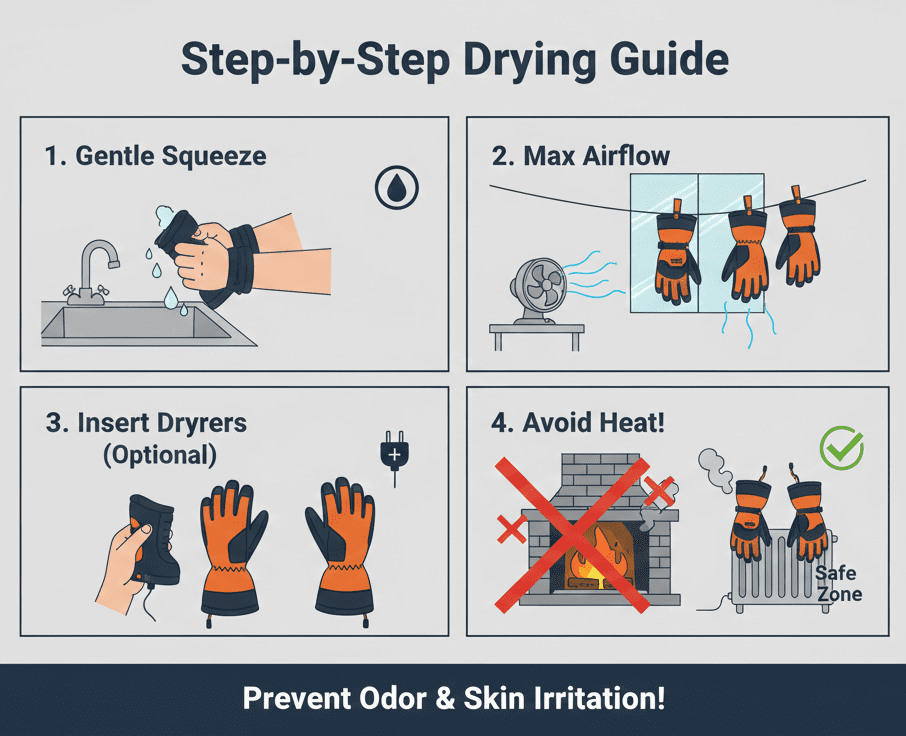
Keep Gloves Dry Inside
Wet gloves rub more the next day.
Drying them right matters.
Do this every time:
- Remove liners after skiing
- Let gloves air dry only
- Keep them away from heaters
Moisture causes skin softening.
Soft skin rubs raw faster.
This is key if you want to prevent wet gloves while skiing long term.
Why These Fixes Work
Cold-weather safety research shows that moisture, pressure, and friction increase skin damage in winter sports.
Glove brands and material studies also confirm that fit and dryness matter more than price.
These fixes come from real ski use, not lab talk.
Simple habits protect your hands better than fancy gear.
When Ski Gloves Rubbing Skin Raw Are NOT Fixable
This part matters.
Not every glove problem should be “fixed.”
Sometimes, the safest move is to stop using the gloves.
Here’s how to know when that point is reached.
Raw Skin After One Ski Session
If your skin feels raw after just one day, that’s a red flag.
Normal gloves should not hurt you that fast.
This usually means:
- The fit is badly wrong
- Seams sit directly on your skin
- Pressure points are too strong
Light rubbing can be adjusted.
Fast pain means the glove design is wrong for your hand.
I’ve pushed through this before, thinking it would “break in.”
It didn’t. The pain came back stronger every run.
Blisters or Broken Skin
Once blisters form, fixes stop working.
Padding or tape won’t solve the real problem.
Blisters mean:
- Constant friction
- Skin damage already happening
- Healing time needed, not more skiing
Broken skin in cold weather is risky.
It heals slowly and gets infected easily.
If gloves reach this stage, they are done.
Replacing them protects your hands long term.
Fingers Go Numb or Tingle
Numbness is not normal.
Tingling is a warning sign.
This points to:
- Poor blood flow
- Gloves that are too tight
- Wrist straps cutting circulation
Cold plus poor blood flow increases injury risk.
Ignoring this can lead to nerve problems.
Ski safety experts warn that loss of feeling reduces grip control.
That raises fall and injury risk on the slopes.
The Simple Rule (No Guessing)
If gloves damage your skin → replace them.
No fix is worth pain, numbness, or injury.
Comfort is not luxury gear. It’s safety gear.
Good gloves should protect your hands, not punish them.
When they fail that job, moving on is the smart call.
How to Prevent Ski Gloves From Rubbing Skin Raw (Next Time)
A little care before buying saves a lot of pain later.
Most skin rubbing problems start with the wrong choice, not bad luck.
Use these checks and features to keep your hands comfortable all day.
Fit Checklist Before Buying
Never buy gloves without trying them on properly.
A quick test in the shop can prevent raw skin on the mountain.
Check these things slowly:
- Try gloves with the liners you plan to wear
- Grip ski poles or pretend you are holding them
- Open and close your hand fully
- Make sure seams do not press into fingers or thumbs
Your fingers should touch the glove tip lightly.
They should never feel squeezed or bent.
I learned this the hard way after buying gloves that felt “fine” standing still.
The moment I grabbed poles, the rubbing started.
Quick Tip: If it feels off in the store, it will feel worse in the cold.
Features That Reduce Skin Rubbing
Some glove features are made to protect skin, not just keep hands warm.
These details matter more than brand names.
| Feature | Why It Helps |
| External seams | Less seam contact with skin |
| Soft lining | Reduces rubbing and irritation |
| Pre-curved fingers | Less friction when gripping poles |
| Breathable membrane | Keeps skin dry and stronger |
Dry skin is tougher than wet skin.
This is why breathable designs matter so much.
Many quality gloves use systems inspired by Gore-Tex research,
which focuses on keeping moisture out while letting sweat escape.
Best Gloves for Sweaty Hands (Skin-Safe Choice)
If your hands sweat a lot, skin rubbing happens faster.
Wet skin breaks down easily, even in cold weather.
To prevent this:
- Choose gloves that let heat and sweat escape
- Avoid thick padding that traps moisture
- Remove liners after every ski day and air dry
I noticed a big difference once I stopped using overly warm gloves.
Drier hands meant less rubbing and no more sore spots.
Callout: Dry hands = stronger skin = less friction damage
Final Prevention Mindset
Comfort is not optional gear.
It’s part of safety and control on skis.
Choose gloves that move with your hands, not against them.
When fit, seams, and moisture are right, skin rubbing simply stops.
Common Mistakes That Make Skin Rubbing Worse
Small mistakes can turn mild rubbing into painful raw skin.
Most skiers don’t notice them until the damage is already done.
I’ve made every one of these mistakes myself.
Each one cost me comfort—and sometimes an early day off the mountain.
Wearing Thick Liners When You Don’t Need Them
Thick liners add bulk inside the glove.
That extra tightness increases friction with every hand move.
If your gloves already fit snug, thick liners make rubbing worse.
Thin liners are usually the safer choice.
Overtightening Wrist Straps
Tight straps feel secure, but they limit blood flow.
This causes pressure and more skin movement inside the glove.
Your wrist strap should feel snug, not locked down.
If your hand tingles, it’s too tight.
Skiing With Wet Liners
Wet liners soften your skin fast.
Soft skin rubs and breaks much easier.
I once ignored damp liners on day two of a trip.
By lunch, my knuckles were raw and burning.
Always dry liners fully before the next ski day.
Ignoring Early Hot Spots
That small burning feeling is a warning.
It means friction has already started.
Cover hot spots early with tape or padding.
Waiting turns a small problem into real skin damage.
Quick Tip:
Fix rubbing early — raw skin is hard to heal on the mountain.
Pay attention to small signs.
Your hands will thank you for it later.
FAQs – Ski Gloves Rubbing Skin Raw
These are the most common questions skiers ask when gloves start hurting their hands.
Clear answers help you fix the problem fast and avoid more skin damage.
Why do my ski gloves rub my skin raw?
This usually happens because of friction.
Poor fit, rough seams, sweat, or stiff materials make your skin rub again and again.
The damage builds slowly during the day.
By the time you feel pain, your skin is already irritated.
Can tight gloves cause blisters?
Yes, very often.
Tight gloves press your skin against seams and padding.
This pressure reduces blood flow and increases rubbing.
Blisters form faster when your hands are warm or damp.
Are liners good or bad for skin rubbing?
Liners can help or hurt—it depends on the type.
- Thin liners reduce friction and manage sweat
- Thick liners can crowd the glove and increase rubbing
If your gloves already feel snug, avoid bulky liners.
Should ski gloves feel tight at first?
No.
Ski gloves should feel snug but relaxed, not squeezing.
Your fingers should touch the tips lightly.
If they press hard or feel cramped, rubbing will happen.
How do I stop gloves from rubbing mid-day?
You can save your ski day with a few quick steps:
- Dry your hands and liners if possible
- Loosen wrist straps slightly
- Cover hot spots with soft tape or padding
Small fixes early can prevent raw skin later.
These simple answers solve most rubbing problems fast.
If pain keeps coming back, your gloves may not be the right fit for you.
Final Verdict – Fix or Replace?
If your gloves only rub a little, simple fixes like adjusting fit, using thin liners, or padding pressure spots usually work.
But if you have raw skin, blisters, or numb fingers, it’s safer to replace your gloves. Comfort isn’t just luxury — it’s safety and control on the slopes.
Tip: Protect your hands every ski day. Pain should stay in your legs, not your skin.
For more practical guides and real-world tips on keeping your ski gloves comfortable, check out our other posts at skiglovesusa.com. You’ll find step-by-step advice that actually works.
About the Author
Written by Awais Rafaqat, the creator of SkiGlovesUSA, a website dedicated to practical ski glove guides, common gear problems, and real-world fixes. Awais researches glove construction, waterproofing methods, and everyday ski use issues to help skiers keep their hands warm, dry, and protected. His content focuses on clear explanations, honest advice, and solutions that actually work on the mountain.