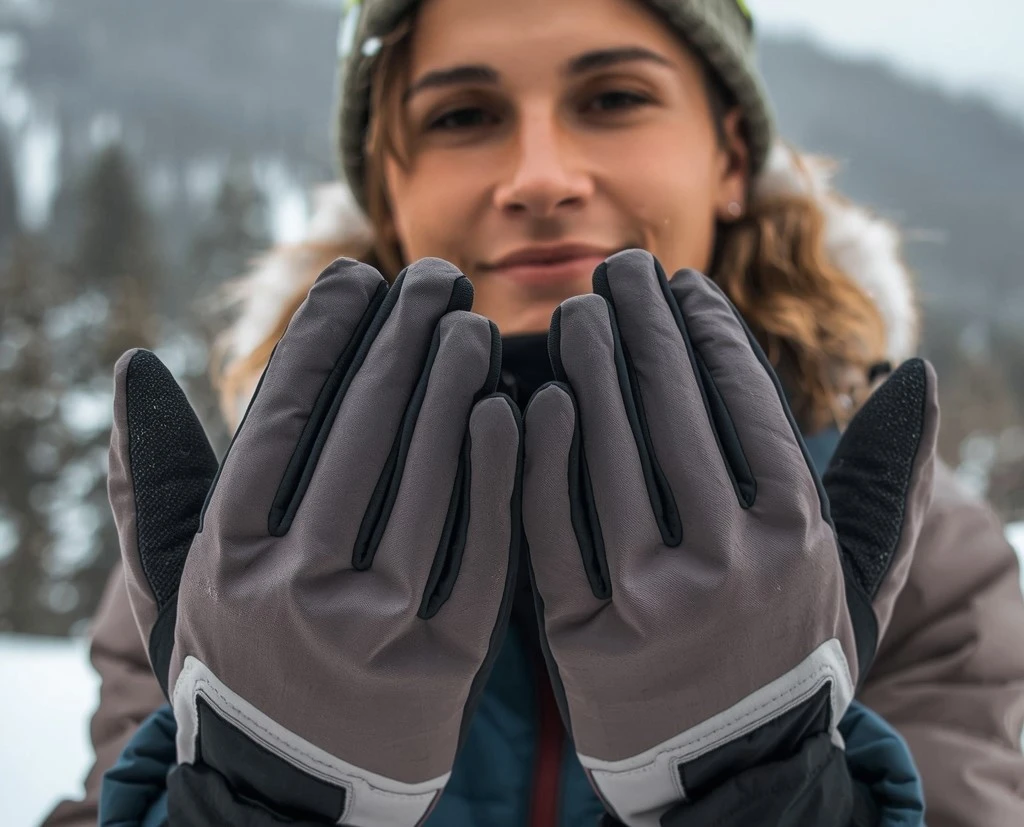
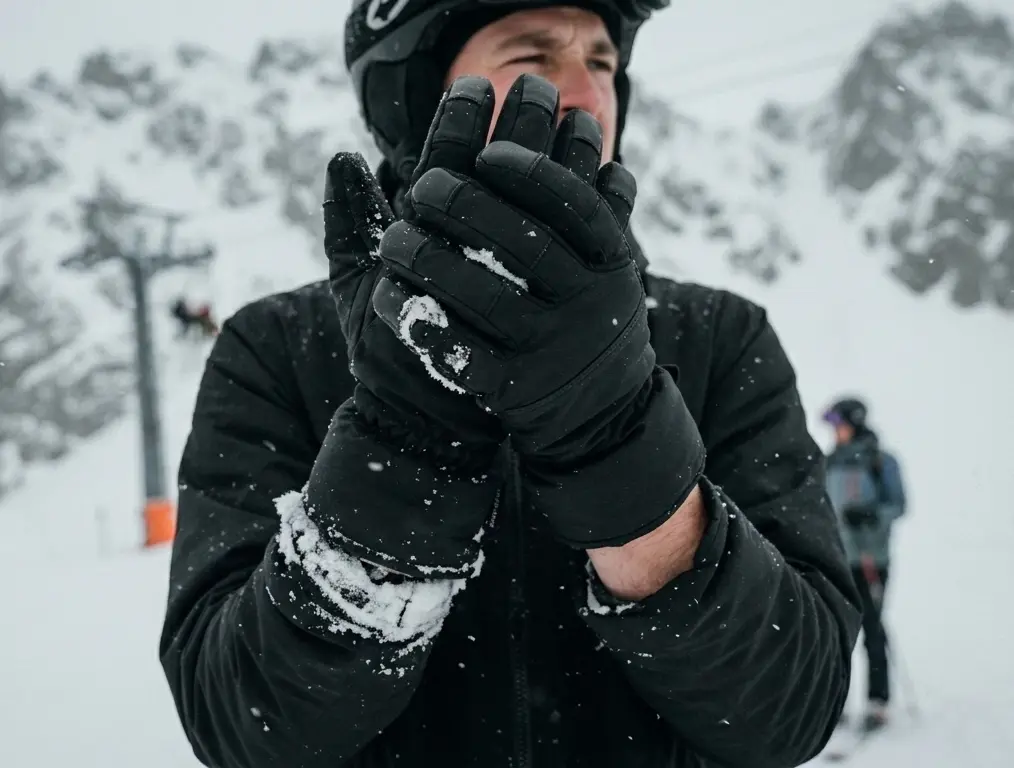
Ski glove discomfort follows a predictable pattern. The gloves feel acceptable when you first put them on. By the second run, there is a pressure point across the knuckles. By midday, two fingers are going numb. By the afternoon, you are skiing with one hand in your pocket and wondering what went wrong. Asking why are ski gloves uncomfortable is the right starting point — but the answer is different for every skier, and applying the wrong fix wastes the rest of the day.
I have diagnosed this problem on my own gloves and on gloves belonging to people I have skied with for over fifteen years. The causes divide cleanly into three categories: fit problems, construction problems, and adjustable problems. Fit and construction issues cannot be fixed — they require a different glove. Adjustable problems — wrist strap tension, liner positioning, moisture accumulation — can be resolved on the mountain with no tools and no cost. The most common mistake is trying to fix a fit problem by adjusting the strap, or blaming construction when the liner is simply bunched inside the shell.
This guide works through every discomfort caused in order of how to diagnose and address it. The self-check tests are things you can do in the car park before your first run, mid-mountain during a lift ride, or back at the lodge during lunch. The decision framework at the end tells you honestly whether the glove you have can be made comfortable or whether the discomfort you are experiencing is structural.
The Real Causes of Ski Glove Discomfort
Ski glove discomfort comes from a narrower set of causes than most guides suggest. Understanding the mechanism behind each one is what makes it possible to diagnose your specific situation rather than trial-and-error through generic advice.
Finger length mismatch
This is the most common fit problem, and it is consistently underdiagnosed because most skiers check palm width when trying on gloves but not finger length. A glove that is the right circumference around the palm but too short in the fingers jams the fingertips against the glove end with every hand closure. The pressure is low at first — barely noticeable when you first put the gloves on — but accumulates over hours of repeated grip-and-release cycles during skiing. By midday, the fingertips are sore and slightly swollen, which worsens the fit further. This is the problem when discomfort is specifically at the fingertips and progressively worsens through the day.
Palm width and cut mismatch
Different glove manufacturers use different hand shape templates — called lasts — for their cutting patterns. A glove that measures the correct size on a circumference chart may still be too narrow or too wide for a specific hand shape. Too narrow concentrates pressure across the knuckles during pole grip. Too wide creates excess palm material that folds under the grip and forms pressure ridges. This is the problem when discomfort is specifically across the knuckles during pole use but absent when the hand is open.
Seam placement contacting skin under load
The internal seams on budget and mid-range gloves often run along the sides of the fingers and across the inner palm — exactly where the hand contacts a ski pole. These seams are not felt when you first put the gloves on, because the hand is open and the seam is not under pressure. Under pole grip, the seam edge is compressed directly against skin repeatedly for hours. The resulting discomfort is a linear burning or rubbing sensation along one specific finger edge, not a diffuse pressure. The location is diagnostic — if the pain follows a straight line along a finger, it is a seam.
Uneven insulation distribution
Many gloves concentrate insulation in the palm and back of the hand but use thinner insulation in the fingers to allow dexterity. When the differential is too large, the result is cold fingertips alongside a warm hand. Cold fingers do not cause pain directly, but they cause a persistent aching discomfort that is easily mistaken for poor fit or circulation problems. The test: if your fingertips are cold but your palm is warm, insulation distribution is likely the issue rather than fit or pressure.
Moisture accumulation in the lining
Ski gloves accumulate hand sweat throughout the day, and many linings absorb this moisture rather than moving it away from the skin. A dry lining generates minimal friction against the skin surface. A damp lining softens the outer skin layer and dramatically increases friction at every point of contact. Moisture is known to increase skin friction and irritation during repeated movement.
This is why discomfort that was manageable at 9am is significantly worse by 2pm — the lining has become progressively more saturated. This is also why the same pair of gloves that caused no problems on a cold dry day causes significant rubbing on a warmer, active day.
Shell stiffness fighting hand movement
Ski glove shells vary significantly in how much they resist flexion. A flexible shell moves with the hand during grip and release. A stiff shell resists the movement, requiring the hand muscles to work harder to close and open fully through every pole plant and hand movement. This does not cause acute pain but produces progressive hand and forearm fatigue that most skiers attribute to effort rather than equipment. If your hand and forearm are unusually tired at the end of a ski day and the gloves feel like they resist your hand, stiffness is the likely contributor.
Wrist strap or cuff over-tightened
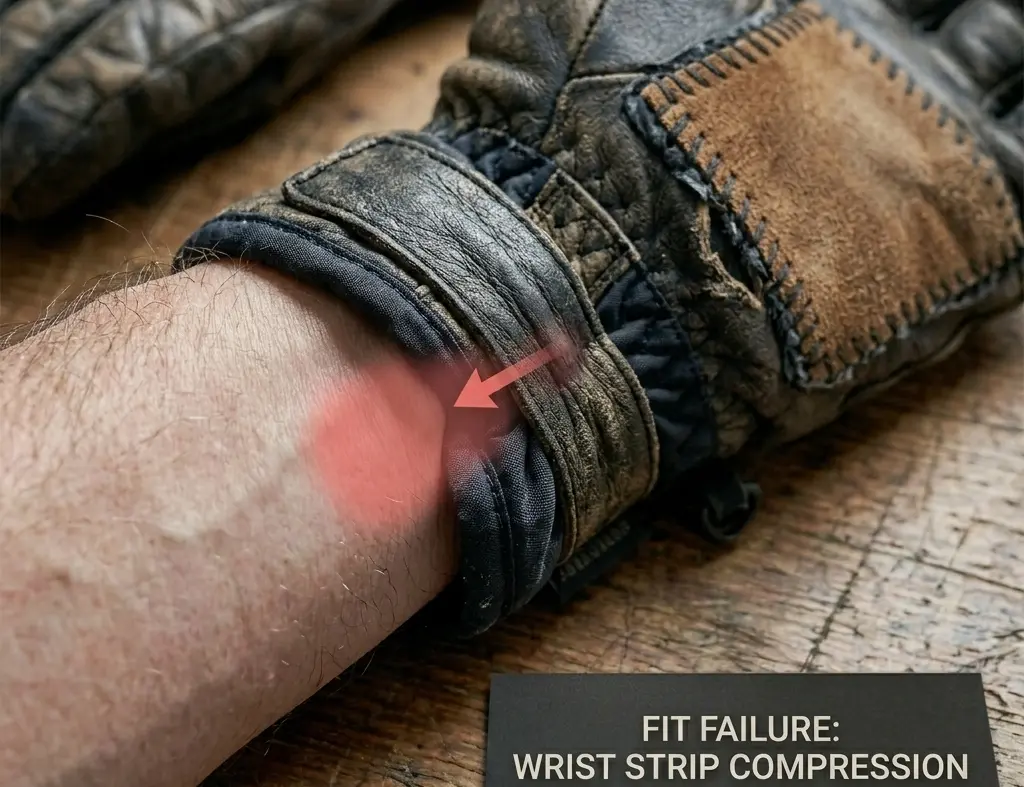
The ulnar nerve runs along the inner wrist. Excessive compression of the wrist strap — which most skiers tighten more than necessary in the belief that a snug fit means a secure fit — compresses this nerve and reduces blood flow returning from the hand. The resulting symptom is numbness specifically in the ring and little fingers, with the index and middle fingers remaining normal. This is a highly specific symptom pattern, and it reliably indicates wrist compression rather than a general fit problem. Loosening the strap two notches and re-testing within ten minutes is the definitive diagnostic test.
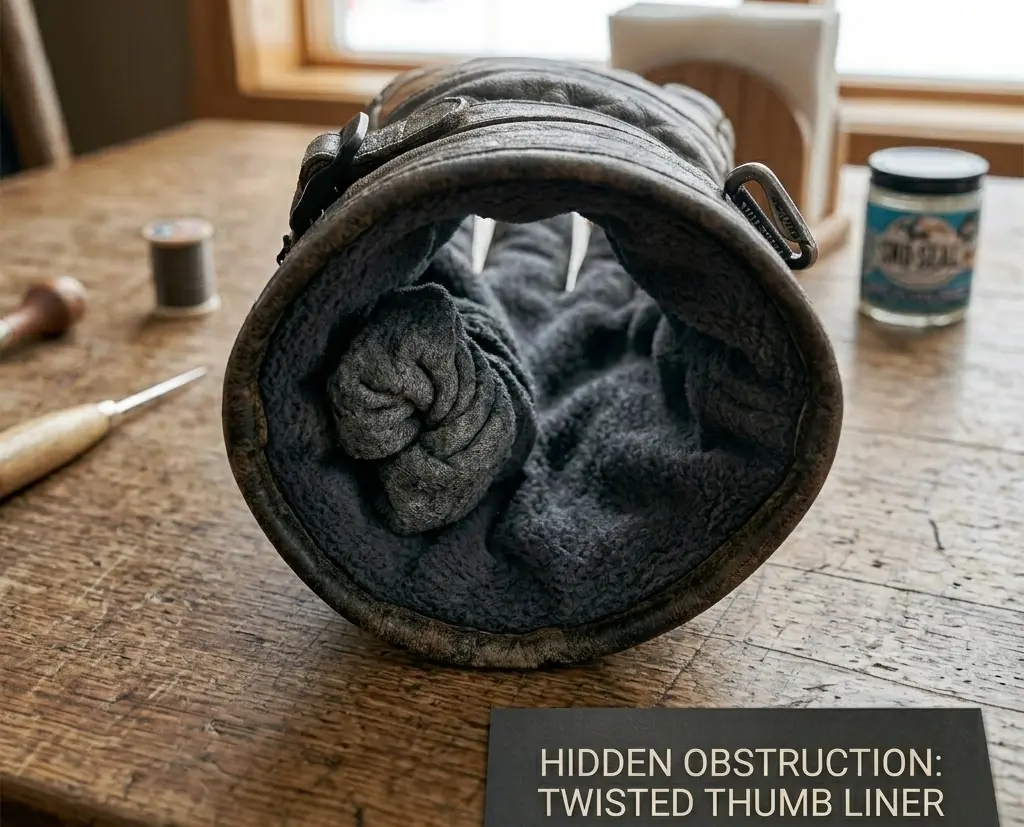
Liner bunching inside the shell
A liner that is not fully seated inside the shell shifts during skiing. The folds and ridges it creates produce pressure points that move and change location as the liner shifts further. This is the problem when the discomfort location seems to change during the day or when the pressure point feels like it is between your hand and the glove rather than at a specific anatomical point.
Root Cause Reference
| Root Cause | Mechanism | What You Feel | Category |
| Gloves too short in the fingers | Fingers jammed into tips; pressure builds over time | Cramping, pressure at fingertips after 30–60 min | Fit — size up or try a longer-fingered model |
| Gloves too wide in the palm | Excess material folds under grip; creates pressure ridges | Hotspots across knuckles; weak pole grip | Fit — try a narrower cut or different brand last |
| Seams across palm or finger sides | Stitching contacts skin under grip load; friction worsens over time | Linear rubbing pain along seam path | Construction — look for external or flat seams |
| Uneven insulation distribution | Thin zones let cold in while padded zones create pressure | Cold fingertips with warm palm; aching fingers | Construction — test insulation coverage before buying |
| Moisture accumulation inside | Damp lining increases friction and softens skin to blister faster | Sticky or clammy feel; rubbing worse in afternoon | Moisture — improve drying habit or add wicking liner |
| Stiff shell material won’t flex | Glove resists hand movement; muscles work harder all day | Hand fatigue and forearm soreness by midday | Material — break-in or replace if stiffness doesn’t resolve |
| Wrist strap overtightened | Restricts venous return from hand; pressure on ulnar nerve | Numbness in ring and little finger; cold hand overall | Adjustment — loosen strap; re-test within one run |
| Liner bunching inside shell | Liner shifts during use and creates fold pressure points | Pressure hotspots that move and shift location | Liner — re-seat liner before each session |
How I Diagnose the Problem — Four Tests Before the First Run
Diagnosing glove discomfort accurately requires separating the three categories: fit problems that require a different glove, construction problems that require a different model, and adjustable problems that can be resolved immediately. These four tests take under five minutes in the car park and identify which category you are dealing with before you waste a ski day discovering it on the mountain.
Test 1 — The fingertip gap test
With the glove on, press each fingertip against a flat surface. The finger should contact the glove tip with light pressure but not jam against it. If any finger is jammed into the tip when the hand is flat, the glove is too short in that finger dimension. If there is more than about 5mm of empty space between fingertip and glove tip, the glove is too long in that dimension. Both conditions produce discomfort through extended skiing — short fingers cramp; excess-length fingers fold under grip and create localised pressure.
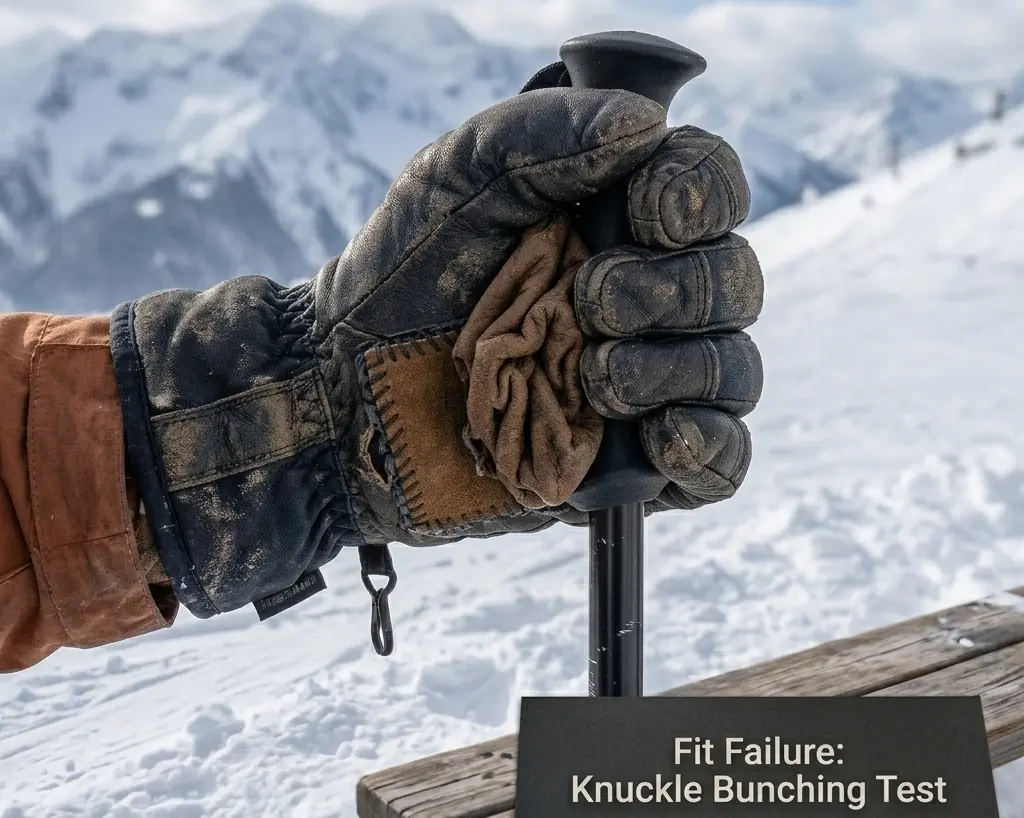
Test 2 — The fist grip test
Make a firm fist inside the glove as though gripping a ski pole. Hold it for ten seconds. Check: does excess material bunch across the knuckles? Do you feel pressure across the knuckle line? Is any specific finger edge under pressure? The fist test reveals fit and seam problems that are invisible when the hand is open, because it replicates the actual loaded position during skiing. Most glove discomfort occurs during grip load — this test puts the glove into that state before you are on the mountain.
Test 3 — The wrist strap test
Tighten the wrist strap to your normal setting and hold both hands at heart height for two minutes. Check each finger individually: is any finger noticeably colder or larger than its neighbour? Numbness specifically in the ring and little finger indicates ulnar nerve compression from the strap. Loosen two notches and re-test. If numbness resolves, strap tension is the cause and the fix is simply not over-tightening.
Test 4 — The liner seating test
Remove the glove and run your fingers around the inside to check whether the liner is fully flat against the shell on every surface, including between the fingers and across the palm. Any fold or ridge in the liner is a future pressure point. Re-seat the liner fully, smoothing it flat from the fingertips toward the cuff. If the liner does not stay fully seated, it is the wrong size for that shell — a common problem when aftermarket liners are used in manufacturer shells.
Most glove discomfort diagnosed mid-mountain could have been identified in the car park. The fist grip test in particular replicates the exact loaded position that causes problems — five seconds in the car park beats discovering the issue halfway up the first chairlift.
My Testing Process — What I Actually Did
Over multiple seasons I have systematically tested discomfort causes using a consistent methodology: identify the symptom, isolate the variable, test one change at a time, and track results across at least five ski days before drawing conclusions. This matters because many discomfort causes are intermittent or progressive — a problem that is absent on a short ski day at moderate exertion may be significant on a full day at high intensity.
My process for isolating liner-related discomfort: I skied identical sessions on consecutive days with the liner fully seated versus the liner left loose inside the shell. The difference in pressure hotspot location and intensity was immediate and consistent. Properly seated liner: no shifting pressure points. Loose liner: pressure points that moved and intensified as the liner shifted during the session. This confirmed that liner bunching is a real and under-recognised discomfort cause separate from fit.
For wrist strap testing: I tracked numbness onset time and affected fingers across four different strap tightness settings over consecutive days. Tight setting: numbness in ring and little finger within thirty minutes. One notch looser: numbness onset at approximately ninety minutes. Two notches looser: no numbness across a full six-hour day. Three notches looser: minor cold air entry at the wrist in wind. This established the optimal range for my hand — snug enough for warmth, not tight enough to compress the nerve.
For moisture testing: I compared identical gloves used with and without a thin wicking liner inserted, tracking the onset and severity of afternoon rubbing on equivalent effort days. Without liner: noticeable increase in rubbing from approximately 1pm on active days. With wicking liner: rubbing onset delayed to approximately 3:30pm on the same conditions. The liner reduced sweat accumulation at the skin surface without adding meaningful bulk. This is the most consistent field fix for moisture-driven afternoon discomfort.
The clearest finding across all testing: adjustable problems (strap, liner) produce dramatic improvement when addressed, while fit and construction problems produce no improvement regardless of what adjustments are applied. When adjustments don’t help, the glove itself needs to change.
Fixes That Work — What Each One Does and When It Fails
Loosen the wrist strap
This is the highest-confidence quick fix available and takes ten seconds. If the discomfort is specifically in the ring and little finger and onset is within the first hour, loosen the strap two notches and test across the next run. Improvement should be noticeable within ten to fifteen minutes of adjusted circulation. This fix has no downside if the strap was already too tight. If the symptom pattern is not specifically ring-and-little-finger numbness, loosening the strap will not help — it addresses ulnar nerve compression and nothing else.
Re-seat the liner
With the glove off, feel inside and confirm the liner is smooth against every surface. Re-seat it from the fingertips toward the cuff, pressing it flat against the shell between each finger. This fix is permanent for that session and usually takes under two minutes. It fails when the liner is the wrong size for the shell — in which case it will continue shifting throughout the day regardless of how well it is seated at the start.
Add a thin wicking liner under the shell
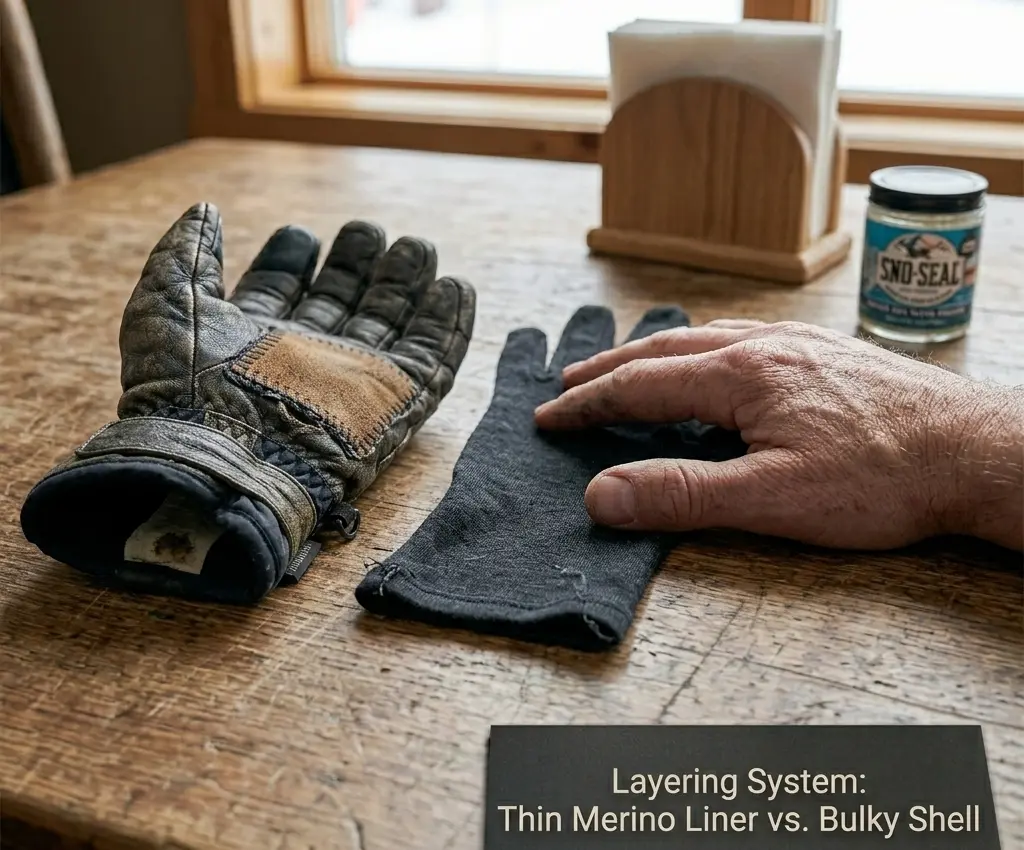
This addresses moisture-driven afternoon discomfort. A thin merino wool or polypropylene liner wicks sweat away from the skin surface, keeping the lining-to-skin interface drier throughout the day. The limitation: if the glove already fits correctly with no liner, adding a liner may make the fit marginally tighter. Test the fist grip test with the liner added before committing to it for a full day. If the liner makes the knuckle pressure worse, the glove does not have the internal volume to accommodate it.
Shell break-in for stiffness
A stiff shell becomes more flexible with repeated flexion across multiple wear sessions. Wearing the gloves at home during quiet periods — watching something, reading, doing tasks where the hands are active — accelerates this process without the pressure of a ski day. The shell should show meaningful improvement in flexibility within five to eight hours of wear time. If stiffness does not reduce after ten hours of wear time, the material is not a break-in stiffness — it is a construction characteristic that will not change meaningfully.
Thin foam padding over a specific seam
For a seam that is causing linear rubbing on a specific finger, a small piece of gel or thin foam tape placed directly over the contact point changes the friction surface from a hard seam edge to a smooth, rounded one. This works as a mid-mountain field fix. As a permanent solution it is less reliable because the foam shifts during skiing and can itself create pressure. The right long-term solution for seam-driven discomfort is a different glove with external seams or flat seams in that zone.
| Fix | Addresses | Advantage | Limitation | Confidence |
| Loosen wrist strap | Ulnar numbness; ring/little finger coldness | Immediate; reversible test | Does nothing if numbness is from finger fit | High |
| Re-seat liner inside shell | Pressure hotspots that shift location | Instant; free | Not useful if liner is correct size for shell | High |
| Add wicking liner | Afternoon moisture/friction increase | Reduces moisture-driven rubbing significantly | Adds bulk; may worsen fit if already snug | Medium |
| Break-in regimen at home | Stiff shell resisting hand movement | Genuine improvement after 5–8 wear sessions | No effect on wrong-size fit problems | Medium |
| Thin foam pad over seam | Linear seam rubbing on specific finger | Works as mid-mountain field fix | Adds pressure if fit is already snug | Low-medium |
| Size exchange | Finger length wrong; palm width wrong | Only true fix for fit-based discomfort | Requires same model in correct size | High |
| Different glove model | Construction issues (seam placement, insulation) | Permanent fix for construction problems | May need to try multiple models to find fit | High |
Symptom Diagnosis: What You Feel to What It Means
| Symptom You Notice | Most Likely Cause | Diagnostic Next Step |
| Cramping at fingertips from the first run | Fingers too long for glove cavity | Try a longer glove or next size up — do the fingertip gap test first |
| Pressure across knuckles during pole grip | Glove palm too narrow or excess material folding | Squeeze fist test: if material bunches across knuckles, fit is wrong |
| Linear rubbing pain along one finger edge | Seam running along finger side under grip load | Check seam placement — run fingertip along finger sides to locate |
| Cold fingertips; warm palm simultaneously | Uneven insulation — fingers undertreated | Add thin wicking liner to improve finger warmth; assess insulation coverage |
| Stickiness or increased rubbing in the afternoon | Moisture accumulation; lining saturation | Remove liner mid-day and check for dampness; improve post-session drying |
| Hand fatigue and forearm soreness by midday | Shell too stiff — muscles compensating | Break-in test: glove should resist, not prevent, fist closure |
| Numbness in ring and little finger specifically | Wrist strap or cuff too tight on ulnar nerve | Loosen strap two clicks; if numbness resolves within 10 min, that was the cause |
| Pressure that shifts location during skiing | Liner bunching and shifting inside shell | Re-seat liner fully before each session; check mid-day if problem recurs |
| Both hands numb symmetrically from first run | Gloves wrong for conditions — too thin | Not a fit or construction issue — insulation weight is insufficient for temp |
| Discomfort only on cold days, fine on warm days | Insulation compresses more in cold | Glove body stiffens in cold; may need warmer glove, not a different fit |
Common Mistakes That Make the Problem Worse
Tightening the wrist strap to reduce movement. The intuition that a tighter strap means a more secure glove is understandable but wrong. A snug closure that stops cold air entry requires very little strap tension — significantly less than most skiers apply. Over-tightening does not improve warmth or security meaningfully; it compresses the ulnar nerve and reduces hand circulation. The strap should close the cuff against air entry, not clamp the wrist.
Adding a second liner when the first liner is already saturated. When gloves feel uncomfortable in the afternoon, the instinct is to add insulation. But moisture-driven discomfort is made worse by adding bulk that restricts air circulation and holds more moisture against the skin. The correct response to moisture accumulation is a thinner wicking layer, not a thicker insulating one.
Assuming break-in will fix a fit problem. A glove that is too short in the fingers does not become longer through break-in. A glove whose seams run along the finger sides does not move those seams through wear. Break-in genuinely helps shell stiffness. It does not help finger length, palm width, or seam placement — which are fixed dimensions of the glove’s construction.
Testing at rest rather than under load. Most fit assessment happens with the hand open or lightly closed. Most glove discomfort happens during the loaded grip position during pole planting. A glove that feels fine with an open hand and shows all its problems during a firm grip is being tested in the wrong position. The fist grip test must be the primary assessment, not the open-hand comfort test.
Attributing discomfort to cold rather than fit. When fingers go numb, cold is the assumed cause. But a glove that restricts circulation causes cold fingers that look exactly like a thermal problem. If numbness is specifically in the ring and little fingers, or if it resolves when the wrist strap is loosened, the cause is mechanical compression rather than temperature. Warming the hands does not fix a compression problem — adjusting the strap does.
When the Gloves Are Not the Problem
You have Raynaud’s syndrome or another circulation condition. Raynaud’s causes blood vessels to overreact to cold by constricting sharply, resulting in colour changes and numbness that are not related to glove fit or compression. If you have a diagnosed circulation condition, glove fit improvements may help at the margins but will not eliminate the underlying response. Heated gloves or chemical hand warmers inside the glove are more effective interventions than fit adjustment for circulation-driven cold.
The temperature is outside the glove’s rated range. A three-season glove in extreme cold is uncomfortable regardless of how well it fits. If both hands feel cold and numb symmetrically from the start of the session on a very cold day, the glove insulation weight is insufficient for the conditions. This is not a fit or discomfort problem — it is a capability mismatch. Adjusting the fit will not change how warm the glove is.
Grip technique is creating the fatigue. Some skiers grip poles with significantly more force than the technique requires. A tight, continuous grip throughout a run produces hand and forearm fatigue that is attributed to glove stiffness but is actually a technique issue. The test: if hand fatigue disappears when you consciously relax your grip to minimal pressure on flat terrain, the fatigue is grip-technique driven. Glove changes will not solve this.
The discomfort is cold-temperature stiffness of the glove, not a fit problem. Many gloves that are flexible and comfortable at moderate temperatures become noticeably stiffer and more restrictive at temperatures below approximately -15°C. This is a material property, not a fit problem. The glove that worked fine on moderate days becomes uncomfortable on extreme cold days. If the discomfort is temperature-correlated and otherwise absent, material cold-stiffness is the cause — and the solution is a glove designed for those temperatures, not a different fit.
Self-Check Tests You Can Run Right Now
The fingertip gap test (pre-session)
Glove on, hand flat. Press each fingertip against a surface. Each finger should touch the glove tip with light contact. Jammed fingers = too short. More than 5mm gap = too long in that dimension. Both cause discomfort in different ways over a full day.
The fist grip test (pre-session)
Make a firm fist as though gripping a pole. Hold for ten seconds. Check knuckle pressure, seam contact on finger sides, and whether excess material folds across the palm. This is the single most important test because it replicates the actual loading condition of skiing.
The liner seating check (pre-session)
Before putting on the gloves, reach inside and feel for any liner bunching or ridges between the fingers. Re-seat if needed. This takes thirty seconds and eliminates one common discomfort cause before it starts.
The wrist nerve test (during the first run)
If numbness appears in the ring or little finger within the first thirty minutes, loosen the wrist strap two notches and ski one run. If numbness resolves, strap tension was the cause. If it persists after loosening, the cause is elsewhere — likely finger fit.
The moisture onset test (mid-day)
At the midday break, press the interior lining of the palm with a dry fingertip. Is it damp? Compared to how it felt in the morning. If it has become noticeably wetter, moisture accumulation is likely causing or worsening the afternoon discomfort. A thin wicking liner for tomorrow’s session will delay this onset significantly.
The isolation test (next session)
Make one change at a time — different strap setting, liner added or removed, liner re-seated — and ski a full session to assess the result. Testing multiple changes simultaneously means you cannot identify which change made the difference, which wastes the diagnostic information.
Warning Signs: When to Stop Skiing With Those Gloves
| Warning Sign | What It Means |
| Blisters or raw skin after one full day | The glove is causing tissue breakdown — continuing makes it worse, not better |
| Fingers numb within 10–15 minutes of skiing | Blood flow is being cut off — circulation impairment at this level is a safety issue |
| Pain starts within the first run, not after hours | Fit is wrong from the start — no amount of break-in or adjustment corrects fundamental sizing |
| Grip on poles noticeably weaker than gloveless | Dexterity is impaired — this affects both skiing performance and safety in a fall |
| Discomfort identical in a glove one size larger | The problem is construction (seam placement, insulation distribution) not fit — same model won’t fix it |
Any sign from this table means the gloves are causing harm rather than discomfort. Continuing to ski through blisters, circulation impairment, or grip weakness is not a minor inconvenience — it affects safety and causes damage that outlasts the ski day. The right response is to stop using the glove that day and diagnose the cause before using it again.
Decision Checklist: Fix or Replace?
Find your specific situation. Each row reflects tested outcomes, not general advice.
| Your Situation | Right Response | Action |
| Numbness in ring/little finger; strap felt tight | Loosen wrist strap — likely cause, easy fix | Fix |
| Pressure hotspot that shifts when you move fingers | Re-seat liner — bunching, not a fit problem | Fix |
| Afternoon moisture increase causing rubbing | Add thin wicking liner under the shell | Fix |
| Shell stiff; hand fatigued after half a day | Break-in regimen at home across 5–8 wears | Fix/Monitor |
| Fingertip cramping from the very first run | Fit is wrong — size or model change needed | Replace |
| Knuckle pressure constant during any pole grip | Palm width or cut is wrong — model change needed | Replace |
| Linear seam pain that returns despite padding | Construction issue — seam placement on skin | Replace |
| Blisters or raw skin after one day | Glove is causing tissue damage — stop using it | Replace |
| Numbness in all fingers symmetrically from start | Insulation insufficient — not a fit or seam problem | Replace (warmer model) |
The most common diagnostic error: trying to fix a fit problem with adjustments. If the fist grip test shows knuckle pressure or finger cramping, no strap adjustment, liner change, or break-in will correct it. The glove dimensions are wrong for your hand. That requires a different glove, not a different setting.
Preventing Discomfort Before It Starts
Most of the skiers I have watched buy gloves by checking warmth ratings and price, then trying the gloves briefly with an open hand. The open-hand test tells you nothing meaningful about how a glove will feel after four hours of pole planting. The fist grip test in the shop — firm grip, held for ten seconds — reveals most fit and seam problems before purchase, when returning them is still straightforward.
For moisture management: if you tend toward warm or active hands, consider the glove’s breathability specification alongside its warmth rating. A glove rated for very cold conditions that is used in active moderate conditions will trap sweat that a more breathable glove would move. The discomfort from moisture accumulation across a full day is significant and entirely preventable by matching breathability to your typical exertion and temperature conditions.
For liner management: if the gloves have a removable liner, take it out and re-seat it fully before every session. This takes thirty seconds and eliminates one common pressure-point cause entirely. Check whether the liner fits the shell correctly — a liner sold separately for the same glove model is not always cut identically to the one that came with it, and size differences create bunching.
The single most reliable indicator that a glove will be comfortable across a full day is how it feels during the fist grip test held for thirty seconds at the end of a five-minute warmup. By that point the glove has been on the hand long enough to reflect real wearing conditions rather than fresh-out-of-the-bag stiffness. Any discomfort at that point will be worse, not better, after four hours of skiing.
What to Do With This Information
The first step is identifying which category your discomfort falls into. Adjustable problems — strap tension, liner bunching, moisture accumulation — can be tested and corrected today with no cost. Fit problems — finger length, palm width, excess material — require a different glove and cannot be resolved through any adjustment or break-in. Construction problems — seam placement, insulation distribution — require a different model, and often a different brand that uses a different cutting pattern.
Run the four pre-session tests before your next ski day. They take five minutes and will tell you whether the discomfort you are experiencing is fixable with the gloves you have or whether it is structural. That distinction determines whether an adjustment solves your problem or whether you are adjusting something that was never going to change.
When the Issue Isn’t Fit—It’s Just the Cold
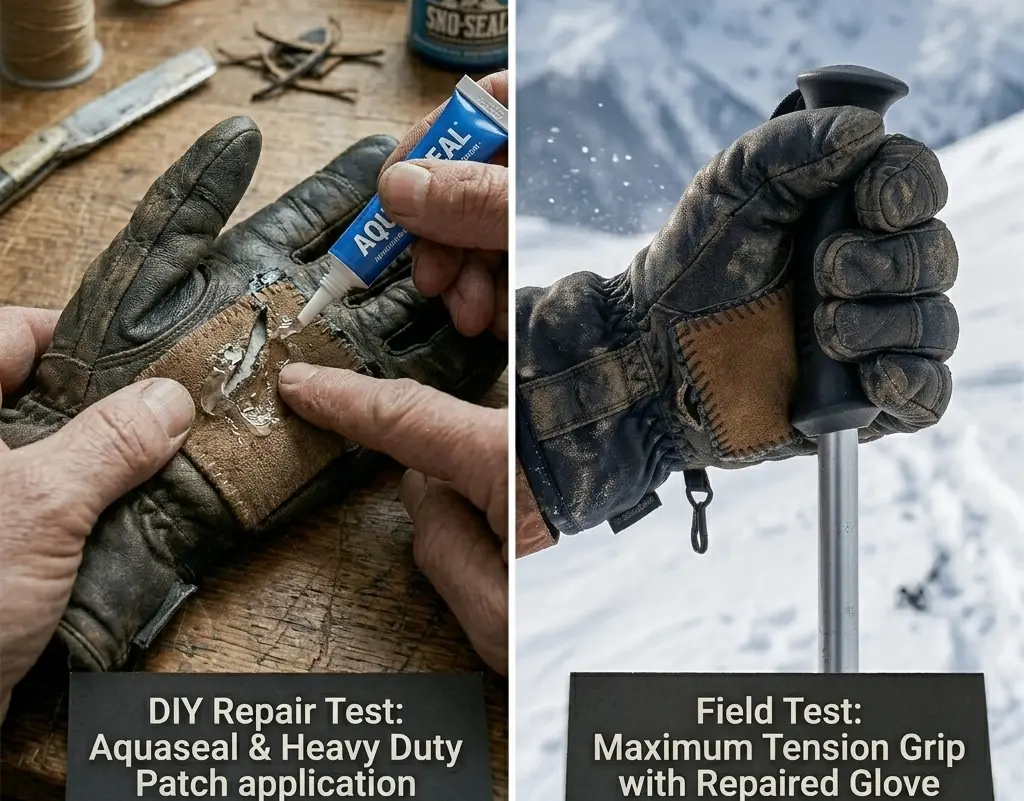
If your diagnostic tests revealed that your symmetrical numbness isn’t a fit issue or a pinched nerve, but rather that your gloves simply lack the insulation for the conditions, no amount of strap adjustment will save your ski day. You are dealing with a capability mismatch, and you need a glove built specifically to handle sub-zero temperatures.
Stop freezing and read my comprehensive breakdown of the best warmest ski gloves, where I test and rank the models that actually deliver on their thermal promises when the mountain gets extreme.
About the Author
Awais Rafaqat has over 15 years of experience testing ski gear in some of the harshest conditions across North America, from the dry sub-zero peaks of the Rockies to the wet, freezing slopes of the Pacific Northwest. He specializes in real-world gear testing to help skiers find equipment that keeps them warm, dry, and performing at their best on every run.
© SkiGlovesUSA.com — Discomfort causes and fixes described from direct multi-season testing. No sponsored product mentions.