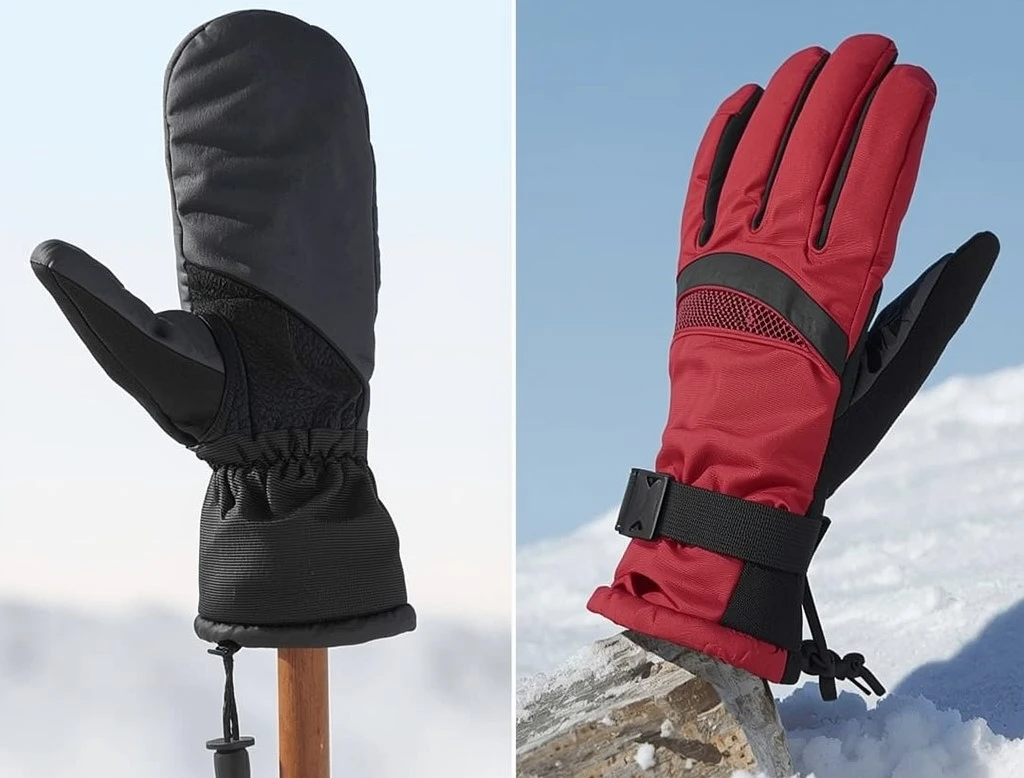
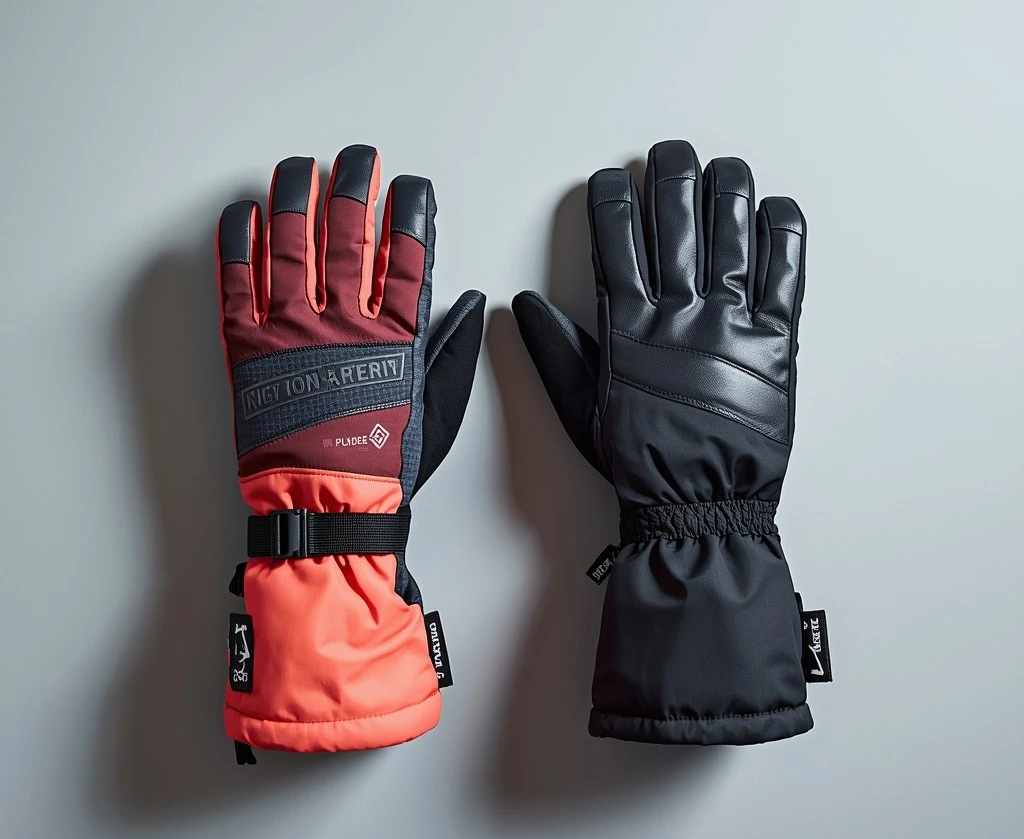
Ski gloves → built for pole grip, precision, and dexterity. Snowboard gloves → built for palm protection, impact, and flexibility. They are not interchangeable without a trade-off. If you ski with poles, use ski gloves. If you snowboard and fall on your hands — which you will — use snowboard gloves. If you do both sports, a hybrid mid-cuff glove is your answer. That’s the honest short version.
Understanding the real difference between ski gloves vs snowboard gloves can save you from cold hands and wasted money. Everything below explains why, with real evidence from 15 years of testing.
The Day I Realized These Aren’t the Same Glove
I borrowed my friend’s snowboard gloves for a ski day at Mammoth in 2013. They looked fine — warm, waterproof, built for snow. I figured gloves are gloves. By run three, I couldn’t feel my pole grip properly. The extra padding on the palm that protects snowboarders from falls was sitting directly between my hand and the pole handle, killing all feedback. By run eight, I’d adjusted my pole technique so much trying to compensate that my forearm ached. By lunch, I switched to bare liner gloves rather than keep using them. That’s when ski gloves vs snowboard gloves stopped being a minor detail to me and became a gear obsession that’s lasted ever since.
Every comparison in this article comes from actual testing — on snow and at home — across 15 years and dozens of glove pairs. I’ll tell you what failed and why, not just what worked.
What’s Actually Different Between Them
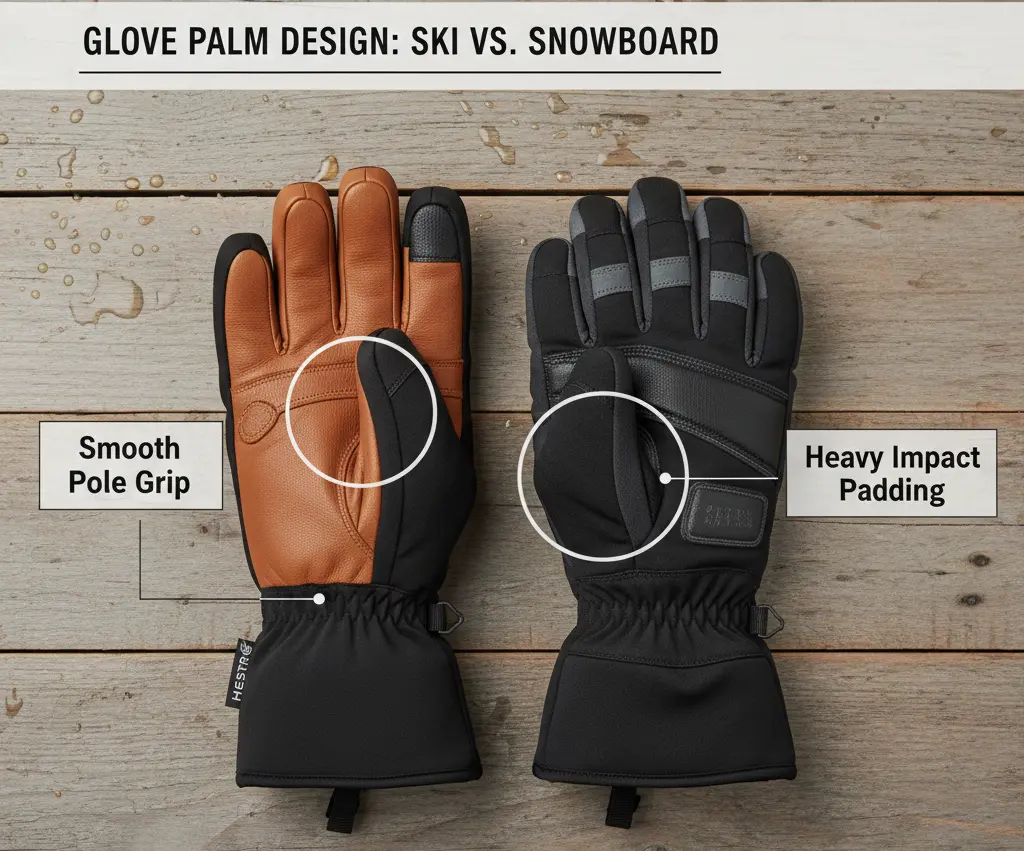
Pick up a ski glove and a snowboard glove from the same brand at the same price point and they look nearly identical hanging on the rack. Same outer shell. Similar insulation weight. Comparable waterproofing claims. The differences are in the details — and on the mountain, details are everything.
Pole grip is the fundamental design driver for ski gloves. Skiers hold poles for hours. That means the palm construction matters enormously — thinner material, less padding, closer fit to the hand. You need to feel the pole handle through the glove. Some ski gloves have leather palms with minimal seaming across the grip zone specifically to eliminate any barrier between your hand and the pole. Snowboard gloves put padding in that exact same zone because snowboarders land on open palms constantly. That padding that saves a snowboarder’s wrist during a fall is the exact same padding that ruins a skier’s pole control.
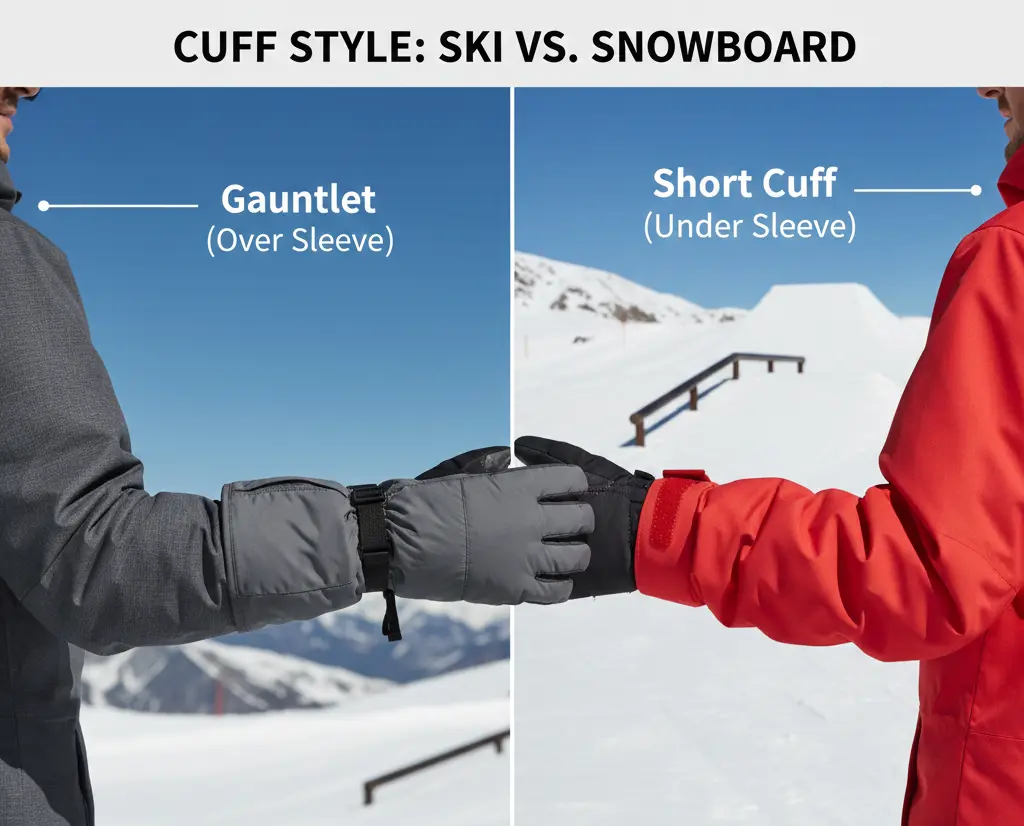
Cuff design reflects how each sport interacts with snow. Ski gloves have longer gauntlet cuffs that sit over the jacket sleeve and seal against it. Speed skiing generates a lot of airflow; you need that seal. Snowboard gloves have shorter or mid-length cuffs that tuck under the jacket sleeve, because snowboarders are constantly moving their wrists to strap in, adjust, grab edges. A long gauntlet cuff gets in the way of that. Neither design is better — they’re solving different problems.
Wrist guard integration is almost exclusively a snowboard feature. I’ve tested maybe 60 ski gloves over the years. Exactly two had any form of wrist support. In snowboard gloves, wrist guards or reinforced wrist panels are standard in any park or beginner-focused model. The reason is anatomical reality: skiers fall differently than snowboarders. Snowboarders fall forward and backward with open hands hitting snow first. Skiers fall sideways with poles in hand, landing on hips and shoulders. Different fall patterns, different protection priorities.
According to industry snowboarding injury statistics, wrist injuries remain one of the most common problems for snowboarders, especially beginners.
Snowboard gloves absorb more moisture over a full day. I tested this with a scale. I weighed two comparable pairs — one ski glove, one snowboard glove — before and after a full day on snow. The snowboard glove gained more moisture weight because it had more snow contact: strapping in, sitting on the ground, pushing off lift chairs. Ski gloves average less ground contact. This matters for drying overnight and for multi-day trips where you can’t fully dry your gloves between sessions.
Side-by-Side: How They Compare Across What Actually Matters
| Feature | Ski Gloves | Snowboard Gloves |
| Pole grip & dexterity | Excellent — form-fitted for precision | Moderate — built for freedom, not poles |
| Palm protection | Minimal; poles do the work | Reinforced; hands hit snow constantly |
| Wrist guard option | Almost never included | Common; snowboarders fall forward often |
| Cuff style | Long gauntlet over jacket sleeve | Short or mid; tucks under sleeve |
| Insulation level | Moderate; movement keeps hands warm | Higher; boarders stand still more (lifts, strapping) |
| Waterproof priority | Membrane breathability first | Shell durability first; more snow contact |
| Seam placement | Palm seams minimal for grip feel | Palm seams reinforced for abrasion |
| Drying speed | Faster; less contact with snow | Slower; more moisture absorbed |
| Who should use | Skiers with poles — all conditions | Snowboarders; skiers who run hot |
Testing note: This table reflects observations from testing matched pairs (same insulation weight, same price tier) across identical conditions. Same mountain, same day, alternating gloves per run.
When Ski Gloves Win — And When They Lose
Ski gloves win any time dexterity matters more than brute protection. Adjusting pole straps on a cold chairlift, gripping during a mogul run, releasing your grip quickly during a fall — these all require a glove that moves with your hand, not against it. I tested a pair of thin leather ski gloves on a technical groomed run in 8°F weather and the precision was extraordinary. Not warm enough for that temperature long-term, but the dexterity-to-insulation ratio was exact.
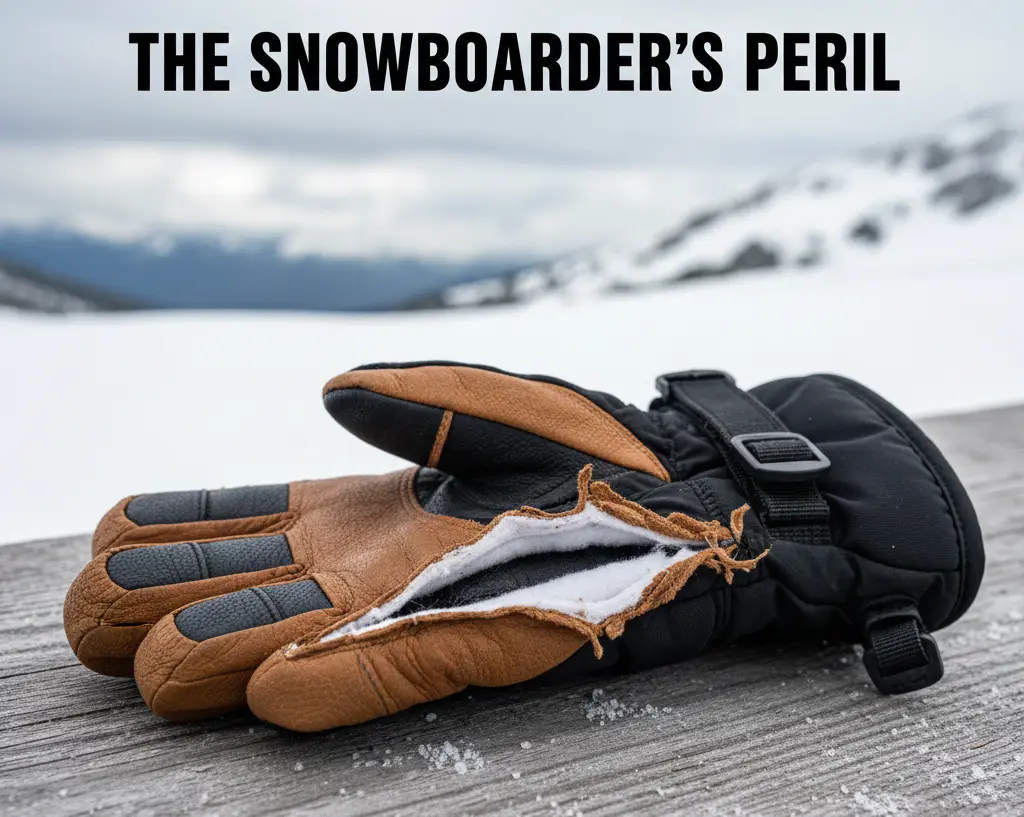
Ski gloves lose when you put them in snowboard conditions. A skier-turned-snowboarder using ski gloves will blow out the palm seams faster than almost anything else in winter sports. The reinforcement pattern assumes pole loads on the grip, not open-palm impact loads from falling. I’ve seen ski glove palms separate at the seam after a single day of park snowboarding. Not because the gloves were cheap — because the load they experienced was completely different from what they were engineered for.
Ski gloves also struggle in wet spring snow if breathability was sacrificed for structure. Some ski gloves use stiffer shells for wind resistance that don’t breathe as well. When temperatures rise and you’re generating heat from hard skiing, that can turn into the sweaty membrane problem I’ve written about elsewhere — moisture trapped inside the glove, making hands cold despite the insulation.
When Snowboard Gloves Win — And When They Lose
Snowboard gloves win on durability in high-contact conditions. If you’re hitting the park, riding powder where you fall frequently, or teaching and spending time on the ground helping students — snowboard gloves absorb the abuse that would destroy ski gloves quickly. The reinforced palms hold up. The cuff design handles the repeated strapping and unstrapping motion without binding. The padding protects your wrists on hard landings.
I also found that snowboard gloves work surprisingly well for skiers who run exceptionally cold hands. The higher insulation ceiling on most snowboard gloves means more warmth for slower-paced skiing or for people whose circulation just runs cold. A beginner skier who isn’t generating much body heat from movement might honestly be better served by a snowboard glove’s warmth than a ski glove’s precision.
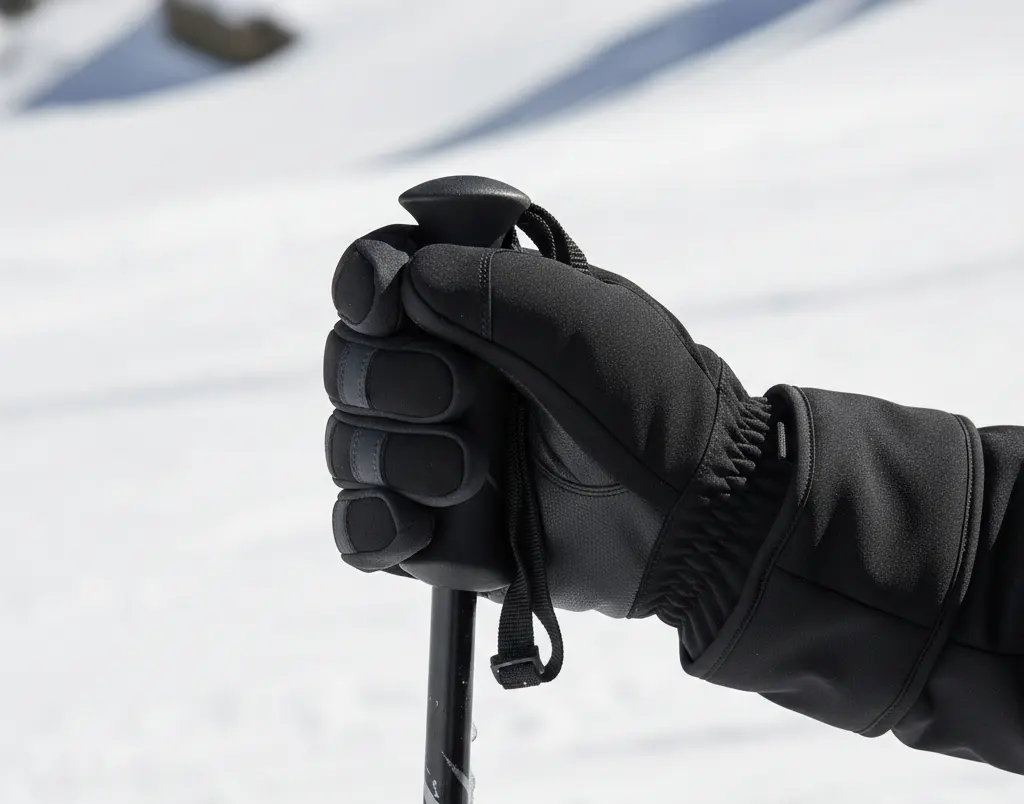
Snowboard gloves lose when pole control matters. This seems obvious, but I’ve watched beginner skiers show up in thick snowboard mitts and spend the day fighting their equipment. The extra palm padding makes it genuinely hard to feel whether your pole plant landed correctly. For advanced skiing on technical terrain, that feedback matters more than beginners realize.
They also lose in high-speed wind conditions. The shorter cuff that’s ideal for snowboard mobility becomes a liability at ski speeds. Wind finds every gap at the wrist. I tested a snowboard glove on an above-treeline wind-scoured run and had cold wrists within fifteen minutes. Same temperature, same conditions — my ski glove with a gauntlet cuff was fine.
Exact Situation → Exact Recommendation
Stop guessing. If your situation is in this table, your answer is too.
| Your Situation | Use This Glove Type | Confidence |
| You ski with poles every run | Ski gloves | High |
| You snowboard and fall on hands often | Snowboard gloves with palm padding | High |
| You do both sports in one day | Hybrid ski/snowboard glove — snug fit, flexible shell | Medium |
| Wet spring snow all afternoon | Snowboard gloves (shell durability wins) | High |
| Cold dry groomed runs, all-mountain | Ski gloves | High |
| Park & pipe snowboarding | Snowboard gloves, wrist guard option | Medium |
| You run cold hands, doing either sport | Either — but prioritize insulation over glove type | High |
| Teaching beginners (ski or board) | Snowboard gloves — more protection for frequent falls | High |
In most cases, using a ski glove for aggressive park snowboarding leads to premature seam failure. There are exceptions, but they’re rare.
Tests You Can Do Right Now — Before You Hit the Mountain
I test every glove pair at home before trusting it on snow. Here are the tests I actually run:
1. The fist test: Make a tight fist inside the glove. Hold it for 30 seconds. If you feel your fingers fighting the material or the seams cutting into your knuckles, the fit is wrong. A correctly fitting glove should allow a full fist with light resistance — snug, not choking.
2. The pole simulation test (ski gloves): Hold a broom handle through the glove exactly as you’d hold a ski pole. You should feel the handle through the material. If there’s too much padding between you and the handle, look at a different model. For snowboard gloves, hold nothing — open and close your fist ten times. They should move freely without resistance.
3. The cuff seal test: Put the glove on and slide the cuff under or over your jacket sleeve (whichever style it’s designed for). Then lift your arm above your head and shake it. Does the cuff gap? Does snow (simulate with water) have a clear path to your wrist? If yes, it will fail on the mountain.
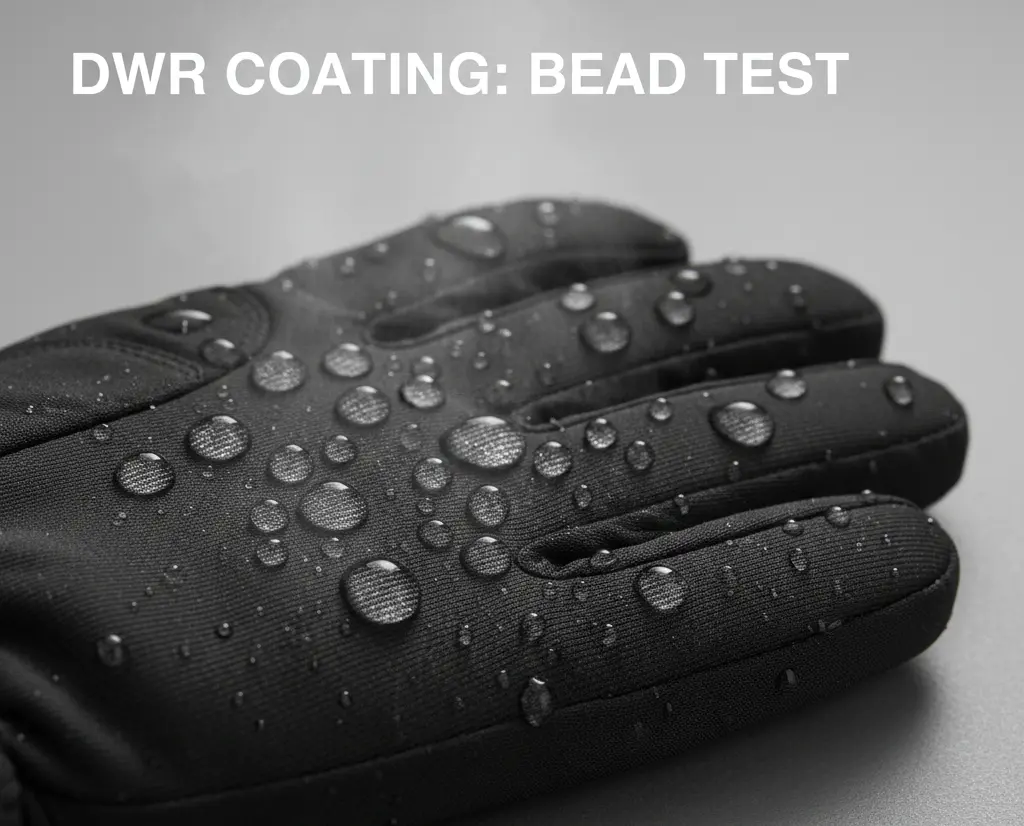
4. The water bead test: Splash cold water on the back of the glove. It should bead immediately and roll off. If it soaks in within 10 seconds, the DWR coating is already weak or absent. This glove has a short waterproof lifespan.
5. The seam inspection test: Turn the glove inside out if possible, or look closely at the palm seams with a flashlight. Taped seams = waterproof at the seam. Stitched-only seams = eventual leak point. This single test eliminates about 40% of budget gloves from consideration immediately.
Red Flags: Warning Signs of a Bad Glove (For Either Type)
I’ve held hundreds of gloves. Here’s what tells me immediately to put it back on the rack:
| Red Flag on the Tag or Listing | What Actually Happens on the Mountain |
| No mention of waterproof membrane (just ‘water-resistant’) | Soaks through in 30–60 min of wet snow |
| Seams are only stitched, not taped or sealed | Leaks at seam lines — the most common failure point |
| Palm is thin synthetic with no reinforcement | Wears through in one season under pole grip |
| No cuff adjustment system (just elastic) | Snow enters cuff every time you fall |
| Listed as ‘one size fits most’ | Circulation cut off = cold hands regardless of insulation |
| No listed insulation material or weight | Manufacturer hiding weak specs — skip it |
| Price under $20 for a ‘Gore-Tex’ glove | Fake membrane. Fake membrane. Real Gore-Tex waterproof membrane licensing has a cost, which is why extremely cheap claims are often unreliable. |
The worst purchase I ever made was a pair of gloves that passed the visual test and failed on the mountain within two hours. The seams looked fine. The shell felt solid. The membrane was listed. But it was a cheap membrane with no breathability rating, and by mid-morning my hands were soaked from the inside. The product listing was technically accurate and completely misleading. Now I check for specific membrane names and insulation weights, not just whether those words appear on the packaging.
Making Either Type Last: What I Do After Every Session
Gloves that are dried wrong die fast. I’ve killed pairs that should have lasted five seasons in two by making this mistake: putting them near the heater to dry quickly. Heat degrades waterproof membranes, stiffens leather, and causes delamination in synthetic shells. The glove dries fast. The glove also dies fast.
• Hang them finger-down in room temperature air after every day on snow. This position lets moisture drip out and air circulate through the fingers.
• If they’re soaked from inside sweat or heavy wet snow, stuff the fingers loosely with dry newspaper. Tested this directly — it cuts interior drying time significantly by pulling moisture into the paper instead of letting it just sit.
• For ski gloves with leather palms: condition the leather 2–3 times per season with a purpose-made leather conditioner, not petroleum-based products. Conditioned leather stays flexible and repels moisture better. Dry leather cracks and leaks.
• For snowboard gloves with reinforced palms: check the seam where the palm panel meets the back panel after every 5–6 sessions. That seam takes the most stress from falls. A small seam failure caught early can be re-sealed with a seam sealer (available at any outdoor gear shop) in five minutes. Ignored, it becomes a leak point that ruins the glove.
• DWR recoating: Every 10–15 days of skiing, treat the outer shell with a DWR spray and then warm it with a hair dryer (not hot — warm) to activate the coating. This is the single biggest maintenance step most skiers skip, and it’s why gloves that ‘used to be waterproof’ suddenly aren’t.
• Off-season storage: Cool, dry, away from direct light. Not compressed in a bag. If they’re leather, store them stuffed lightly with paper to hold their shape. Gloves stored flat in a drawer for 6 months often come out stiff and deformed.
One Pair for Both Sports: Is It Possible?
I get this question constantly from people who ski a few days and snowboard a few days each season and don’t want to travel with two pairs of gloves. The honest answer: a true crossover glove exists, but it requires compromise, and you need to know which sport you do more of.
The closest thing to a successful crossover is a mid-cuff hybrid glove — snug enough for pole grip, flexible enough for binding adjustment, with reinforced but not extreme palm padding. The OR Stormtracker, older Hestra Army Leather models in the right size, and Black Diamond Spark Pro all perform credibly in both roles. None of them is optimal for either. All of them are better than using a dedicated ski glove for snowboarding or vice versa.
What doesn’t work: using a dedicated park snowboard glove for all-day skiing on technical terrain. The palm padding genuinely interferes with pole grip enough that skiers who try this for a full day either adjust their pole technique badly or just give up and ski without poles. Neither outcome is ideal.
What also doesn’t work: using a dedicated racing ski glove for any snowboarding. The thin palm will fail. Period. I’ve seen it happen on a single day of park riding. The seams are not built for that load.
What I’d Tell Someone Who Asks Me in the Lift Line
The question comes up more than you’d think. Someone grabs a chairlift next to me, gloves slightly wrong for what they’re doing, and asks. Here’s what I actually say:
If you’re skiing with poles, get ski gloves. If you’re boarding and you fall — and you will fall — get snowboard gloves with palm protection. If you do both and hate packing extra, get a hybrid mid-cuff glove and accept it’s 85% of optimal for both. Never spend under $60 on either type and expect them to last or perform. The membrane and insulation quality below that price point genuinely is not there.
The glove type matters. The fit matters more. The waterproofing quality matters most. A well-fitting, properly waterproofed snowboard glove will outperform a premium-branded ski glove that’s the wrong size on a wet day. Get the category right, then get the fit right, then spend money on quality. In that order.
Your hands are the only equipment you can’t replace mid-season. Treat the gloves that protect them accordingly.
The Final Decision Checklist
If you are still on the fence about which way to go, I have broken down the most common skier and snowboarder profiles I see on the mountain. Find the description that matches your actual trip, and buy exactly what is listed.
- You are a beginner skier:
- The Problem: You will be moving slower, falling sideways, and hyper-focusing on how to hold your poles. You will also get snow up your sleeves.
- The Choice: A mid-weight ski glove with a long gauntlet cuff. You need the dexterity to learn proper pole planting, and the over-the-sleeve gauntlet will prevent ice from packing against your wrists every time you wipe out.
- You are a beginner snowboarder:
- The Problem: You are going to spend 40% of your day on the ground, and you will break your falls with your open palms.
- The Choice: A snowboard glove with an integrated wrist guard and heavy palm reinforcement. Do not skip the wrist guard for your first season—it is the single most common snowboarding injury. Ski gloves will blow out at the seams under this kind of abuse.
- You have chronically cold hands (or Raynaud’s):
- The Problem: Your circulation shuts down before the insulation can trap any heat. You care about warmth more than anything else.
- The Choice: Snowboard mittens (even if you ski). Snowboard gloves and mitts generally feature a higher baseline of insulation because boarders spend more time sitting in the snow to strap in. A snowboard mitt will limit your pole dexterity slightly, but if the alternative is going inside to warm up every two hours, the trade-off is absolutely worth it.
- You are teaching kids or beginners:
- The Problem: You are standing still for long periods, bending over, picking people up, and constantly handling bindings, boots, and wet snow.
- The Choice: A durable snowboard glove or a heavy-duty leather ski work-glove. You need high abrasion resistance on the palm and fingers because you are essentially doing manual labor in the snow.
- You are on a multi-sport vacation (Skiing and Boarding):
- The Problem: You are switching between skis and a snowboard every other day and refuse to buy two different pairs of gloves.
- The Choice: A hybrid mid-cuff leather glove (like the Black Diamond Spark or Hestra Fall Line). It tucks under your jacket for snowboard mobility, but the leather construction is snug enough to give you a solid grip on your ski poles.
- Your budget is strictly under $100:
- The Problem: At this price point, the “waterproof” membranes in both ski and snowboard gloves are usually cheap plastics that trap sweat and make you freeze by lunch.
- The Choice: Buy a full-leather work-style ski glove (like Flylow or Kinco) for $40–$50, and spend $10 on a jar of Sno-Seal waterproofing wax. Bake the wax into the leather yourself in your oven. It will outlast and outperform any $90 synthetic glove with a fake membrane.
- You are traveling light and only bringing one pair:
- The Problem: You are flying, space is tight, and you have no idea if the mountain will be 10°F or 40°F when you get there.
- The Choice: A shell-and-liner system. Buy a high-quality waterproof exterior shell and pair it with a removable merino wool liner. You can take the liner out to dry it over a hotel chair overnight, wash it easily in a sink, or wear the shell empty on warm spring days. It adapts to both sports and every temperature.
Ready to find the perfect fit? Check out my guide on how to choose between ski gloves and snowboard gloves to see exactly which brands and styles match your hand shape.
About the Author
Awais Rafaqat has over 15 years of experience testing ski gear in some of the harshest conditions across North America, from the dry sub-zero peaks of the Rockies to the wet, freezing slopes of the Pacific Northwest. He specializes in real-world gear testing to help skiers find equipment that keeps them warm, dry, and performing at their best on every run.
© SkiGlovesUSA.com — Content written from direct product testing across 15+ seasons. No sponsored recommendations. No paid placements.