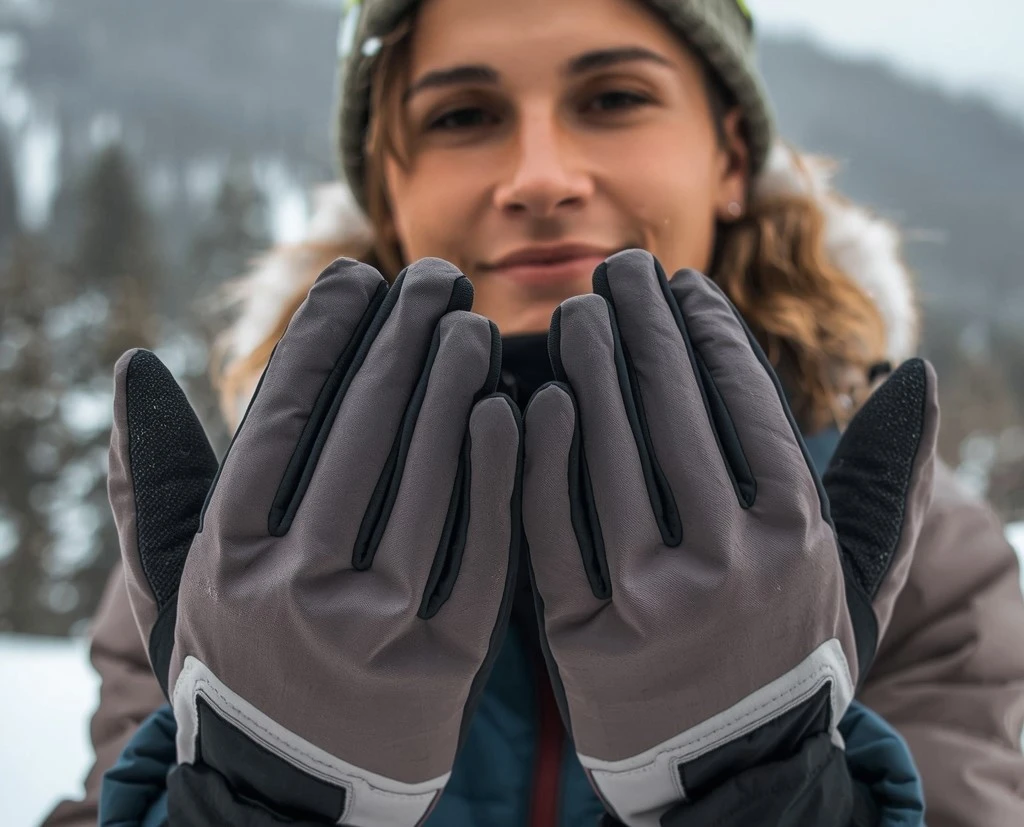
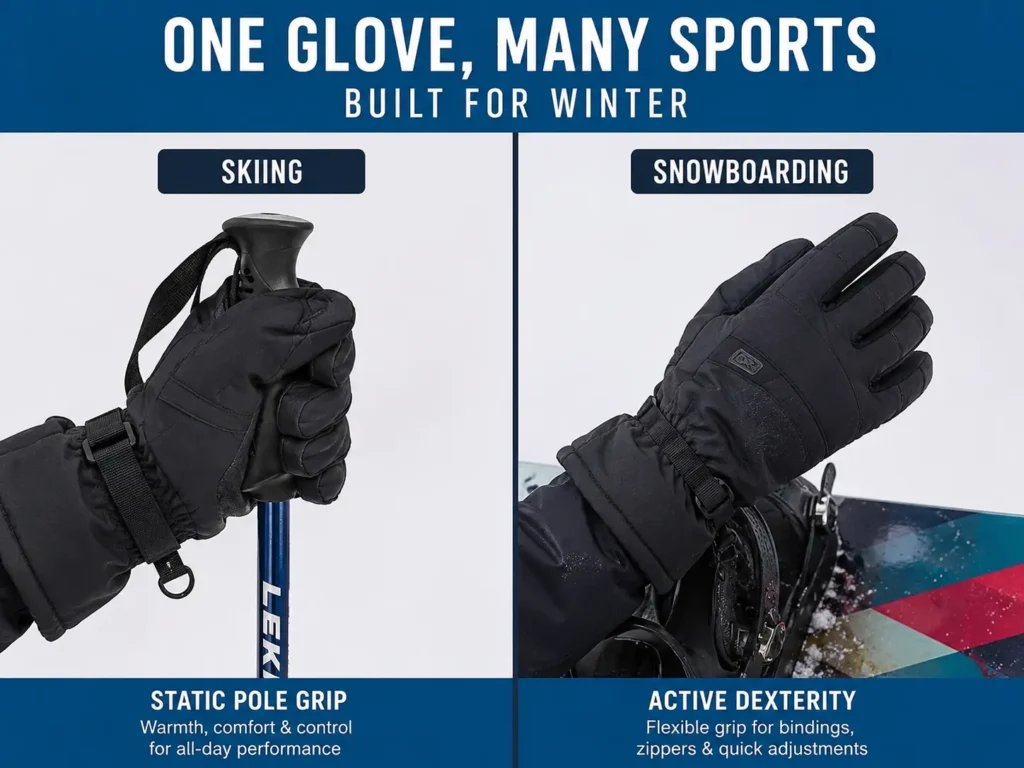
Quick answer: Yes, for some sports and no for others — it comes down to whether the activity needs the same hand position and dexterity skiing does, or something genuinely different. Ski gloves are built around a static, closed-fist grip on a pole and sustained cold exposure with minimal fine motor work. Snowboarding and sledding ask for almost the same thing, so ski gloves carry over well. Ice skating and anything involving small fasteners or repeated finger-independent tasks ask for something ski gloves weren’t built to give you.
If you’re trying to figure out whether your current pair covers your specific mix of activities, or whether it’s time to buy something built for your primary sport, the Ski Glove Finder narrows that down by what you actually do most, not just by temperature rating.
The rest of this comes down to matching glove design to activity demand, sport by sport, honestly — including where ski gloves genuinely fall short rather than pretending one pair does everything well.
- What Ski Gloves Are Actually Built For
- Why Hand Positioning Is the Variable Most People Miss
- Snowboarding: Close Enough That It Rarely Matters
- Ice Skating: Where Ski Gloves Genuinely Struggle
- Sledding and Tubing: Arguably Overbuilt for the Job
- Winter Hiking and Snowshoeing: A Moisture Mismatch, Not a Dexterity One
- Snowmobiling: The One Sport With a Real Engineering Gap
- Cross-Country Skiing: High Output, Different Moisture Math
- Where Insulation Choices Complicate the Comparison
- A Practical Way to Decide for Your Own Situation
- When Better Ski Gloves Solve the Problem Anyway
- A Quick Self-Check Before You Buy Anything Else
- Frequently Asked Questions
What Ski Gloves Are Actually Built For
Skiing puts your hand in one repeated position for hours: a loose fist around a pole grip, wrist slightly flexed, fingers doing very little independent work beyond holding on. The glove is designed around that position — insulation concentrated where a closed fist needs it, palm material built for consistent pole contact rather than varied grip patterns, and dexterity treated as a secondary concern behind warmth and wind resistance.
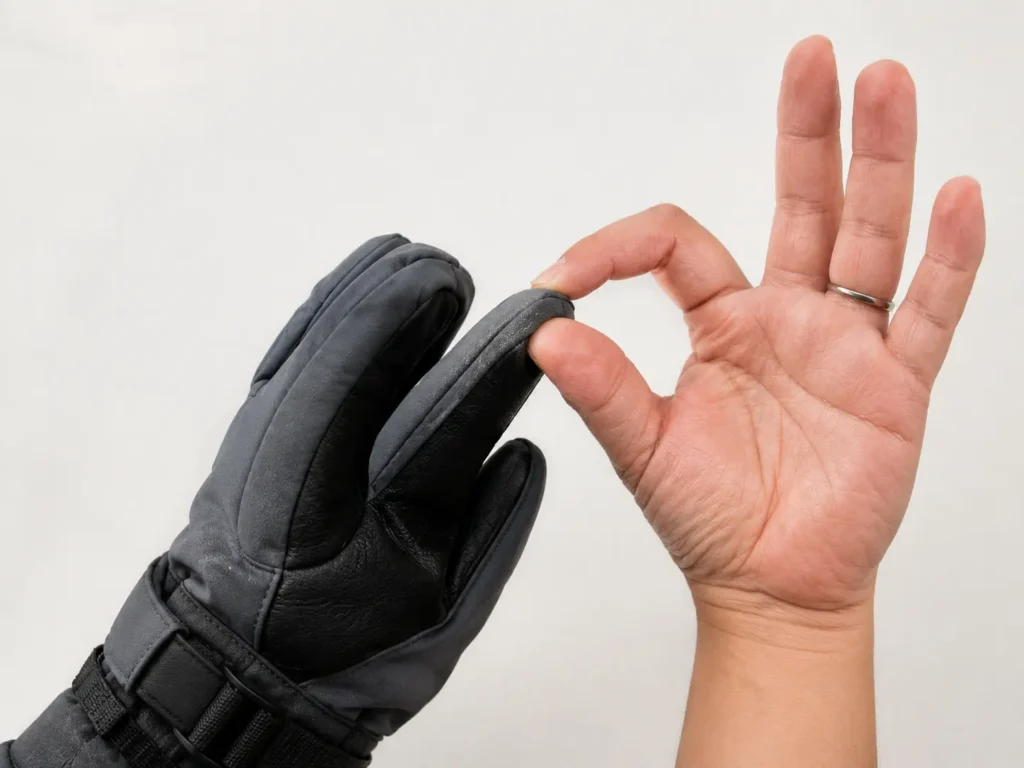
That design choice is completely reasonable for what skiing actually demands, and it’s exactly why ski gloves feel great on a chairlift and can feel clumsy the moment a task needs your fingers to move independently — tying a lace, working a small buckle, gripping something narrower than a pole. The glove isn’t failing; it’s just being asked to do something it wasn’t built around.
Why Hand Positioning Is the Variable Most People Miss
The instinct is to judge glove versatility by warmth alone, but warmth was never the variable that determines cross-sport performance — hand positioning and required dexterity are. A glove that’s plenty warm for ice skating can still perform poorly there if the sport demands finger independence the glove’s construction doesn’t allow.
This isn’t a small effect. Research measuring hand performance in gloved versus bare-hand conditions has found that glove thickness alone can more than double the time needed to complete tasks requiring fine coordination — placing and turning small objects took roughly twice as long wearing a glove built for protection over precision. Ski gloves sit on the thicker, less dexterous end of that spectrum by design, which matters enormously for some sports and barely at all for others.
Snowboarding: Close Enough That It Rarely Matters
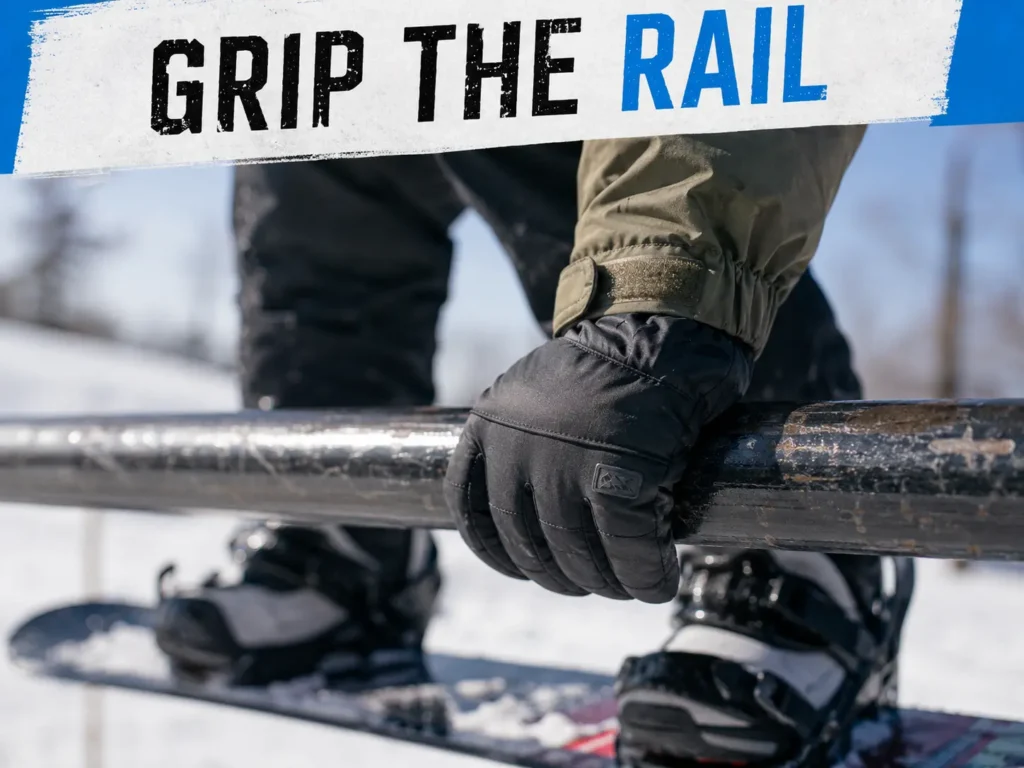
Snowboarding is the one activity where the “can you use ski gloves” question barely needs asking. The hand position — gripping a rail or the snow itself during a fall, minimal fine motor work, sustained cold exposure on a lift — overlaps with skiing closely enough that the same glove construction serves both activities almost identically.
Where a real difference shows up is impact protection. Snowboarders put a hand down on packed snow far more often than skiers do, and a ski glove’s palm reinforcement is built for pole-grip durability rather than repeated impact absorption. For occasional boarding, this rarely matters. For someone boarding as often as they ski, it’s worth comparing the two glove categories directly rather than assuming the overlap is total.
Ice Skating: Where Ski Gloves Genuinely Struggle
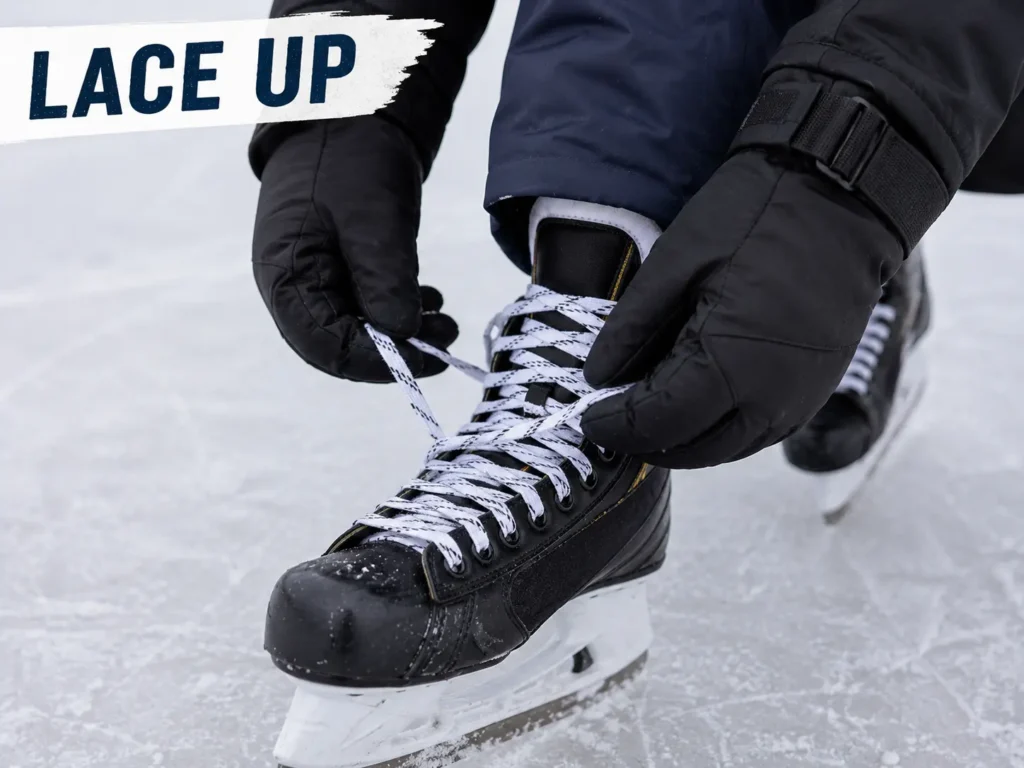
This is the clearest mismatch on the list, and it’s worth being honest about it rather than claiming versatility that doesn’t exist. Ice skating demands real finger independence — tying laces tight enough to matter, adjusting guards, actually feeling the blade edge through your boot via subtle balance adjustments that involve your whole body including hand positioning during falls and recoveries.
A thickly insulated ski glove built around a static pole grip works against nearly all of that. Lace-tying with numb, restricted fingers is the moment most people notice the mismatch directly — a task that takes ten seconds barehanded can become a genuine frustration in gloves built for a completely different hand posture. This is a case where the honest answer is that ski gloves work, technically, but noticeably worse than gloves or even a thin liner glove built with finger dexterity as the priority rather than an afterthought.
Sledding and Tubing: Arguably Overbuilt for the Job
Sledding asks less of a glove than almost any other winter activity on this list — grip a rope or handle, absorb some impact and friction from the snow, stay warm while mostly sitting or standing around between runs. Ski gloves aren’t just adequate here, they’re genuinely overbuilt for the demand, which is a good problem to have.
The one place this shifts is with kids sledding repeatedly and dragging hands through snow to brake or steady themselves. A ski glove’s reinforced palm and cuff protection actually earns its keep here in a way it doesn’t during quiet sitting, so if anything, sledding is a case where the “extra” durability ski gloves carry over from skiing becomes a genuine advantage rather than an unused feature.

Winter Hiking and Snowshoeing: A Moisture Mismatch, Not a Dexterity One
Hiking and snowshoeing don’t demand much finger independence, so the dexterity concerns that hurt ski gloves in ice skating mostly don’t apply here. What changes instead is exertion level and the moisture that comes with it.
Skiing involves real activity but with long passive stretches — lift rides, waiting in lines — that let sweat dissipate. Uphill hiking or snowshoeing is sustained exertion with far less passive recovery time built in, which means hands sweat more consistently and that moisture has less opportunity to clear before the next uphill push. A heavily insulated ski glove built around skiing’s activity pattern can run warmer than hiking actually needs, leaving hands damp rather than genuinely cold — a different problem than the one ski gloves solve well.
This shows up most clearly on the ascent portion of a hike or snowshoe trip, where output is highest and a ski glove’s warmth becomes a liability rather than a benefit — damp palms inside an over-insulated glove, with nowhere for that moisture to go until you stop moving or open the cuff to vent. The descent or flatter sections, where output drops back toward something closer to skiing’s own activity level, are where a ski glove’s warmth stops being a mismatch and starts working the way it’s supposed to. Anyone doing mostly flat, low-output snowshoeing rather than steep climbing will notice this mismatch far less than someone tackling real elevation gain.
Snowmobiling: The One Sport With a Real Engineering Gap
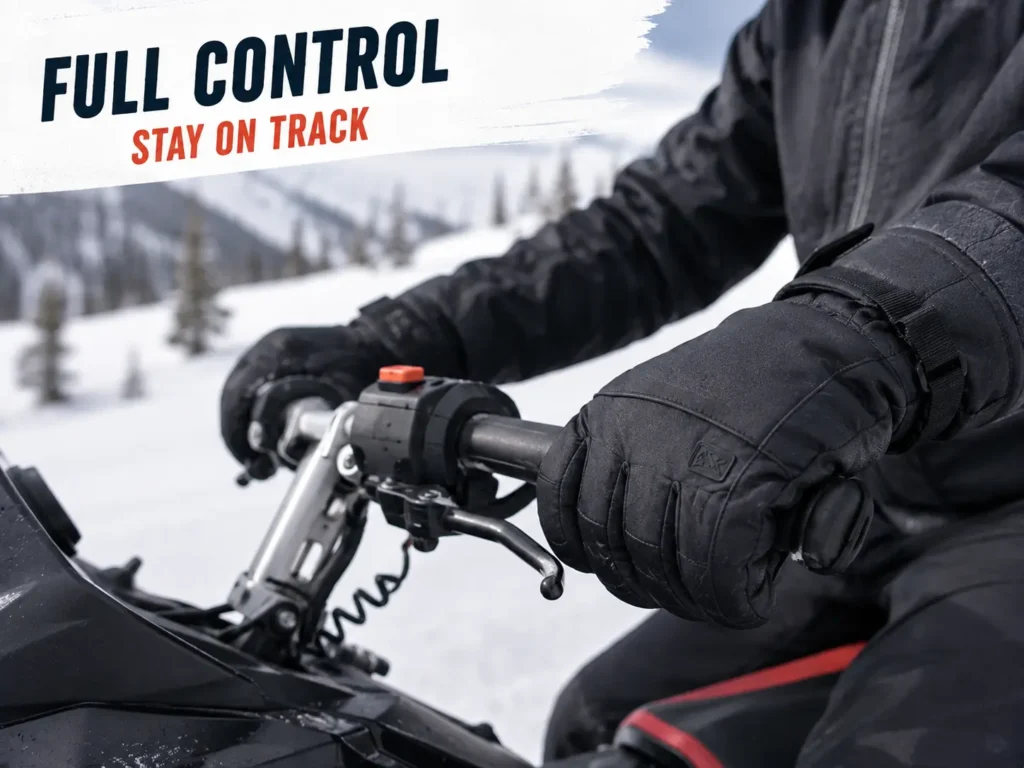
Snowmobiling is where a genuine design gap shows up, and it’s not about warmth or dexterity — it’s vibration. Sustained engine and trail vibration transmitted through the handlebars into the hands over hours of riding is a real physiological concern, serious enough that it has its own international testing standard.
Gloves specifically rated for vibration reduction are evaluated against ISO 10819, a standard developed for workers using vibrating power tools, measuring how much vibration actually reaches the palm through the glove material rather than just how the glove feels by hand. Ski gloves aren’t built or tested against this standard at all, since skiing never exposes hands to sustained mechanical vibration the way gripping a running snowmobile’s handlebars for hours does. For occasional, short rides this gap rarely matters. For anyone riding regularly and for long stretches, it’s a legitimate reason to consider gear built and tested specifically for vibration exposure rather than assuming warmth alone covers it.
Cross-Country Skiing: High Output, Different Moisture Math
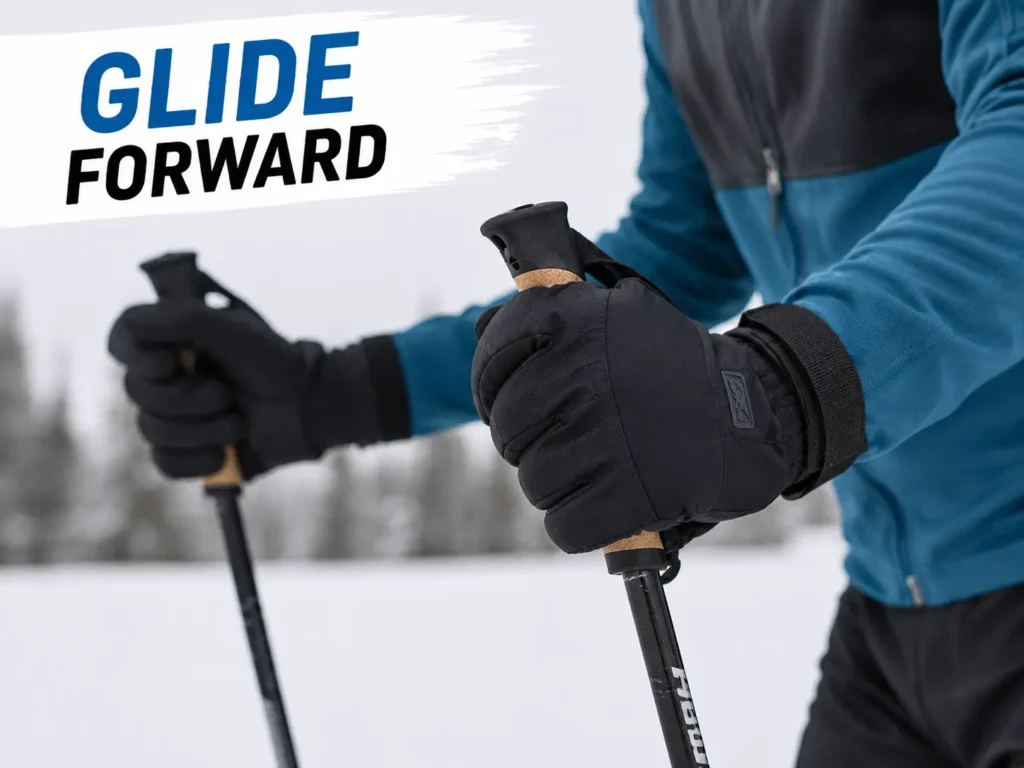
Cross-country skiing shares surprisingly little with downhill skiing from a glove-demand standpoint, despite the shared name. It’s continuous, high-output aerobic exercise with almost none of downhill skiing’s passive lift-ride recovery time, which means hands run considerably warmer and sweatier throughout an entire session rather than cycling between exertion and rest.
A downhill ski glove’s insulation weight, built around intermittent activity with real recovery windows, tends to run too warm for sustained cross-country effort — the same moisture-buildup problem that shows up in hiking, just more pronounced given how continuous the exertion is. Thinner, more breathable gloves built specifically for aerobic winter sports handle this better than a downhill-weight glove ever will, regardless of how waterproof or well-insulated that downhill glove otherwise is.
Where Insulation Choices Complicate the Comparison
Warmth and dexterity aren’t the only variables — how insulation behaves under repeated compression matters too, and it’s a factor that gets ignored in most versions of this comparison. Ski glove insulation is generally built for intermittent use: skiing all day, then hours of rest before the next session, giving compressed fibers time to recover their loft between wears.
Foam and fiber insulation has a documented physical limit on how many compression cycles it can absorb before permanently losing some of its loft — a property called compression set. Sports with tighter, more continuous grip demands, like snowmobiling or ice skating where hands are gripping something firmly for extended stretches, compress that insulation more consistently than skiing’s on-again, off-again grip pattern does. Over a season of heavy cross-sport use, that difference in compression frequency can measurably shorten how long a ski glove holds its original warmth compared to using it for skiing alone.
This is a slow, cumulative effect rather than something noticeable after a single outing, but it’s part of why “my ski gloves still look fine” isn’t the same as “my ski gloves are performing the way they did new” after a season of being pressed into service for an activity they weren’t originally built around.
A Practical Way to Decide for Your Own Situation
Start with how often you actually do the other activity relative to skiing. Someone snowboarding twice a season doesn’t need a second pair of gloves; someone snowmobiling every weekend through an entire winter is dealing with cumulative exposure that occasional use never triggers.
From there, weigh how much genuine finger independence the activity demands versus how much sustained output or vibration it involves. Ice skating and anything with small fasteners point toward dexterity as the deciding factor. Snowmobiling and long cross-country sessions point toward vibration and moisture management instead. Sledding and casual snowshoeing rarely hit either threshold hard enough to justify a second pair.
When Better Ski Gloves Solve the Problem Anyway
For several of these sports, the honest fix isn’t a completely different category of glove — it’s a better pair of ski gloves. Someone whose hands run cold snowmobiling occasionally often just needs more warmth and better wind resistance, which a higher-quality ski glove genuinely delivers. Someone hiking in gloves that run too warm can size down on insulation within the same ski glove category rather than buying a separate hiking-specific product. A range of options across insulation levels and price points covers more of these edge cases than it first appears, without requiring a closet full of activity-specific gloves for sports you do occasionally.
Ice skating and serious, regular snowmobiling are the two genuine exceptions on this list — cases where the mismatch is structural (dexterity, vibration testing) rather than something a warmer or better-fitted ski glove can close.
A Quick Self-Check Before You Buy Anything Else
Before spending money on activity-specific gloves, a genuinely useful test is putting your ski gloves on and trying the most dexterity-demanding task the new activity actually requires — tying a skate lace, working a small buckle, adjusting a binding by feel. If that task is merely a little clumsy but doable, the mismatch is minor enough that a second pair probably isn’t worth it.
If that same task is genuinely frustrating or impossible without removing the gloves entirely, that’s a real signal rather than a minor inconvenience — it means the activity is asking for finger independence your current gloves structurally can’t provide, no matter how warm or well-fitted they otherwise feel.
For vibration-heavy activities like snowmobiling, the equivalent check is harder to self-administer, since vibration damage accumulates over hours and seasons rather than showing up in a five-minute test. Frequency of use is the better proxy there — a handful of rides a season rarely reaches meaningful exposure, while weekly riding through a full winter does.
Frequently Asked Questions
Will using ski gloves for other sports damage them faster?
Generally no, with one exception — repeated hard impact from sports like ice skating falls or aggressive sledding braking wears palm and knuckle reinforcement faster than skiing’s more predictable fall patterns, but casual use across most of these activities doesn’t meaningfully shorten a glove’s working life.
Is there a single winter sport where ski gloves perform best outside of skiing?
Snowboarding, without much competition. The hand position, exposure pattern, and activity rhythm are close enough to skiing that there’s genuinely little performance gap to discuss.
Should I buy separate gloves if I only do an activity a few times a season?
Rarely. Occasional use almost never accumulates enough of a mismatch — dexterity frustration, vibration exposure, moisture buildup — to justify the cost of activity-specific gear for something you do a handful of times a year.
What’s the single biggest factor in whether ski gloves will work for another sport?
Required finger independence. Sports that need real dexterity — tying, buckling, fine adjustments — expose the gap in ski glove design fastest and most consistently, more than temperature, moisture, or almost any other factor on this list.
Does the same logic apply to mittens instead of gloves?
Mostly yes, with the mismatch even more pronounced — a mitten’s grouped-finger design is even further from what dexterity-heavy sports like ice skating need, while the trade-off works fine or even better for low-dexterity, high-cold activities like sledding or standing around at an outdoor rink between skating sessions.
Can liner gloves worn under ski gloves help with the dexterity problem?
Not really, and sometimes they make it worse. A liner adds another layer between your fingers and the task at hand, which compounds the dexterity restriction rather than solving it. Liners help with warmth and moisture management, not with the finger-independence gap that causes most cross-sport frustration.
Cross-country skiing and ice skating sit at opposite ends of this same spectrum for different reasons — one from sustained aerobic output, the other from dexterity demand — while snowboarding and sledding sit close enough to skiing’s own demands that the question barely needs asking in the first place. Matching the activity’s actual demand, rather than defaulting to “gloves are gloves,” is what actually predicts whether a single pair will serve you well across a full winter of mixed activities.