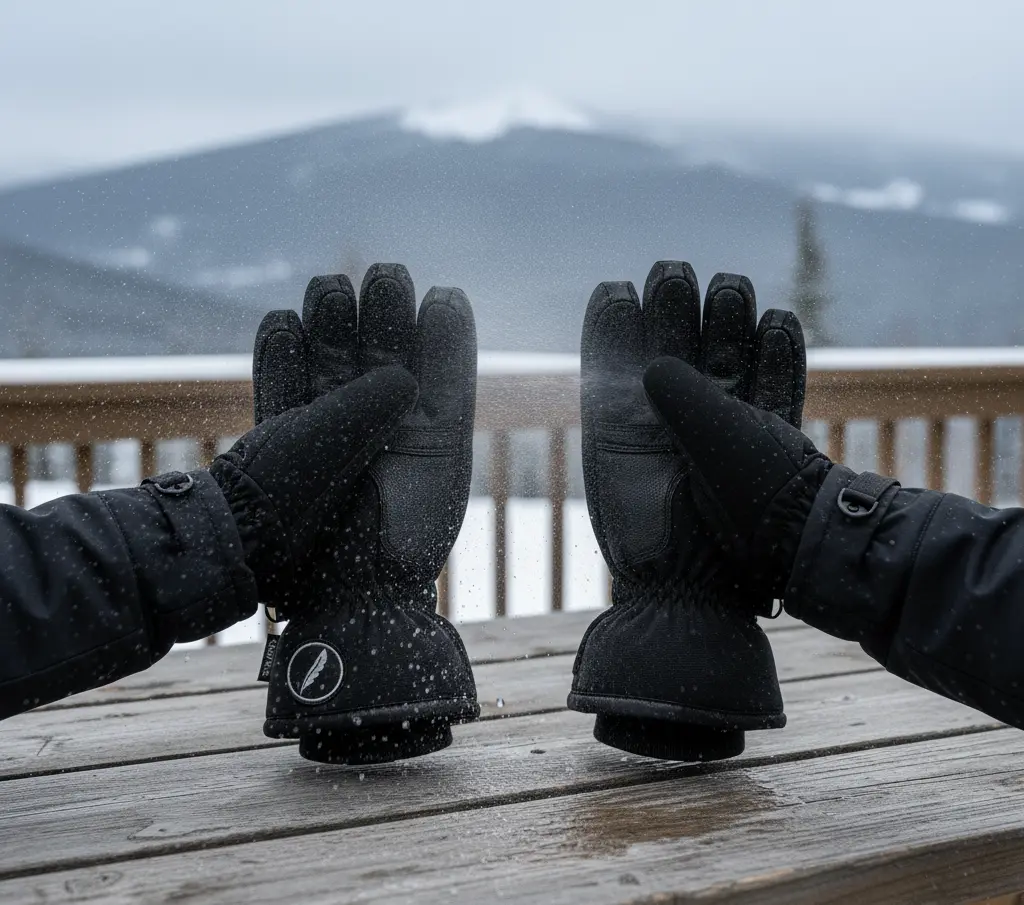
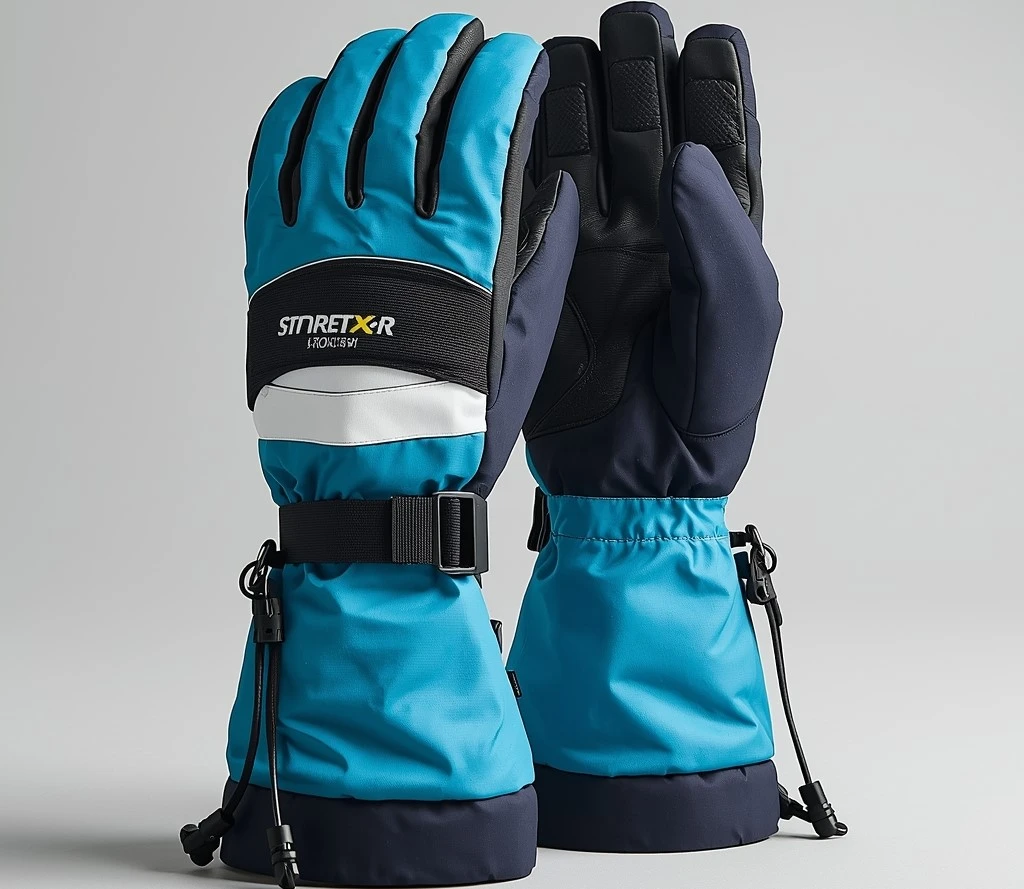
Ski gloves have wrist straps and leashes because they serve two completely separate functions that are both needed during a ski day. The wrist strap seals the glove against your wrist while you are skiing — it closes the gap between the glove cuff and your jacket sleeve that would otherwise let cold air and snow in. The leash keeps the glove attached to your wrist when you take it off, preventing it from being dropped or lost. To understand why ski gloves have wrist straps, you need to know that wrist straps and leashes are not the same feature — they solve completely different problems.
The wrist strap is active while the glove is on. The leash is active while the glove is off. A skier who understands this distinction uses both correctly. A skier who treats them as interchangeable — or who ignores one of them — leaves a gap in protection that shows up as either cold hands during a run or a lost glove during a chairlift ride. Both outcomes are preventable, and the prevention is straightforward once the function of each component is clear.
This article covers what each component does mechanically, why each one matters in specific skiing contexts, how to use both correctly, and what the warning signs are when either is being misused. Glove material, waterproofing, and insulation are covered in separate guides — the focus here is specifically the strap and leash system.
Why Do Ski Gloves Have Wrist Straps: The Wrist Seal Function
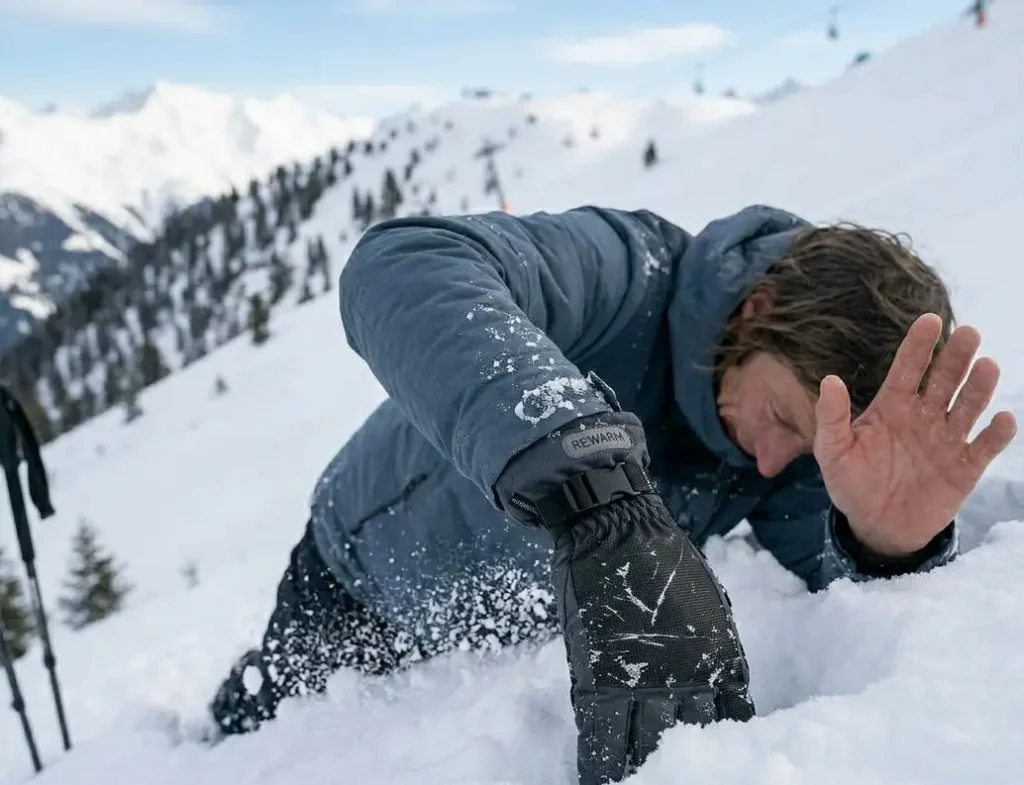
The wrist strap’s job is to close the opening at the bottom of the glove cuff against your wrist and jacket sleeve. If the cuff is not properly sealed, cold air and snow can enter through the wrist opening, reducing overall warmth and comfort, particularly on chairlifts; and snow enters from below during falls and powder skiing when the wrist zone contacts snow directly.
The mechanism through which the wrist strap creates warmth is not intuitive to most skiers. The strap does not add insulation — it prevents the convective heat loss that occurs when cold air circulates through the gap between the glove and sleeve. The wrist zone has a high density of blood vessels near the skin surface. Cold air or snow reaching that zone cools the blood flowing through it before it reaches the fingers, increasing the risk of cold-related issues like frostbite during prolonged exposure.
This is why fingers can go cold quickly on windy chairlift rides even in well-insulated gloves — the wind is not penetrating through the insulation, it is entering through an unsealed wrist gap and cooling the blood supply before it reaches the fingers. A tightened wrist strap closes that entry point.
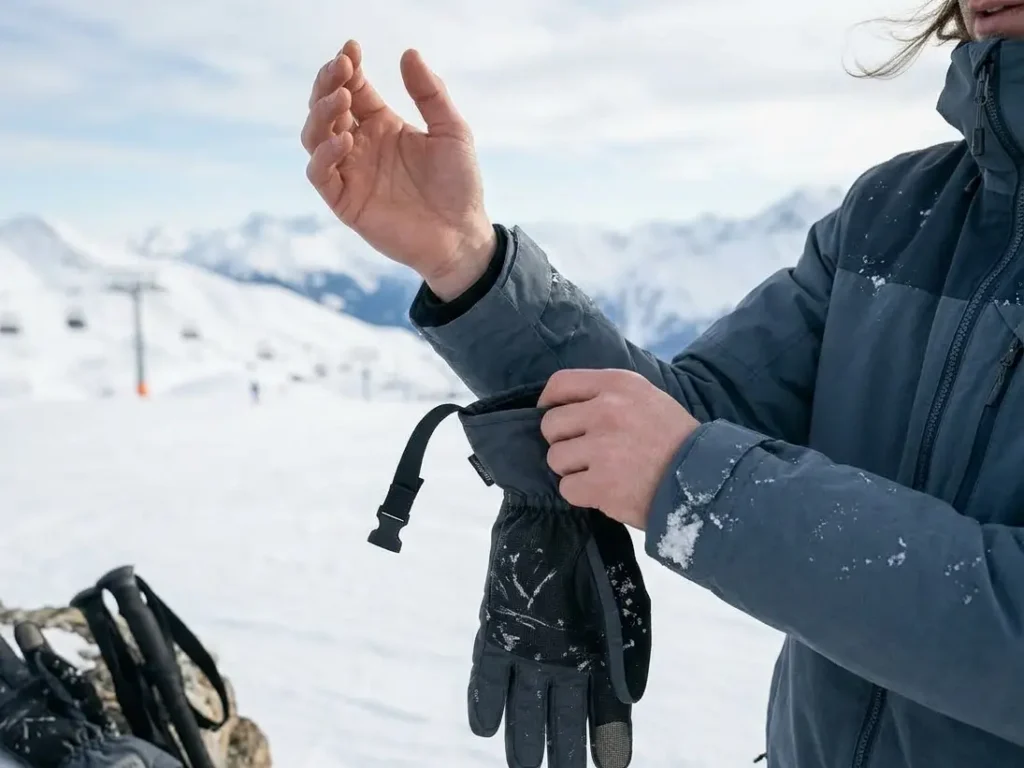
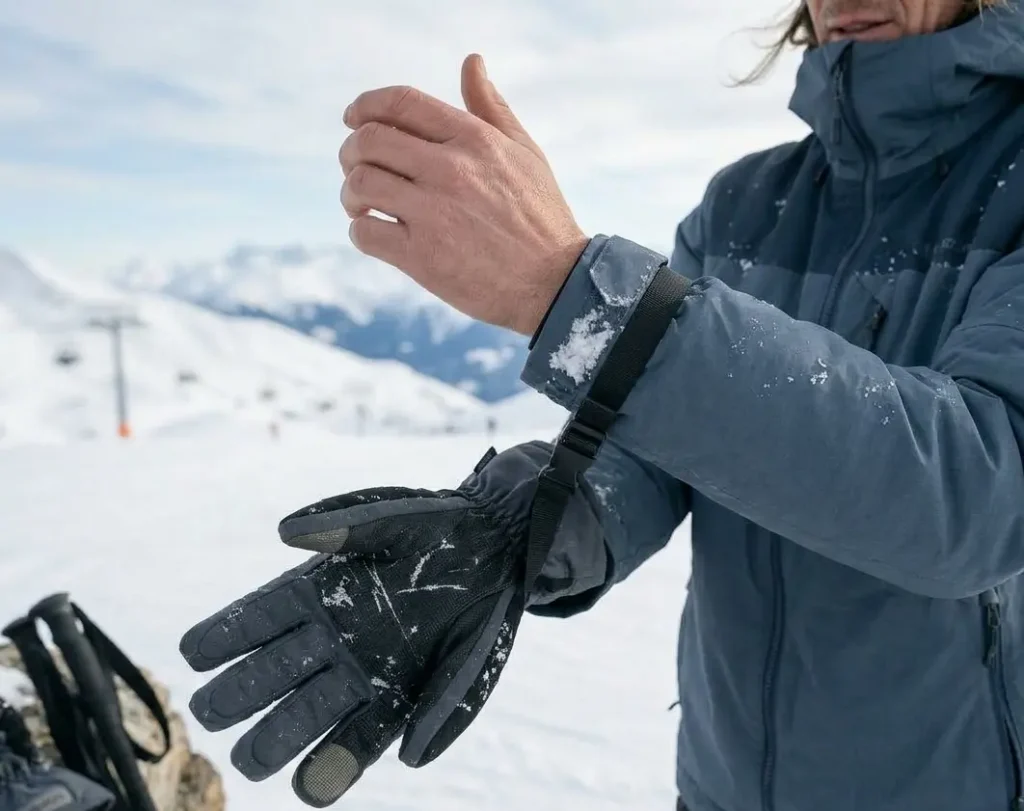
The strap must be tightened with the jacket sleeve seated inside the strap perimeter — not over bare skin with the sleeve sitting outside the closure. Tightening a strap over the jacket sleeve without the sleeve tucked inside still leaves a gap between the sleeve and the strap. The correct sequence is: put the jacket on, tuck the sleeve inside the glove cuff, then tighten the strap so the sleeve is enclosed within the closure. This is the step most skiers miss, and it is the reason a tightened strap sometimes still allows cold air in.
A wrist strap tightened over a jacket sleeve that is sitting outside the closure provides almost no sealing benefit. The sleeve must be inside the glove cuff before the strap is tightened — that is what creates the actual seal.
The Leash — What It Does and When It Matters
The leash is a loop or cord attached to the glove body that wraps around the wrist under the glove. When the glove is removed — for any reason, at any point during the ski day — the leash keeps it tethered to the wrist rather than allowing it to fall or be set down on a surface where it can be knocked off, blown away, or forgotten.
Ski gloves are removed more frequently during a typical ski day than most skiers consciously track. Gloves come off for chairlift snack breaks, for goggle adjustments in the lodge, for sunscreen application at the summit, for boot buckle tightening between runs, for phone use, for binding adjustments after a fall, and for any number of other small tasks that require bare-hand dexterity. Each of those removal events is a potential drop or loss event without a leash. The leash makes all of them risk-free.
The leash is worn on the bare wrist before the glove goes on — not on the outside of the glove, not between the glove and skin, but as a separate loop sitting on the wrist under the glove. When the glove is taken off, the leash holds it against the wrist. The glove hangs there, stays warm relative to a glove placed on an icy surface, and is immediately accessible for replacement without searching pockets or bags.
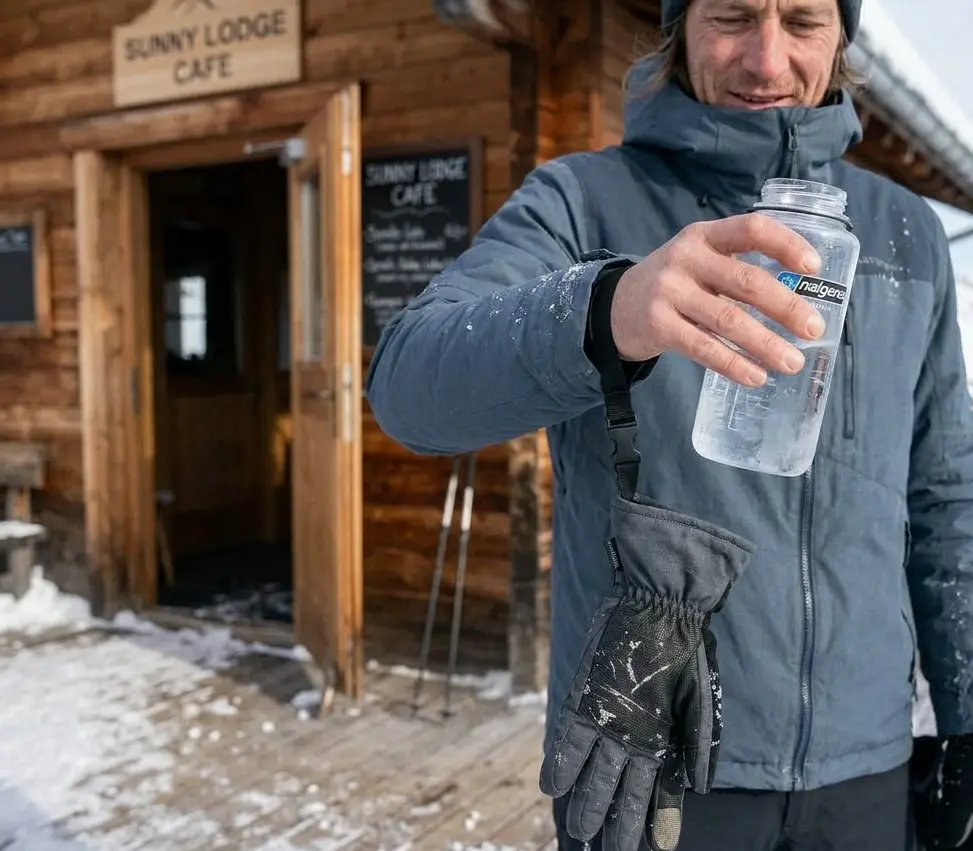
A chairlift drop is the most cited leash scenario, and it is a genuine risk — a glove dropped from a moving chairlift at height into deep powder is frequently unrecoverable without ski patrol assistance, and patrol recovery is not always possible. But the chairlift is actually one of the less frequent removal events on a typical ski day. The leash earns its value cumulatively across every small removal event, not just the chairlift drop. A skier who removes gloves eight times per ski day without a leash takes eight chances per day that a glove is knocked off a table, blown off a railing, or left behind at a rest stop.
Wrist Strap vs Leash — Two Functions, Two Components
The wrist strap is active while the glove is on
It closes the cuff opening against the jacket sleeve during skiing. It is adjusted and tightened at the start of each run. Its entire value is delivered while the glove is worn — sealing the gap that would otherwise allow cold air and snow to enter. It has no function when the glove is off.
The leash is active while the glove is off
It holds the glove to the wrist during any removal event. It is worn as a loop on the bare wrist under the glove and functions passively — no conscious action is needed during removal, the glove simply stays tethered rather than falling. It has no function during skiing because the glove is on the hand.
Neither replaces the other
A glove with only a wrist strap provides a good seal during skiing but no protection against loss when the glove is removed. A glove with only a leash prevents drops during removal but leaves the wrist gap unsealed during skiing. Both together cover both phases of a ski day — the active skiing phase and the removal phase. Most skiers treat one as optional. Neither is.
Adjustability differs between the two
Wrist straps are typically adjustable — Velcro, drawcord, or elastic — designed to close over different sleeve thicknesses and jacket cuff styles. Leashes are mostly fixed-loop systems sized to fit a range of wrists. Some gloves offer adjustable leash loops; most do not. The strap closure type matters for seal quality; the leash loop size matters for whether it stays on the wrist comfortably during use.
Quick Visual Summary
| Feature | When It Works | What It Prevents |
| Wrist Strap | While glove is ON | Cold air, snow entry |
| Leash | While glove is OFF | Dropping or losing gloves |
Are Wrist Straps and Leashes Actually Necessary?
Yes — for most skiers, both are necessary because they solve different problems.
A wrist strap is necessary if you want to keep your hands warm in windy or snowy conditions. Without it, even high-quality gloves can feel cold because air enters through the wrist gap.
A leash is necessary if you remove your gloves during the day. Without a leash, every removal creates a risk of dropping or losing a glove — especially on chairlifts.
However, in specific situations:
- In warm spring skiing, the wrist strap matters less
- If you never remove your gloves, the leash becomes less important
For most skiers, especially beginners, both should be used together for full protection.
What Happens When Straps and Leashes Are Not Used — Real Observations
The strap failure consequence is gradual and easy to misattribute. A skier with an unsealed wrist strap experiences cold fingers that arrive within ten to fifteen minutes of wind exposure on a chairlift or exposed ridge. The cold is typically attributed to insufficient glove warmth or cold temperatures rather than to the open wrist gap. The actual cause is convective cooling of blood flow through the wrist zone — the insulation is performing correctly but the gap is allowing wind to reach the blood vessels before the fingers.
Tightening the strap mid-day, after recognising the pattern, typically produces a noticeable improvement in finger warmth within a few minutes of the next run.
I specifically tested this by intentionally leaving the strap loose on one hand and tightened on the other across three chairlift rides in cold windy conditions. The unsealed hand was colder at the fingertips within twenty minutes — not dramatically, but consistently and measurably. On the third ride, the difference was clear enough that I could identify the cold hand without looking at which strap was tight. The insulation on both gloves was identical. The only variable was the strap seal.
The leash failure consequence is acute rather than gradual. A glove placed on a lap, a table edge, or an icy chairlift bar without a leash holding it is at risk at every moment. I have observed multiple glove losses at chairlift load zones where the skier put a glove on the safety bar to adjust something and the lift movement knocked it off. In one case, the glove was at a height where retrieval required stopping the lift — which patrol did not prioritise.
The skier completed the session with one glove and one bare hand. In all observed cases, the loss was preventable with a leash. The leash costs nothing after purchase — it is a thirty-second habit of wearing the loop before putting the glove on.
How to Use Both Components Correctly — Step by Step
For the wrist strap:
Put the jacket on first. Extend the jacket sleeve to its full length so it is not bunched at the wrist. Slide the glove onto the hand with the sleeve tip inside the glove cuff — the last few centimetres of the jacket sleeve should be inside the glove cuff opening, not outside it. Then tighten the wrist strap so it closes over the sleeve tip, enclosing both the glove cuff and the sleeve edge within the closure. The strap should be snug — firm enough to prevent gap opening during arm movement — but not tight enough to compress the wrist. Test by raising both arms to shoulder height and bending the wrists: the cuff and sleeve should not separate to expose the wrist zone. Re-tighten at every chairlift boarding.
For the leash:
Before putting the glove on, thread the leash loop over the bare wrist. The loop should sit on the wrist between the glove and the skin — not over the glove, not over the jacket. Put the glove on over the wrist with the leash already positioned. Route the leash cord so it exits toward the glove body rather than toward the wrist zone — this prevents the cord from sitting against skin under grip pressure. When the glove is removed for any reason, the loop holds the glove to the wrist automatically. No conscious action is required during removal — the leash functions passively once it is positioned correctly.
The two most common usage errors: tightening the wrist strap over a jacket sleeve that is sitting outside the glove cuff (leaves a gap); and wearing the leash loop over the glove rather than under it (leash cannot function if it is not between glove and wrist). Both errors take thirty seconds to correct and produce immediate improvement.
Common Mistakes Skiers Make With Straps and Leashes
Tightening the strap once at the start of the day and not re-checking. Wrist straps loosen through the repeated flexion of a ski session. A strap that was snug at 9am is often loose by the first chairlift. The habit of checking and re-tightening at every chairlift boarding takes five seconds and maintains the seal through the entire day. Skiers who check once and forget find their strap progressively less effective through the morning.
Wearing the leash loop over the glove exterior. This is the most common leash error. The loop goes on before the glove, not after. A leash worn over the glove cannot tether the glove to the wrist when the glove is removed — the loop slides off the glove as the glove comes off. The leash is only functional when it is under the glove, in contact with the wrist, so that removal of the glove leaves the leash attached to the body.
Assuming the strap seals against bare wrist skin. A strap tightened against bare skin with the jacket sleeve sitting outside the glove cuff still leaves the sleeve-to-glove gap open. The seal is between the glove cuff interior and the jacket sleeve tip — the strap closes around both of them together. If the sleeve is not inside the cuff when the strap is tightened, the strap is tightened against the wrong surface and the gap remains.
Not checking Velcro condition before the season. Velcro wrist closures degrade through use and storage. The hook side collects lint, snow crystals, and glove fibre that mat the hooks flat and prevent them from gripping. A Velcro closure that was fully functional last season may not hold reliably this season. Cleaning the hook strip with a stiff brush before the first day restores grip. A Velcro strip where the hooks are worn flat cannot be restored and needs to be replaced or the closure method supplemented.
Attributing cold fingers to glove insulation when the strap is loose. This is the most expensive mistake — it leads to unnecessary glove replacement. A skier with an unsealed wrist strap experiencing cold fingers attributes the cold to insufficient insulation and upgrades to a warmer glove. The warmer glove with the same unsealed strap produces the same outcome because the cause was never the insulation. Cold fingers in wind conditions with an otherwise warm glove should prompt a strap check before any other diagnosis.
When Straps and Leashes Are Not the Right Solution
When the cold comes from insulation, not the wrist gap. If fingers are cold in calm, low-wind conditions where convective cooling through the wrist gap is not occurring, the wrist strap is not the relevant variable. Calm cold days produce cold from insufficient insulation weight or from poor circulation — neither of which is addressed by strap adjustment. The strap solves the wind gap problem specifically.
When glove fit is the underlying problem. A glove that is the wrong size for the hand shifts position under grip load regardless of strap tightness. An undersized glove restricts circulation regardless of how loosely the strap is worn. Strap adjustment compensates for minor fit variations but cannot fix a fundamentally incorrect glove size. If fingers are cold from restricted circulation and the strap is already loose, glove size is the more likely cause.
When the leash attachment point on the glove is damaged. A leash whose attachment point has separated from the glove body provides false security — the leash appears to be in use but will fail the moment the glove drops and load is applied to the attachment. Inspect the leash attachment point at the start of each season and after any session where the leash was loaded — visible thread separation or hardware looseness means the leash needs repair before it can be relied on.
Condition-Based Guide: When Each Component Matters Most
Cold windy conditions and exposed terrain
The wrist strap is the priority here. Wind entering the wrist gap cools blood flow to fingers within minutes, because exposure to cold air significantly increases the risk of cold-related conditions. Tighten the strap before every run in these conditions — not once at the start of the day.
Powder and deep snow
Wrist strap again. Snow enters through the cuff opening during falls and wrist-deep powder contact. The strap prevents accumulation against skin that melts and soaks the liner.
Chairlift rides with glove removal
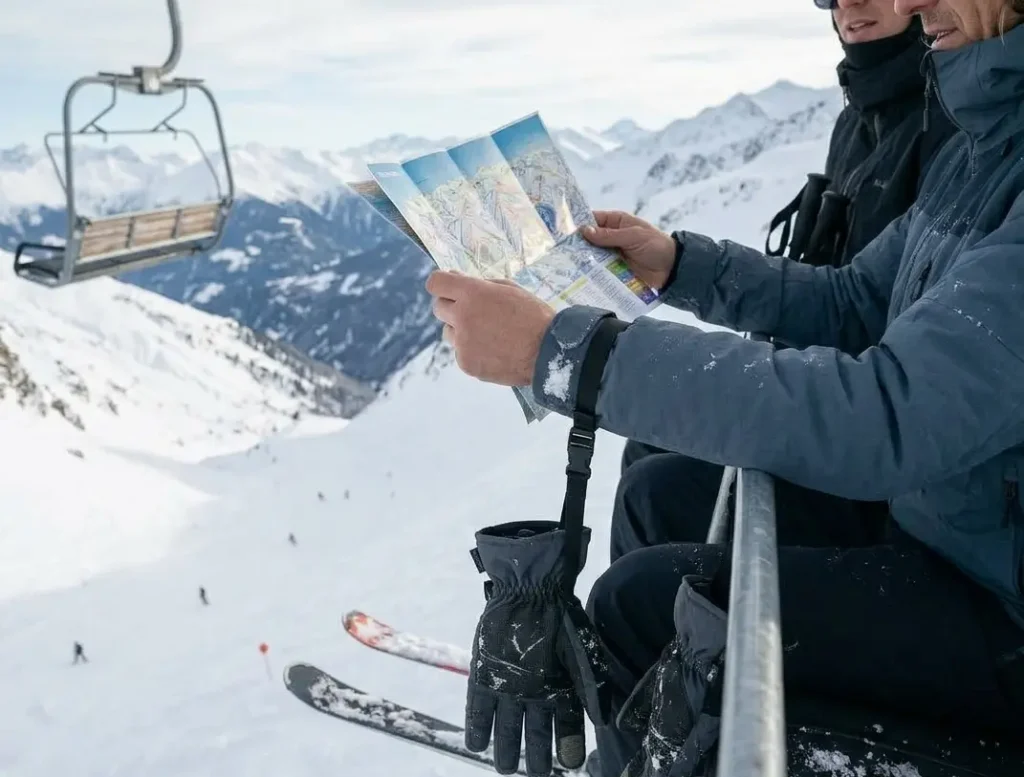
The leash is the priority. A dropped glove from a chairlift is frequently unrecoverable. The leash must be in use on every removal event on a lift — no exceptions.
Lodge breaks and equipment adjustments
Leash again. These are the most frequent removal events on a ski day. A glove set on a table, icy railing, or lap without a leash is at risk on every occasion.
Backcountry or off-piste with gear changes
Both components matter equally. Multiple removal events for layering, navigation, and binding adjustments make the leash essential. The strap is needed whenever skiing resumes because backcountry conditions rarely allow untightened cuffs.
Beginner skiers with frequent adjustments
Both components. Removal frequency is highest for beginners — strapping bindings, adjusting boots, checking equipment. The leash covers every removal; the strap covers every run. Neither is optional for a beginner in cold conditions.
Groomed resort runs in mild weather
Both are still useful. The strap provides a seal even in mild conditions with minimal inconvenience. The leash remains relevant on any chairlift regardless of temperature. There is no condition where either component is actively wrong to use.
Real-World Example
Imagine removing your gloves on a chairlift to check your phone. Without a leash, even a small movement can knock the glove off your lap.
Now imagine skiing down in windy conditions with a loose cuff. Cold air enters through the wrist gap, and your fingers get cold within minutes.
These are everyday situations where straps and leashes make a direct difference.
Warning Signs That Straps or Leashes Are Not Working Correctly
| Warning Sign | What It Means and What to Do |
| Cold fingers arriving suddenly mid-run in wind | Gap at wrist cuff is open; wind is reaching wrist zone and cooling blood flow to fingers; tighten strap immediately — this is the strap’s primary function and it is not being used |
| Snow accumulating at wrist against skin | Cuff strap not tightened; snow entering through cuff opening on falls or wrist contact with snow; melt water from this snow soaks into liner |
| Glove slipping partially off during aggressive movements | Strap too loose — glove can shift position; tighten strap so glove sits firmly; also check that glove size is correct |
| Leash digging into wrist during skiing | Leash routed incorrectly — should sit under glove cuff, not between glove and skin; re-route leash loop before next run |
| Leash tangling with jacket cuff | Leash is too long or routed over rather than under the jacket sleeve; adjust routing so leash loop sits inside the glove cuff |
| Wrist cold despite strap tightened | Strap is tightened but jacket sleeve is not seated under it; gap between sleeve and strap still exists; ensure jacket sleeve is tucked inside the strap perimeter before tightening |
Decision Checklist: Strap and Leash Use Every Ski Day
Work through each item before you ski. The first two apply before every single run.
Every run — Tighten wrist strap before every run, not just the first. Straps loosen through movement across a session. A strap that was snug at the start is often loose by the second chairlift. Five seconds at every lift boarding maintains the seal all day.
Every run — Jacket sleeve inside the strap perimeter before tightening. The sleeve tip must be inside the glove cuff before the strap is tightened. Tightening over a sleeve sitting outside still leaves the gap open. Check this every time.
Every session — Leash loop on bare wrist before putting glove on. The loop goes under the glove, not over it. Put the loop on the bare wrist first, then put the glove on. A leash worn over the glove cannot function when the glove is removed.
Check once — Leash routed under jacket cuff, not outside it. A leash sitting outside the jacket cuff tangles with sleeve movement. Route the cord so it stays inside the cuff. Check this at the start of the first session with a new pair.
Check fit — Strap snug, not cutting circulation. A strap tight enough to restrict blood flow defeats the warmth purpose entirely. Snug means no gap opens under arm movement — not tight enough to feel the strap against the wrist under grip load.
Seasonal — Leash attachment point inspected for fraying. A frayed leash fails silently. The attachment point where the leash cord meets the glove body should be inspected at the start of each season. Loose stitching or hardware movement means it needs repair before being relied on.
Each trip — Velcro closure cleaned if used. Velcro hook strips collect snow, lint, and glove fibre that mat the hooks flat. Clean with a stiff brush before each trip. A Velcro strip with worn flat hooks cannot hold and needs replacement or supplementing.
Quick Problem Diagnosis
If something is already going wrong, match your problem to the cause below.
Fingers cold specifically in the wind despite warm gloves. Wrist strap not fully tightened — wind entering cuff gap. Tighten strap before next run; check jacket sleeve is inside the closure.
Snow inside the glove at wrist after falls. Cuff opening not sealed — strap loose or untightened. Tighten strap; a gauntlet cuff also offers better snow seal than a short cuff regardless of strap condition.
Gloves dropped and lost during the session. Leash not in use or not present. Check whether the glove has a leash attachment point; use the leash loop on every removal event going forward.
Leash is uncomfortable during skiing. Leash worn over the glove rather than under it, or the cord is sitting against bare skin. Re-route: the loop goes on the bare wrist before the glove is put on.
Strap tightened but wrist still cold. Jacket sleeve not inside strap perimeter — gap still present between sleeve and closure. Ensure the sleeve tip is tucked inside the strap before tightening.
Velcro strap not holding during run. Velcro matted with snow, lint, or wear. Clean the hook strip with a stiff brush before each trip. If hooks are worn flat, the closure needs replacing.
Glove shifting position during aggressive skiing. Strap too loose — glove moving under grip load. Tighten strap; also check glove fit — an oversized glove shifts regardless of strap tightness.
The most frequent misdiagnosis: cold fingers attributed to insufficient glove insulation when the actual cause is an unsealed wrist strap in wind. Before upgrading gloves for warmth, tighten the strap with the jacket sleeve correctly seated inside and test across one chairlift ride. If fingers are warmer, the strap was the issue — not the insulation.
Conclusion
Ski gloves have wrist straps and leashes because they solve two completely different problems — warmth and loss prevention.
The wrist strap keeps cold air and snow out while you ski. The leash keeps your gloves attached to you when you take them off.
Most issues skiers experience — cold hands or lost gloves — come from not using these features correctly rather than from the gloves themselves.
Using both properly takes less than a minute and can significantly improve comfort and prevent avoidable problems throughout a ski day.
The wrist strap’s effectiveness depends partly on which cuff type your glove uses — a gauntlet cuff that seals over the jacket sleeve creates a different sealing dynamic than a short cuff that sits underneath it. How those two cuff systems affect snow entry, wind protection, and what the strap can and cannot compensate for is covered in Gauntlet vs Short Cuff Ski Gloves: Which Should You Choose?.
About the Author
Awais Rafaqat has spent over 15 years testing ski gear across North America — from the dry sub-zero conditions of the Rockies to the wet, heavy snow of the Pacific Northwest. His focus is real-world performance: what gear actually does in the conditions skiers encounter, not what the spec sheet says it should do.
© SkiGlovesUSA.com — Observations drawn from direct multi-season testing across glove types, strap systems, and conditions. No sponsored product mentions.