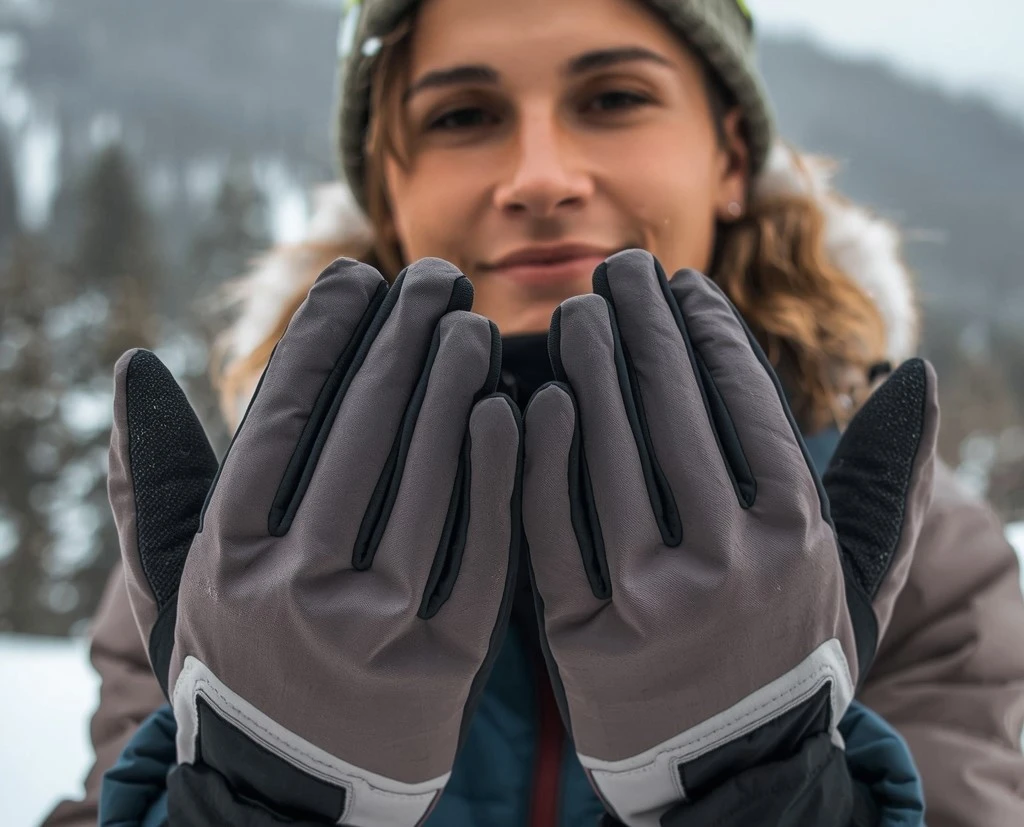
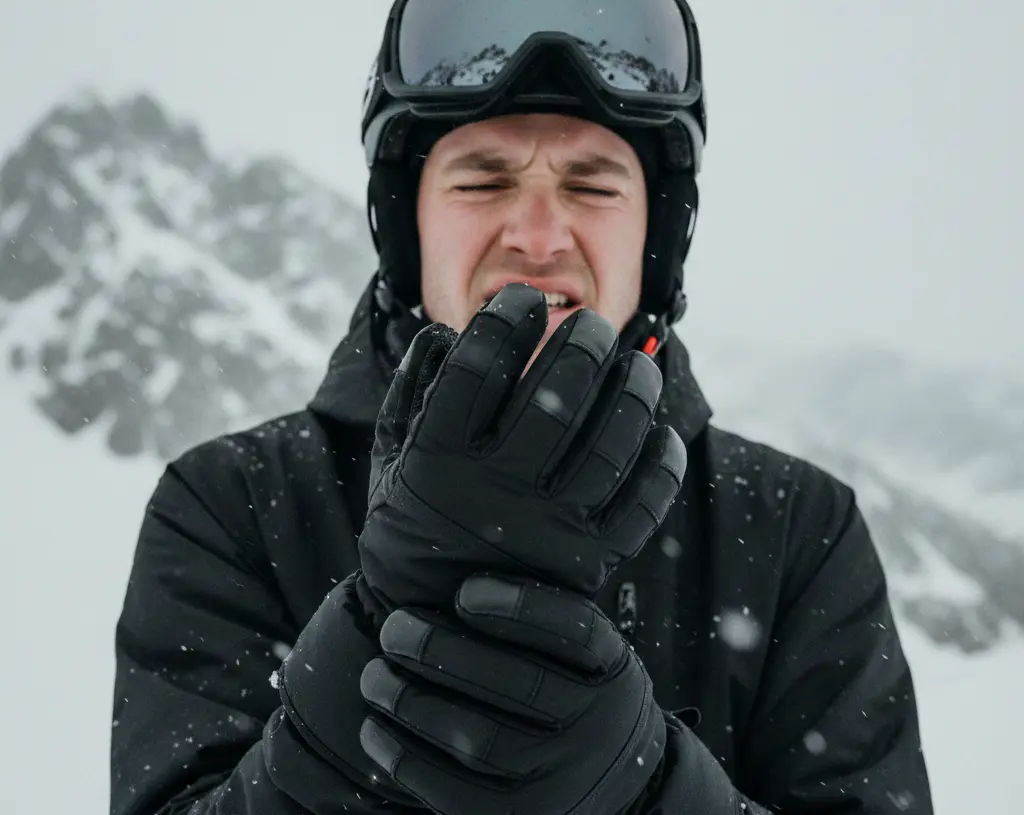
Ski gloves cause hand pain more often than people think. You put them on to stay warm and protected, but after a few runs, your fingers ache, your hands feel numb, and gripping your poles becomes an agonizing chore.
This isn’t just bad luck, and it isn’t “just part of the sport.” After spending over fifteen years on the mountain as a guide and gear tester, I have realized that skiers often ignore hand pain, assuming it is inevitable in cold weather.
It is not.
If your hands hurt, something is mechanically wrong with your gear or how you are wearing it. This guide breaks down the real-world reasons why ski gloves cause hand pain, how to diagnose your specific issue, and the practical fixes I use to keep my hands comfortable during 8-hour days in sub-zero temperatures.
Way #1 — Tight Ski Gloves Cut Blood Flow
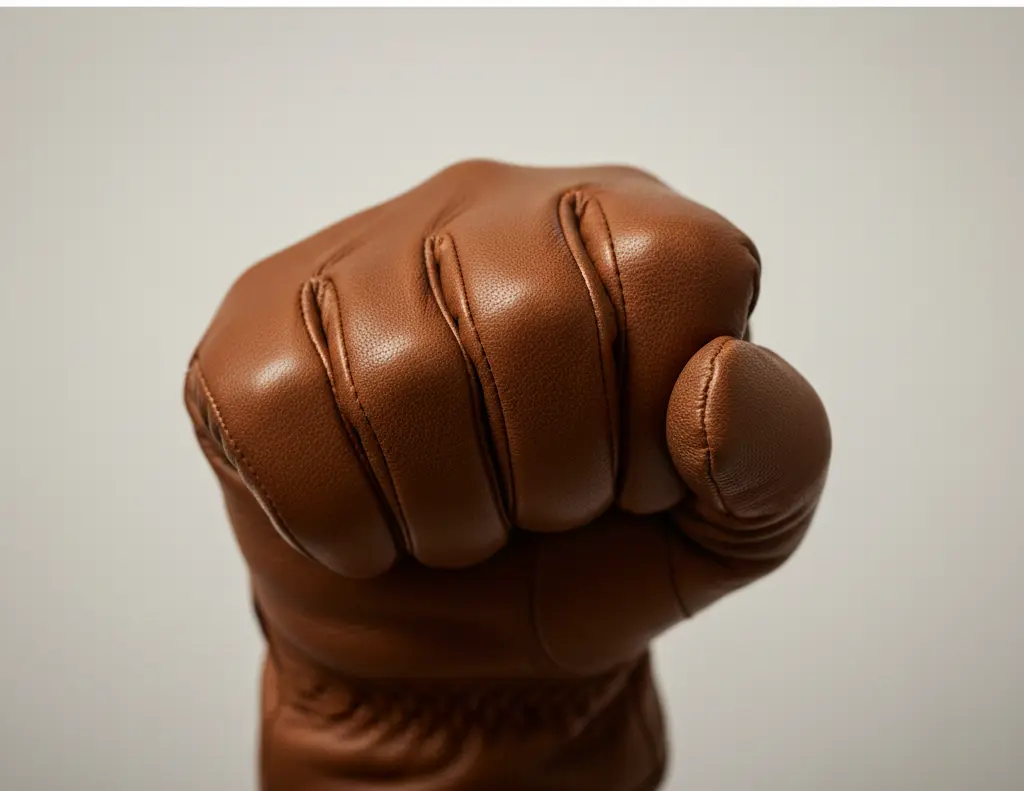
Tightness is the single most common cause of hand pain on the mountain. Many skiers choose gloves that feel “secure” or “snug” in the store, but they don’t account for how hands behave when active.
How Tightness Destroys Circulation
Your hands rely on a constant flow of warm blood to stay functional. When a glove is too tight:
- Capillary Compression: Small blood vessels are squeezed shut.
- The “Dead Space” Problem: Warmth in a glove comes from trapped air. If the glove is too tight, there is no air to warm up.
- Grip Pressure: When you wrap your hand around a ski pole, the fabric stretches. If the glove is already tight, this movement cuts off circulation to the fingertips entirely.
My “Mountain Test” for Tightness
I have a simple test I perform with every skier I guide.
- Put on your gloves and zip them up.
- Make a tight fist.
- Hold it for 30 seconds.
- The Result: If you feel the fabric pulling hard against your knuckles or if your fingertips feel like they are hitting a “wall,” those gloves are too small. On a chairlift, that pressure will turn into a deep, throbbing ache within minutes.
Way #2 — Wrong Glove Size and Finger Length
Size isn’t just about the width of your palm; it’s about the length of your fingers.
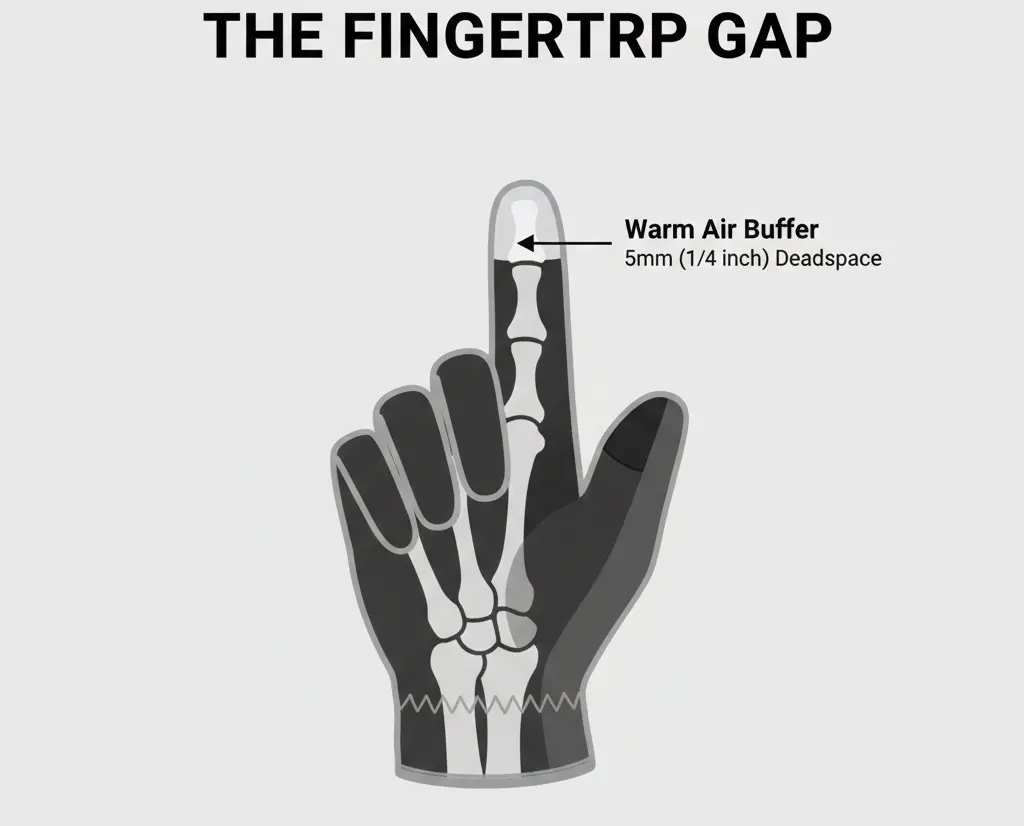
Fingertip Bruising and Nail Pain
If your fingers are too long for the glove, your nails will constantly press against the end of the insulation. Every time you plant your pole, you are essentially “punching” the front of the glove.
- Real-World Scenario: I once took a risk on a pair of “high-performance” gloves that were slightly too short in the thumb. By lunch, my thumb was throbbing so hard I couldn’t grip my zipper.
- The Fix: You should always have about a quarter-inch (5mm) of “dead space” at the tip of your fingers when your hand is relaxed.
Why Ski Gloves Hurt Hands: The Width Issue
If the glove is too wide, your hand slides around inside. You then over-compensate by gripping your poles twice as hard to keep them steady. This leads to muscle fatigue in the palm, which feels like a cramping pain.
Way #3 — Stiff Gloves and Muscle Strain
Not all “waterproof” materials are created equal. Some cheap waterproof coatings make the outer shell feel like hardened plastic.
The Over-Gripping Trap
When a glove is stiff, your hand has to fight the material just to close around the pole.
- The Experiment: I once tried a pair of heavy-duty industrial work gloves for skiing. They were warm, but so stiff I had to use 30% more muscle power just to hold my poles. By 2:00 PM, I had “skier’s cramp” in my forearms.
- Condition-Based Recommendation: If you have smaller hands or less grip strength, choose gloves with Goat Leather or high-quality GORE-TEX shells. These materials are naturally more supple and “break in” over time.
Way #4 — Poor Insulation and Cold-Induced Pain
Cold hands don’t just feel numb; they hurt. When nerves get cold, they send sharp, stinging signals to the brain.
Why Cold Fingers Ache
When your body gets cold, it pulls blood away from your extremities to protect your internal organs (vasoconstriction).
- Nerve Irritation: As blood flow drops, the nerves in your fingertips become hypersensitive. This is that “stinging” feeling.
- The “Hot Aches”: When you finally get inside and the blood rushes back, it causes intense throbbing pain. This is a sign your insulation failed you.

Comparison: Thinsulate vs. PrimaLoft
| Insulation Type | Advantage | Disadvantage | Best For |
| Thinsulate | Very thin, great dexterity | Not as warm in extreme cold | Spring skiing / Mild days |
| PrimaLoft | Mimics down, very warm | Can feel bulky | Mid-winter / Storm days |
| Down | Warmest available | Useless if it gets wet | Dry, extreme cold |
Way #5 — Liner Friction and Blisters
The inside of your glove matters as much as the outside.
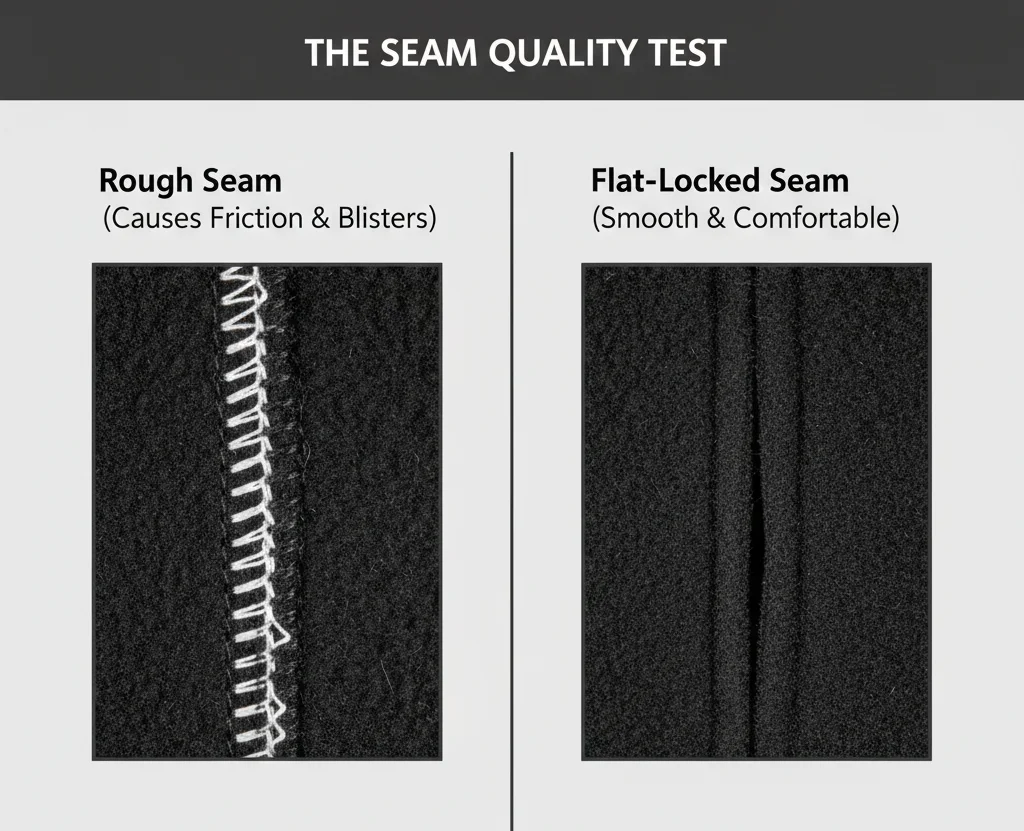
Rough Seams
In low-quality gloves, the internal seams are often thick and rough. When you grip your poles for 6 hours, those seams rub against your knuckles and the sides of your fingers. This creates “hot spots” that turn into blisters.
- My Recommendation: I always use a thin Merino Wool liner. It acts as a second skin, preventing the glove’s internal seams from rubbing against my actual skin. It also wicks away sweat, which is the leading cause of friction pain.
Way #6 — Moisture and “The Wet Squeeze”
Wet gloves are a recipe for hand pain.
How Moisture Causes Pain
- Evaporative Cooling: As sweat or melted snow evaporates, it sucks heat out of your hands.
- Fabric Shrinkage: Some materials (especially cheap synthetics) tighten when they get wet and then freeze. A glove that fit in the morning can become a “vice grip” by the afternoon.
- The Test: If you can wring water out of your glove liners at lunch, your “waterproof” barrier has failed, and your pain is likely cold-induced.
Way #7 — Heavy Gloves and Wrist Fatigue
If you are wearing a “Gauntlet” style glove that is heavily over-insulated, the sheer weight of the glove can strain your wrist.
The Lever Effect
A heavy glove puts weight far away from your wrist joint. Over hundreds of pole plants, this strains the tendons in your wrist and the back of your hand.
- The Fix: If you feel wrist pain, switch to an under-cuff glove. They are lighter and keep the weight closer to your arm, reducing the leverage on your joints.
How I Pick My Gloves (The “Pro” Selection Process)
When I am at the shop, I don’t look at the price tag first. I look at construction.
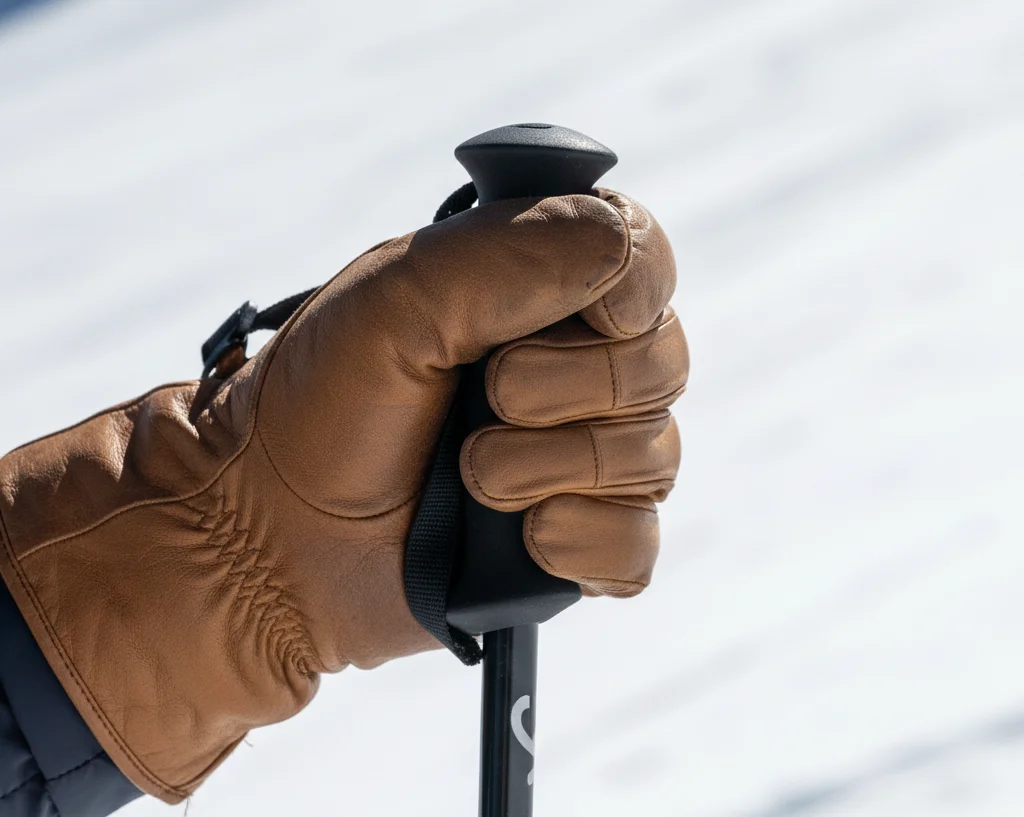
- The Pole Test: I always grab a ski pole from the rack and hold it while wearing the glove. If I feel any “pinching” in the palm, I move on.
- The Seam Feel: I reach inside and rub the seams. If I can feel the thread, I know it will cause friction.
- The Liner Pull: I pull the glove off by the fingertips. If the liner pulls out like a wet sock, I don’t buy it. A loose liner causes bunching, which causes—you guessed it—hand pain.
My Personal Choice: I use a medium-weight leather glove with a removable liner. This allows me to dry the liners perfectly overnight and adjust my warmth based on the weather.
When This is NOT the Right Choice
Sometimes, the glove isn’t the problem—the skier is.
- Do NOT buy bigger gloves if you have Raynaud’s Syndrome: If you have medical circulation issues, bigger gloves won’t help. You need heated gloves or mittens.
- Avoid stiff gloves for beginners: Beginners tend to “death grip” their poles because they are nervous. A stiff glove combined with a nervous grip will cause intense hand pain within two runs.
Quick Problem-Diagnosis
- Pain in the Knuckles? The glove is too tight across the back. Size up.
- Pain in the Fingertips? The glove is too short. Your nails are bruising.
- Burning/Stingy Pain? Friction from rough liners or a “wetted out” glove.
- Dull Aching in the Palm? Over-gripping due to stiff materials or poor pole fit.
- Numbness on the Chairlift? Your wrist straps are too tight, cutting off the ulnar or median nerve.
Decision Checklist for Pain-Free Hands
- [ ] Can you make a fist without the fabric feeling like a drum skin?
- [ ] Is there 5mm of space at the end of your thumb and fingers?
- [ ] Does the glove flex easily without forcing your muscles to work?
- [ ] Are the internal seams smooth to the touch?
- [ ] Are your wrist straps snug but not leaving a red mark on your skin?
Maintenance Tips to Prevent Pain
- Never dry gloves on a radiator: High heat makes leather and synthetics “crunchy” and stiff. Stiff gloves cause pain. Air-dry them only.
- Use Leather Conditioner: If you have leather gloves, keep them soft with a wax-based conditioner. Soft leather moves with you; dry leather fights you.
- Wash your liners: Salt from your sweat builds up in the fabric, making it abrasive. Clean liners are soft liners.
Hand pain shouldn’t end your ski day. By choosing a glove that respects your circulation and movement, you can focus on the snow instead of your aching fingers.
Ready to find the perfect fit? Check out my guide on how to choose ski gloves to see exactly which brands and styles match your hand shape.
About the Author
Awais Rafaqat has over 15 years of experience testing ski gear in some of the harshest conditions across North America, from the dry sub-zero peaks of the Rockies to the wet, freezing slopes of the Pacific Northwest. He specializes in real-world gear testing to help skiers find equipment that keeps them warm, dry, and performing at their best on every run.