QUICK ANSWER: “10,000mm” and “IPX7” both claim to measure waterproofing, but they’re testing completely different things. The mm number comes from a hydrostatic head test — how many millimeters of water pressure the fabric can resist before leaking. IP ratings come from a different standard built for rigid electronics enclosures, not flexible fabric, which is exactly why you rarely see them on gloves. Neither number tells you about breathability, seam sealing, or DWR condition — all of which matter as much as the rating itself.
- Why This Confuses Almost Everyone
- What the "mm" Number Actually Measures
- Rough Guide to What the Numbers Mean in Practice
- What the mm Number Doesn't Tell You
- Where IP Ratings Come From, and Why Gloves Rarely Use Them
- mm vs. IP — Which One Actually Matters for Gloves
- The Construction Details That Matter More Than Either Number
- Common Mistakes When Shopping by Rating Number Alone
- Decision Checklist
- Frequently Asked Questions
- Final Thoughts
Why This Confuses Almost Everyone
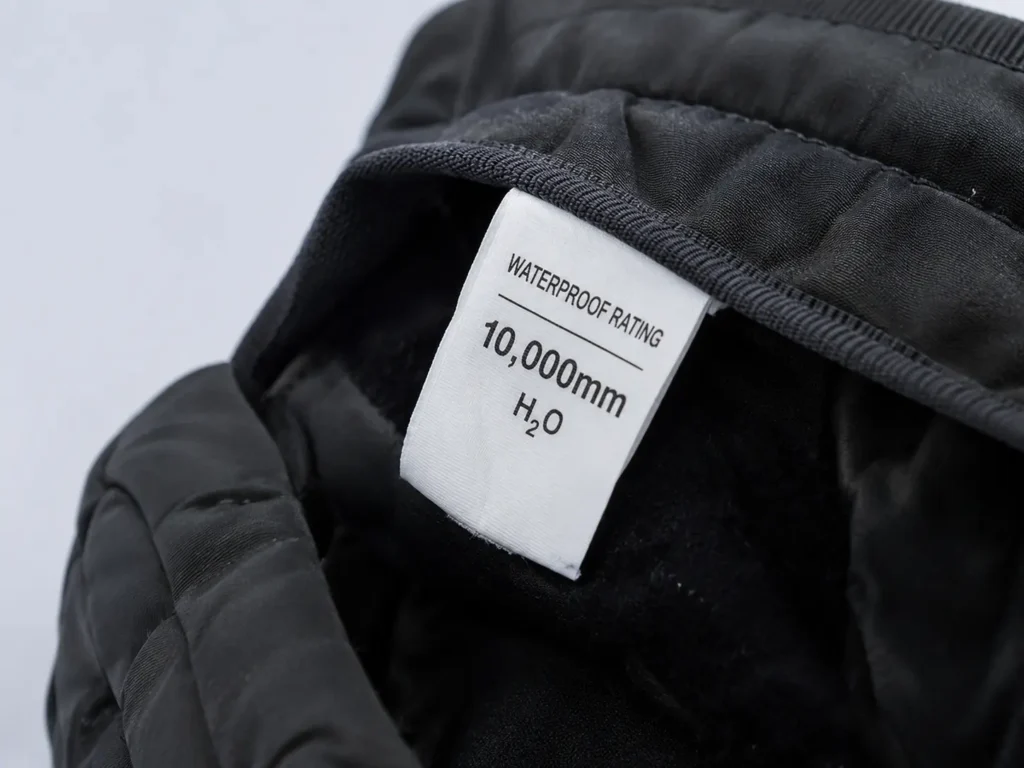
A glove tag showing “10,000mm” looks precise and scientific. It is precise — but only about one specific thing, tested in a lab, under conditions that don’t map directly onto a wet chairlift ride or an hour of falling in slush.
Understanding what the number actually measures — and just as importantly, what it doesn’t — is the difference between choosing a glove based on real performance and choosing one based on whichever tag has the bigger number. And if you’d rather skip decoding tags entirely, the Ski Glove Finder matches you to gloves based on your actual conditions instead.
What the “mm” Number Actually Measures
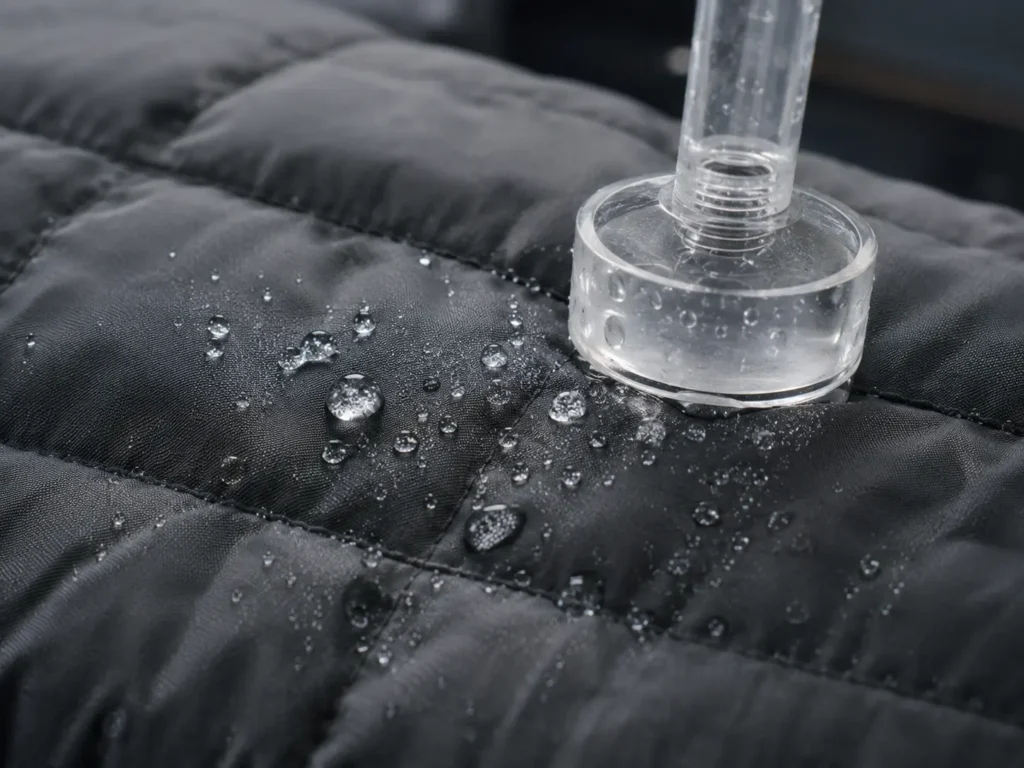
The millimeter rating comes from a hydrostatic head test. A tube is sealed against the fabric, and water is added until the fabric starts to leak. The height of that water column, in millimeters, at the point of failure is the rating.
A fabric rated 10,000mm held back a column of water 10 meters tall before water pushed through in that specific lab test. A higher number means the fabric resisted more pressure before failing.
This is a genuinely useful measurement, because it correlates reasonably well with how fabric behaves under real pressure — a gloved hand gripping a wet pole, pressing against a soaked chairlift bar, or packed into slush during a fall all put pressure on fabric in a way that light rain simply doesn’t.
Rough Guide to What the Numbers Mean in Practice
Around 5,000mm handles light, dry snow contact reasonably well but starts to struggle once conditions turn genuinely wet — this is common on budget gloves built for occasional, mild-condition use.
Around 10,000mm covers most standard resort conditions, including moderate wetness from typical snow contact and average chairlift exposure.
20,000mm and above is built for sustained wet exposure — coastal snowpacks, spring slush, long storm days — where fabric is under water pressure for extended periods rather than brief contact.
These numbers are a reasonable starting point for comparison, not a guarantee — the rating describes the fabric alone, isolated from the rest of the glove’s construction.
What the mm Number Doesn’t Tell You
A high mm rating says nothing about whether the seams are sealed, whether there’s a real waterproof membrane behind the shell, or how the insulation behaves once it does get damp. Waterproof vs. water-resistant ski gloves covers that distinction in more depth than makes sense to repeat here.
It also says nothing about breathability. A glove can have an excellent mm rating and still feel damp and cold from trapped sweat, because that’s a completely separate property from how much outside water pressure the shell resists.
Where IP Ratings Come From, and Why Gloves Rarely Use Them
IP — Ingress Protection — ratings come from IEC 60529, an international standard originally built to classify how well rigid electronics enclosures resist dust and water.
The format is two digits after “IP.” The first covers solid objects and dust resistance, rated 0 to 6. The second covers water resistance, rated 0 to 9, from light dripping at the low end to sustained high-pressure jets at the high end. An “X” in place of either digit means that category simply wasn’t tested, not that protection is zero.
The standard was designed around rigid, sealed housings — the kind of enclosure that stays a fixed shape. A ski glove flexes constantly, has seams, and needs to remain breathable, which is exactly why IP testing rarely gets applied to soft, flexible gear like gloves. It’s not that the system is wrong — it’s built for a different category of product entirely.
mm vs. IP — Which One Actually Matters for Gloves
For ski gloves specifically, the mm rating is the more relevant number, simply because it’s a test methodology built around flexible fabric under pressure, which is closer to how a glove actually gets challenged on the mountain.
An IP rating, on the rare occasion you see one applied to soft gear, can still tell you something about baseline water resistance, but it wasn’t developed with fabric flex, seams, or breathability in mind — all things that matter enormously for how a glove performs in practice.
Neither system replaces checking the actual construction: a membrane like Gore-Tex behind the shell, properly sealed seams, and a DWR finish that hasn’t worn down all matter as much as either rating on the tag.
The Construction Details That Matter More Than Either Number

Seam sealing
Unsealed seams are one of the fastest routes for water to bypass an otherwise well-rated shell entirely — pressure from packed snow works into stitching regardless of how high the fabric’s own rating is.
Membrane presence
A genuine waterproof-breathable membrane keeps working even after the outer shell gets wet. A high mm rating on the outer fabric alone doesn’t provide that same backup once the surface saturates.
DWR condition
The Durable Water Repellent coating on the outer fabric wears down with use, typically over 8 to 12 ski days of regular wear. Once it’s gone, the fabric absorbs water instead of shedding it, regardless of what the original mm rating claimed.
Common Mistakes When Shopping by Rating Number Alone
Assuming a higher mm number means a warmer glove. Waterproofing and insulation are separate properties entirely — a highly waterproof glove with thin insulation will still leave you cold.
Ignoring DWR maintenance because the shell “is rated high.” The rating describes the fabric when new and tested in a lab. A worn DWR finish on that same fabric performs nothing like its original rating.
Assuming any waterproof rating guarantees breathability. These are unrelated properties. A glove can resist significant water pressure and still trap sweat if there’s no membrane managing vapor from the inside.
Comparing an IP-rated product to an mm-rated one directly. The two numbers come from different test standards measuring different things — there’s no simple conversion between them, and treating a higher IP digit as automatically “better” than a given mm number is comparing incompatible measurements.

Decision Checklist
- Occasional skier, dry mild conditions: A 5,000-10,000mm rating is generally adequate — you’re unlikely to sustain the pressure exposure that higher ratings are built for
- Regular resort skier, average conditions: 10,000-15,000mm with a genuine membrane covers most standard wet-snow exposure
- Wet coastal snow, spring slush, storm days: 20,000mm+ paired with sealed seams and a real membrane — the rating alone isn’t enough at this exposure level
- Seeing an IP rating on a glove: Treat it as a rough baseline signal, not a direct comparison to mm-rated competitors — the test methodologies aren’t equivalent
Frequently Asked Questions
Is a 20,000mm glove always better than a 10,000mm one?
For sustained wet exposure, yes, the higher number reflects genuinely better resistance to water pressure. For dry, mild conditions, the difference may never actually matter in practice, and you may be paying for water resistance you won’t use.
Do all ski gloves list a waterproof rating?
No — many rely on general descriptors like “waterproof” or brand-specific membrane names instead of a specific mm figure, particularly at the budget end of the market where formal hydrostatic head testing isn’t always published.
Can I trust an mm rating to predict how a glove handles actual snow?
Reasonably well, since the test simulates pressure similar to what packed snow and wet contact create. It won’t account for seam quality, membrane presence, or DWR condition, all of which affect real-world performance alongside the base fabric rating.
Why don’t more ski gloves use IP ratings if the system is so precise?
IP testing was built for rigid enclosures, not flexible, seamed, breathable fabric. Applying it to gloves would mean testing a product type the standard wasn’t designed to evaluate, which is part of why the outdoor industry has largely standardized on mm ratings for gloves instead.
Does a high waterproof rating mean I don’t need to reapply DWR treatment?
No — DWR is a separate, wearing component of the shell, and it degrades with use regardless of what the fabric’s original rating was. A glove rated 15,000mm with worn-off DWR will perform worse than the number suggests until that coating is refreshed.
Final Thoughts
The mm number on a glove tag is a real, useful measurement — it just measures one specific thing under lab conditions, not the full picture of how a glove performs on an actual ski day. IP ratings, when you do see them, come from a standard built for a different category of product entirely. Neither number replaces checking seam construction, membrane presence, and DWR condition, which collectively determine whether a glove lives up to whatever figure is printed on its tag. If your gloves feel like they’re underperforming their rating, why ski gloves feel stiff in extreme cold and ski glove care tips both cover specific symptoms this post doesn’t.