As an Amazon Associate, I earn from qualifying purchases.
Quick Answer: If your fingers go white and numb as soon as the lift starts moving, thick insulation alone probably won’t fix it, because insulation only slows heat loss and your hands aren’t making much heat to keep. A heat source you control works better, so every pick here either adds one or pairs with a liner that does. WEIVIOQ liners go under a shell you already like, SPRING IN FALL is the all-day battery glove, Yoassi is the cheap way to try heated gloves, Hestra needs no battery, and SNOW DEER works if you also ride a motorcycle or e-bike.
Not sure which one fits your hand size and budget? The Ski Glove Finder gets you to a shortlist in about a minute.
| Glove | Type | Heat source | Listed runtime | Listed price | Suits |
| WEIVIOQ | Thin liner | 7.4V 2200mAh battery | Up to 6 hours | $89.99 | Layering under your own shell |
| Hestra Army Leather Heli Ski | Leather ski glove | None | Not applicable | $185.30 | Battery-free warmth, long-term use |
| SPRING IN FALL | Heated glove | 7.4V 3200mAh per glove | 6 to 8 hours on low | $93.99 | Full days on the lifts |
| Yoassi | Heated glove | 7.4V 6000mAh | Up to 9 hours | $42.99 | First heated pair, tight budget |
| SNOW DEER | Heated riding glove | Two 7.4V 3000mAh batteries | 2.5 to 6 hours | $124.99 | Skiing plus motorcycle or e-bike |
Prices and runtimes come from each maker’s product listing at the time of writing. Treat them as starting points and confirm them before you order.
- Why Thick Gloves Still Leave You Cold
- WEIVIOQ Heated Liners: Warmth Under Your Own Shell
- Hestra Army Leather Heli Ski: The Battery-Free Option
- SPRING IN FALL Heated Gloves: The All-Day Workhorse
- Yoassi Heated Gloves: The Budget Way In
- SNOW DEER Heated Gloves: Built for Riders, Useful on the Lift
- Heat Settings, Numb Fingers and One Safety Habit
- Batteries: The Part Nobody Plans For
- The Twenty Minutes Before the First Lift
- A Five-Minute Fit Test You Can Do at Home
- Mistakes That Cost a Ski Day
- Which One to Buy
- Questions Skiers Ask
Why Thick Gloves Still Leave You Cold
Two skiers ride the same chairlift in the same wind. One makes plenty of hand heat, so a decent glove just keeps it in. The other has blood vessels that tighten at the first chill, so the same glove has almost nothing to keep.
That gap is why people with Raynaud’s often say their gloves are fine until the third run, then suddenly are not. A shell can look excellent on paper and still leave white, numb fingertips by the second lift ride.
So skip the question of how thick a glove is. Ask where the heat will come from on a slow, windy lift ride, when your hands are cooling and your circulation is pulling back.
WEIVIOQ Heated Liners: Warmth Under Your Own Shell
WEIVIOQ Heated Glove Liners
– Far infrared fiber heating elements stimulate blood circulation
– Thin, soft Lycra shell slips under any outer glove without bulk
– 2200mAh battery with 3 heat settings, up to 6 hours runtime
~$89.99
★★★★★ (4.7/5 — 87 Amazon reviews)
Check Price on Amazon →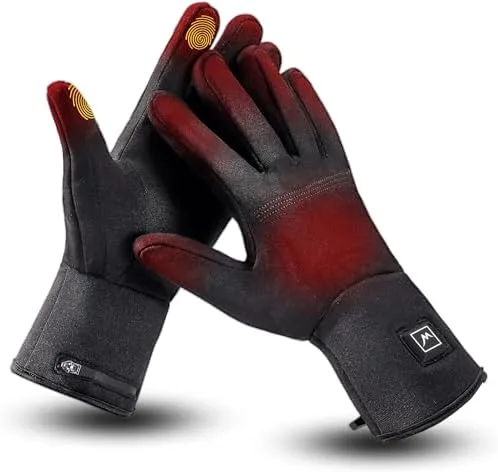
These are thin liners made from soft Lycra on the outside with a fleece lining inside. The maker says the far-infrared fiber elements cover the back of the hand and the fingers, and the battery is a 7.4V 2200mAh pack good for up to six hours on a full charge. There are three heat settings on a controller, and the thumb and forefinger carry touch sensors for phone use.
These work well because they are thin. They slide under a glove or mitten you already own, which means you keep the shell you trust and add a heat source only where you need it. Sizes run from XX-Small to XL/2XL, which is a wider spread than most heated gloves offer, and fit matters a lot for anyone watching circulation.
The trade-off is that a liner is not a shell. It will not stop wind or snow, so the glove you pull over it decides how well wind and snow stay out. The listing also suggests buying an extra battery for long days, and that is sold separately. If you ski from the first chair to last, plan for a spare.
The listing also markets the liners for Raynaud’s, arthritis and poor circulation. That is the seller’s marketing, not medical advice. The liners add warmth, and they do not treat the condition.
Hestra Army Leather Heli Ski: The Battery-Free Option
Hestra Army Leather Heli Ski 5-Finger Glove
– Windproof HESTRA Triton fabric with durable Army Goat Leather palm
– Thin high-capacity polyester fiber retains heat even when wet
– Removable liner with Eagle Grip design for a closer, natural fit
~$185.30
★★★★☆ (4.5/5 — 784 Amazon reviews)
Check Price on Amazon →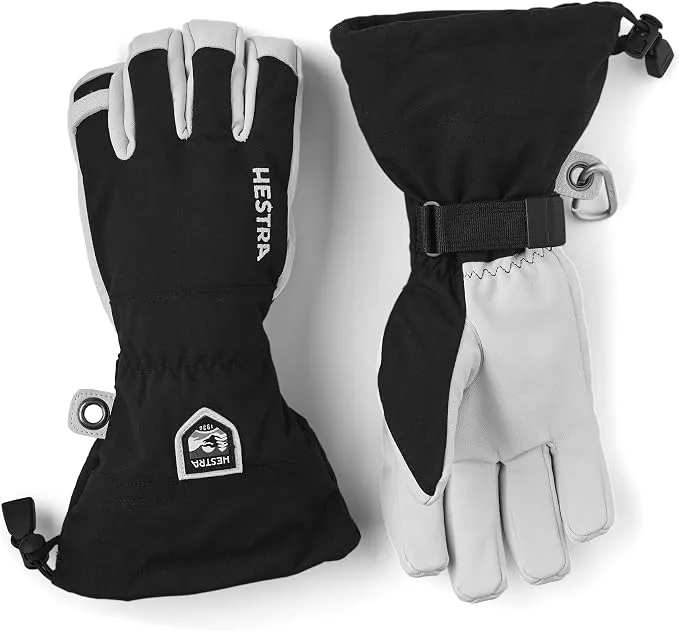
Hestra built this glove for freeriders, guides, patrollers and instructors, so it is made for people who spend all day in the cold. The back of the hand uses Triton fabric, described as windproof, water-resistant and breathable, while the palm and fingers use Army Goat Leather. The insulation is a very thin polyester fiber the maker says holds heat even when wet.
The five-finger cut gives the most dexterity in the Heli Ski family, and the lining is removable, so you can swap it or stack another liner for colder mornings. An elastic strap with a Velcro closure and a snow lock help keep cold air from sneaking up the wrist, which is exactly where a lot of heat escapes.
For some skiers with Raynaud’s, this is the pick for mild days and shoulder-season trips, with no charging to remember. It is also the glove to buy once and look after for years. The catch: it has no heat source, so it works best on days when your hands are not fighting you, or when you slide a heated liner inside.
The care label says hand wash only, so expect a little upkeep. Browsing other premium shells to place beside this one? Our best ski gloves page lines up the wider field.
SPRING IN FALL Heated Gloves: The All-Day Workhorse
SPRING IN FALL Rechargeable Heated Gloves
– Far-infrared elements extend from back of hand to fingertips
– Heats in 30 seconds, up to 149°F on high with 3 heat levels
– Removable 3200mAh battery, 6-8 hour runtime on low
~$93.99
★★★★★ (4.7/5 — 36 Amazon reviews)
Check Price on Amazon →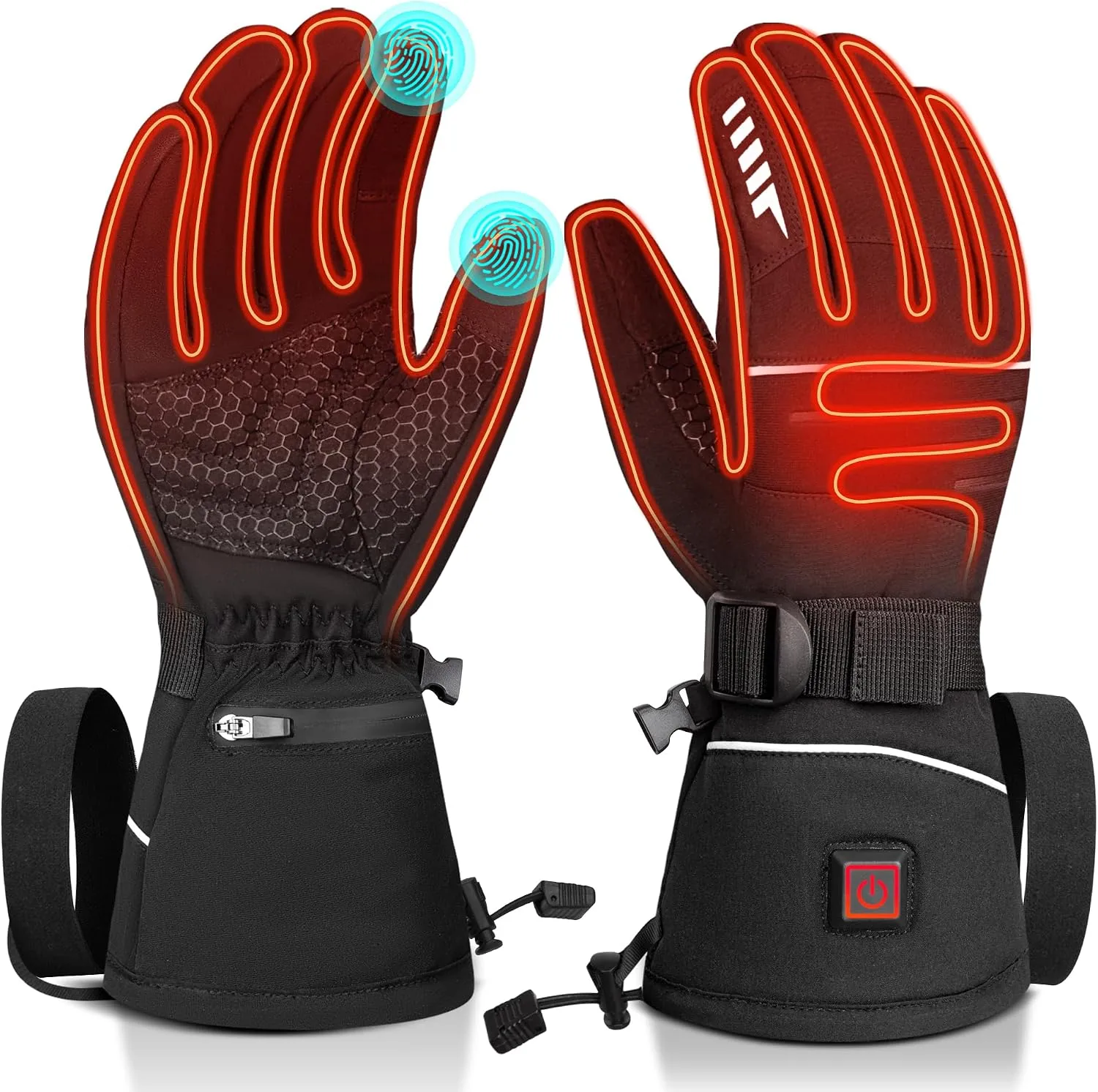
This is the one to look at first if you ski full days. Each glove carries its own removable 7.4V 3200mAh battery. The maker lists six to eight hours on low heat, and the dual charger refills both packs in about three to four hours. High heat reaches up to 149°F, and the gloves warm up in around 30 seconds.
Heat comes from far-infrared elements that run from the back of the hand to the fingertips, aimed at reducing cold spots. A DWR-treated shell sheds moisture, and a waterproof TPU insert keeps the lining from soaking through. An adjustable wrist strap and drawstring cuff block wind and snow.
When the heat is off, the listing says they work like regular thermal gloves, which matters on days when you want to save battery for the afternoon. Anti-loss wrist clips stop a dropped glove from sliding off the lift, and the 12-month warranty gives you some cover if a battery or connection fails early.
The limit is size choice. The listing shows a unisex Large option, so anyone between sizes should check the size chart before ordering. Tight fit and Raynaud’s do not mix, because a squeezed hand loses even more circulation.
Yoassi Heated Gloves: The Budget Way In
Yoassi Rechargeable Heated Gloves
– 7.4V 6000mAh battery heats in 30 seconds, lasts up to 9 hours
– Heating elements cover every finger and the back of the hand
– Waterproof TPU liner with 3 adjustable temperature levels
~$42.99
★★★★☆ (4.2/5 — 89 Amazon reviews)
Check Price on Amazon →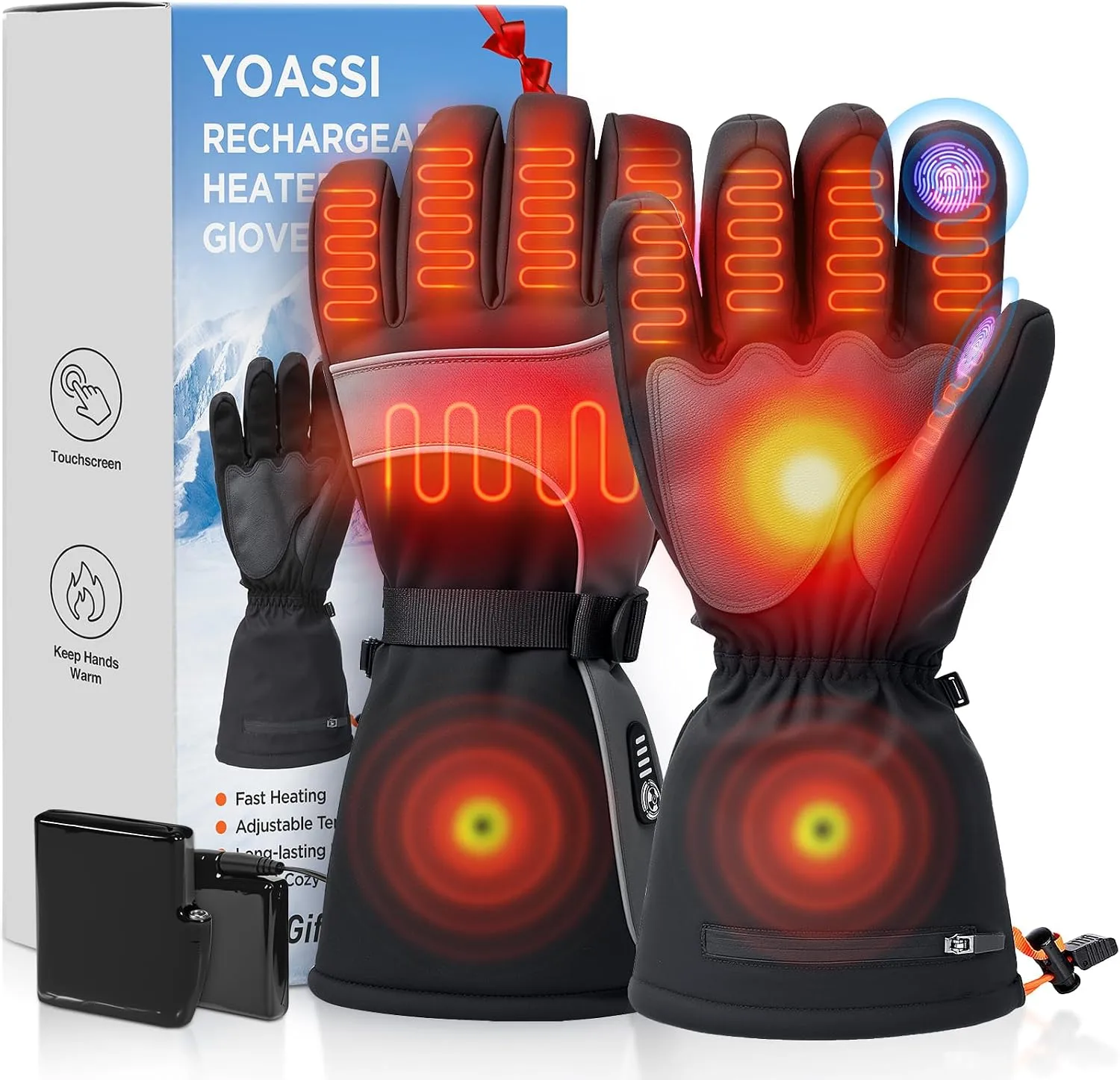
At around $43, Yoassi is the lowest price here, which makes it the easiest way to find out whether heated gloves suit you. The listing claims a 7.4V 6000mAh battery, heat in about 30 seconds and up to nine hours of use, the longest runtime of the five.
The three heat levels are spelled out in degrees: low at 110 to 116°F, medium at 128 to 134°F and high at 146 to 152°F. A battery indicator shows how much charge is left, and a TPU waterproof liner sits under the shell. Touchscreen fingertips and an anti-slip palm help with phones and ski poles.
Two things to check before buying. The title mentions mittens, yet the listing describes heated fingers, so confirm the shape before you buy. The listing also shows only two sizes, so a very small or very large hand may not fit well.
Watching every dollar? You can also browse our gloves under $50 for non-heated backups to keep in your bag. It is a low-cost way to find out whether heated gloves suit you.
SNOW DEER Heated Gloves: Built for Riders, Useful on the Lift
SNOW DEER Heated Motorcycle Gloves
– Full-finger far-infrared carbon fiber heating to the fingertips
– Soft sheepskin palm with carbon fiber knuckle armor for protection
– Dual 3000mAh batteries, 2.5-6 hour runtime with 3 heat settings
~$124.99
★★★★☆ (4.3/5 — 41 Amazon reviews)
Check Price on Amazon →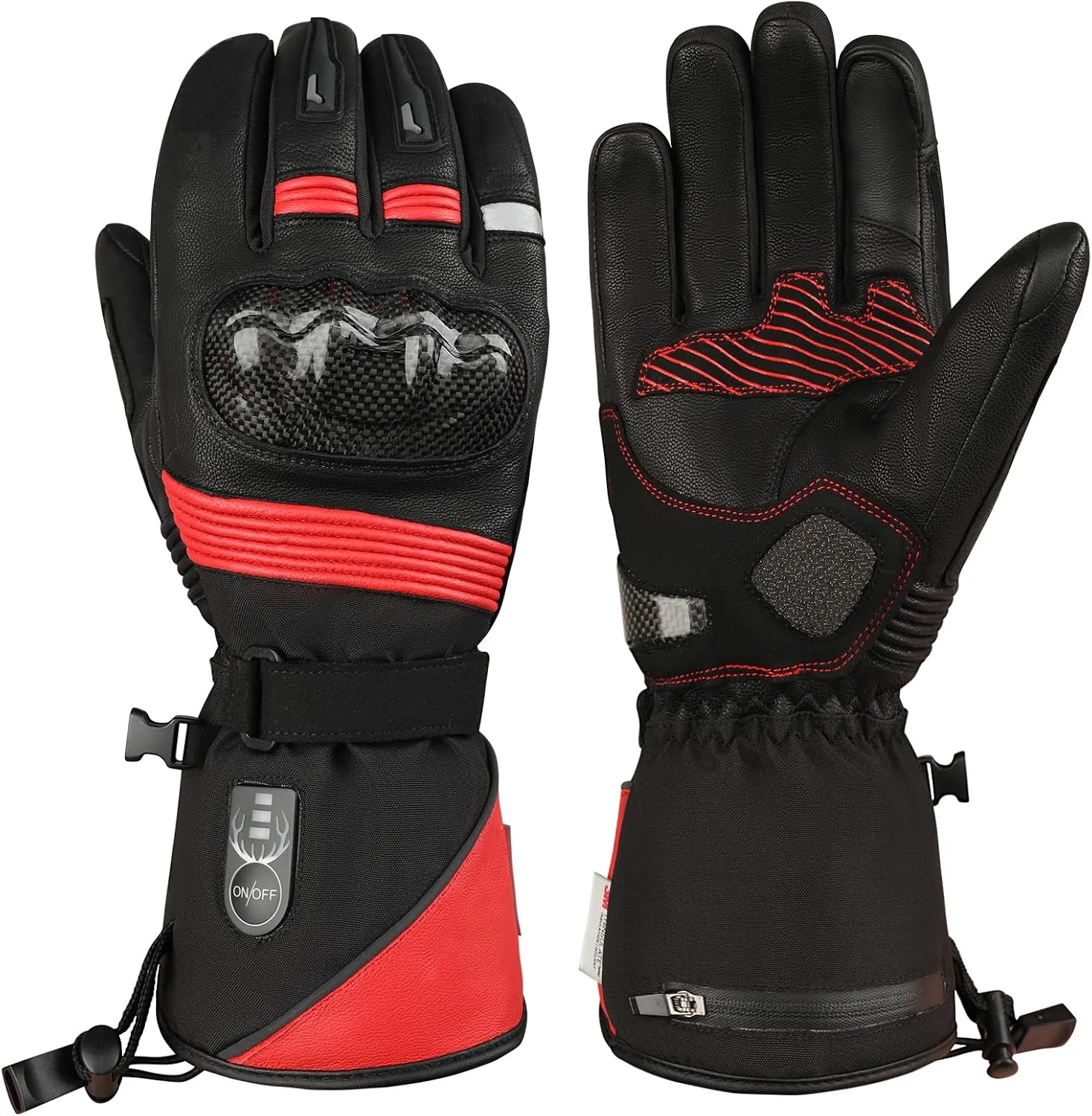
These are motorcycle gloves first. They carry carbon fiber knuckle armor and reinforced stitching, with sheepskin on the palm and fingers. The heating elements cover the fingers to the tips and the back of the hand in two separate zones, powered by two 7.4V 3000mAh packs. The listing quotes 2.5 to 6 hours of heat and a three to four hour charge.
The listing names skiing among its uses, along with e-bike riding and snow work, so it is not a stretch to wear them on a chairlift. Sheepskin feels soft, the membrane blocks wind and water, and the adjustable wrist strap keeps cold air out.
The caution is design. Armor over the knuckles and a riding cut can feel odd around a ski pole, and shorter runtimes mean the battery matters more. They make sense if one pair has to cover skiing and other cold-weather rides, and less sense if skiing is your only use.
Heat Settings, Numb Fingers and One Safety Habit
Skin that has lost feeling cannot tell you it is getting too hot. Check the listed numbers. Yoassi tops out between 146 and 152°F, and SPRING IN FALL reaches 149°F, which is a lot of heat against skin that may not react the way you expect.
Start on low, check the skin by eye after a few minutes, and only step up if your hands still feel cold. The goal is comfortable hands, not the hottest setting.
For a plain-language look at why cold and stress set off attacks, and why avoiding both is the main approach, see the NIAMS overview. Nothing on this page replaces advice from your own doctor, especially if attacks are frequent, painful or leave marks.
Batteries: The Part Nobody Plans For
Every heated option here runs on a rechargeable pack, and cold air tends to shorten how long lithium batteries last. The runtimes in the table are the makers’ figures, usually measured at low heat. Expect less in real conditions, and expect less still if you run the gloves hot.
| Glove | Battery listed | Runtime listed | Charge time listed |
| WEIVIOQ | 7.4V 2200mAh | Up to 6 hours | Not stated; extra battery sold separately |
| SPRING IN FALL | 7.4V 3200mAh per glove | 6 to 8 hours (low) | 3 to 4 hours, dual charger |
| Yoassi | 7.4V 6000mAh | Up to 9 hours | Not stated |
| SNOW DEER | Two 7.4V 3000mAh | 2.5 to 6 hours | About 3 to 4 hours |
| Hestra | None | Not applicable | Not applicable |
Charge the packs indoors with the charger that came in the box, and do not leave them plugged in unattended. Swollen casing, odd smells or unusual heat are reasons to stop using a battery. If a battery ever causes trouble, the CPSC reports site is where U.S. shoppers can file a product safety report.
The Twenty Minutes Before the First Lift
A glove can only hold the heat it is given. If your hands are already cold when you pull the gloves on, you have just sealed the cold in. Warm your hands first, then glove up.
That means putting the liners or gloves on in the lodge or the car, not on the lift line. Switch the heat on before the chilly part starts, since bringing a hand back from white and numb takes longer than keeping it comfortable. If a glove sat in a freezing car overnight, warm it up before wearing it.
A few other habits help. Warm drinks help your core, and your core feeds your hands. Health sources also list nicotine and certain cold medicines as things that can tighten blood vessels, so they are worth a conversation with your doctor. The American College of Rheumatology has a patient page covering everyday triggers and care, linked here as the ACR overview.
When you do take a glove off for a phone, a strap or a pole basket, put it straight back on. Bare fingers in the wind lose heat quickly, and winning it back wastes minutes of battery.
A Five-Minute Fit Test You Can Do at Home
Most returns happen because a glove felt fine in the box and wrong on the mountain. You can catch that in your living room. Put the gloves on with any liner you plan to wear, make a loose fist, then spread your fingers wide. Nothing should pinch at the knuckles, and the fingertips should not press against the end of the glove.
Next, turn the heat on low and hold a ski pole or a broom handle for a few minutes. Hot spots, a controller that digs into the wrist, or a battery pocket that shifts all show up quickly. Then check the cuff. It should close snugly over your jacket sleeve without squeezing the wrist, since a tight band slows the blood flow you are trying to protect.
Keep the packaging and tags until you have done this. A glove that fails the test is far easier to send back before it has seen snow.
Mistakes That Cost a Ski Day
The most common one is buying by thickness. A chunky glove feels warm in the shop because the shop is warm. On a windy lift ride, that same glove has nothing to work with unless something is making heat inside.
Another is choosing a size by guesswork. Heated gloves need room for air, and a squeezed hand makes everything worse, so if you sit between sizes, read the size chart, buy the roomier one and add a thin liner. Stacking a liner under a glove also changes the fit, so try the full setup before the trip, not at the base area.
People also wait too long to switch the heat on. Turning it up after the fingers have gone white is slower than starting low from the beginning. And many forget a spare battery, then hit a long afternoon with a dead pair and no plan B.
Finally, remember that five-finger gloves lose heat faster than mittens because the fingers are separated. All five picks here are finger-style, so if cold wins every argument you have, a heated mitten is worth a look too.
Which One to Buy
| Your situation | Pick | Reason |
| Already own a shell you love | WEIVIOQ liners | Thin, wide size range, adds heat to existing gear |
| Full days on the lifts, wind and cold | SPRING IN FALL | Removable batteries, dual charger, waterproof insert |
| First heated pair, small budget | Yoassi | Lowest price, longest listed runtime |
| Mild days, no charging, long-term gear | Hestra Heli Ski | Leather, removable lining, pairs with a heated liner |
| Skiing plus motorcycle or e-bike | SNOW DEER | Dual heating zones, reinforced build |
If you only buy one thing this season, choose the SPRING IN FALL gloves, or pair Hestra with the WEIVIOQ liners for a setup that gives you both a quality shell and a heat source. Whatever you pick, try it on at home first, run the heat on low for a few minutes, and make sure your fingers have room to move.
Questions Skiers Ask
Are heated gloves safe if I have Raynaud’s?
Many people with cold hands use them, and the main care point is skin that has lost feeling. Start on the low setting, look at your fingers after a few minutes, and only turn the heat up if you still feel cold. If you take medicine for circulation or have skin damage from past attacks, ask your doctor before relying on heat.
Can thicker gloves do the job without a battery?
On mild, sunny days, often yes. A well-made glove like the Hestra holds the heat your hands already have. On cold, windy days, thickness only slows the loss, so a heated liner or glove gives you something extra to work with.
Mittens or gloves?
Mittens are warmer because the fingers share heat. All five picks here are finger-style, which gives better control of poles and straps. If cold keeps winning, look for heated mittens too, and check the size chart carefully.
How long will the battery last on the mountain?
Use the maker’s figures as a best case. They are usually measured on low heat, and cold air shortens battery life. Plan on less than the listed runtime, carry a spare if you ski all day, and charge everything the night before.
Can I wear a liner under my regular ski gloves?
Yes, and it is a good way to add heat without replacing a glove you like. Thin liners such as the WEIVIOQ are made for this. Try the full setup at home first, since two layers change the fit and a tight hand loses circulation.
When should I turn the heat on?
Before your hands get cold. Warm them up indoors, put the gloves on, and switch the heat on low while you walk to the lift. Bringing a hand back from white and numb takes much longer than keeping it comfortable.
When should I see a doctor?
If attacks are frequent, painful, or leave sores or color changes that linger, get it checked. Gloves reduce cold exposure, and they do not replace medical care.
Affiliate disclosure: Some links on this page may be affiliate links. If you buy through them, skiglovesusa.com may earn a small commission at no extra cost to you. Specs, prices and battery figures come from the manufacturers’ product listings and can change. This article is general gear information and not medical advice.