As an Amazon Associate, I earn from qualifying purchases.
Quick Answer: If your toes go cold in ski boots, a thicker sock is often the wrong fix. A sock that is too thick squeezes your foot and slows blood flow, which makes you colder. Pick a knee-high wool blend sock that fits snugly without wrinkles. Wigwam Snow Sirocco is the cheapest wool pick at $19. The Merino Blend 2-Pack costs $9.50 a pair but has little wool. Smartwool Ski Full Cushion is the strongest all-round sock at $28.90. OutdoorMaster is the light, snug compression pick for skiers whose boots are already tight.
Planning the rest of your gear? The Ski Glove Finder helps you match gloves to your budget and weather in about a minute.
| Sock | Fabric | Cushion | Listed price | Good for |
| Wigwam Snow Sirocco | 60% wool, 30% stretch nylon, 9% stretch polyester, 1% spandex | Full | $19 | Low-cost wool, USA made |
| Merino Blend Ski Socks 2-Pack | 31.3% wool, 39.7% acrylic, 28.4% polyamide, 0.6% elastane | Full | 18.99for2pairs(9.50 each) | Tight budgets, spare pairs |
| Smartwool Ski Full Cushion | 60% merino, 38% recycled nylon, 2% elastane | Full | $28.90 (list $34) | Cold days, long wear |
| OutdoorMaster Thermolite Compression | 30% merino, 35% Thermolite, 25% nylon, 10% spandex | Light | 25.99for2pairs(13 each) | Tight boots, snug fit |
Prices and fabric details come from each product page when this was written. Check them again before you buy, since sellers change prices often.
- Why Your Feet Go Cold in Ski Boots
- Pick a Sock That Fits Your Boot
- How to Read a Sock Label
- Wigwam Snow Sirocco: Low-Cost Wool, Made in the USA
- Merino Blend Ski Socks 2-Pack: The Spare Pair Option
- Smartwool Ski Full Cushion: The Strongest All-Round Pick
- OutdoorMaster Thermolite Compression: Light and Snug
- Match the Sock to Your Kind of Cold
- A Morning Routine That Keeps Toes Warm
- What to Do on the Hill
- When Cold Feet Is a Warning
- Packing Socks for a Cold Trip
- Washing and Making Socks Last
- Mistakes That Leave Toes Cold
- Questions Skiers Ask
- Which One to Buy
Why Your Feet Go Cold in Ski Boots
Cold toes in a ski boot usually come from three things. The sock is too thick. The boot is buckled too tight. Or the sock holds sweat against your skin. Notice that only one of those three is about warmth. The other two are about blood flow and moisture.
Your feet need room for blood to move. A thick sock inside a snug boot takes up that room. The foot gets squeezed, blood flow drops, and the toes cool off even though you are wearing more fabric. Tight gear does the same thing to hands. Our post on tight gloves shows how it happens.
Sweat is the third problem. Your feet make a lot of it inside a closed boot. Wet socks lose their warmth fast. This is why cotton socks do badly on the mountain, and why a wool blend that handles damp feet is worth paying for.
Pick a Sock That Fits Your Boot
Start with your boot, not the sock. A snug performance boot needs a thin to medium sock. A roomier boot can take a cushioned one. Modern boots with insulated liners already trap a lot of heat, so a very thick sock adds little and costs you fit.
Look at the sock length too. All four picks here reach over the calf. That keeps the cuff above the top of the boot and stops the sock from sliding down your shin. A sock that slips creates folds, and folds create sore spots.
When you try on a new sock, put it on with the boot you will ski in. Stand up, bend your knees, and wiggle your toes. You should feel a snug fit with no pinching. If your toes feel pressed, go down a cushion level or check the size chart.
How to Read a Sock Label
The tag tells you more than the front of the package. Start with the wool share. More wool usually means better warmth when the sock gets damp. Smartwool and Wigwam both sit at 60%. The merino blend pack sits near 31%, and OutdoorMaster at 30% adds Thermolite to make up for it.
Next, check the nylon or polyamide. These fibers add strength, so the sock lasts longer. Then check the spandex or elastane. A small amount, from 1% to 2%, gives stretch without squeezing. A larger amount, like the 10% in the OutdoorMaster, gives a tighter, compression-style fit.
Look at where the cushion sits. Full cushion means padding on the shin, heel and toe. Light cushion means padding mostly on the sole. Then look at the toe seam. A flat or seamless toe is gentler on your toes. Finally, check the cuff. A stay-up or non-slip cuff keeps the sock from sliding down your calf.
Wigwam Snow Sirocco: Low-Cost Wool, Made in the USA
Wigwam Men’s Snow Sirocco Knee-High Ski Socks
– 60% wool blend with stretch nylon and spandex for full cushioning
– Stay-up leg cuff keeps socks from slipping inside ski boots
– Seamless toe closure reduces friction and blister risk
~$19.00
★★★★☆ (4.4/5 — 1,668 Amazon reviews)
Check Price on Amazon →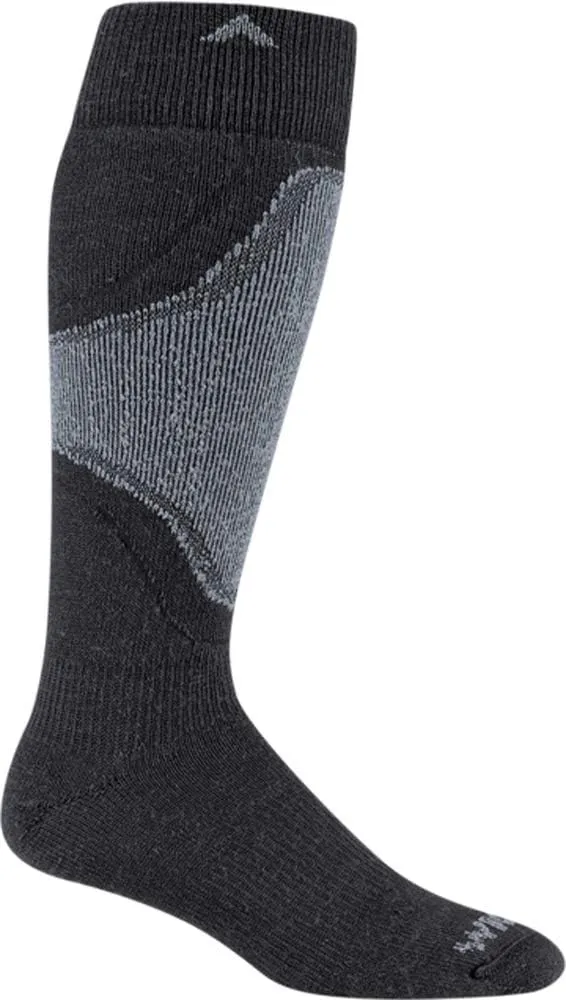
This is a knee-high ski sock listed at $19. The fabric is 60% wool, 30% stretch nylon, 9% stretch polyester and 1% spandex. The page lists full cushioning, a stay-up leg cuff and a seamless toe closure, and says it is made in the USA.
The wool share is the reason to look at it. Wool keeps its warmth better than most fabrics when it gets damp, and 60% is a real amount. The stretch nylon and polyester help the sock keep its shape, so it does not sag by the afternoon.
The seamless toe matters for cold feet. A seam across the toes can rub and press, and pressure on the toes cuts blood flow. A smooth toe also helps avoid blisters on long days.
One thing to check: the listing is for the men’s sock, in size Large and black. Women and anyone between sizes should read the size chart before ordering. Buy it if you want a real wool sock without spending $30. Skip it if you need a very thin sock for a race-fit boot, since a full cushion adds bulk.
Merino Blend Ski Socks 2-Pack: The Spare Pair Option
Merino Wool Ski Socks for Men, Women & Youth
– Merino wool blend provides natural insulation without overheating
– Full cushioning on heels, toes, and shins for fatigue-free days
– Elastic arch band and over-the-calf length prevent slippage
~$18.99
★★★★★ (4.6/5 — 10,328 Amazon reviews)
Check Price on Amazon →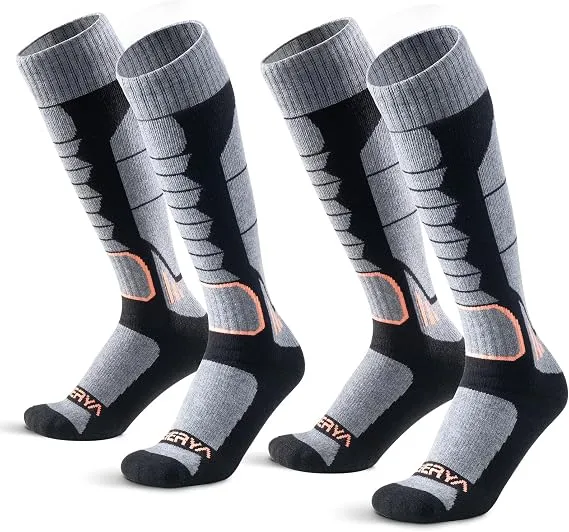
This is a two-pair pack at $18.99, which works out to $9.50 a pair. It is a knee-high sock with full cushion on the heel, toe and shin, and an elastic band around the arch that holds the sock in place. The page says you can machine wash it, and it comes in many colors and in pack sizes of 2, 3, 4 or 6.
The sizing is wide. Sizes run from Small to XX-Large, covering men’s 2.5 to 15, women’s 2 to 15.5 and youth. That is useful if one pack has to fit a whole family.
Read the fabric carefully. The page says merino blend, but only 31.3% is wool. The rest is 39.7% acrylic, 28.4% polyamide and 0.6% elastane. Acrylic can feel warm, but it does not handle damp feet as well as a higher wool share. The page also promises warmth in sub-zero cold, and that is a sales line, not a promise.
It is a good fit for one kind of buyer: someone who skis a few days a year, wants a spare pair, and does not want to spend much. If your feet get cold often or you ski many days, step up to a sock with more wool.
Smartwool Ski Full Cushion: The Strongest All-Round Pick
Smartwool Men’s Ski Full Cushion Over-the-Calf Socks
– Indestructawool technology reinforces high-impact wear zones
– 4 Degree Elite Fit System adds strategic stretch and mesh zones
– Virtually seamless flat-knit toe for extra comfort
~$28.90
★★★★★ (4.6/5 — 407 Amazon reviews)
Check Price on Amazon →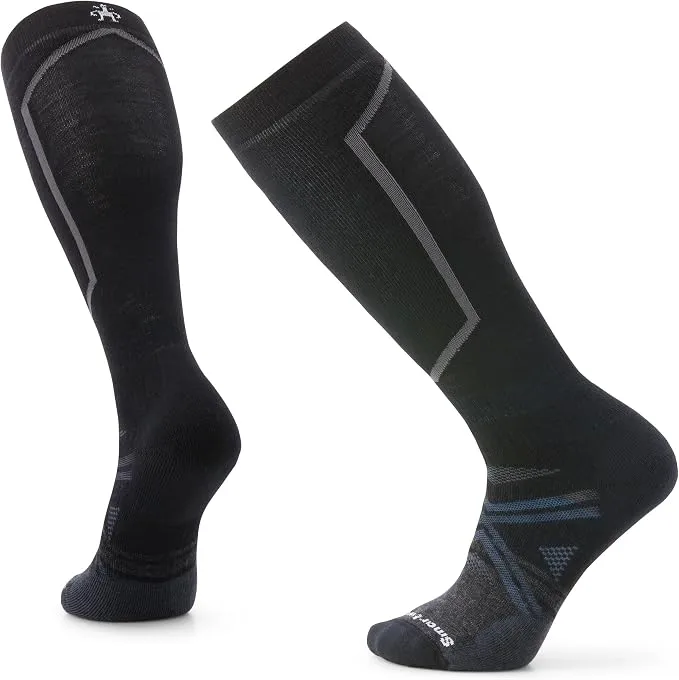
This is the most complete sock here. It is 60% merino wool, 38% recycled nylon and 2% elastane, made in the USA, and it costs $28.90 in black with 15% off the $34 list price. Other colors are Nightfall Blue, Taupe and Winter Moss, and sizes run from Small to XX-Large.
Three features stand out on the page. Indestructawool is a durability design knit into the spots that wear out first. The 4 Degree Elite Fit System adds stretch and mesh zones for breathability and to help protect against blisters. And the virtually seamless toe has a flat knit seam for comfort.
What does that mean for cold feet? The mesh zones let heat and damp air escape, so sweat does not stay in the sock. A good fit stops the folds that cause pressure. And a high merino share keeps the sock warm when it gets a little damp. Together those are the things that matter most for cold toes.
It costs the most of the four, so be honest with yourself about how often you ski. If you ski ten or more days a year, it is easier to justify. For cold days with long lift lines, this is the first sock to try. The care label says machine wash.
OutdoorMaster Thermolite Compression: Light and Snug
OutdoorMaster Thermolite Merino Wool Ski Socks
– Hollow-core Thermolite fibers lock in heat while staying lightweight
– 30% merino wool with Lycra spandex for shape and flexibility
– Targeted compression zones support foot, ankle, and calf
~$33.99
★★★★★ (4.6/5 — 289 Amazon reviews)
Check Price on Amazon →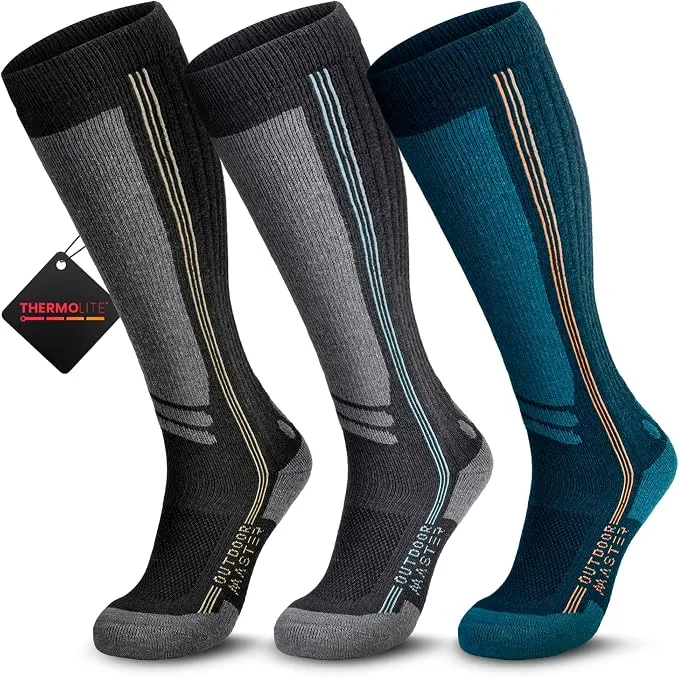
This sock mixes 30% merino wool, 35% Thermolite, 25% nylon and 10% Lycra spandex. Thermolite is a hollow-core fiber that the page says traps a layer of air for warmth and dries fast. It has a light cushion, terry loops on the sole, and compression zones around the foot, ankle and calf. The cuff is non-slip, and the toe is seamless.
The price is $25.99 for a two-pair pack, which is $13 a pair. Multi-color packs cost more, at $33.99 to $39.99. You can hand wash it or machine wash it on a gentle cycle. Sizes are Medium to X-Large only, so smaller feet are not covered.
The light cushion is the key point. This sock takes up little room, so it suits a snug boot where a thick sock would squeeze. The compression zones hold the sock in place and give the calf some support. The page says it helps prevent toe swelling and protects the Achilles tendon, which are marketing claims and not medical ones.
If your boot feels loose, the light cushion may leave your feet cold, and a fuller sock will work better. Cold feet and cold hands often show up together, so take a look at the warmest ski gloves for your hands too.
Match the Sock to Your Kind of Cold
Not every cold foot has the same cause. Use this table to find yours, then pick a sock that fixes it.
| What happens | Likely cause | Try this |
| Toes cold from the first run | Boot or sock too tight | Loosen the buckles, switch to a lighter sock such as OutdoorMaster |
| Warm at first, cold after lunch | Sweat built up in the sock | Smartwool or Wigwam, which have more wool |
| Cold while standing in lift lines | Not enough cushion or insulation | A full cushion sock and a boot with an insulated liner |
| Cold even in a loose boot | Poor blood flow or a medical cause | See the safety section below and talk to a doctor |
| Socks slip down and bunch | Cuff too short or loose | An over-the-calf sock with a non-slip cuff |
A Morning Routine That Keeps Toes Warm
Small habits help as much as the sock. Put your socks on right before your boots, not an hour earlier. Ski Magazine’s writer on chronic cold toes says sweaty feet become cold feet, and holding off on socks until the last minute helped avoid starting the day damp. Read the Ski Magazine tips for the full list of fixes.
Keep your boots warm too. Do not leave them in a freezing car overnight. Bring them inside, and pull the liners out if you can so they dry. A damp liner steals heat all day.
Smooth your socks before you step in. Pull the cuff up, flatten the toe, and make sure there are no folds across the top of your foot. Then buckle the boot snugly, but not tight. On the lift, open the top buckle if your feet feel numb, and close it again before the run.
At lunch, take the boots off, and swap into dry socks if yours are damp. Fresh, dry socks reset your whole afternoon and cost nothing if you already own a spare pair.
What to Do on the Hill
Standing in a lift line is when feet get coldest, since you stop making heat. Wiggle your toes and shift your weight every minute or so. Flex your ankles in the boot. It sounds small, but it keeps blood moving.
On the chairlift, let your boots hang loose and do not clench your toes. If the lift ride is long, open the top buckle a notch. Close it again before you ski. A boot that is too tight on the lift is a common reason toes turn numb by the top.
Small chemical foot warmer packs are another option if your feet still run cold. Use the kind made for boots, follow the directions, and give them room, since a squeezed foot defeats the purpose. Check your toes after the first hour for any redness or pain.
When Cold Feet Is a Warning
Most cold toes are only annoying. But a cold is a warning. The CDC says frostbite causes loss of feeling and color, and that the risk is higher in people with poor blood circulation. Signs include white or grayish-yellow skin, skin that feels firm or waxy, and numbness. You can read the CDC frostbite page before a cold trip.
Numb toes are a tricky signal, since frozen skin cannot feel pain. If your toes go numb and stay numb, get off the hill and warm them up. Do not rub them, and do not walk on them more than you must.
If your toes often turn white or blue in the cold, even in good socks, the cause may not be your sock. Raynaud’s is one condition that causes this, and the National Institute of Arthritis and Musculoskeletal and Skin Diseases explains it in its NIAMS overview. This article is not medical advice. A doctor can tell you what is going on.
Packing Socks for a Cold Trip
For a weekend, bring three pairs. Wear one, dry one, and keep one clean for the coldest morning. For a full week, four or five pairs let you rotate without doing laundry. If you are flying, socks pack small, so a spare pair costs you almost nothing.
Keep your ski socks apart from your everyday socks. Ski socks are cut for a boot and have padding in set places, so they wear out faster when used for walking around town. Store them flat, not stretched, so the cuff keeps its grip.
Bring a small bag for damp socks. At the end of the day, take them out of the bag right away and let them air out. A sock left in a sealed bag overnight stays wet and starts to smell, and it will not warm your feet the next morning.
Washing and Making Socks Last
Read the care label, since all four are different. Smartwool, Wigwam and the merino blend pack can go in the machine according to their pages. OutdoorMaster says hand wash or a gentle machine cycle. Wash socks inside out, and skip fabric softener, which can coat the fibers and slow how fast they dry.
Dry them fully between ski days. A sock that stays damp loses warmth and starts to smell. On a trip, hang them near a heater, but not on top of it, since heat can damage stretch fibers.
Replace a sock when the cushion goes flat or the cuff stops gripping. A worn sock bunches and slips, and that brings back the folds that cause cold, sore feet.
Mistakes That Leave Toes Cold
The first is wearing two pairs of socks. It feels like double warmth, but it creates wrinkles and pressure. One good sock works better than two.
The second is buying by thickness. A thick sock in a snug boot squeezes your foot. Fit matters more than bulk.
The third is wearing the same pair all week. Damp socks lose warmth, so rotate pairs and let each one dry.
The fourth is choosing cotton. A cotton sock soaks up sweat and holds it against your skin. Skip it for skiing, even if a product page says cotton is warm.
The fifth is ignoring the size chart. A sock that is too big folds, and one that is too small squeezes. Check your boot size and the chart for each brand.
Questions Skiers Ask
Are thick socks better for cold feet?
Not always. A thick sock in a snug boot can squeeze your foot and slow blood flow. If your boot has room, a full cushion sock works well. If it is tight, a thinner sock may keep you warmer.
Should I wear one pair or two?
One. Two pairs create wrinkles and pressure, and that can make feet colder. Choose one sock with the right cushion for your boot.
Is wool better than synthetic?
Wool handles damp well and holds warmth, so it is a strong choice for cold feet. Blends with nylon or Thermolite add stretch and shape. A sock with very little wool, like the merino blend pack, will not act like a high-wool sock.
How long should ski socks be?
Over-the-calf is the standard. The cuff stays above the boot, which stops the sock from sliding down and bunching.
Can I wear my ski socks for hiking or everyday use?
You can, but keep your best pair for the mountain so the cushion lasts. Ski socks are cut for a boot, and everyday wear wears them out faster.
How often should I replace ski socks?
Replace them when the cushion packs down, the cuff goes loose, or holes appear. A good wool sock can last several seasons with careful washing, but there is no set number.
Which One to Buy
Want real wool for a small budget? Choose the Wigwam Snow Sirocco. Need spare pairs for the lowest price? The Merino Blend 2-Pack works, with the wool share in mind. Want the most complete sock for cold days? Choose Smartwool. Have a snug boot? Choose OutdoorMaster.
A quick look at cost per pair: the merino blend pack is $9.50, Wigwam is $19, OutdoorMaster is $13 in the two-pack, and Smartwool is $28.90. Over ten ski days, the gap between the cheapest and the priciest is under $2 a day. If cold toes ruin your day, that is small money for a sock that fits your boot and keeps your feet dry.
Whichever you pick, try it with your ski boot, check the size chart, and loosen your buckles a notch before the first run. Warm feet usually come from fit first and fabric second.
Affiliate disclosure: Some links on this page may be affiliate links. If you buy through them, skiglovesusa.com may earn a small commission at no extra cost to you. Prices, fabric details and care instructions come from the manufacturers’ product pages and can change.