As an Amazon Associate, I earn from qualifying purchases.
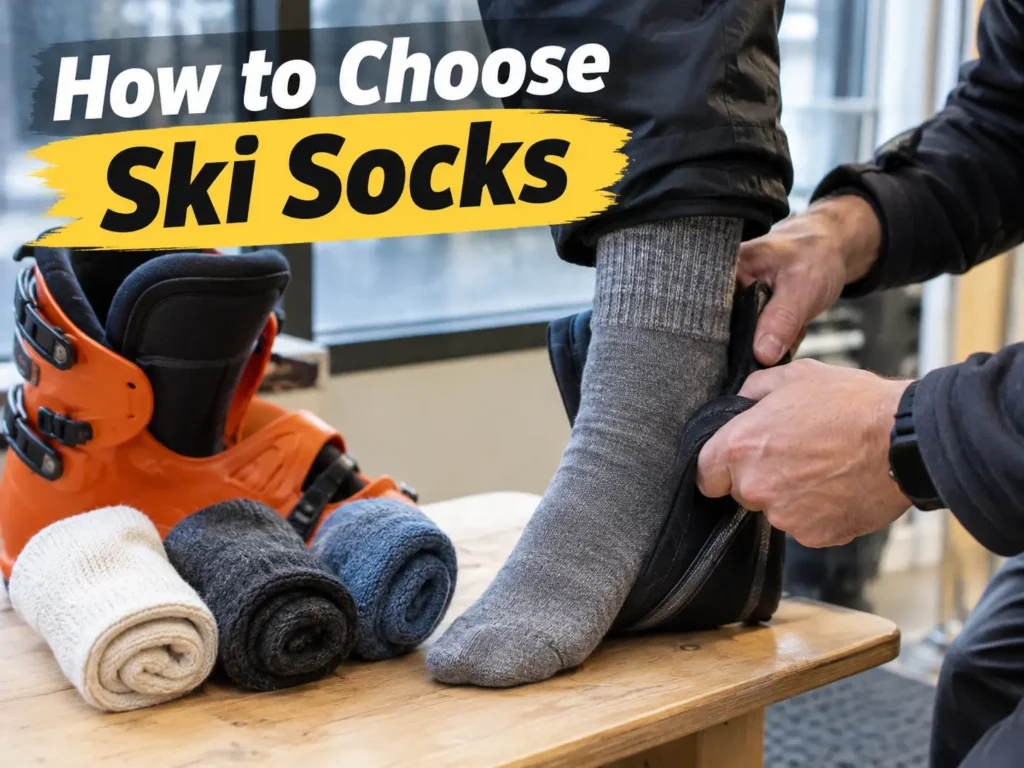
Quick answer: Start with your boot, not the sock aisle. A ski sock has to fit the space your boot leaves behind, so a snug performance boot wants a thin sock and a roomy boot can take a little more cushion. Look for one over-the-calf sock in wool, a wool blend or a synthetic, with no cotton, sized so nothing folds. Then test it inside the boots you will ski in.
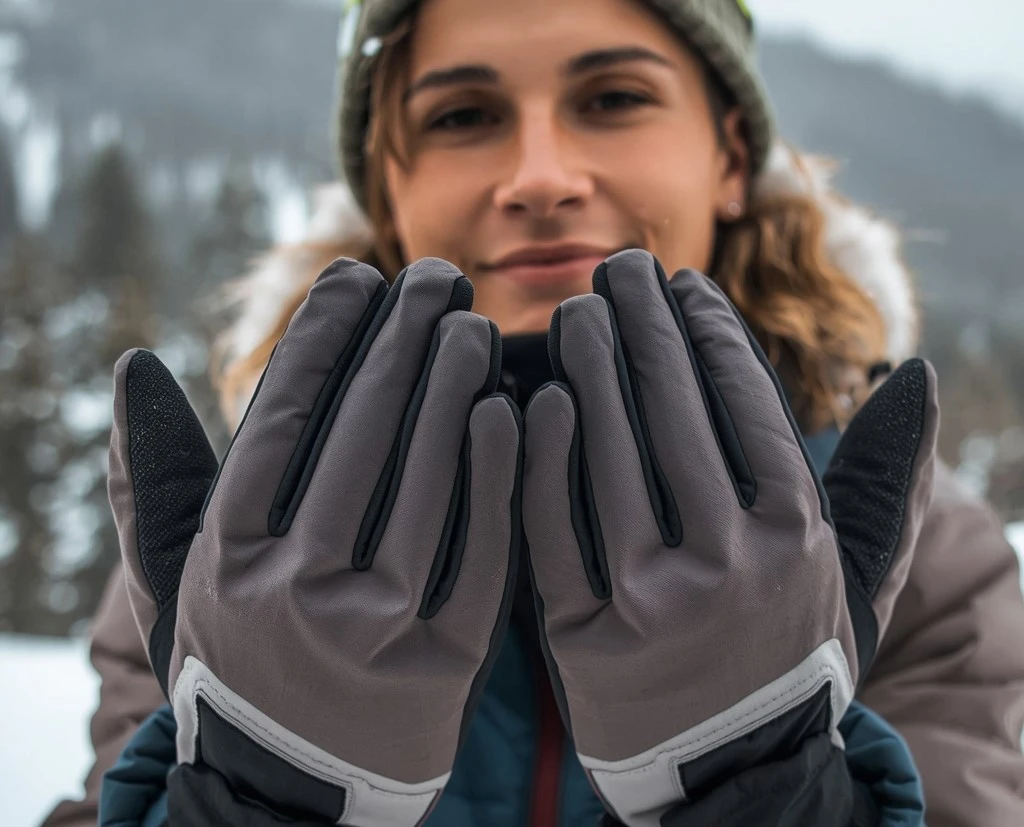
Your hands need the same care as your feet. The Ski Glove Finder sorts glove options by budget and weather in about a minute.
- Find Your Row First
- Why the Boot Gets the First Vote
- Six Feet, Six Different Answers
- Sizing a Sock Without Guessing
- What the Padding Does, Zone by Zone
- Height and Cuff: Where the Sock Ends Matters
- Match the Sock to the Day
- A 10-Minute Try-On You Can Do at Home
- Where the Sock Money Should Go
- Why Fabric Comes Last
- Wool, Synthetic or Blend: A Plain Answer
- Heated Socks, Ski Touring and Rental Days
- Bring This to the Boot Fitter
- Hot Spots and Blisters: Catch Them Early
- Three Mix-Ups That Waste Money
- When to Retire a Sock
- Frequently Asked Questions
- The Short Version
Find Your Row First
Most advice on this topic starts with fabric. That is the wrong end to start from. A sock lives inside a boot built to hold your foot still, so the boot sets the limits and the sock has to work inside them.
The table below links common situations to the sock traits that tend to work. Find the row that sounds like you, then read the matching profile further down. If two rows fit, read both.
| Your situation | Cushion | Fabric lean | Check this first |
| Snug, performance-style boot | None or light | Thin wool blend or thin synthetic | Pressure across the toes |
| Roomy all-mountain boot | Light to medium | Wool blend | Heel lift when you flex |
| Toes go cold first | Light, then medium only if the boot has room | Wool blend | Buckle tightness |
| Feet sweat a lot | Light | Synthetic or thin wool blend | A dry spare pair for lunch |
| Shins ache after a day | Light with shin padding | Any fabric except cotton | Cuff height and grip |
| Rental boots, a few days a year | Light to medium | Whatever fits flat | The brand’s size chart |
| Ski touring uphill | None or light | Thin, fast-drying knit | Seams under pressure |
No brand names appear in that table on purpose. Brands rework their knits every few seasons, while the traits in the table stay useful for years.
Why the Boot Gets the First Vote
A ski boot is a stiff shell with a foam liner inside. It exists to hold your foot in one place so small movements reach the ski. Anything you add to that space, even a thicker sock, takes room away from your foot.
That is why boot fitters ask you to arrive wearing the sock you plan to ski in. A fit built around one sock will feel different the day you switch to another.
So the order matters. Settle the sock before the boot, or at least at the same time. If you already own boots, treat them as the fixed part and find the sock that suits the space they leave.
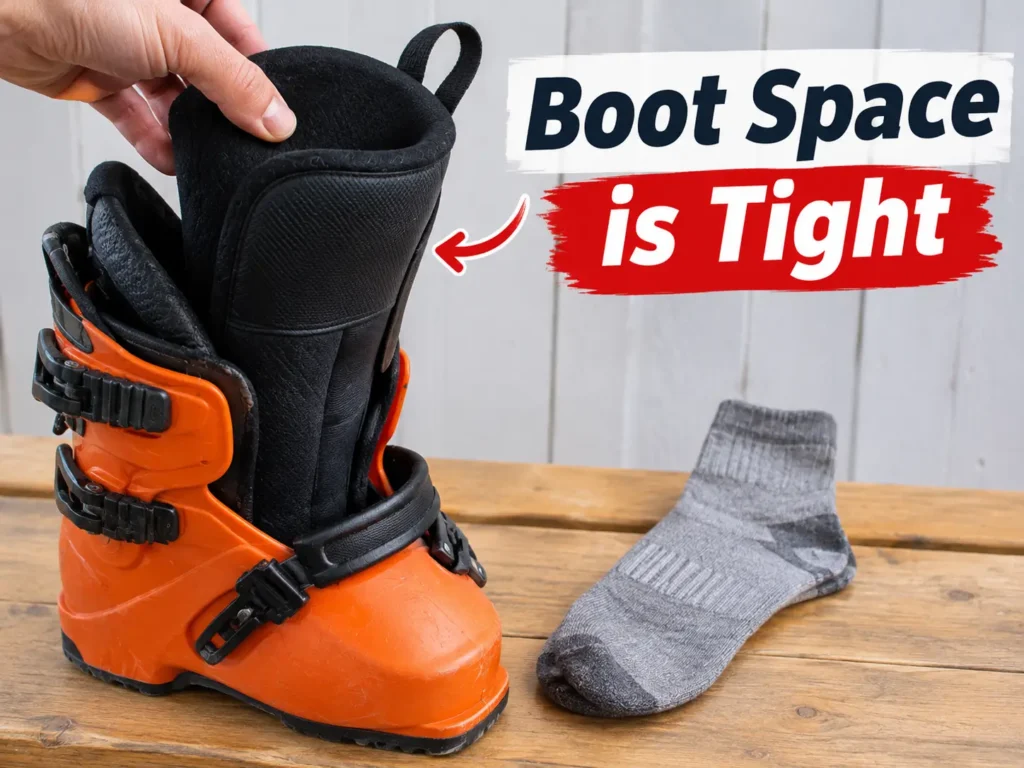
How can you tell a boot is already full? Two signs show up early. Your toes stay jammed against the front even when you flex your knees forward, or you see deep red lines across the top of your foot when the boots come off. Either one says the next sock should be thinner, not thicker.
The reverse happens too. A roomy boot with a very thin sock lets the heel lift and the foot slide, and that rubbing is where hot spots start. More cushion helps a little. A smaller shell or a molded liner fixes it better.
Six Feet, Six Different Answers
The same sock can warm one skier and freeze another because the feet, the boots and the days are all different. Here are six common cases. Skim for yours.
The cold-toe skier
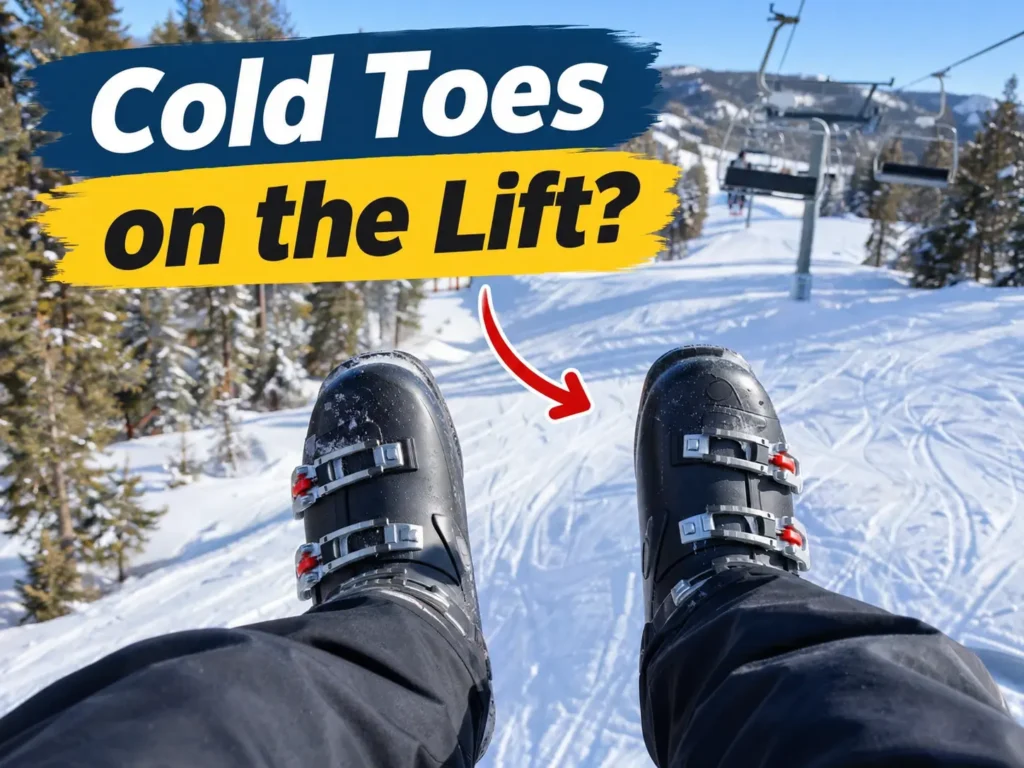
Cold toes are the most common complaint, and the first instinct is to add thickness. In a snug boot that backfires. A thick sock squeezes the foot, blood has less room to move, and toes cool faster even with more fabric around them.
Try the opposite first. Move to a thinner sock, loosen the top two buckles a notch and give your toes room to wiggle. If your feet stay cold in a boot with plenty of space, a fuller cushion in a wool blend makes sense.
Toes that turn white or stay numb in good gear deserve a talk with a doctor, not just another purchase.
The sweaty-feet skier
If your feet feel warm on the first run and clammy by lunch, sweat is the problem, not cold. Wet fabric loses warmth, and damp skin is where blisters start. Look for thin knits, mesh panels over the top of the foot and a fiber that moves moisture instead of soaking it up.
A foam boot liner does not breathe much, so the sock does most of the moisture work. That also makes a dry spare pair at lunch the cheapest upgrade you can buy. Carry it in a jacket pocket, not a cold locker.
The roomy-boot skier
Wide feet, rental boots and soft all-mountain boots all leave extra volume. A sock that is too thin in that space lets your heel lift and your foot slide forward on every turn. The rubbing shows up on the heel and on top of the toes.
A light-to-medium cushion fills a little of that gap. Still, a sock is a patch, not a fix. If your heel moves when you flex your ankle, tell the shop. A smaller shell or a heat-molded liner solves what socks cannot.
The tight-boot skier
Performance-fit boots are built with little spare room. They want the thinnest sock that still holds its shape, often with no padding under the sole and a bit on the shin.
Compression-style knits can help here, since they hug the foot and do not bunch. The trade-off is a closer feel, so try one with the boot before you commit. Many skiers in these boots also buy two pairs of the same thin sock, because thin socks dry faster overnight.
The shin-bang skier
Shin bang is the sore, bruised ache along the front of your lower leg after a day of pressing into the boot tongue. A sock cannot remove it, but it can soften it.
Pick a knee-high sock with padding down the front of the shin and a cuff that stays put. Make sure the padding sits where the tongue touches. A boot buckled too hard can still bruise you, so ease the upper buckles on the lift.
The few-days-a-year skier
If you ski three or four days a season, you do not need a sock built for race training. Aim for the middle: a light-to-medium over-the-calf sock in a wool blend or synthetic, sized to your foot, in two pairs so you can swap at lunch.
Skip cotton, tube socks and dress socks. They sweat, bunch up and stop at the wrong place on your calf.
Sizing a Sock Without Guessing
Sock sizes cover a range of shoe sizes, and the ranges differ by brand. Check your shoe size against each brand’s chart instead of assuming a medium is a medium.
If you land between two sizes, retail fit guides generally say to go down. A snug sock stays flat. A loose one folds across the toes and the instep, and a fold inside a tight boot acts like a pebble.
Women’s and men’s socks differ mostly in shape. Women’s versions tend to have a narrower foot and heel and a little more arch support, but either works when the size is right. Some socks are also knit for the left and right foot. If the label says L and R, follow it.
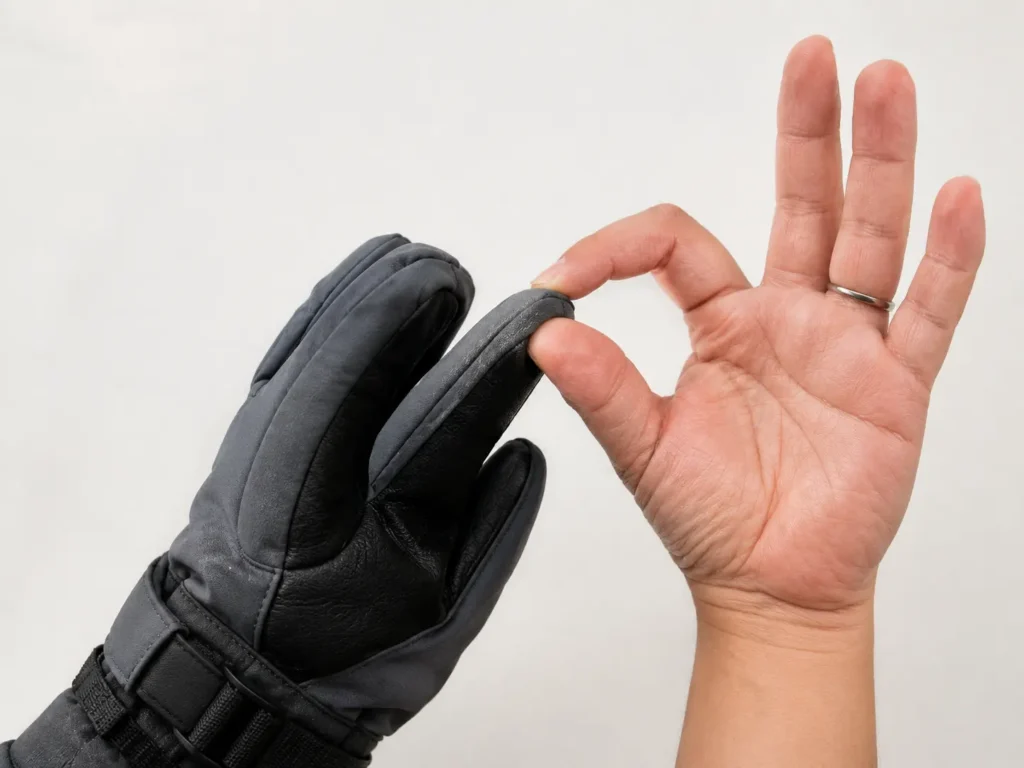
Fit works the same way for your hands. The glove fit test shows how a snug fit still leaves room for blood to move, and the idea carries straight over to a sock.
| What you see or feel | What it usually means | Next step |
| Folds across the toes or instep | Sock too big, or not pulled up flat | Go down a size and smooth it before the boot |
| Sock slides down the shin | Cuff too loose or too short | Try an over-the-calf sock with a gripping cuff |
| Toe pressure within minutes | Sock too thick, or too short in the foot | Go thinner and check the size chart |
| Heel slips inside the sock | Sock too large in the heel | Try the next size down |
| Red marks on the shin | Cuff or padding sits in the wrong place | Try another height or a cuff that stays put |
| Sock feels fine, boot feels tight | The boot is the problem | Visit a boot fitter |
What the Padding Does, Zone by Zone
Cushion means padding, and where it sits matters more than how much there is. Four labels cover most socks: none, light, medium and full.
Think of padding in three zones. The shin zone protects the front of your leg from the boot tongue. The heel and toe zones soften pressure and wear. The sole zone adds warmth and shock absorption, but it also adds bulk under the foot, where space is tight.
| Cushion | Where the padding sits | Good for | Trade-off |
| None | Almost nowhere; thin knit | Tight performance boots, feeling the ski | Little warmth or protection |
| Light | Shin, with reinforced heel and toe | Most skiers in most boots | Cold-prone feet may want more |
| Medium | Shin, heel, toe and part of the sole | Cold days, roomier boots | Can crowd a snug boot |
| Full | Most of the foot and shin | Very cold days, loose boots | Bulk, less feel, more pressure |
Light cushion is the safest starting point for most boots. You can add padding later, but you cannot take space back once a boot feels full.
Height and Cuff: Where the Sock Ends Matters
Over-the-calf is the standard height for skiing, and the reason is simple. The cuff should end above the top of the boot, on the bare calf, where nothing pushes it down into the boot.
A mid-calf sock can end right at the boot’s edge. There it tends to creep, bunch under the cuff and leave a fold behind your ankle. A fold in a tight boot feels like a pebble after an hour.
Calf size matters too. With large calves, a very tight cuff can dig in and leave marks. With slim calves, a loose cuff slides. Check that the stretch at the top matches your leg, and look for a cuff that grips without squeezing.
Pull the sock fully up and smooth it flat before the boot goes on. Then look at the top of your foot and the heel. A sock that starts straight stays straight longer, and a twisted one gets worse with every turn.
Match the Sock to the Day
Your boot stays the same all season, but the weather does not. A sock that feels right at 10°F can feel hot and damp in April slush.
On warm spring days, feet sweat more and the snow is wet. Go to the lightest cushion that still fits, pick a fast-drying knit and carry a dry pair. Boot liners pick up damp from slush too, so a spare pair pays off sooner.
On very cold or windy days, the answer is still not a thicker sock. Check that your boot has room first. If it does, a medium cushion in a wool blend adds warmth. If it does not, loosen the buckles on the lift and keep your toes moving.
Many skiers settle on two different pairs in the bag: one light and one medium, in the same height and size, never worn together. That covers most days and takes almost no room.
A 10-Minute Try-On You Can Do at Home
You can test a sock before your first ski day, and you do not need a slope. You need your boots, ten minutes and a mirror.
Put the sock on and smooth it flat. Slide into the boot, buckle it as you would on the hill and stand in a ski stance with your knees bent. Do not stand tall only, since a boot feels very different when you flex forward.
Stay in the boot for the full ten minutes. Walk around a little. Lift your heel and see if the sock stays put. Wiggle your toes. Pay attention to the first three minutes and the last three, since pressure that builds slowly is the kind that ruins a day.
Then take the boots off and look at your skin. Light sock marks are normal. Deep red lines, pale patches or one tender spot are not.
| Spot | Pass | Fail |
| Toes | Wiggle freely and touch nothing hard | Jammed or tingling within minutes |
| Heel | Stays put when you flex | Lifts or slides |
| Top of foot | Even pressure, no sharp line | Deep red line or a pressure point |
| Shin | Padding sits at the tongue | Cuff digs in or padding misses the tongue |
| Skin afterward | Light sock marks only | Deep marks, pale patches or sore spots |
If one sock fails, try another size or cushion before blaming the boot. If three socks fail in the same way, the boot is the problem, and a fitter is your next stop.
Where the Sock Money Should Go
Socks cost little next to boots, skis and a lift ticket, so it is tempting to grab the cheapest pair. A sock that fits costs about the same as one that does not.
Our sock picks list four options between about $9.50 and $29 a pair. That spread shows a well-fitting sock does not need a premium price. It also shows that the lowest price often comes with less wool and less shape-holding stretch.
A simple way to split a budget: fit first, then the pieces that touch you, then everything else. A boot and a sock that fit come before nearly all other gear. After that, protection beats extras, which is why the best ski helmets and the cold weather goggles sit ahead of most add-ons.
Hands follow the same rule. Our Best Ski Gloves page sorts options by budget, and the logic matches: fit and fabric before the brand name.
One practical tip: two pairs of the same sock beat one expensive pair. You can swap at lunch, wash one while you wear the other and keep going when one pair gets damp.
Why Fabric Comes Last
Fabric matters, just not first. A fine wool sock in the wrong size still folds. A modest blend that sits flat does more for you than a premium sock that does not.
A paper from the American Academy of Podiatric Sports Medicine makes the same point from the foot’s side. Its author, podiatrist Dr. Douglas Richie, argues that athletes should be fitted while wearing the exact socks they will use, which reverses the usual habit of buying socks after the shoes.
In a 1995 fit study he ran for a sock maker, adding a thick padded sock to a shoe that already fit with a thinner one called for a longer shoe size 77% of the time. That study used athletic shoes, not ski boots, and a sock company paid for it. Treat the number as a signal, not a law.
The same paper explains what happens when fabric gets wet. Fibers swell as they take in moisture, and swollen fibers pack together and leave less air space. The figures it cites are below.
| Fiber | Swells when wet (figure cited) | What it means on your foot |
| Cotton | About 45% | Holds sweat, packs down and stays cold |
| Wool | About 35% | Holds heat when damp, though the fibers get denser |
| Acrylic (a synthetic) | Under 5% | Keeps its shape and its air space |
Wool still earns its place. The paper notes that wool is preferred outdoors because it keeps heat even when wet, and that pure wool can feel abrasive, which is why makers blend it with synthetics.
That is the case for a blend: wool for warmth when damp, a synthetic for shape, strength and quick drying, and a little elastic so the knit hugs the foot.
Wool, Synthetic or Blend: A Plain Answer
Wool, synthetic and blends can all work in a ski boot. The real split is how each one behaves after a few hours of sweat.
Wool, especially merino, stays warm when damp, resists odor and feels soft. It costs more and dries slower. Makers add nylon to it for strength.
Synthetics dry fast, hold their shape and cost less. Some skiers find they hold odor and feel clammy once the sweating stops. They suit sweaty feet and short trips.
Blends try to get both. When you read a tag, look at three numbers: the wool share, the nylon or polyamide share for strength and the elastic share for stretch. One or two percent elastic gives stretch without squeeze. In our own sock roundup, wool shares ran from about 30% to 60%.
Skip cotton for skiing. Every source used in this guide agrees on that point, and it is the one rule with no exceptions.
Heated Socks, Ski Touring and Rental Days
Heated socks
A heated sock adds a battery and a thicker knit, so it takes more room in a boot. If your boots are snug, ask a fitter before you buy. A battery cuff that presses on your shin or calf can create the same pressure you are trying to avoid. Heated gear is worth a look for cold-prone skiers once the fit is solved, not before.
Ski touring
Uphill days mean thousands of steps in a boot with the cuff unlocked. Thin, fast-drying socks with flat seams matter more here, and a dry spare for the descent is worth the small weight.
Rental days
Rental boots are made to fit many feet, so they tend to be roomy, and the liners can be packed down from use. Wear your own thin or light sock, bring a spare pair and ask for a smaller size if your heel lifts. Do not stack socks to fill the gap.
Bring This to the Boot Fitter
If you are buying boots, the fitting is where your sock gets its real test. Ski Utah’s boot fitting tips tell skiers to bring the same socks they will wear on the slopes, ideally one thin, snug pair in wool or synthetic, and to skip cotton and dress socks.
It also suggests shorts or loose pants that roll above the knee, so the fitter can see and reach your shin and ankle, and it says to plan a couple of hours so the process is not rushed.
Spend at least 10 to 15 minutes in your top picks, the guide adds, because a boot that feels good at first can reveal pressure points later. That matches the home try-on above, so use the same slow approach there.
Tell the fitter what you plan to wear and what you feel: cold toes, shin pain, a heel that lifts. A fitter cannot fix what you do not mention.
If you get a custom or heat-molded liner, wear the same sock on molding day and keep wearing it. A liner shaped around a thin sock will feel snug with a thicker one.
Hot Spots and Blisters: Catch Them Early
A blister starts as a hot spot, a warm, tender patch on one part of the foot. The podiatry paper above names three ingredients: shear, pressure and a moderate amount of moisture. A good sock system can reduce each of them.
Board-certified dermatologists recommend nylon or moisture-wicking socks, advise against cotton, and say to stop as soon as your skin turns red or a spot starts to hurt. Carrying on is how blisters form.
That advice covers shoes in general. Its tip to try two pairs is not written for ski boots, where fitters ask for one thin pair, so fix the fit instead of stacking socks.
| Where it rubs | Usual sock cause | What to try |
| Back of the heel | Sock too loose or too thin, heel lifting | A snugger size; ask about boot heel hold |
| Top of the toes | Bunching at the toe seam | A flat toe seam; check boot length |
| Tips of the toes | Sock too short for the foot | The next size up; check boot length |
| Ball of the foot | Padding compressed and damp | A thinner, drier sock |
| Front of the shin | Cuff or tongue pressure | Padded shin; ease the upper buckles |
| Ankle bone | A fold or seam | Smooth the fold or try another knit |
If you feel a hot spot on the hill, stop and look. A small piece of moleskin or soft tape over the spot, put on dry skin and smoothed flat, is a common first step, and the dermatologists’ guide mentions both.
Three Mix-Ups That Waste Money
Treating a cushion as warmth. Padding adds bulk, and bulk can cut blood flow. Warmth comes from a fit that leaves room for circulation and a fabric that stays dry.
Copying a friend’s sock. A sock that works in someone else’s boot tells you about their boot. Feet and boots vary a lot, so run your own try-on.
Buying a single pair to save money. One pair means a damp sock on day two. That costs more in comfort than a second pair costs in cash.
When to Retire a Sock
A sock does not fail all at once. The padding goes flat, the cuff loosens, thin patches show at the heel and toe, and fit slowly slips away. A worn sock moves inside the boot, and movement makes folds.
Hold a pair up to the light once a season. If you can see through the heel or the cuff no longer grips your leg, replace it. Wash by the care label and let each pair dry fully between ski days.
Frequently Asked Questions
Should I buy thick or thin ski socks for cold feet?
In a snug boot, thicker socks can compress your feet and restrict blood flow, actually making your toes colder. Try switching to a thinner sock and loosening upper boot buckles to allow proper circulation. Only use medium or heavy cushion if your boot has extra room.
What fabric is best for ski socks?
A wool-synthetic blend is ideal. Wool (such as merino) retains heat even when damp and resists odors, while synthetics (like nylon or acrylic) provide shape retention, durability, and fast drying. Always avoid cotton, as it absorbs moisture and loses insulation.
How should ski socks be sized?
Always check the brand’s specific size chart against your shoe size. If you fall between sizes, size down so the sock fits snugly without bunching or folding inside your boot.
Should I wear two pairs of socks while skiing?
No. Doubling up on socks creates bulk, causes friction, and reduces boot control. Stick to a single well-fitting, over-the-calf ski sock.
The Short Version
Start with the boot and its spare room. Match the size to your foot so nothing folds. Begin with a light cushion, add padding only if the boot has space and keep wool or synthetic as your fabric, never cotton.
Then run the ten-minute try-on, because a sock that passes at home usually survives the hill. If three socks fail the same way, stop buying socks and talk to a boot fitter.