As an Amazon Associate, I earn from qualifying purchases.

Quick Answer: Choose a ski base layer for the moment you will spend the most time in: sweating hard, then sitting still in the cold. Pick a thin, snug fabric that is not cotton, either a synthetic that dries fast or merino wool that stays steady, in a weight that matches your weather. Everything else, from the brand to the color, comes after that.
The easiest way to see why is to follow one ski day from the parking lot to the last run. And if gloves are on your list as well, the Ski Glove Finder narrows them down in about a minute.
- 8:00: The Parking Lot: Start a Little Cold
- 9:00: The First Run: Your Engine Turns On
- 10:30: The Chairlift: Where the Chill Hits
- 12:00: Lunch: The Damp Shirt Test
- 2:00: The Afternoon: Cold Feet and Tired Legs
- 4:00: The Last Run: Cold Without the Heat
- What Your Base Layer Is Made Of
- Why Wool and Synthetics Feel Different When You Stop
- Which Fabric Fits Which Skier
- Weight: Lightweight, Midweight or Heavyweight
- Fit: Snug, Not Tight
- Reading the Tag Like a Pro
- Women's, Men's and Kids' Cuts
- Spring Slush and Sudden Cold Snaps
- Packing Base Layers for a Trip
- Build a Set That Works
- Washing and Making Layers Last
- Quick Fixes for Common Problems
- Your Choice in Three Questions
8:00: The Parking Lot: Start a Little Cold
You step out of the car and it feels freezing. The urge is to put on everything you own. Resist it. Within ten minutes of skiing your body makes a lot of heat, and a layer that feels perfect at the car can leave you drenched by the first lift.
A good rule is to start slightly cool. You should feel a small chill when you click into your skis, not a toasty glow. That is the sign you have the right amount on. A thin base layer under a jacket does most of the work, and you can add or remove layers from there.
| Starting temperature | Base layer weight | Add on top |
| 40s and up, spring | Lightweight top, skip bottoms | Shell jacket |
| 20s to 30s | Lightweight or midweight top and bottoms | Insulated jacket or fleece plus shell |
| Teens and below | Midweight top and bottoms | Fleece, then insulated shell |
| Windy ridge, any temperature | Same as above | Neck gaiter and face cover |
If you are shopping, start from real products with listed prices. Our base layer picks cover five layers from about $24 to $95, so you can see how weights and fabrics compare.
Think of your outfit as a stack. The base layer sits on your skin, a fleece or light puffy goes in the middle when it is cold, and a jacket goes on top. Each layer has a job, and the base layer has the hardest one, since it deals with sweat first.
9:00: The First Run: Your Engine Turns On
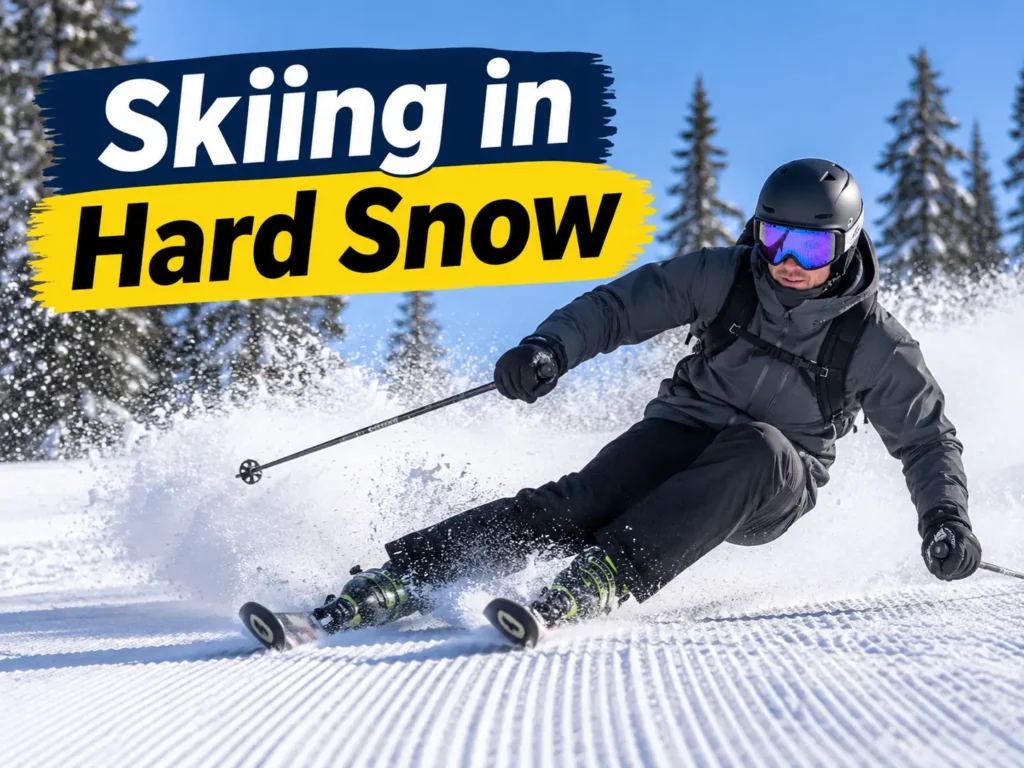
Now you are skiing. Your heart rate climbs, your legs burn and sweat starts. This is the moment a base layer earns its keep. Its job is to move that sweat off your skin so it can spread out and dry, instead of sitting against you.
Cotton fails here. It soaks up sweat and holds it, so the shirt stays wet and cold against your back. Synthetic fabrics and wool handle moisture in different ways, and we cover both below. Either one beats cotton by a wide margin.
Your jacket plays a part too. A jacket with vents lets warm, damp air out of the system. If your base layer wicks but your jacket has no vents, the moisture just gets trapped further out. Our guide to ski jacket choices explains the vents, the fabric numbers and the layering that pair with a good base.
Look for a quarter zip or a loose collar on your base layer as well. Opening it a few inches on a climb lets heat out without taking off your jacket. Small changes like that keep you in the comfortable range for longer.
10:30: The Chairlift: Where the Chill Hits
You finish a hard run, sit on the chair and the wind picks up. This is the moment most people feel cold. Your skin is warm and damp, the air is cold and you are no longer moving. The sweat on your base layer starts to cool you down, and fast.
The fabric makes a big difference here. A base layer that holds a lot of water on its surface feels clammy and cold. One that spreads the moisture out and lets it evaporate, or one that absorbs vapor into the fibers, keeps the chill away longer.
Your head matters too. Sweat on your scalp can drip into a helmet liner and cool you from the top down. A thin, wicking helmet liner or beanie helps. Our ski helmet picks show helmets with removable ear pads that are easy to wash and dry.
Pair the helmet with a thin neck gaiter or a buff, and make sure the base layer collar sits flat under it. A bulky collar that bunches under a gaiter leaves gaps where cold air sneaks in.
12:00: Lunch: The Damp Shirt Test
You head into the lodge and the heat hits. Now you can feel exactly how your base layer did. Is your back damp? Does the shirt cling? Does it smell already? These are clues about whether the fabric suits you.
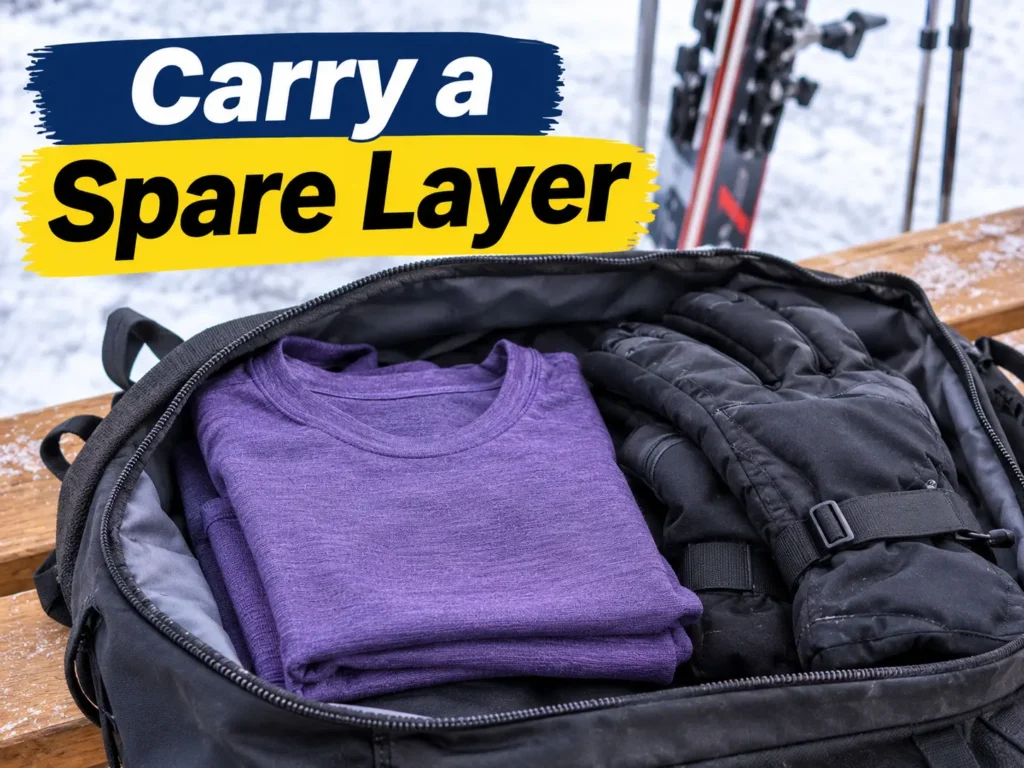
A smart habit is to carry a spare. Many skiers pack a dry base layer in a bag or locker and change at lunch. It takes two minutes and gives you a fresh start for the afternoon. A spare also helps on days with spring slush, when everything gets wetter.
Notice your goggles too. If your base layer holds sweat and your neck stays damp, warm air rises and fogs your lenses. Keeping your skin dry helps your goggles stay clear. For more on that, see our guide on cold weather goggles.
Eat and drink at lunch too. A warm meal gives your body fuel to make heat, and water keeps you from getting tired early. Cold hands and a foggy brain often start with an empty stomach, not just damp clothes.
2:00: The Afternoon: Cold Feet and Tired Legs
By mid-afternoon your energy drops. Your body makes less heat, and cold finds the weak spots. Often those are your feet. Damp socks and tight boots are a common reason toes go numb late in the day.
Your base layer bottoms and your socks work together. If your thighs are damp, your legs lose heat and your feet follow. A thin, wicking bottom layer helps keep blood flowing to your feet. And a good ski sock keeps them warm. Our guide to ski socks shows how fit and fabric change the day.
Keep your socks out of the damp as well. Take them off at lunch if you can, and let your feet breathe for a few minutes. Dry socks and a dry base layer are the two cheapest ways to turn a cold afternoon around.
If you start to shiver, that is a signal to warm up. Go inside, change into dry layers and have a warm drink. Do not push on, since cold muscles tire fast and make mistakes.
4:00: The Last Run: Cold Without the Heat
By the end of the day the sun is lower and the air is colder. You have been sweating on and off for hours. Your base layer has been through a lot. A layer that stayed fresh and dry now saves you from a cold finish.
The Centers for Disease Control and Prevention notes that hypothermia can happen even above 40°F if a person is chilled by sweat, rain or cold water. Its CDC hypothermia page lists warning signs such as shivering, exhaustion and confusion. That is why damp layers are not only a comfort issue.
If you feel the signs, stop skiing, get warm and dry, and tell someone. The right base layer will not fix every cold problem, but it lowers the odds that sweat turns a good day into a risky one.
What Your Base Layer Is Made Of
Three fabric families cover almost every ski base layer: polyester and other synthetics, merino wool and cotton. Each behaves differently when you sweat and when you stop. Knowing how helps you pick for your style of skiing.
| Fabric | How it handles sweat | Strength | Weak spot |
| Polyester and polypropylene | Repels water and moves sweat along the surface | Dries fast; low cost; very durable | Can smell; may feel clammy when you stop |
| Merino wool | Absorbs vapor into the fiber and releases it slowly | Stays comfortable across temperatures; slow to smell | Higher cost; dries slower |
| Blends (wool and synthetic) | Mix of both | Balances cost, durability and comfort | Varies with the mix, so check the tag |
| Cotton | Soaks up and holds water | Soft and cheap | Stays wet and cold on the hill |
Why Wool and Synthetics Feel Different When You Stop
Wicking is a simple idea. Tiny gaps between the fibers pull sweat away from your skin and spread it out so it can evaporate. Backpacking Light, an independent gear testing site, explains the science of how wicking works and notes that wicking claims can vary widely between fabrics, just like breathability claims.
Synthetic fibers are hydrophobic, which means they repel water. Sweat travels along the surface and dries quickly. That is great while you move and keeps you light. Wool is different: the fiber absorbs moisture vapor inside while the surface stays fairly dry, and it releases that moisture slowly.
A four-year study at North Carolina State University looked at this. It compared 100% wool, cotton, viscose and polyester fabrics of similar weight. Polyester dried faster, but that did not make skin feel better at rest, because skin temperature dropped. Wool settled sooner. The research was funded by Australian Wool Innovation, a wool industry group, so weigh it with that in mind. You can read the NC State study summary on their site.
The fair takeaway is simple. Both wool and synthetics beat cotton by a mile. Synthetics win on price and drying speed. Wool wins on steadiness, comfort during stops and smell. Pick by how you ski and what you want to spend.
Which Fabric Fits Which Skier
| Your skiing style | Fabric to lean toward | Why |
| A few days a year, tight budget | Synthetic | Low cost and does the job |
| Hard skiing, lots of sweat | Lightweight synthetic or thin merino | Fast moisture control |
| Many stops and lift rides | Merino or a wool blend | Steadier warmth when you stop |
| Multi-day trips with no laundry | Merino | Slow to smell |
| Sensitive skin | Fine merino or smooth synthetic | Less itch from soft fibers |
| Kids who grow fast | Synthetic | Affordable to replace |
Weight: Lightweight, Midweight or Heavyweight
Weight describes how thick the fabric is, and makers often list it in grams per square meter. A common rule of thumb puts lightweight at around 150, midweight at around 200 and heavyweight at 250 or more. Brands differ, so treat these numbers as a rough guide.
More weight is not always better. A thick base layer traps heat, which helps when you are cold and still, and hurts when you ski hard. Most resort skiers do best with lightweight or midweight, and add a fleece or insulated jacket for the coldest days.
| Weight | Rough grams per square meter | Best for |
| Lightweight | About 150 | Hard skiing, warm days, spring |
| Midweight | About 200 | Most resort days, cold starts |
| Heavyweight | 250 and up | Very cold, slow days, people who run cold |
Fit: Snug, Not Tight
A base layer works only if it touches your skin. If it hangs loose, sweat cannot move through it and the fabric bunches under your jacket. If it is too tight, it squeezes and limits how you move. Aim for snug, like a second skin.
Test it by raising your arms and bending down. The hem should stay near your waist and the sleeves should reach your wrist bone. The collar should not choke you. A neck style matters too: a crew neck is simple, a quarter zip lets you vent and a hooded style adds warmth under a helmet.
| Check | What good looks like | If it fails |
| Arm lift | Hem stays near your waist | Try a longer cut |
| Sleeve length | Cuffs reach your wrist bone | Size up or choose a longer sleeve |
| Seams | Flat, no rubbing at shoulders or underarms | Pick a flatlock-seam style |
| Collar | Comfortable under a jacket and gaiter | Try a quarter zip or lower neck |
| Bottoms | Waistband stays put, cuffs sit under socks | Check the rise and length |
Reading the Tag Like a Pro
The tag tells you more than the front of the package. Start with the fiber content. Look for percentages, not vague words like “performance fabric”. Then look for a weight, a care note and the seam type.
| On the tag or product page | What it tells you |
| Polyester, polypropylene, nylon | Synthetic fibers; fast drying and durable |
| Merino wool, with a percentage | Wool content; more wool means more steadiness and smell control |
| Elastane or spandex, 2% to 10% | Stretch; more stretch means a closer fit |
| Flatlock seams | Smooth seams that rub less |
| Grams per square meter | The weight of the fabric |
| Care label | How to wash it, and whether a dryer is allowed |
| Cotton listed as a main fiber | A warning sign for skiing |
Women’s, Men’s and Kids’ Cuts
Base layers are cut differently for different bodies. Women’s cuts are usually narrower at the shoulders and shaped at the hips. Men’s cuts are broader through the chest. Unisex cuts try to fit both, and they can feel loose. Choose the cut that stays snug without pulling, whatever the label says.
Kids need a close fit just as much, and it is easy to get wrong. A loose shirt leaves a gap where sweat collects, and kids often cannot tell you why they are cold. Pick a thin, snug top and bottom that go under their snow gear, and skip cotton, which is common in children’s pajama sets.
Check the size chart for each brand, and measure chest, waist and inseam. Sizes run differently between makers, and a base layer that fits well in one brand can run small in another.
Spring Slush and Sudden Cold Snaps
Spring skiing is a sweat test. The sun is warm, the snow is wet and you can go from freezing at 9 a.m. to hot at noon. Lightweight base layers, a vented jacket and a spare dry top give you the most room to adjust. Many skiers skip bottoms on warm days and put them in a pack.
A sudden cold snap flips the problem. A wet base layer and a dropping temperature make chills fast. Carry a midweight layer in your bag, and put it on before you feel cold. Putting on a layer early costs nothing. Taking time to warm up after you get chilled does.
In both cases, fresh layers help. If the day changes, change with it, and do not wait to feel bad before you act.
Packing Base Layers for a Trip
For a weekend, pack two tops and one bottom, plus a spare pair of socks. For a week, three tops and two bottoms work if you can wash once. Merino can go longer between washes, which helps when you travel light. Roll your layers, since they are thin and pack small.
Wear your bulkiest layer on the plane, and keep one base layer in your carry-on. If your bag gets delayed, you can still ski with borrowed or rented outer layers and your own base layer, which is the piece that touches your skin.
Build a Set That Works
You do not need a closet full of base layers. Two tops and one bottom cover most weekend trips. Wear one top, let the second dry or pack it for lunch. Wash between trips. If you ski a lot, add a third.
| Skier | Set | Rough cost |
| Weekend beginner | Two synthetic tops, one synthetic bottom | About $60 to $100 |
| Regular resort skier | One merino top, one synthetic top, one bottom | About $120 to $200 |
| Multi-day traveler | Two merino tops, one bottom | About $200 and up |
Spend a bit more on the piece you wear most, and buy the other pieces at lower prices. If your feet run cold, put money into good socks as well.
Washing and Making Layers Last
Follow the care label. Synthetics usually go in the machine on a gentle cycle. Wool may need cool water and a gentle wash. Skip fabric softener, which can coat the fibers and slow how fast they wick. Dry layers fully before you put them away.
Wash after every few days of skiing, and sooner if the layer smells. Sweat and body oil clog fibers over time. A layer that is washed and dried correctly performs better and lasts through more seasons.
Check the cuffs, hem and seams once a season. If the fabric has gone thin, stretched out or started to pill badly, replace it. A worn base layer slides around and lets sweat collect.
Quick Fixes for Common Problems
| Problem | Likely cause | Fix |
| Damp back by the second run | Too heavy, too warm or poor wicking | Switch to a lighter, snugger layer; use jacket vents |
| Cold at lunch | Sweat cooling on your skin | Change into a dry layer; add a warm mid-layer |
| Smells after one day | Synthetic fibers holding odor | Wash soon; try merino or a blend |
| Layer rides up | Too short or too loose | Try a longer cut; check the size chart |
| Itchy or irritated skin | Coarse fibers or rough seams | Choose fine merino or smooth synthetic with flat seams |
Your Choice in Three Questions
First, how much do you sweat? If a lot, lean toward lightweight and fast drying. If you run cold or stop often, lean toward wool or midweight. Second, what is your budget? Synthetic is the low-cost path, and merino is the comfort upgrade. Third, how long are your trips? For long trips without laundry, wool saves you.
Once you have those answers, shop by fabric, weight and fit. Try the layer on at home, run the tests above and wear it for a full ski day before you decide it is a keeper. Dry skin is what you are really buying.