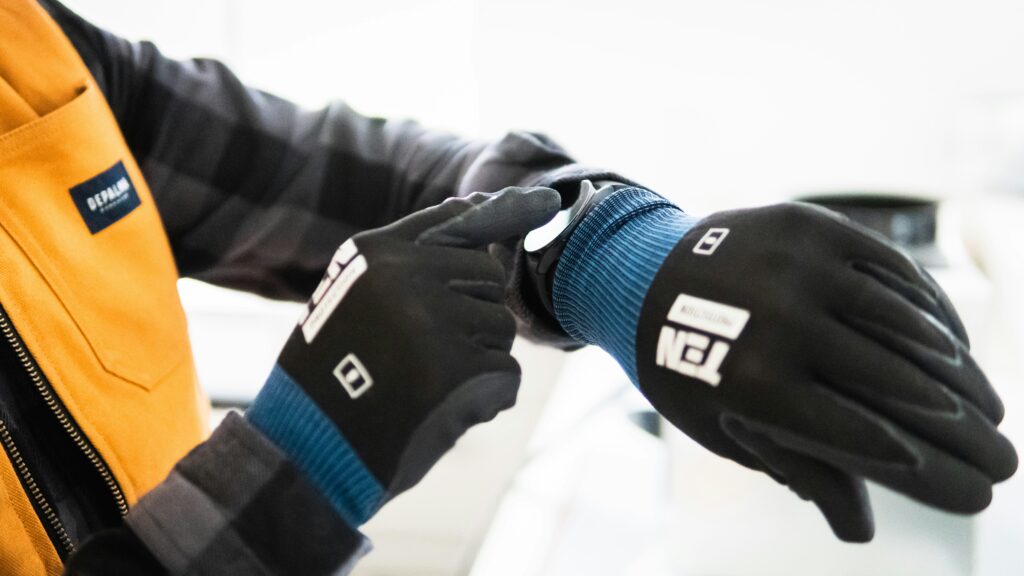
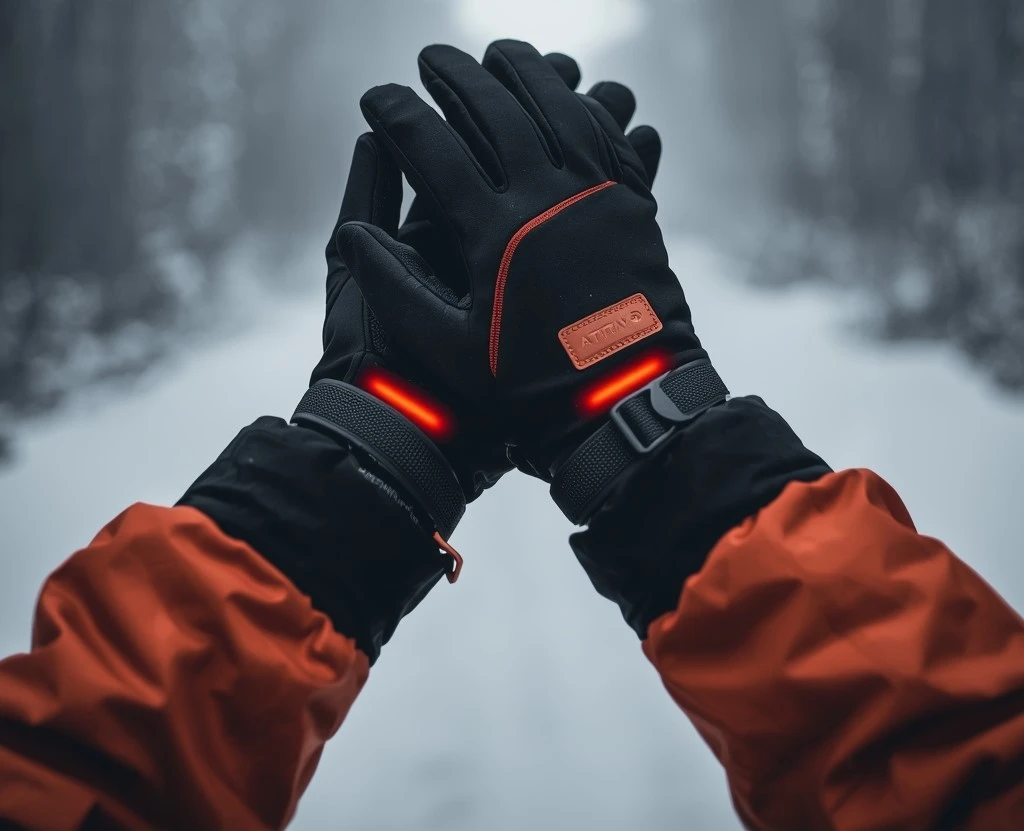
Cold hands ruin ski days. That’s not an opinion — it’s the main reason skiers start cutting runs short, take extra lodge breaks, or stop enjoying themselves entirely. When my fingers started going numb before noon on colder days, I figured I had two options: upgrade my traditional gloves or try heated ski gloves. Neither choice seemed obvious. Traditional gloves felt reliable and simple. Heated gloves seemed expensive and complicated. So I spent a season testing both properly before drawing any conclusions.
This article is based on that testing — not brand specs, not forum opinions.If you’re wondering are heated ski gloves worth it, this real-world testing breakdown will give you a clear, no-nonsense answer.
How I Tested: The Setup
I didn’t want to guess based on one cold day. I ran three separate tests across a full season to get a real picture of performance.
Side-by-side brand comparisons: I picked three brands at different price points and wore one glove type per brand on the same hand on back-to-back ski days with similar conditions. I tracked how long my hands stayed warm, when moisture started building up inside, and whether the heat setting made a difference. Switching the gloves between hands on different days helped rule out circulation differences.
Mountain tests on 20-degree slopes: These were real ski days, not controlled lab conditions. I skied the same intermediate runs repeatedly — chair lifts included — and noted when warmth started fading, how the gloves handled wind exposure on the lift, and whether wet snow contact changed anything. The 20-degree slope gave consistent wind exposure without requiring expert terrain.
Garage freezer tests: For controlled temperature measurement, I placed each glove type in my chest freezer set to 10°F with my hands inside for timed intervals. This sounds extreme, but it eliminates weather variability entirely. I measured how long each glove type maintained comfortable warmth, and what happened when I introduced a damp cloth — simulating wet snow contact — inside the freezer.
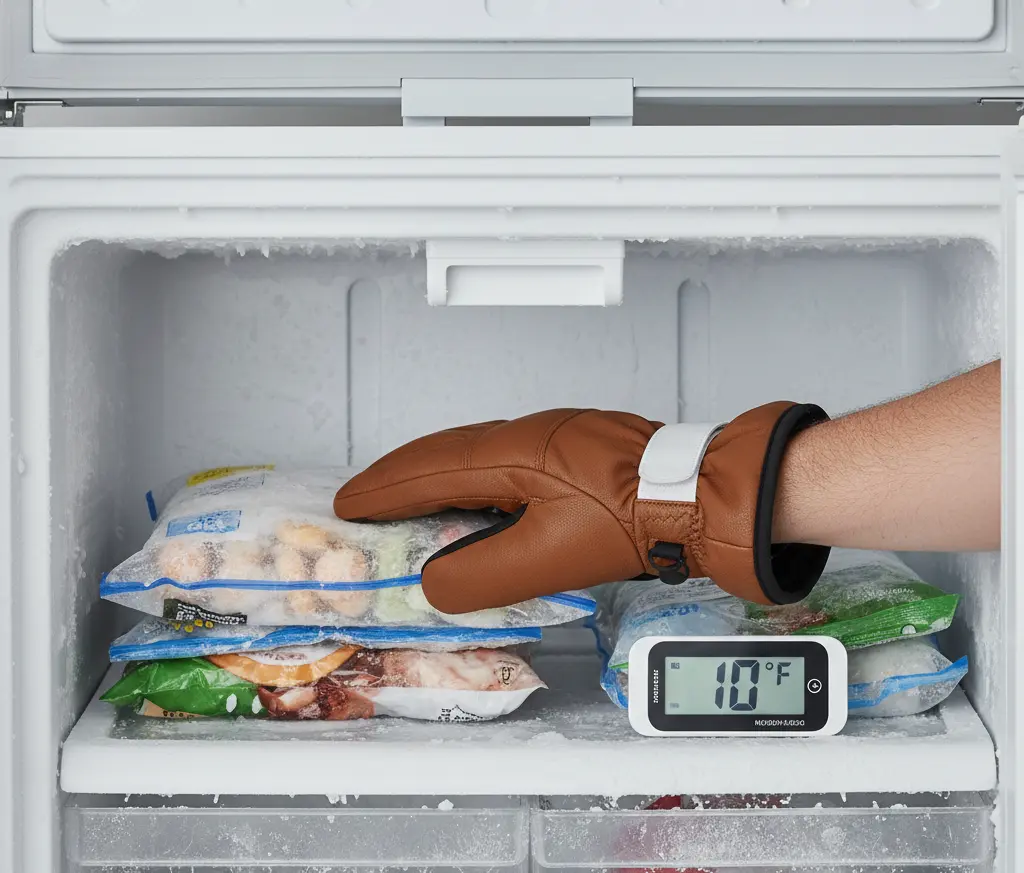
The combination of all three let me separate marketing claims from actual performance. The mountain tests told me what real skiing felt like. The freezer tests told me why.
What I Actually Found
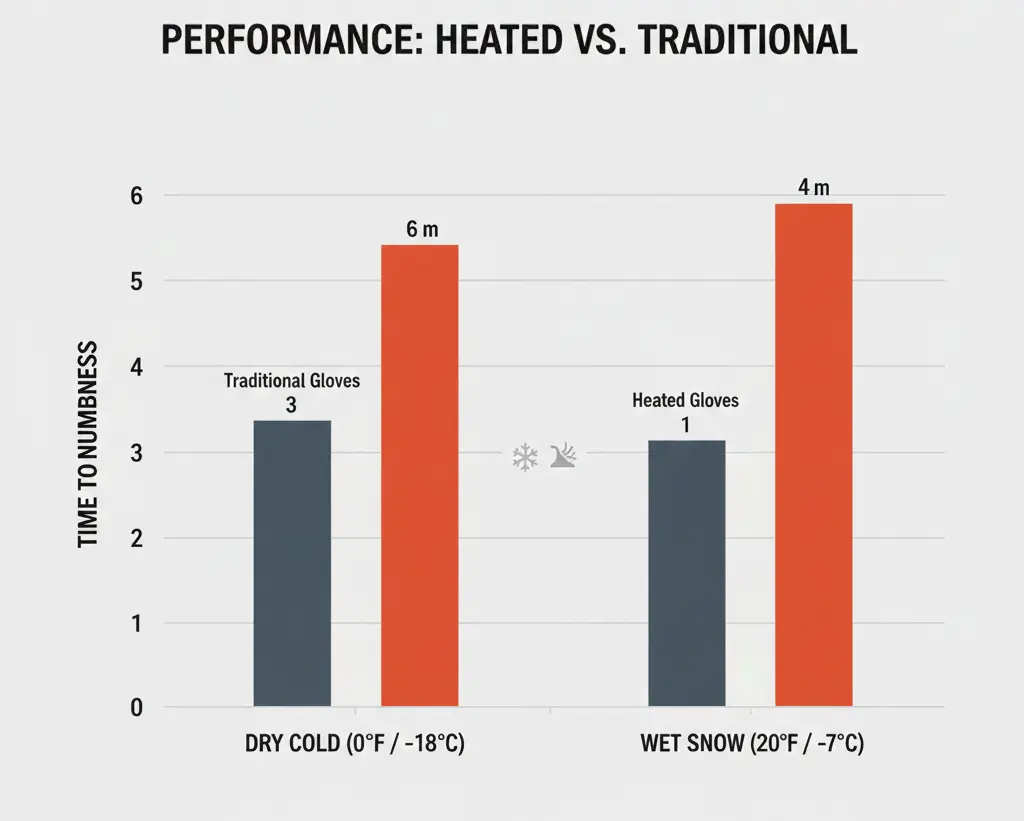
My main question going in was simple: which glove type keeps hands warmest for the longest time? I expected the answer to depend heavily on the price of the traditional gloves. A $200 insulated glove should compete with a $180 heated glove, I assumed. That turned out to be only partly true.
In dry, cold conditions — around 15°F with low humidity — my premium non-heated insulated gloves performed nearly as well as the lowest-heat setting on the heated gloves. The difference was maybe 20 minutes before I noticed my fingers cooling down. Not a huge gap for a morning session, but meaningful for a full-day trip.
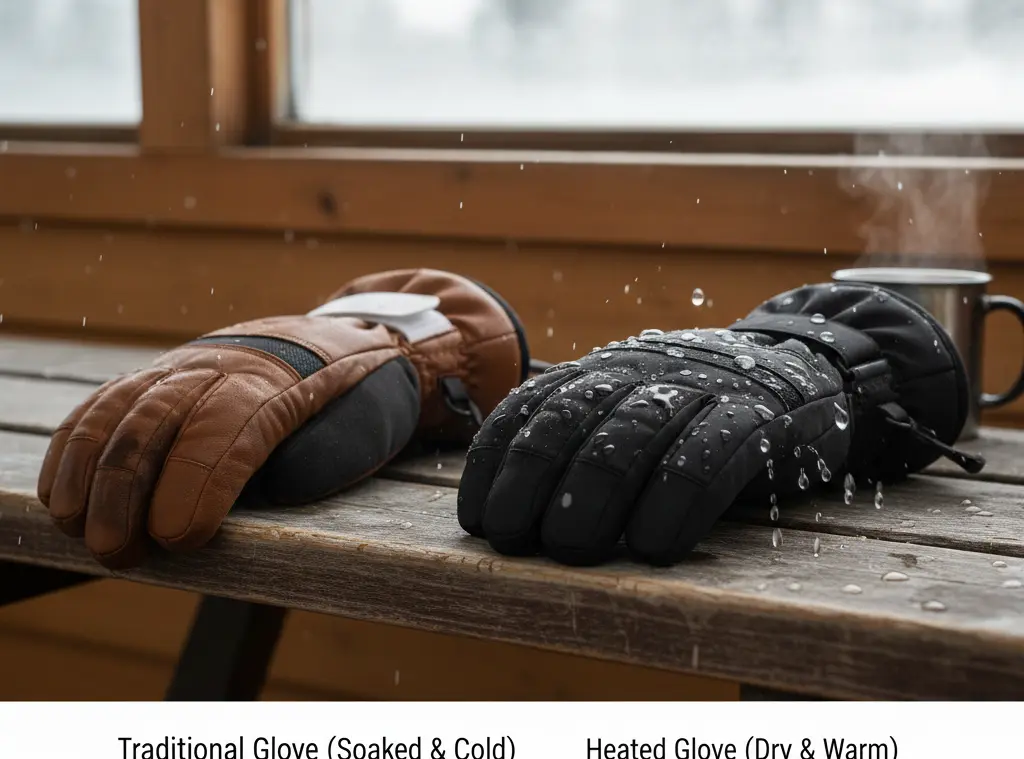
Where things shifted dramatically was wet snow. I tested this specifically because we had two days with heavy, sticky snow — the kind that clings to everything and soaks through gloves faster than people expect. My traditional waterproof gloves failed first. Even though they were marketed as waterproof, the moisture worked into the seams after repeated snowball-style contact, and once the inner lining got slightly damp, warmth dropped fast.
The heated gloves handled this completely differently. The active heat element compensated for moisture intrusion. My hands stayed warm even when I could feel the glove exterior was wet. That was the most honest surprise of the whole test — I expected heat to be the advantage in extreme cold, but the real edge showed up in wet, moderate-cold conditions around 25°F to 32°F where traditional gloves struggle the most.
Battery life was the main concern I had going in, and it held up reasonably well. On medium heat setting, I averaged about 4.5 to 5 hours of warmth, which covers most full ski days if you manage usage. On the coldest days when I ran them on high, that dropped to about 2.5 to 3 hours — which is not enough for a full day without recharging during lunch.
How Heated Ski Gloves Actually Work
The basic setup is simple: a rechargeable lithium battery — usually located in a small pocket at the cuff — powers a heating element woven into the lining near the fingers and palm. You control the heat level with a button, usually cycling through low, medium, and high settings. Most heated gloves need 1.5 to 3 hours to charge fully.
The key difference from insulation-only gloves is that insulated gloves trap your body heat passively. They work as long as your body is producing enough heat and the glove material keeps that heat from escaping. When moisture builds up inside, it pulls heat away from your skin — which is why wet conditions degrade traditional gloves so quickly. Heated gloves introduce external heat that offsets this. They’re not fighting cold so much as actively replacing warmth that moisture or wind steals.
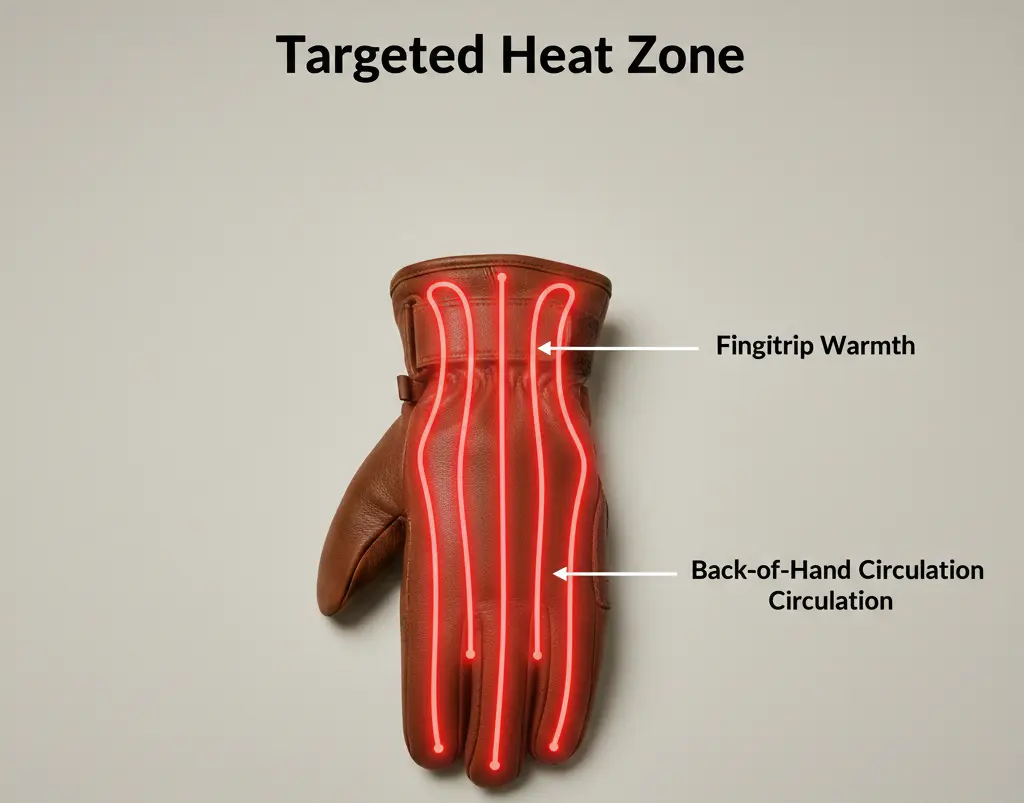
This matters for how you use them. Running heated gloves on high in dry conditions wastes battery you might need later. Running them on low in wet snow may not fully compensate. The skill is matching the heat setting to the actual condition, not just turning them on and forgetting about it.
When Heated Gloves Work Well — and When They Don’t
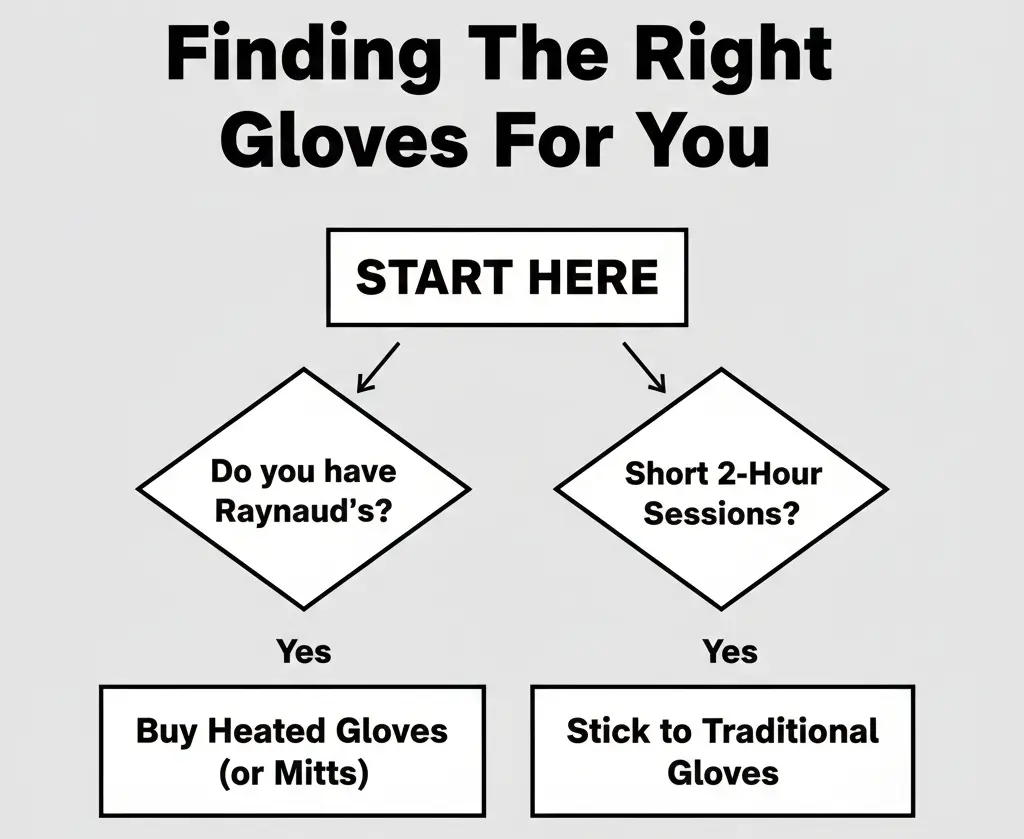
Heated gloves genuinely outperform traditional gloves in these situations: wet or heavy snow conditions between 20°F and 35°F, long ski days of 6-plus hours, skiers with poor circulation or Raynaud’s syndrome, and consistently cold environments where passive insulation just can’t keep up. For anyone who has chronically cold hands regardless of what gloves they wear, heated gloves are a real solution, not just an upgrade.
They struggle in specific situations, too. Below 5°F to 10°F, battery drain accelerates and you may find you’re burning through power faster than heat is helping. In extremely dry, light-powder conditions, a well-insulated traditional glove can match them for warmth at a fraction of the cost. And for half-day skiers or casual weekend trips in mild conditions, the added cost and battery management just isn’t worth it.
One thing I want to be clear about: heated gloves are not a cure for poorly fitting gloves. If your gloves are too tight and restricting circulation at the wrist or fingertips, heat won’t fix that. Fit matters first.
Mistakes Skiers Make With Heated Gloves
The biggest mistake I see is buying heated gloves and treating them like regular gloves — putting them on and never adjusting the setting. On warmer days, keeping them on high all morning drains the battery before afternoon, which is exactly when you need the warmth. Starting on low and adjusting as conditions change makes the battery last through a full day.
Second mistake: ignoring waterproofing. Heated gloves still need a functional waterproof membrane. Some budget heated gloves cut costs on the outer shell, which defeats the purpose. The heat element helps, but it can’t fully overcome a soaked-through glove. Check that any heated glove you buy has a proper waterproof-breathable membrane, not just a DWR coating that wears off quickly.
Third mistake: buying based on price alone. A $100 heated glove often has a smaller battery and weaker heating element than a $200 one. The price difference usually reflects genuine battery capacity and heat distribution coverage. But paying $300+ for a brand name doesn’t automatically mean better performance than a solid mid-range option. I found a mid-tier brand in my testing that consistently outperformed a more expensive one in wet conditions specifically because its heat element reached the fingertips better.
And finally: not testing before your trip. Charge the gloves fully and wear them around the house for a few hours to verify battery life and heat output before you rely on them on the mountain.
Condition-Based Recommendations
If you ski in wet, heavy snow regularly at temperatures between 20°F and 35°F, choose heated gloves, because this is where traditional waterproof gloves fail and where heated gloves make the biggest difference. Moisture intrusion at moderate cold is the hardest problem for passive insulation to solve.
If you ski primarily in dry powder below 15°F, a premium traditional insulated glove with solid waterproofing will often match a heated glove’s performance for 3 to 4 hours, at lower cost and with no battery management required. Consider heated gloves only if you’re going all-day.
If you have Raynaud’s syndrome, poor circulation, or consistently numb fingers regardless of gloves, heated gloves aren’t just worth it — they’re the right tool. No amount of passive insulation fully compensates for a circulation problem.
If you ski 2 to 3 hours on mild days between 28°F and 40°F, skip heated gloves entirely. A quality mid-layer glove or waterproof shell-and-liner combo will serve you better without the added cost, weight, and charging routine.
Heated Gloves vs. Traditional Alternatives: Honest Trade-offs
Vs. Premium Waterproof Insulated Gloves ($80–$150): Traditional insulated gloves are lighter, simpler, and need no charging. They perform well in dry cold. In wet snow or long days, they fall behind heated options in sustained warmth. For skiers who don’t have circulation issues and ski moderate conditions, they’re the better value. For wet conditions or all-day use, they’re outclassed.
Vs. High-End Non-Heated Technical Gloves ($150–$250): The best non-heated gloves use premium insulation like PrimaLoft Gold or Thinsulate and have excellent waterproofing. They’re competitive with heated gloves in dry, cold conditions and are notably lighter. Where they fail is moisture management in wet snow and extended sessions. A $200 non-heated glove and a $200 heated glove perform similarly for the first 2 to 3 hours in most conditions — after that, the heated glove extends comfort noticeably.
Decision Checklist: Do You Actually Need Heated Gloves?
Answer these honestly before buying:
• Do your hands go numb even with good gloves on? (Yes = strong case for heated)
• Do you ski in wet or heavy snow more than dry powder? (Wet = stronger case for heated)
• Are your typical ski days 5+ hours? (Long days = more benefit)
• Is your budget above $150? (Below this, quality drops significantly)
• Are you comfortable managing battery life? (If no, traditional gloves are simpler)
• Do you have a circulation condition like Raynaud’s? (Yes = heated gloves are worth it)
If you answered yes to three or more of these, heated gloves will likely make a real difference. Two or fewer, and a premium traditional glove is probably the smarter spend.
Diagnosing Your Hand-Cold Problem
Not all cold hands are the same problem, and heated gloves don’t fix all of them equally. Ask yourself these questions:
Do your fingers go numb, or do they just feel cold? Numbness often indicates a circulation issue — heated gloves help here. General coldness that’s manageable suggests an insulation gap that a better traditional glove might solve first.
Does moisture build up inside your current gloves? If you notice dampness on the inside after a few hours, that’s the glove trapping sweat with no breathability — which is a fit or material problem more than a heat problem. Heated gloves with a breathable membrane address this better than adding heat to a non-breathable glove.
Does the problem happen only in wet snow, or in all conditions? If only wet snow, you likely have a waterproofing failure — heated gloves help. If all conditions, you may need better base insulation first.
When in your ski day does it start? If numbness sets in within the first hour, it’s likely a fit or circulation issue. If it starts after hour three, it’s probably insulation fatigue — where passive warmth depletes — and heated gloves genuinely solve that.
Who Should Skip Heated Gloves
Budget-conscious skiers spending under $120 on gloves should stick with traditional options. The cheap heated gloves in this price range often have underpowered batteries and weak heating elements that don’t deliver meaningful benefit over a good $80 insulated glove.
If your ski days are typically under 3 hours, there’s no practical case for heated gloves. A quality mid-price insulated glove handles 3 hours in most conditions without issue.
Skiers who prefer minimal gear and hate managing devices will find battery charging and heat adjustments annoying enough to detract from the experience. There’s no shame in preferring simplicity.
Anyone sensitive to pressure around the wrist from the battery housing should try gloves in-store before buying. The battery pack at the cuff varies by brand and can feel restrictive under a tight jacket sleeve.
Maintenance: Making Them Last
Recharge fully after every use, not just when they’re dead. Lithium batteries degrade faster with full drain cycles than partial cycles. Storing them at around 50% charge during off-season extends battery longevity significantly.
Reapply DWR (durable water repellent) spray to the outer shell at the start of each season. Even the best waterproof membranes work better when the outer fabric is beading water rather than wetting out. Most outdoor retailers sell Nikwax or Grangers sprays that work on heated glove shells.
Dry them naturally after use. Avoid placing heated gloves directly on radiators or heat vents — high external heat degrades the battery faster and can affect the heating element wiring over time. A well-ventilated room at room temperature is enough.
Inspect the charging port and cables before each season. Bent pins or corroded connectors cause charging failures, and discovering this mid-trip isn’t fun. A small amount of electrical contact cleaner on a cotton swab keeps ports clean if stored in damp conditions.
Store the gloves somewhere with a stable temperature. Extreme cold or heat during storage — like a garage through summer — shortens battery life measurably season over season.
The Actual Answer
Heated ski gloves are worth it for specific skiers in specific conditions — not universally. If you have chronically cold hands, ski in wet snow, or push through long days, they solve a real problem and outperform traditional alternatives where it matters. If you ski casually in mild conditions with decent circulation, a well-chosen traditional glove saves you money and complexity.
The testing made one thing clear: the case for heated gloves is strongest in wet, moderate-cold conditions, not extreme cold. That’s where the marketing undersells them and where skiers with traditional gloves feel the gap most. If that matches where and how you ski, they’re worth every dollar.
The Next Step: Don’t Lose Your Heat to Your Phone
If you have decided that heated gloves are the right choice for your cold hands, there is one major trap you still need to avoid. Buying a pair that forces you to take them off to check a GPS trail map or answer a text completely defeats the purpose. The moment you expose your bare skin to the freezing wind, you instantly lose all the heat you just paid for.
Finding the right balance between warm heating elements and sensitive touchscreen fingertips is incredibly difficult for gear companies to get right. To see which models actually let you type and swipe without taking them off, read my hands-on testing guide to the Best Heated Ski Gloves for Smartphones.
About the Author
Awais Rafaqat has over 15 years of experience testing ski gear in some of the harshest conditions across North America, from the dry sub-zero peaks of the Rockies to the wet, freezing slopes of the Pacific Northwest. He specializes in real-world gear testing to help skiers find equipment that keeps them warm, dry, and performing at their best on every run.