Quick answer: A genuinely good pair of heated gloves with real touchscreen fingertips has to solve two separate engineering problems at once — keeping your hands warm and letting your fingertips still register on a screen — and most budget models solve one at the expense of the other. If you run cold hands on the mountain and check your phone often enough that removing gloves is a real hassle, the combination is worth it. If you’re generally warm-handed and only check your phone occasionally, a standard glove with a simple touchscreen patch does the job for a fraction of the price and hassle. Either way, it helps to know what you’re actually buying into before spending on either option, and the ski glove finder is a faster way to narrow that down than scrolling spec sheets.
- Why Heat and Touchscreens Fight Each Other
- How the Touchscreen Part Actually Works
- What Cold Does to the Battery, Not Just Your Hands
- Durability: Where Heated Gloves Actually Fail Over Time
- Real Scenarios Where the Combination Actually Pays Off
- Cost Versus What You're Actually Paying For
- Common Mistakes Buying and Using These Gloves
- Who This Actually Makes Sense For
- FAQ
Why Heat and Touchscreens Fight Each Other
The core tension in this product category isn’t marketing spin — it’s a real physical trade-off. Heating elements need to sit close to your skin to transfer warmth efficiently, and that same fingertip real estate is exactly where a capacitive touchscreen needs the thinnest, most conductive material possible to register a touch accurately.
Carbon fiber heating elements are the more common choice in better gloves specifically because they’re thinner and more flexible than older nichrome wire designs, which matters enormously at the fingertip where any added bulk directly reduces both dexterity and touchscreen sensitivity. A heavier heating element wrapped around a fingertip doesn’t just feel clumsy — it physically increases the distance between your finger and the screen’s sensing layer, which is often enough to make a tap register as a miss.
This is the reason a glove that heats well and a glove that has great touchscreen fingertips are sometimes built by the same brand as genuinely different products, not just different price tiers of the same design. The engineering priorities pull in opposite directions at the exact same point on the hand.
How the Touchscreen Part Actually Works
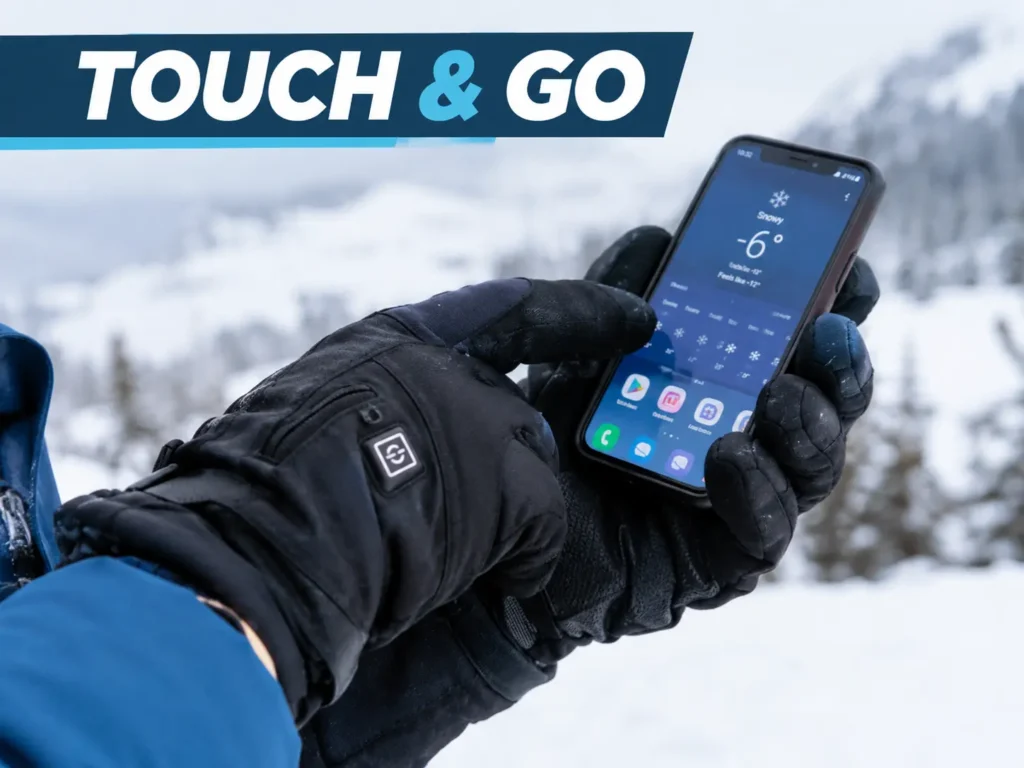
It helps to understand what a touchscreen is actually detecting before evaluating whether a glove’s fingertip claims are realistic. According to a technical explainer from TechTarget, a capacitive touchscreen panel is coated with a material that stores a small electrical charge, and touching it with something conductive — a bare finger, a specialized stylus, or a properly designed glove — draws a measurable charge to that point, which the screen interprets as a touch location.
This is exactly why the cheap rubbery grip dots seen on many budget gloves fail so quickly at touchscreen use. Rubber and silicone aren’t conductive at all — those patches only work if they’re thin enough that some of your finger’s natural charge bleeds through the material, and any wear, moisture, or slight thickening of that patch breaks the connection entirely.
Gloves that actually work reliably use conductive thread woven directly into the fingertip fabric, creating a continuous conductive path from your skin to the outer surface. That’s a fundamentally different approach than a rubber patch sitting on top of ordinary fabric, and it’s the detail worth checking before buying rather than trusting a “touchscreen compatible” label at face value.
Thicker gloves, heated or not, run into a related problem even with good conductive thread. Multiple layers of insulation between your fingertip and the outer conductive layer weaken the charge that actually reaches the screen, which is why some perfectly well-built heated gloves still feel less responsive than a thin unheated liner glove. This isn’t a manufacturing flaw — it’s a direct consequence of how much insulating material sits between your skin and the screen.
Testing this before you’re relying on it matters more than most buyers realize. A glove that registers taps easily on a warm showroom floor can behave differently once your hands are actually cold, since cold skin itself carries slightly less usable charge than warm skin does. Trying a glove’s touchscreen function after your hands have been genuinely cold for a while gives a far more honest read than testing it indoors.
If you’ve decided heat and touchscreen access both matter enough to justify the investment, it’s worth comparing that cost against what you’d spend on a well-built glove in a lower price bracket with just a proper conductive fingertip and no heating element at all — for a lot of skiers, that combination covers 80 percent of the benefit at a fraction of the cost and complexity.

What Cold Does to the Battery, Not Just Your Hands
Heated glove battery claims are almost always measured under conditions that don’t resemble an actual ski day, and understanding why helps set realistic expectations before you’re standing at the base of a lift wondering why your “8-hour” battery died at hour three.
According to RELiON, a battery technology manufacturer, lithium batteries generally retain 95 to 98 percent of their rated capacity in cold conditions — which sounds reassuring, but that figure describes the battery discharging in cold air, not a battery that’s also actively powering a heating element drawing continuous current. Running a heating circuit at the same time as cold exposure compounds the drain in a way a simple cold-weather capacity rating doesn’t capture.
Charging in cold conditions carries a separate risk worth knowing about. Charging a lithium battery below freezing can cause a process where lithium ions coat the surface of the battery’s internal anode rather than being absorbed properly, which reduces the battery’s usable capacity over time and, in more severe cases, creates a safety risk. This is the practical reason to charge a heated glove’s battery indoors overnight rather than leaving it in a cold car or an unheated mudroom.
| Battery Size | Realistic Runtime on High | Realistic Runtime on Low |
| 2200mAh | 2–3 hours | 4–5 hours |
| 3600mAh | 4–5 hours | 7–8 hours |
| 5200mAh+ | 6–7 hours | Full day, with margin |
Bigger batteries solve the runtime problem but create a different one — weight and bulk sitting on your wrist for an entire day, which some skiers find more tiring than just switching to a lower heat setting partway through.
Durability: Where Heated Gloves Actually Fail Over Time
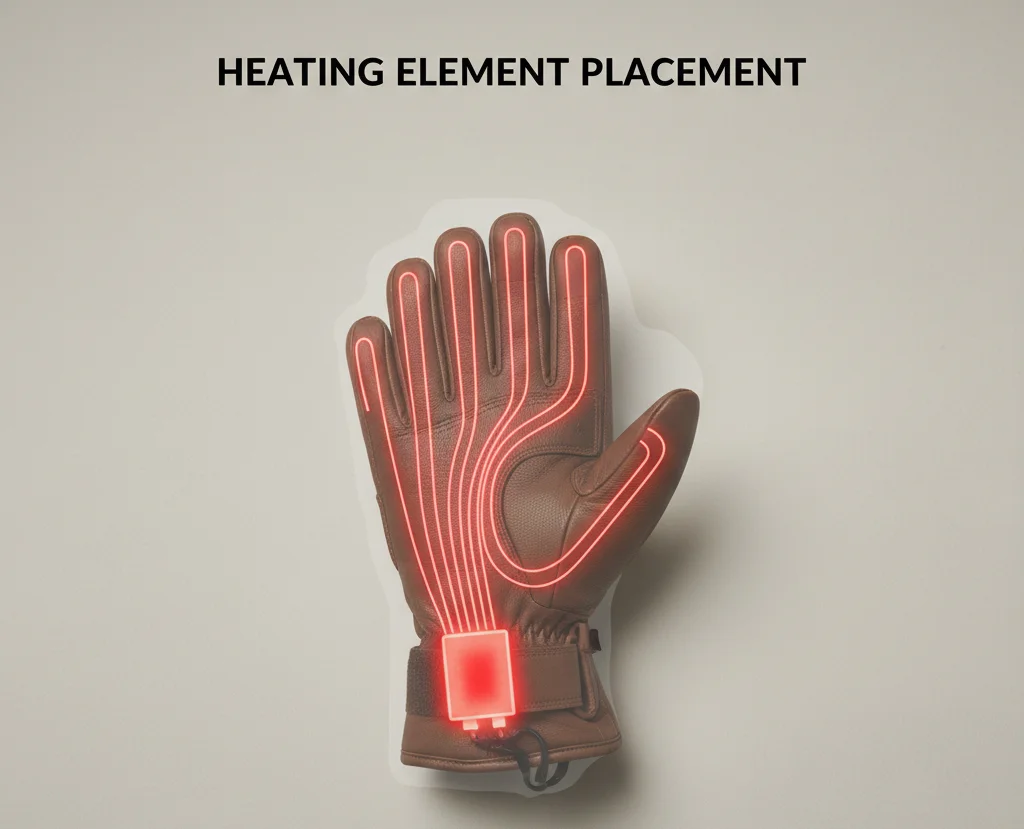
A heating element failing rarely happens all at once. It usually starts as a cold spot — one finger or a section of the palm that stops warming while the rest of the glove still works fine — and that’s a sign of a broken connection somewhere in the internal wiring, not a battery problem.
This kind of failure tends to happen at flex points first, specifically where the heating element bends every time you make a fist. Carbon fiber tolerates repeated flexing better than older wire-based elements for exactly this reason, but no heating element is immune to failure after enough seasons of constant bending at the same points.
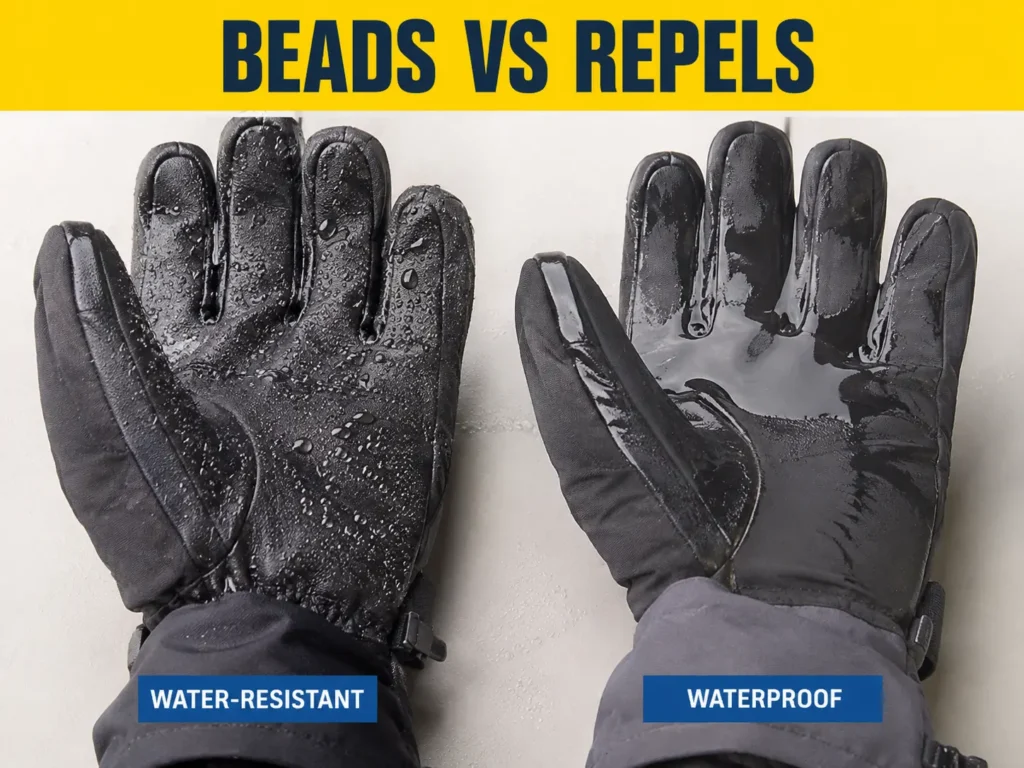
Water exposure is the other major failure path, and it’s specific to how the glove is built rather than the heating technology itself. A heating element sitting under a genuinely waterproof membrane survives moisture fine. One installed in a glove with only a DWR-treated shell and no real membrane is more exposed to the slow moisture creep that eventually corrodes the thin wiring connections.
Checking a return policy and warranty length before buying matters more for heated gloves than for standard ones, simply because there’s more that can fail. A glove with a one-year warranty on the heating element specifically is telling you something about how long the manufacturer actually expects that component to last under normal use.
Real Scenarios Where the Combination Actually Pays Off
An all-day resort trip in genuinely cold conditions is where heated touchscreen gloves earn their price most clearly. Being able to check trail maps or respond to a message about meeting up without pulling off a glove in fifteen-degree wind is a real, repeated convenience across a full day rather than a one-time nice-to-have.
Multi-day trips change the calculation because of charging logistics rather than performance. A glove that performs great on day one only helps if you can actually recharge it every night, which means hotel outlet access and remembering to plug it in — a real, unglamorous logistical requirement that’s easy to overlook when comparing spec sheets.
Backcountry or extended uphill touring is where heated touchscreen gloves make the least sense, somewhat counterintuitively. Sustained physical effort generates enough of your own body heat that added battery heating becomes unnecessary bulk and weight, and touring skiers checking a phone mid-climb is a rarer need than a resort skier waiting on a chairlift.
Cold-sensitive hands specifically — whether from circulation issues or just personal cold tolerance — are where this category solves a real problem rather than just adding convenience. For a skier who genuinely struggles with numb fingers by midday regardless of glove quality, the heating element functions as actual pain relief, not just a feature checkbox.

Cost Versus What You’re Actually Paying For
A jump from a $40 standard glove to a $150 heated one isn’t really a jump in glove quality alone — a meaningful share of that price difference is the battery, the heating circuit, and the charging hardware, not necessarily better waterproofing or a warmer insulation layer underneath.
This matters when comparing two heated gloves at very different price points. A budget heated glove and a premium one can use similar insulation and shell material, with the actual price gap coming almost entirely from battery capacity, heating element quality, and how well the electronics are sealed against moisture — differences that matter a lot for reliability but won’t show up if you’re only comparing warmth ratings on a spec sheet.
Replacement cost is worth factoring in separately from the upfront price. A heating element or battery pack that fails outside warranty on an otherwise fine glove often can’t be economically repaired, which means the practical lifespan of a heated glove is sometimes shorter than a well-made standard glove even though the shell and insulation could easily have lasted longer.
Common Mistakes Buying and Using These Gloves
Expecting battery specs to translate directly to trail conditions is the most common and most avoidable mistake. A battery rated for eight hours in a lab at room temperature, sitting flat with no heating load, behaves nothing like the same battery strapped to your wrist in twenty-degree wind actively powering a heating circuit.
Buying based on the “touchscreen compatible” label alone, without checking whether the fingertip construction uses actual conductive thread versus a rubber patch, leads directly to the frustration of stabbing at a frozen screen that won’t register a tap. This is worth checking in product photos or reviews before buying rather than assuming the label guarantees performance.
Running the heating element on high the entire day drains the battery far faster than necessary and often provides more heat than your hands actually need once you’re moving and generating your own warmth. Starting on a lower setting and increasing only when you’re stationary — riding a lift, waiting in a lift line — stretches battery life considerably.
Storing a heated glove’s battery fully depleted at the end of the season is a mistake that shows up months later as reduced capacity the following winter. Lithium batteries store best partially charged, and a battery left at zero percent through an entire off-season degrades faster than one stored around 40 to 50 percent.
Who This Actually Makes Sense For
| Situation | Heated Touchscreen Gloves | Standard Gloves With Touchscreen Fingertips |
| Cold-sensitive hands, all-day resort skiing | Strong fit | Won’t solve the cold problem |
| Frequent phone use, moderate cold tolerance | Good fit if budget allows | Reasonable middle ground |
| Backcountry touring, generating own body heat | Unnecessary weight and cost | Better fit |
| Occasional phone checks, generally warm hands | Overkill | Sufficient |
| Multi-day trips without reliable charging access | Risk of dead battery mid-trip | More reliable, no charging dependency |
If the honest answer for your situation lands on the right column, a lighter-weight, non-heated option with a properly built conductive fingertip is worth checking out before spending more on a battery system you may rarely use at full capacity. Pairing that lighter glove with a heated liner underneath on your coldest days gives you a middle option that doesn’t require committing to a single heated shell for the whole season.
FAQ
Do heated gloves work better with conductive thread or rubber grip dots for touchscreen use?
Conductive thread woven into the fingertip fabric performs far more reliably over time. Rubber dots only work by allowing a small amount of your finger’s natural charge through a thin layer, and that thin layer wears down with use in a way woven conductive thread doesn’t.
How cold does it need to be before a heated glove’s battery drains noticeably faster?
Meaningful drain typically starts becoming noticeable below freezing, and it compounds quickly below zero Fahrenheit. The heating circuit itself, not just ambient cold, is the bigger factor in how fast a battery actually depletes on the mountain.
Can I use a heated glove’s touchscreen fingertips while the heating element is off?
Yes — the conductive thread that enables touchscreen use is a separate system from the heating circuit, so touchscreen function works whether or not the heat is switched on.
Is it worth buying a heated glove just for the touchscreen feature if I don’t need the warmth?
No. A standard glove with properly built conductive fingertips costs significantly less and skips the battery weight, charging logistics, and eventual heating-element wear that come with a heated system you’re not actually using for its main purpose.