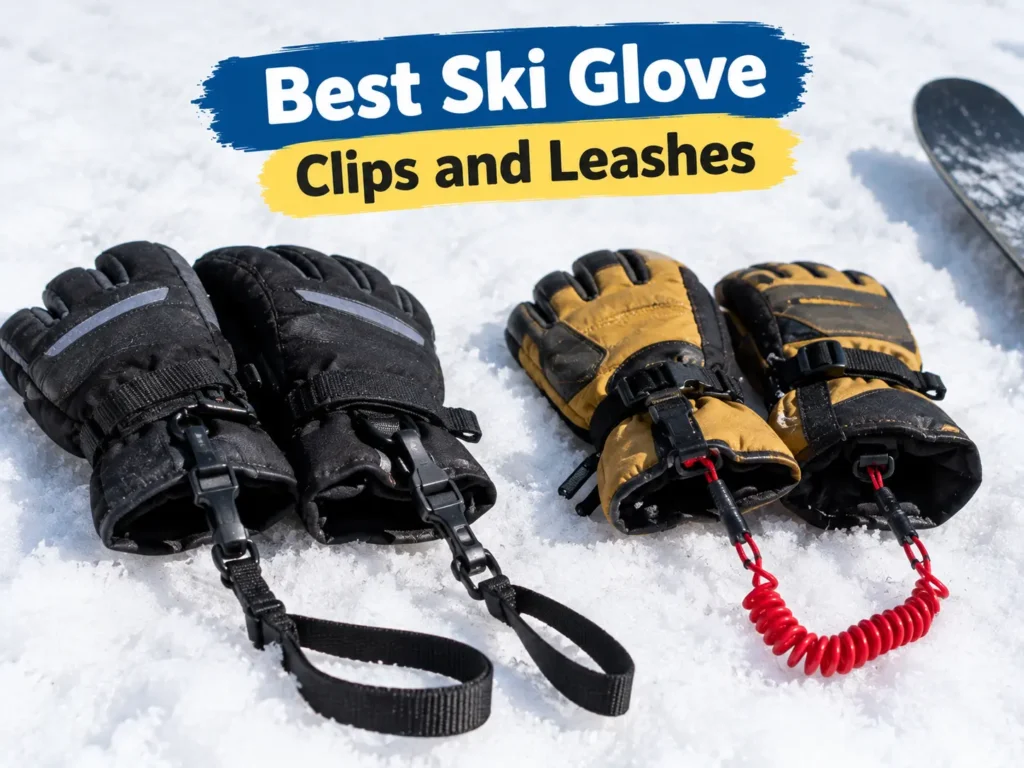
Gloves come off constantly during a lesson — showing a grip, tying a boot, checking a phone, giving your hands a break between runs — and every one of those moments is a chance for a glove to end up somewhere it shouldn’t. The short version: pick a leash for your coldest, busiest day, not your average one — a metal connector holds up better once temperatures actually drop, while an adjustable strap earns its keep when conditions swing all season. If you’re still sorting out the gloves themselves, run your hand size through ski glove finder first.
- What Actually Separates a Working Leash From a Frustrating One
- Sinbana's Metal-Button Leash
- RunNico's Hook-and-Loop Strap
- Hestra's Brand-Matched Leash
- XMJY's Adjustable Buckle Leash
- Why Metal Hardware Holds Up Better Once It's Actually Cold
- Why Gloves Disappear So Easily During a Long Day Outside
- What a Full Day on the Snow Puts a Strap Through
- Buying Mistakes That Show Up Later, Not on Day One
- Keeping the Hardware Working All Season
- When Skipping a Leash Actually Makes Sense
- The Actual Risk Behind Losing a Glove
- Common Questions
- Bottom Line
What Actually Separates a Working Leash From a Frustrating One
Most people judge a leash by how it looks in a product photo, but the thing that actually determines whether you keep using it is how the hardware behaves once your hands are cold and you’re moving fast. A leash that clicks open smoothly on a mild afternoon can turn into a two-handed fight at 5°F, and that gap between “fine in the store” and “fine on the mountain” is the real thing worth comparing below.
| Leash | Attachment Type | Material | Price | Best For |
| Sinbana 4-pack | Metal button connector | Nylon webbing, metal hardware | ~$7 | Genuinely cold, wind-exposed days |
| RunNico strap | Hook-and-loop wrist closure | Nylon and polyester | ~$9 | Adjustable fit over thick sleeves |
| Hestra leash | Fixed elastic loop | Elastic, brand-matched hardware | ~$12 | Already wearing Hestra gloves |
| XMJY leash | Sliding adjustable buckle | Elastic webbing, plastic buckle | ~$9 | Sharing gear across multiple people |
Sinbana’s Metal-Button Leash
Sinbana 4pcs Ski Glove Leash with Metal Button
– 4 adjustable leashes included — enough for multiple trips or pairs
– Durable nylon metal construction, built for rigorous outdoor use
– Simple hook-and-buckle attachment, fits most wrists
~$6.99
★★★★☆ (Sinbana — anti-lost ski glove leash)
Check Price on Amazon →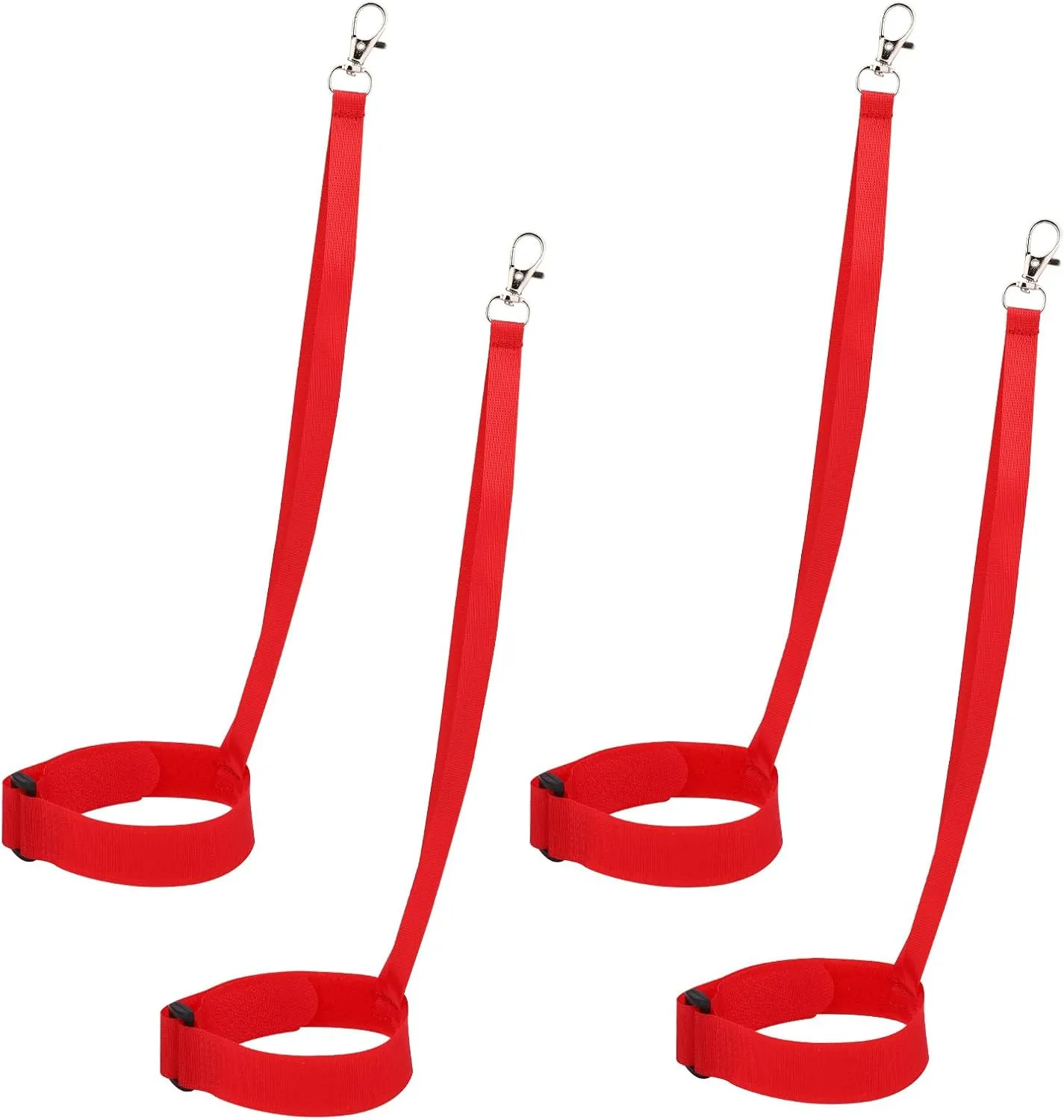
The connection point here is a small metal button instead of the molded plastic most cheap leashes use, and that swap matters more than it looks like it should. Plastic buckles are exactly the part that stiffens and cracks once a real cold sets in, so building the connector out of metal sidesteps that failure point entirely.
It ships as a four-pack, which turns out to be genuinely practical rather than excessive. Straps go missing in gear bags, get loaned out and never returned, or end up clipped to the wrong jacket by accident. Having spares on hand means a lost strap is an annoyance, not a morning derailed.
Where it fits: cold, wind-exposed conditions where you want hardware that won’t seize up on you.
Where it doesn’t: the metal feels cold on first contact, and four of them is more than a casual or occasional skier needs.
RunNico’s Hook-and-Loop Strap
RunNico Sport Glove Safety Strap
– Velcro wrist bracelet adjusts to fit most wrist sizes
– Quality nylon and polyester build — resists deforming or tearing
– Slim, comfortable band that won’t feel like a burden while worn
~$8.99
★★★★☆ (4.2/5 — 120 Amazon reviews)
Check Price on Amazon →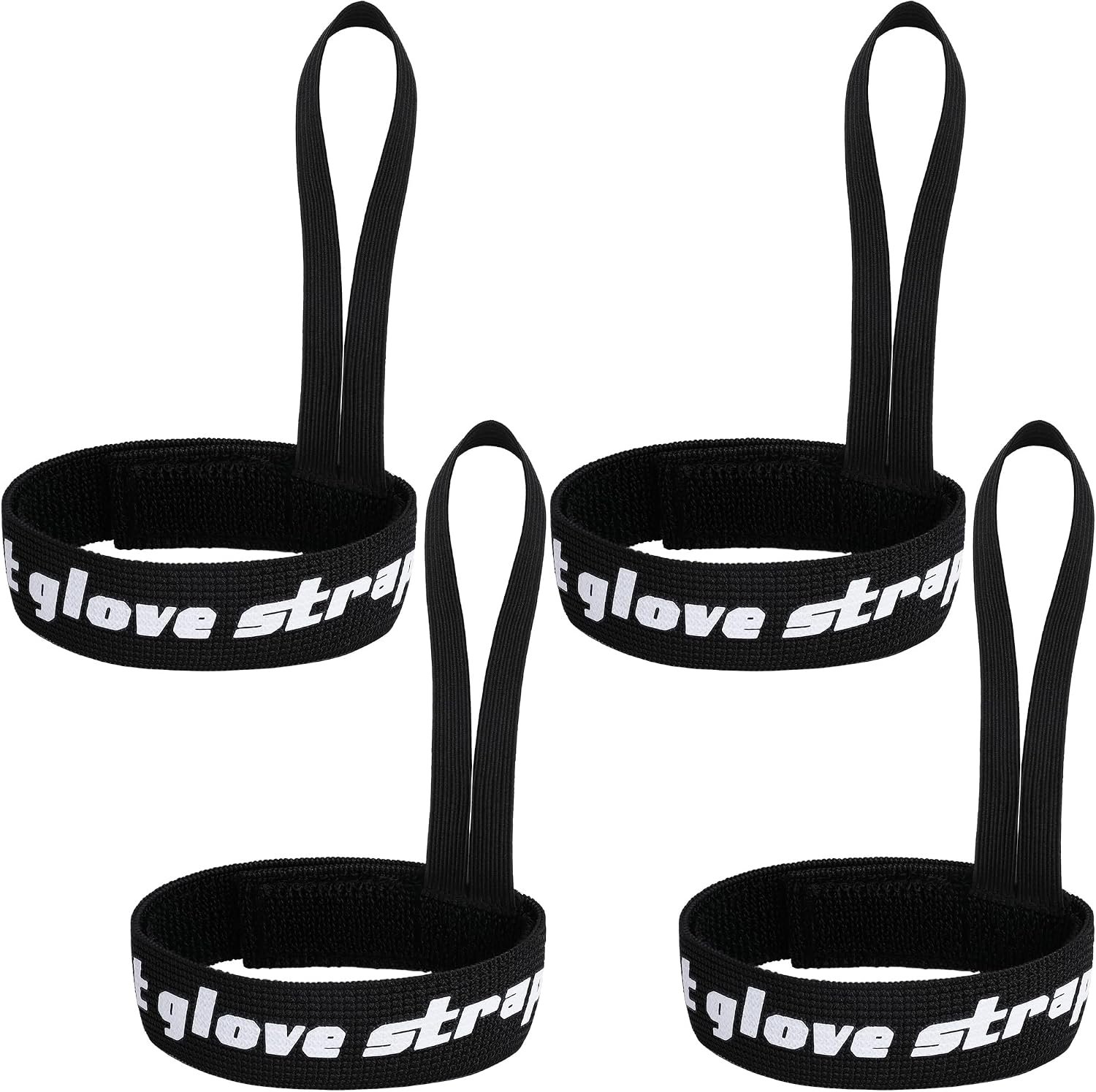
Rather than a fixed elastic loop, this one wraps and closes with hook-and-loop, which changes how it fits day to day. Loosen it over a thick base-layer cuff when it’s genuinely cold, or cinch it down for a lighter layer in spring — one strap, two different fits, without buying a second leash.
That flexibility comes at a cost over time. Hook-and-loop closures lose grip faster than a sewn elastic band does, since the hooks pick up lint and snow debris with every use. It’s not a defect, just a maintenance reality worth knowing going in.
Where it fits: conditions that genuinely shift through the season — cold mornings, milder afternoons — without wanting multiple leashes.
Where it doesn’t: expect the closure to feel noticeably weaker by midseason; that’s normal wear, not a bad unit.
Hestra’s Brand-Matched Leash
Hestra Men’s Elastic Wrist Handcuff Leashes
– Sold in pairs, purpose-built for men’s narrow/slim glove sizes 8-11
– Elastic bracelet pulls over the wrist and attaches to glove handcuff point
– Ideal for lift rides — gloves hang safely when removed
~$11.95
★★★★★ (4.7/5 — 557 Amazon reviews)
Check Price on Amazon →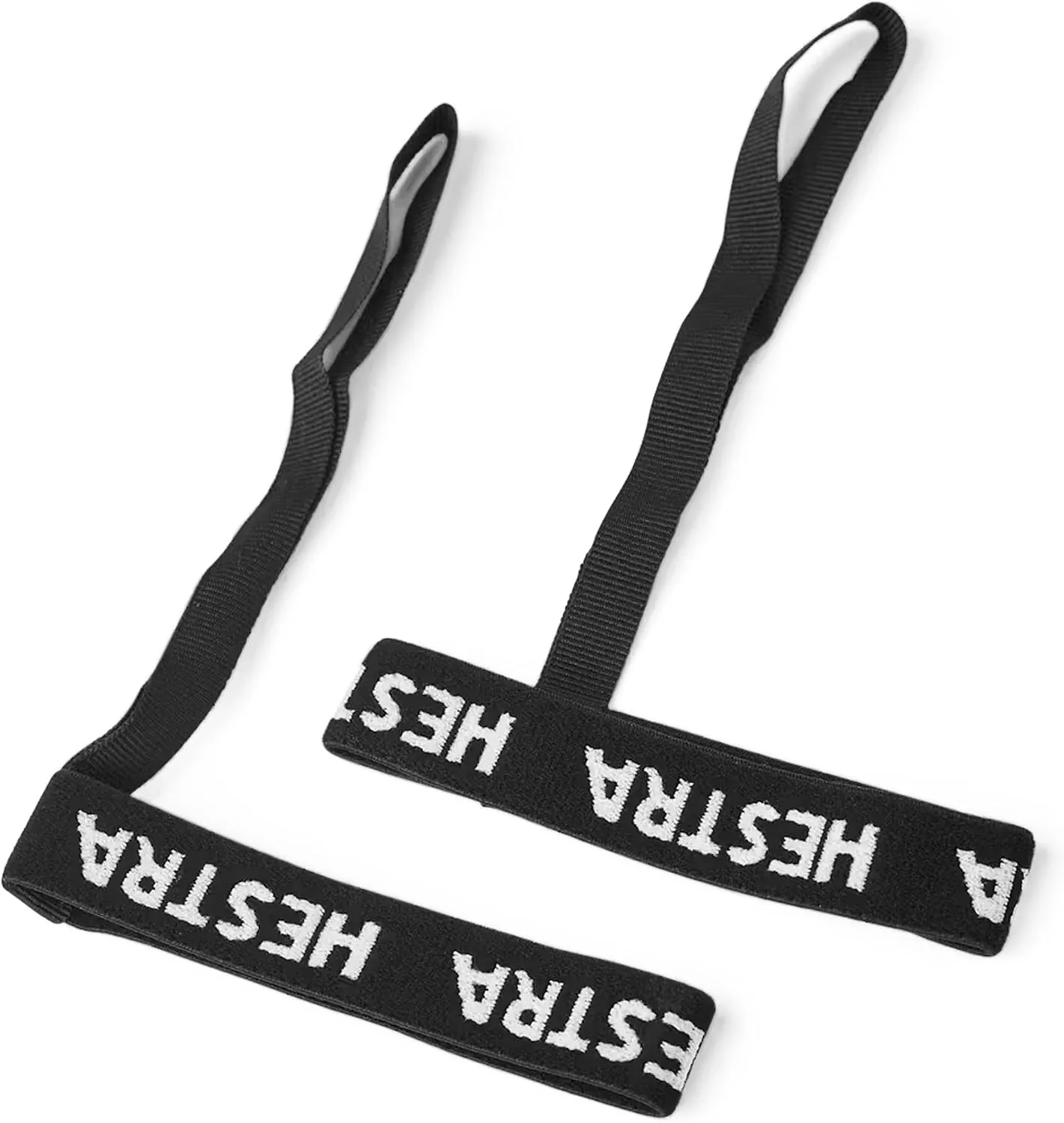
Hestra sells this leash separately from its gloves, sized to match that brand’s narrower cuff. If you already own Hestra gloves, buying the matching leash removes a fit question you’d otherwise have to guess at, since the hardware is built specifically around that cuff shape.
Mechanically it’s a standard elastic loop — nothing more advanced than what a generic version does. What you’re really paying for is the guarantee that it matches gear you already own. If you haven’t settled on gloves yet, it’s worth checking gloves under $50 before deciding what leash to pair with them, since the leash is the smaller decision here.
That guarantee matters most for anyone who’s already invested in matching one brand’s sizing and doesn’t want to introduce a mismatched attachment point mid-season, when there’s no time to troubleshoot gear that doesn’t quite fit right.
Where it fits: instructors already wearing Hestra gloves who want a guaranteed match.
Where it doesn’t: with a different glove brand, a cheaper generic elastic leash does the identical job.
XMJY’s Adjustable Buckle Leash
XMJY Adjustable Ski Glove Leash
– Sold as 2 pairs — unisex fit for skiing, snowboarding, or mountaineering
– Buckle allows length adjustment for a customized fit
– Slim, comfortable band that’s easy to forget you’re wearing
~$8.99
★★★★★ (4.8/5 — 31 Amazon reviews)
Check Price on Amazon →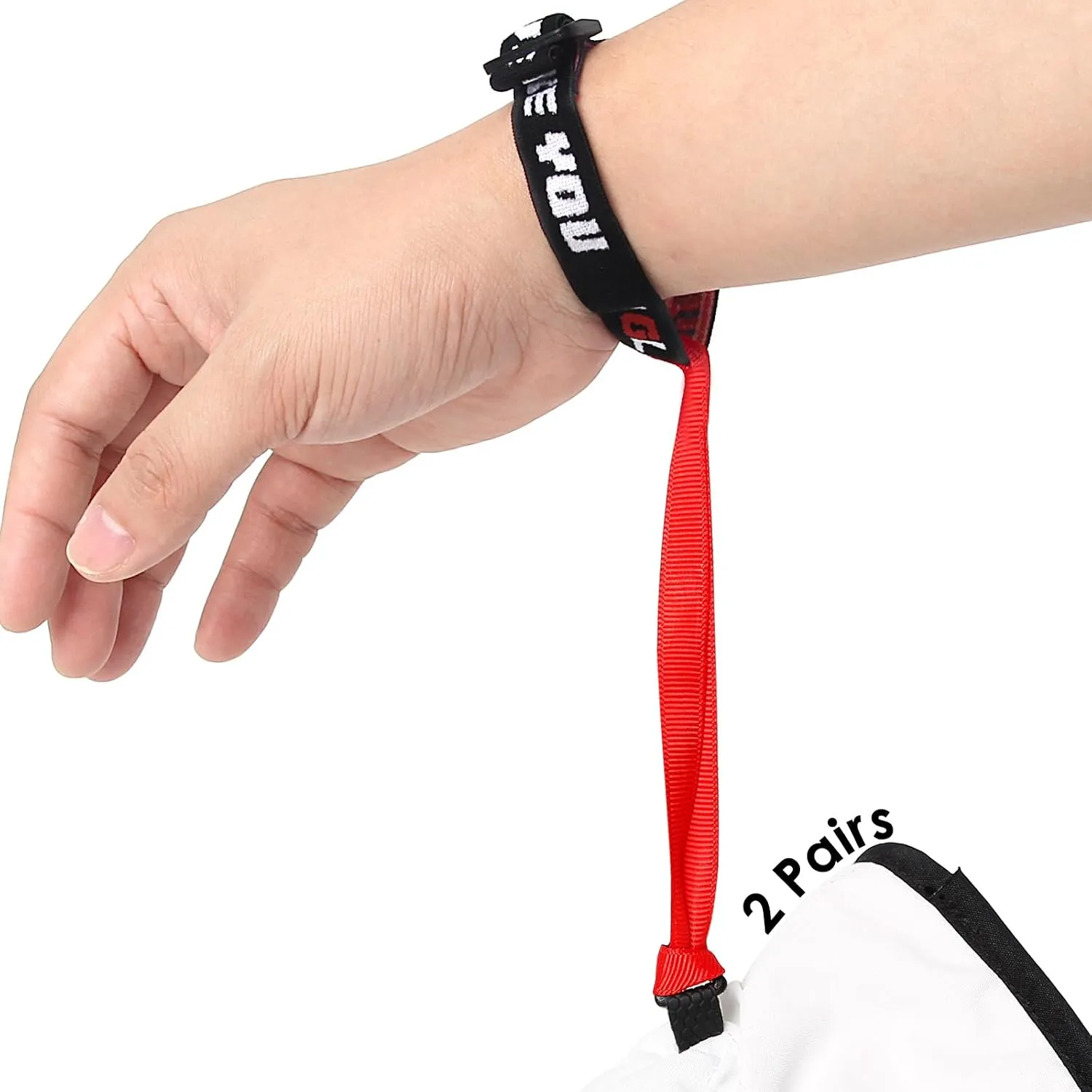
A sliding buckle changes the length of the strap itself here, not just how tight it sits on your wrist — a different kind of adjustability than hook-and-loop offers. That’s especially useful where gear gets shared: a communal strap bin at a smaller school has to fit a real range of wrist sizes, and a fixed-length loop either works for a given person or it doesn’t.
It comes in multi-packs, which fits that shared-gear use case well, though nothing stops one person from using a single pair. The plastic buckle does carry the same cold-weather stiffening risk as any plastic hardware, so it suits moderate conditions better than the coldest mornings a season throws at you.
Where it fits: teams or schools sharing straps across people with different wrist sizes.
Where it doesn’t: on the coldest days, the plastic buckle is more likely to give you trouble than Sinbana’s metal connector.
Why Metal Hardware Holds Up Better Once It’s Actually Cold
Nylon webbing, elastic cord, and small plastic or metal buckles make up most of what these leashes are built from, and all three respond differently as the temperature drops. Cold-flexibility testing on nylon components shows the material loses flexibility and turns noticeably more brittle as it gets colder, to the point that standard nylon parts can crack under stress well below what you’d expect from how they feel indoors.
A cheap plastic buckle runs into the same issue. It clicks open fine at 20°F. At 5°F with wind pushing through, it can stiffen enough that you’re wrestling with it using fingers that are already cold — which defeats the entire point of a quick-release strap. Elastic has its own version of this problem, since rubber-based cords lose some stretch in the cold, so a leash that felt loose in a warm store can feel noticeably tighter on a genuinely frigid morning. Metal hardware doesn’t have this brittleness issue at all, which is the real reason it holds up better across a full cold season even though it feels colder to the touch when you first put it on.
Why Gloves Disappear So Easily During a Long Day Outside
A glove comes off dozens of times across a full day on snow — checking a phone, tying someone’s boot, demonstrating something bare-handed, just giving your hands a break. Each of those moments is an opportunity for a glove to get set on a snowbank, tucked under an arm, or balanced on a chairlift bar and forgotten.
Multiply that across a full day, repeated day after day through a season, and the odds of an actual loss stop being a “maybe” and start being close to inevitable if nothing is physically attached to your wrist. Standing still adds to the risk too — a glove set down even briefly is one gust of wind or one ski edge away from disappearing, in a way that rarely happens on flat, sheltered ground.
None of this comes down to being careless. It’s just repetition. Someone who takes their gloves off twice a day and someone who takes them off forty times a day aren’t behaving any differently from each other — one of them is simply running the same small odds far more often, which is what eventually turns a rare mishap into something close to a certainty.
What a Full Day on the Snow Puts a Strap Through
Picture a cold, still start to the morning, hands mostly gloved and quiet, moving into an afternoon of constant grip-and-release work — poles, buckles, a zipper — then finishing with bare-handed boot adjustments in the last cold hour of the day. That sequence hits every condition a leash actually needs to survive, all in a single shift.
The cold, quiet start tests whether hardware still moves freely once it’s genuinely cold — the point where Sinbana’s metal connector has an edge over a plastic buckle. The end-of-day bare-handed work tests whether the leash is actually keeping the glove somewhere you can find it, rather than dangling loose and catching on a zipper pull, which is exactly where an overly long or poorly fitted strap tends to fail.
A single light day on a resort’s easier terrain was never going to expose any of this, simply because it doesn’t put enough repetitions through the hardware. It’s the accumulation across a full day — the thirtieth glove-off, not the first — that separates a strap genuinely built to last from one that just looked fine on the shelf.
Buying Mistakes That Show Up Later, Not on Day One
Judging fit by how a strap feels indoors is the most common misstep — something that felt snug in a warm house can feel restrictive once your wrist is slightly swollen from cold and repeated glove changes. Picking something bulky without checking it against your actual jacket cuff is a related issue, since extra material can bunch under a tight sleeve and create a pressure point you won’t notice until you’re already out there.
Assuming a cheap strap will hold up for a full season just because it survived the first week is another trap — the same repeated motion, day after day, wears out stitching and buckles faster than occasional use ever would. And tossing a wet strap into a jacket pocket overnight speeds up exactly the corrosion and freeze-thaw stress that shortens hardware life the fastest.
A less obvious mistake is buying based purely on how a strap looks in a listing photo. A sleek elastic loop and a slightly chunkier metal-button connector can look almost identical in a photo, but they behave very differently once it’s genuinely cold — a difference no product photo is going to show you.
Keeping the Hardware Working All Season
Straps take more day-to-day abuse than people expect, mostly because nobody thinks to treat them like gear that needs upkeep the way a jacket or a glove does. Hook-and-loop closures pick up lint, packed snow, and road salt from a parking lot over a season, and that buildup — not age on its own — is usually what actually kills the grip. Brushing it out every few weeks keeps it working closer to how it did on day one.
Metal connectors hold up well against cold, but they’re not immune to salt exposure either, from slushy lots or de-icer on walkways. A quick wipe-down at the end of the day, the same way you’d treat a car door hinge, keeps that slow corrosion from setting in and eventually making the connector stick.
Elastic loops tend to fail without much warning, since the rubber inside degrades from repeated stretching long before the outer fabric looks worn out. If a leash that used to snap back tight now just sits loose, that’s the elastic itself giving out — worth replacing before it fails mid-day rather than after.
When Skipping a Leash Actually Makes Sense
There are real cases where a leash isn’t the right call. Spending a lot of time crouched down working closely with young kids means a dangling leash can snag on a jacket zipper or a pole strap — a clip that only connects when you actually need it avoids that entirely. Some certified instructors also keep gear minimal during exams or clinics, since the national standards organizations set for demonstration technique focus more on visible hand position than on what’s hanging off a wrist.
Neither option is the objectively correct one across the board. A leash trades a bit of visual bulk for guaranteed protection. A clip trades that guarantee for a cleaner look and one extra step you have to remember to do. Most people default to a leash and keep a spare clip around for the specific days it’s the better fit.
The Actual Risk Behind Losing a Glove
It’s tempting to treat this as a small accessory decision, but the real stakes come down to how long your hand is exposed once a glove is gone. Cold, windy conditions don’t need much bare-hand exposure before frostbite risk becomes real, especially on fingers, which lose heat faster than most other parts of the body relative to their size.
Some gloves already help with part of this problem — many ship with a built-in wrist strap, which is different hardware from a standalone leash and solves a related but separate issue. It’s worth reading how a strap and leash actually differ, since plenty of people don’t realize their gloves already cover part of what a leash is for.
Common Questions
Is a glove leash worth buying if I only ski or teach occasionally?
For occasional use, yes, though the cheapest option in the table above is probably enough. The repeated-cycle wear that eventually breaks down hardware isn’t much of a factor if you’re only out a handful of days a season.
Should price or cold-weather performance drive the decision?
Cold-weather performance. A $7 leash with a metal connector that keeps working on a genuinely frigid morning beats a slightly cheaper plastic one that seizes up right when you need it most.
Will any of these fit gloves from a different brand?
Most attach to any glove with a handcuff loop or tab sewn into the cuff — that small attachment point most ski gloves already have. If a pair doesn’t have one, a clip attached to a zipper pull or backpack strap is the more workable option instead of forcing a leash onto hardware it wasn’t designed for.
Is a clip ever the smarter pick over a leash?
Yes, particularly if you’re working closely with young kids or attending an exam or clinic where minimal dangling gear matters — outside of those situations, a leash’s guaranteed attachment generally beats a clip’s cleaner look.
Does the attachment style actually matter, or is any strap fine?
It matters more than most people expect once real cold gets involved. A strap that works fine in a 30°F parking lot can behave very differently at 5°F with wind, which is exactly why the material and hardware type — metal versus plastic, elastic versus hook-and-loop — deserves more attention than the color or the logo on the packaging.
Bottom Line
For genuinely cold, wind-exposed conditions, Sinbana’s metal-button leash is the one built for that exact scenario, and the four-pack means a lost strap never leaves you without a backup. If conditions swing through the season, RunNico’s hook-and-loop adjustability handles that better than a fixed loop can. Already wearing Hestra gloves? Their matching leash removes the fit guesswork for a modest premium. And for shared gear across a team with different wrist sizes, XMJY’s buckle-adjustable design is the practical choice.
None of this has to be a single, permanent pick — a metal-button leash for the coldest stretches and a lighter option for milder days can both live in the same gear bag without any conflict. Buy based on the worst morning you’ll actually face this season, not the easiest one, and the rest of the decision mostly sorts itself out.
Affiliate Disclosure: This post contains affiliate links. If you buy through them, we may earn a commission at no extra cost to you. Prices correct as of the publish date, subject to change.