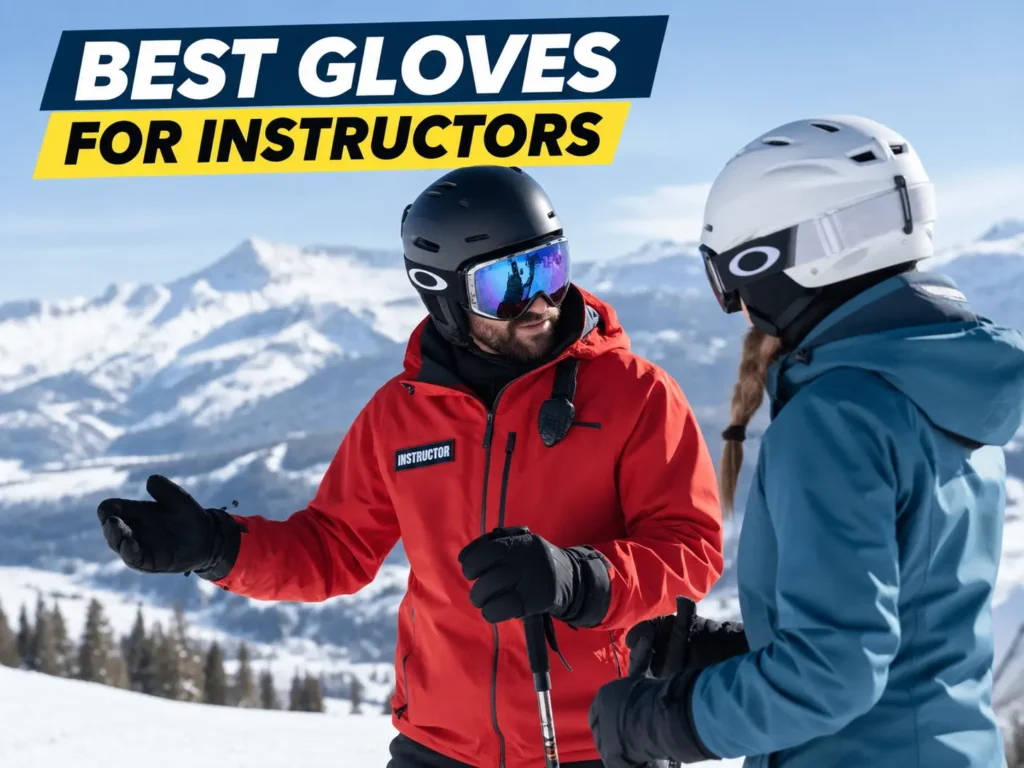
Teaching skiing for a living changes what a glove actually has to do. A recreational skier’s hands are exposed for maybe four or five runs. An instructor’s hands are out for six or seven hours, in every temperature the day throws at them, doing constant fine work — buckling boots, adjusting bindings, demonstrating a pole plant slowly enough for a beginner to copy it. The short version: prioritize a glove built for daily, season-long wear with a removable liner over one built for a single great powder day, since the two are solving genuinely different problems. Skip the guesswork and run your hand size and typical mountain conditions through our fit-matching tool before you commit to a $150+ pair.
- The Question Worth Asking Before Any of These
- Hestra Army Leather Heli — The One That Names the Job
- Black Diamond Guide — The Warmest, Toughest Option
- Gordini Storm — Real Gore-Tex at Half the Price
- Dakine Leather Titan — Solid, But Not Instructor-Specific
- Why Dexterity Actually Falls Off Before Warmth Does
- A Job That Counts as Real Cold Exposure
- A Day That Actually Tests These Gloves
- The Wind Factor Instructors Deal With That Most Skiers Don't
- Replacing Gear on a Teaching Schedule
- Fit Matters More When You're Not Replacing Gloves Often
- Matching Glove to Actual Teaching Load
- What People Get Wrong Buying for This Job
- Common Questions
- Bottom Line
The Question Worth Asking Before Any of These
The question that actually matters here isn’t “which glove is warmest.” It’s which glove survives forty or fifty teaching days a season without falling apart, while still letting you feel a buckle through the leather. That’s a narrower, harder target than most ski glove content aims at, and it’s why the four gloves below get evaluated against that specific bar rather than a generic “best ski glove” checklist.
| Glove | What It’s Actually Built Around | Price |
| Hestra Army Leather Heli | Named directly for guides and instructors; removable liner | ~$185 |
| Black Diamond Guide | Alpine-guide durability, heaviest insulation of the four | ~$175 |
| Gordini Storm | Gore-Tex versatility at a lower price point | ~$83 |
| Dakine Leather Titan | Lighter, more everyday cold-weather build | ~$100 |
Hestra Army Leather Heli — The One That Names the Job
Hestra Army Leather Heli Ski 5-Finger Glove
– Windproof HESTRA Triton fabric backhand with durable Army Goat Leather palm
– Thin high-capacity polyester fiber retains heat even when wet
– Removable lining with Eagle Grip design for a closer, natural fit
~$185
★★★★☆ (4.5/5 — 784 Amazon reviews)
Check Price on Amazon →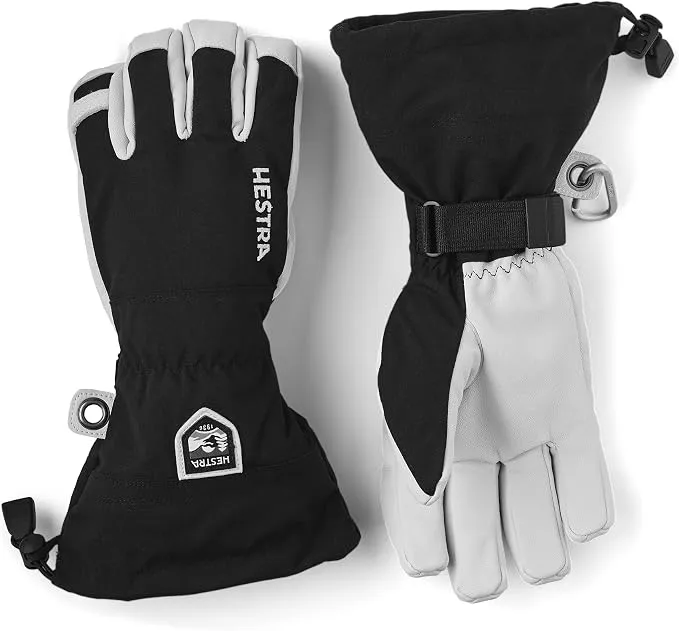
This is the only glove on the list whose own product listing uses the word “instructors” directly. Hestra built the Army Leather Heli for freeriders, professional mountain guides, patrollers, and ski instructors specifically — people the listing describes as placing high demands on function, fit, and durability. That’s not a marketing stretch; it’s the stated design brief.
The palm and fingers use Army Goat Leather, the same durability-focused material pro patrol gloves have relied on for years. According to Hilton Glove, a hand-protection manufacturer, goatskin retains natural lanolin oils even after tanning, which keeps the hide supple and self-conditioning through repeated flexing — exactly the kind of daily buckle-and-pole contact this job produces.
The liner comes out completely, which matters more for a five-day-a-week schedule than a weekend trip. A soaked liner can dry overnight separately from the shell, instead of one damp unit going back on your hand the next cold morning. The Eagle Grip cut follows the natural curve of the hand, and a Velcro-closed strap keeps the whole thing quick to get on and off between lessons.
Where it fits: anyone teaching regularly across a full season who wants the one glove actually engineered around this exact job.
Where it doesn’t: at roughly $185, it’s the most expensive pick here, and that liner system is dead weight if you’re only teaching occasionally rather than daily.
Black Diamond Guide — The Warmest, Toughest Option
Black Diamond Men’s Guide Ski/Snow Gloves
– Goatskin leather palm with GORE-TEX Plus Warm waterproof insert
– 170g PrimaLoft Gold on back of hand, 133g PrimaLoft Gold Eco in palm
– Removable liner, high gauntlet cuff, and padded knuckle patch
~$174.88
★★★★☆ (3.8/5 — 29 Amazon reviews)
Check Price on Amazon →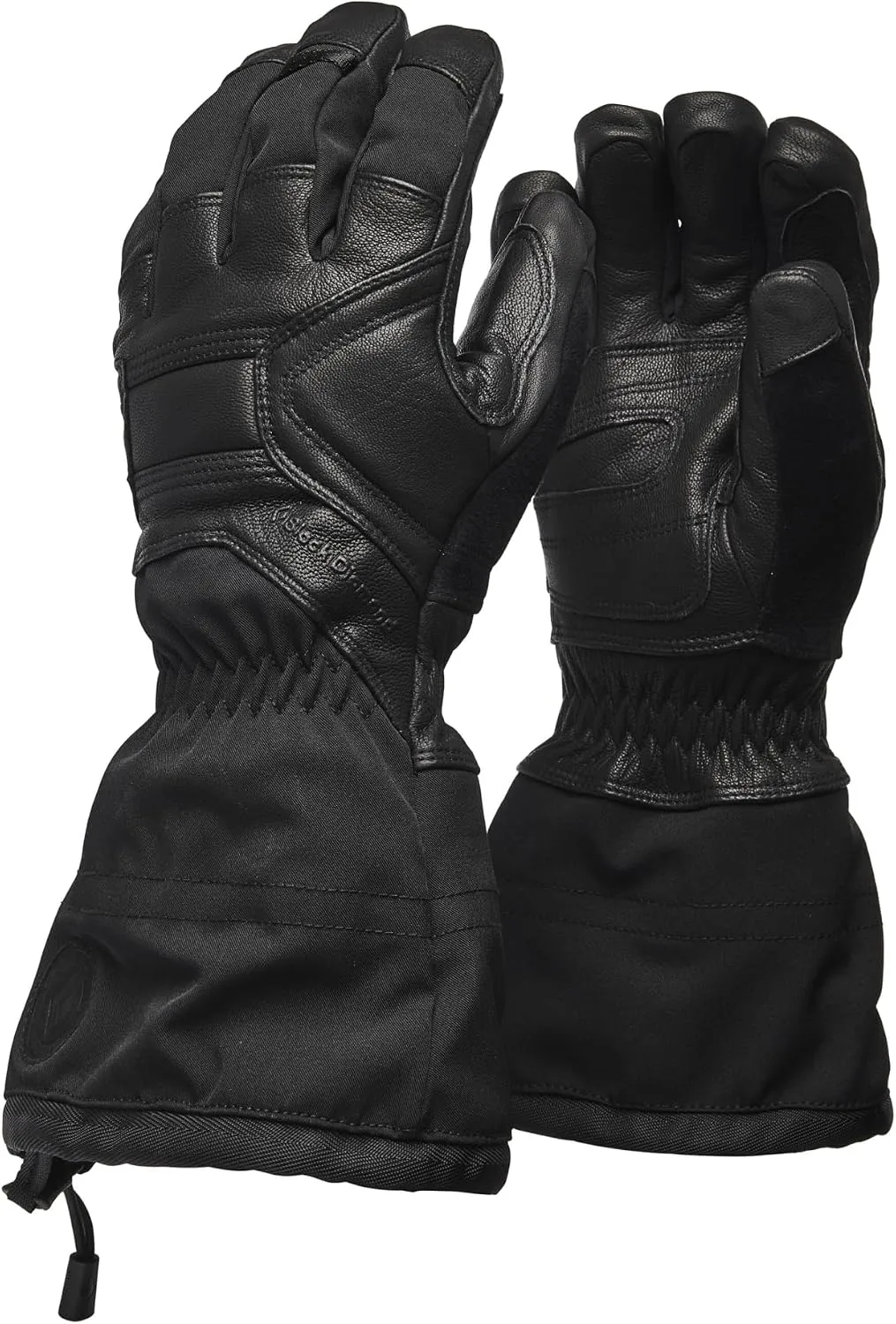
Black Diamond’s Guide glove is the heaviest hitter of the four on raw insulation. It pairs goatskin leather with 170g of PrimaLoft Gold on the back of the hand and 133g in the palm — genuinely more insulation than any of the other three carry, which makes it the clear pick for anyone teaching through consistently brutal cold rather than a milder resort climate.
The build reflects its “guide” branding rather than instructor-specific marketing, but the two roles overlap heavily in what they demand from a glove. A 4-way-stretch nylon shell reinforces the high-wear zones, a padded knuckle patch adds impact protection, and the liner is removable here too — the same drying and adjustability advantage the Hestra offers, in a warmer, bulkier package.
It’s rated by Black Diamond as the warmest glove in their lineup, built for multi-day missions in genuinely freezing conditions. For an instructor at a high-elevation or consistently frigid resort, that’s not overkill — it’s the actual spec sheet this job needs on the coldest weeks of the season.
Where it fits: instructors teaching through genuinely severe cold who want maximum warmth without giving up the liner-swap flexibility.
Where it doesn’t: the extra insulation adds bulk, and on a milder afternoon it can be more glove than the fine dexterity work — buckles, zippers, small adjustments — actually wants.
Gordini Storm — Real Gore-Tex at Half the Price
Gordini Men’s Gore-Tex Storm Glove
– Durable 10k polyester shell, bluesign approved GORE-TEX insert
– Megaloft synthetic insulation with moisture-wicking lining
– Zippered handwarmer pocket, leash, and nosewipe
~$82.99
★★★★☆ (4.5/5 — 272 Amazon reviews)
Check Price on Amazon →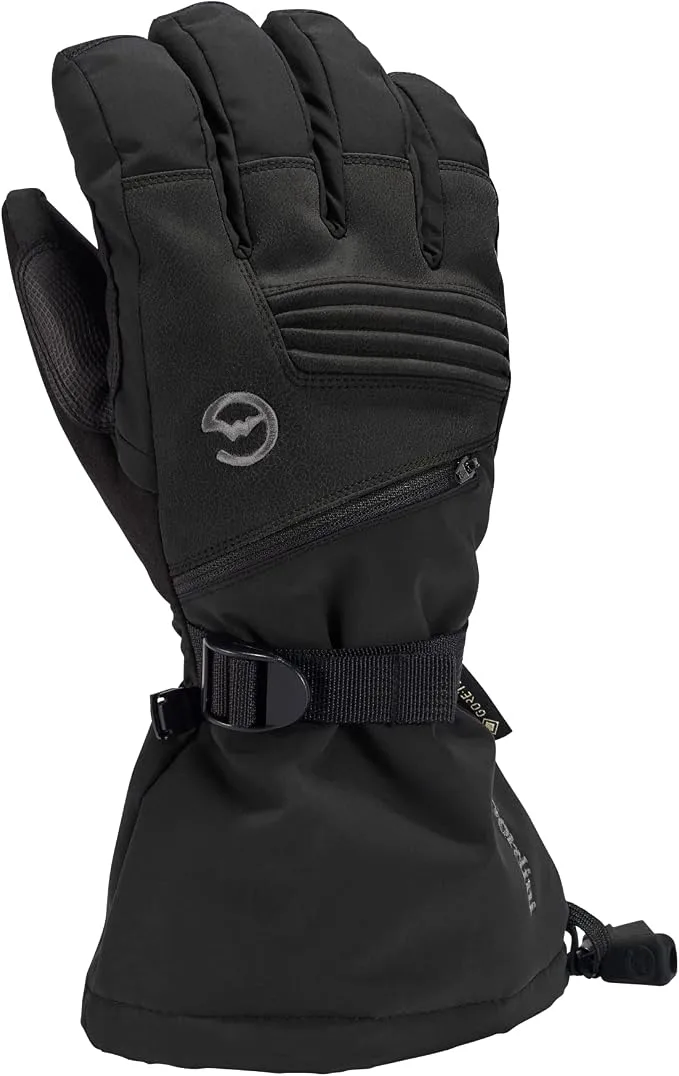
Gordini’s Storm glove solves the instructor problem from the value side, and it’s worth taking seriously rather than dismissing as the budget afterthought on this list. The waterproofing here is a genuine, licensed Gore-Tex insert — not a generic “water-resistant” claim — paired with Megaloft synthetic insulation and a moisture-wicking liner.
A textured, water-resistant synthetic trim covers the high-wear points at the palm and fingers, and the gauntlet cuff closes with a drawcord and wrist strap to actually seal against a jacket sleeve. There’s a zippered handwarmer pocket built in too, along with a leash and a nosewipe patch — small details that add up over a long teaching day.
At around $83, it’s less than half the price of either leather pick above, and for a cost-conscious instructor or one teaching in a milder climate where extreme durability matters less, that price gap is real, usable money across a season of gear purchases.
Where it fits: part-time or seasonal instructors, milder-climate resorts, or anyone who wants genuine technical waterproofing without the leather-glove price tag.
Where it doesn’t: it lacks the goat-leather durability and liner-swap system of the two premium picks, so it won’t hold up to the same volume of daily heavy use over multiple seasons.
Dakine Leather Titan — Solid, But Not Instructor-Specific
Dakine Leather Titan Gore-Tex Snow Glove
– Shaped for natural hand movement and dependable dexterity
– Built with recycled polyester blend for repeated winter use
– Cuff design seals the connection with jacket sleeves
~$100
★★★★★ (4.6/5 — 170 Amazon reviews)
Check Price on Amazon →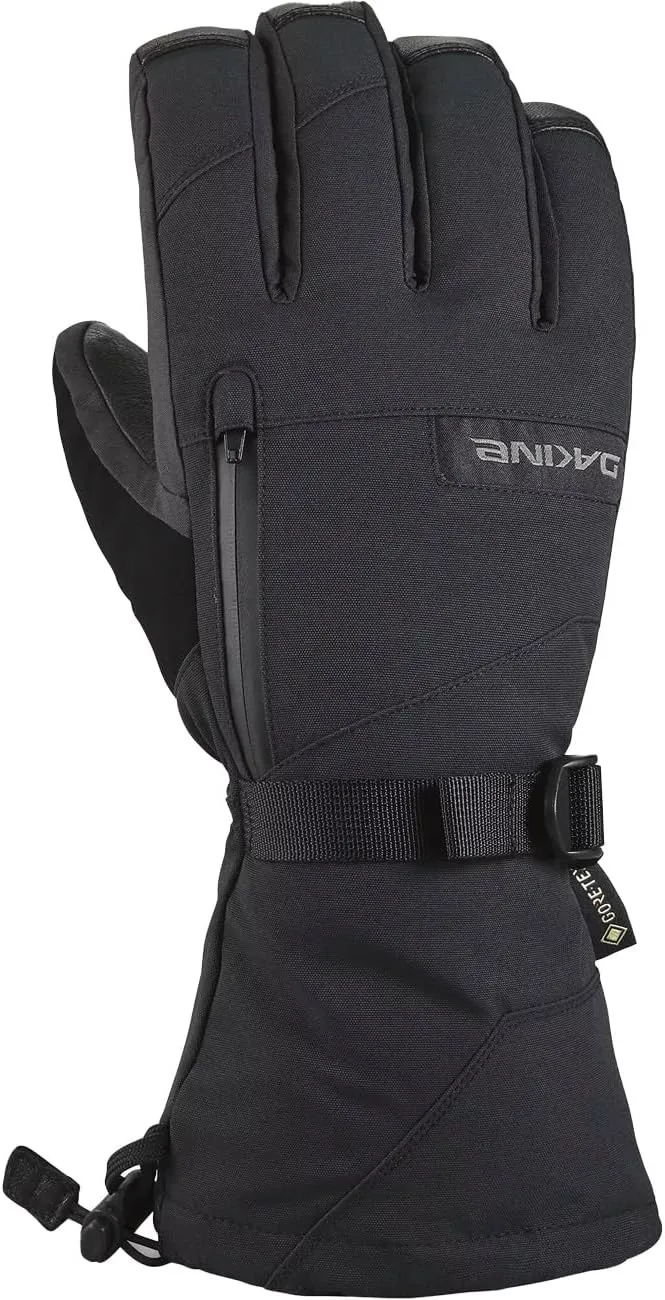
This is the least instructor-targeted glove on the list, and it’s worth being direct about that before anything else. Dakine’s own listing describes the Leather Titan around general skiing, snowboarding, and “mountain days, travel and everyday cold-weather wear” — there’s no mention of teaching, professional use, or daily-wear durability anywhere in its own marketing copy.
What it does offer is genuine: real Gore-Tex construction for weatherproofing, a fit shape for natural hand movement and dexterity when handling gear, and a cuff designed to connect securely with a jacket sleeve. None of that is fabricated or a stretch — it’s simply a well-made general-purpose glove rather than one built around the specific demands of a teaching job.
At roughly $100, it sits in an odd middle spot — pricier than the Gordini without the leather durability or liner system that justifies the Hestra and Black Diamond’s higher cost.
Where it fits: an instructor who already owns and likes this glove for personal skiing and wants to know if it’ll survive occasional teaching use, or someone who splits time between instructing and recreational days.
Where it doesn’t: as a dedicated, full-season teaching glove, it’s the weakest match of the four here — genuinely capable, just not built with this specific job in mind.
Why Dexterity Actually Falls Off Before Warmth Does
This is the part most buying guides skip, and it matters specifically for a job built around fine motor tasks. A controlled study on hand and finger performance, available through PubMed, found that dexterity and grip strength decline measurably as skin temperature drops — a separate, earlier effect than the point where a glove would be described as failing to keep hands “warm” in a general sense.
That’s the practical argument for the liner systems in the Hestra and Black Diamond picks specifically. A liner lets you drop insulation thickness at the palm on a milder day, keeping fingertip sensitivity closer to bare-hand levels for buckle work, and add it back for a genuinely cold morning without owning two separate gloves.
A Job That Counts as Real Cold Exposure
It’s worth framing this plainly: teaching skiing for a living is occupational cold exposure, not recreational cold exposure, even though it happens on a mountain instead of a loading dock. According to OSHA’s official cold stress guidance, workers regularly exposed to cold, wind, and wet conditions face a real, documented health risk, and wind speed specifically accelerates heat loss well beyond what the air temperature alone suggests.
That framing changes how you should think about glove cost. A $175 glove is a poor value for four ski days a year. It’s a genuinely reasonable equipment investment for someone whose actual job requires their hands to function correctly through a full winter of shifts.
A Day That Actually Tests These Gloves
Picture an 8 a.m. lineup with a cold, still morning, moving into demonstrating wedge turns to a beginner group where your hands are mostly still, then an afternoon private lesson working on pole plants where you’re gripping and releasing constantly, then a final hour buckling six sets of kids’ boots back into their bindings before pickup. That’s not an unusual day — it’s a fairly typical one, and it hits every failure mode a glove can have inside eight hours.
The still, cold morning tests raw insulation, which is where the Black Diamond’s heavier fill earns its keep. The active pole-work tests dexterity and grip under repeated flexing, which is where a linear-adjustable system like the Hestra has room to breathe. The end-of-day buckle work tests fine motor control after hands have already spent seven hours in the cold — exactly the scenario where the dexterity research above matters most, since you’re not starting fresh, you’re finishing tired and cold.
A single-purpose recreational glove, built and tested around a few hours of continuous skiing, was never evaluated against this specific pattern of stop-start demands. That’s not a knock on those gloves — it’s just a different design brief than what an instructor’s actual day requires.
The Wind Factor Instructors Deal With That Most Skiers Don’t
Standing still, teaching, in wind is a genuinely different exposure than skiing through it. A recreational skier moving downhill generates wind of their own regardless of the actual air movement; an instructor standing at the bottom of a run watching a student’s form, or holding a static position while explaining a technique, gets the full, undiluted wind chill effect for minutes at a stretch with none of that self-generated airflow masking it.
That static exposure is part of why the cuff and wrist-seal design on a glove matters more for this job than it does for a skier who’s rarely standing still for long. A gauntlet cuff with a real drawcord closure, like the Gordini and Black Diamond both have, keeps wind from working its way up the wrist during exactly this kind of stationary teaching moment, in a way a looser or shorter cuff doesn’t manage as well.
Replacing Gear on a Teaching Schedule
Season-long daily wear changes the replacement math in a way occasional recreational use doesn’t. A palm that shows visible wear after 15 recreational days might show the same wear after 40 or 50 teaching days, simply because of the sheer volume of buckle, binding, and pole contact involved.
This is where the leather-versus-synthetic split between these four compounds over a season rather than staying a one-time choice. Goat leather’s self-conditioning properties, covered above, mean a well-maintained leather palm can outlast a synthetic one that looked identical on day one — the gap shows up specifically under the kind of repeated, heavy contact a teaching schedule produces rather than an occasional weekend trip.
Budgeting for actual replacement timing, rather than assuming a single purchase covers an entire career, is part of realistic instructor gear planning. It’s worth checking general signs a pair has reached the end of its useful life specifically once you’re putting this many actual days on a single pair, since the usual recreational timelines don’t really apply here.
Fit Matters More When You’re Not Replacing Gloves Often
A glove bought to last several seasons needs to fit correctly from the start in a way a disposable-feeling budget pair doesn’t punish you as harshly for getting slightly wrong. Sizing up “for warmth” on a premium leather glove often backfires specifically for this job, since excess material in the palm reduces exactly the fine tactile feedback that buckle and binding work requires.
Hand swelling over a long teaching day is worth factoring into sizing too, since repeated glove removal and replacement — pulling gloves off to handle a phone, a zipper, or a buckle bare-handed — changes how a glove fits by the afternoon compared to the first cold run of the morning. A glove sized correctly at 8 a.m. can feel different by 3 p.m., and that’s normal rather than a sign something’s wrong with the glove itself. If you’re not confident in your current size across brands this different in construction, running your measurements against each brand’s own chart is worth the ten minutes before spending this much on a single pair.
Matching Glove to Actual Teaching Load
If you’re teaching most days across a full season, in genuinely variable conditions from cold mornings to warm afternoons, the case for a liner-based system — Hestra or Black Diamond — gets stronger with every additional teaching day, since the versatility and durability compound over more use rather than sitting idle in a gear bag.
If you’re a part-time or seasonal instructor, or you’re teaching primarily at a milder-climate resort, the Gordini’s Gore-Tex construction at a fraction of the price is a genuinely sound call rather than a compromise — you’re simply not putting enough cumulative wear on the glove to justify the premium durability tier.
If budget is the binding constraint this season and you’re deciding between the Dakine and waiting to save for something more purpose-built, it’s worth a look at genuinely affordable ski glove options to see whether a lower price point can still cover your actual teaching conditions before assuming you need to spend at either end of this comparison.
What People Get Wrong Buying for This Job
Assuming maximum insulation is always the right call is the most common and most costly mistake. The dexterity research above points the other way for a chunk of the season — a thick, low-dexterity glove on a 35-degree afternoon actively works against the buckle-and-binding work the job demands.
Buying based on a single cold-morning experience, then discovering the same glove is miserable and sweaty by 2 p.m., is a related error that a liner system specifically solves and a fixed-insulation glove specifically can’t.
Underestimating how much daily use actually costs a budget glove over a season leads a lot of instructors to replace a $40 pair two or three times before a $150 pair would have needed replacing once — the math doesn’t always favor the cheaper option once you count total teaching days.
Common Questions
Is a removable liner actually worth the extra cost for this job specifically?
For anyone teaching multiple days a week across a full season, yes — the ability to dry the liner and shell separately, and to adjust warmth without buying a second glove, addresses two real, recurring problems that a fixed-insulation design simply can’t solve on its own.
How much should insulation weight actually matter in this decision?
Less than most buyers assume. The research on cold-related dexterity decline suggests the bigger practical issue for this specific job is losing fine motor control before losing general warmth, which argues for a liner system you can adjust rather than the single heaviest insulation number you can find.
Do these gloves need to be leather specifically, or does synthetic work fine?
Synthetic works fine for lighter, less frequent use, which is exactly the case the Gordini and Dakine picks make well. For genuinely daily, season-long wear, goat leather’s natural durability and self-conditioning properties give it a real edge that most synthetic palms don’t match at a comparable price.
Is it worth buying two pairs — one warm, one light — instead of one liner-based glove?
That’s a reasonable alternative to a liner system, and some instructors do exactly that. The trade-off is cost and the hassle of managing two pairs rather than one adjustable system, which is the specific problem the Hestra and Black Diamond picks are built to solve in a single glove.
Bottom Line
If this is genuinely your job and not an occasional weekend activity, the Hestra Army Leather Heli is the pick that was actually built with your specific role in mind, and the Black Diamond Guide is the strongest alternative if raw warmth matters more to you than the exact liner system. If you’re teaching part-time or in a milder climate, the Gordini gets you real Gore-Tex performance without the premium price tag, and the Dakine is a fine glove if you already own it — just not the one purpose-built for this exact job.
There’s no shame in starting at the budget end and upgrading once you know exactly what a full season actually demands from your hands.
Affiliate Disclosure: This post contains affiliate links. If you buy through them, we may earn a commission at no extra cost to you. It never changes which gloves we recommend. Prices correct as of the publish date, subject to change.