QUICK ANSWER: For most families, the OutdoorMaster Kids Ski Snow Gloves (~$27) is the best all-around pick — 3M C40 Thinsulate at 120g plus a TPU waterproof insert, the heaviest insulation and most complete waterproof build on this list. For the tightest budget with the deepest review base, the Tough Outdoors Kids Snow Gloves (~$10) has 2,965 reviews at 4.6 stars. For toddlers who need to get gloves on and off themselves, the Andake Kids Ski Mittens (ages 1-14, zipper entry) is the easiest design here to actually use. Not sure whether your kid actually needs a ski-specific glove instead of a general snow-play one? Ski glove finder sorts that out in a few quick questions rather than making you guess from a product page.
Backyard and sledding-hill glove shopping isn’t the same problem as shopping for downhill skiing. Skiing gloves get evaluated on pole grip and precise dexterity. Outdoor-play gloves get evaluated on something more basic: do they stay dry, stay on, and survive a kid who’s building a fort and having a snowball fight in the same afternoon. That’s the lens this comparison uses.
- All 5 — Quick Comparison
- Why This Guide Is Different
- The Honest Truth About Kids' Snow Gloves
- How These Gloves Were Compared
- OutdoorMaster Kids Ski Snow Gloves — Best Overall
- Tough Outdoors Kids Snow Gloves — Best Budget Pick
- Andake Kids Ski Mittens — Best for Toddlers
- TRENDOUX Kids Winter Ski Gloves — Best for Touchscreen Use
- SnowStoppers Long Cuff Mittens — Best for Sledding and Snow-Out Protection
- What Nobody Tells You About Kids' Snow Gloves
- Why These Five Were Picked
- Decision Checklist — Pick in 60 Seconds
- Is It the Glove, or Is It Something Else?
- When These Aren't the Right Choice
- Honest Pros and Cons
- FAQ
- Final Thoughts
All 5 — Quick Comparison
| Glove | Best For | Waterproofing | Rating | Price |
| OutdoorMaster Kids Ski Snow Gloves | Best overall | TPU insert + water-resistant shell | 231 reviews, 4.5★ | ~$27 |
| Tough Outdoors Kids Snow Gloves | Best budget / highest review volume | Waterproof nylon shell | 2,965 reviews, 4.6★ | ~$10 |
| Andake Kids Ski Mittens | Best for toddlers | Double layer + TPU membrane | 2,106 reviews, 4.8★ | ~$20 |
| TRENDOUX Kids Winter Ski Gloves | Best for touchscreen use | TPU membrane | 40 reviews, 4.3★ | ~$15 |
| SnowStoppers Long Cuff Mittens | Best for sledding / snow-out protection | Drypel Liner + long cuff | 490 reviews, 4.7★ | ~$20 |
Why This Guide Is Different
This guide starts from the one thing that actually separates a good outdoor-play glove from a bad one for kids specifically — how the glove handles getting wet and staying on a moving, falling, snowball-throwing child — and builds the comparison around that.
Every spec, price, rating, and review count below comes directly from each product’s own current listing. None of it is a personal test, and it isn’t presented as one — it’s a comparison built from real listing data and real buyer review patterns, labeled honestly throughout.
The Honest Truth About Kids’ Snow Gloves
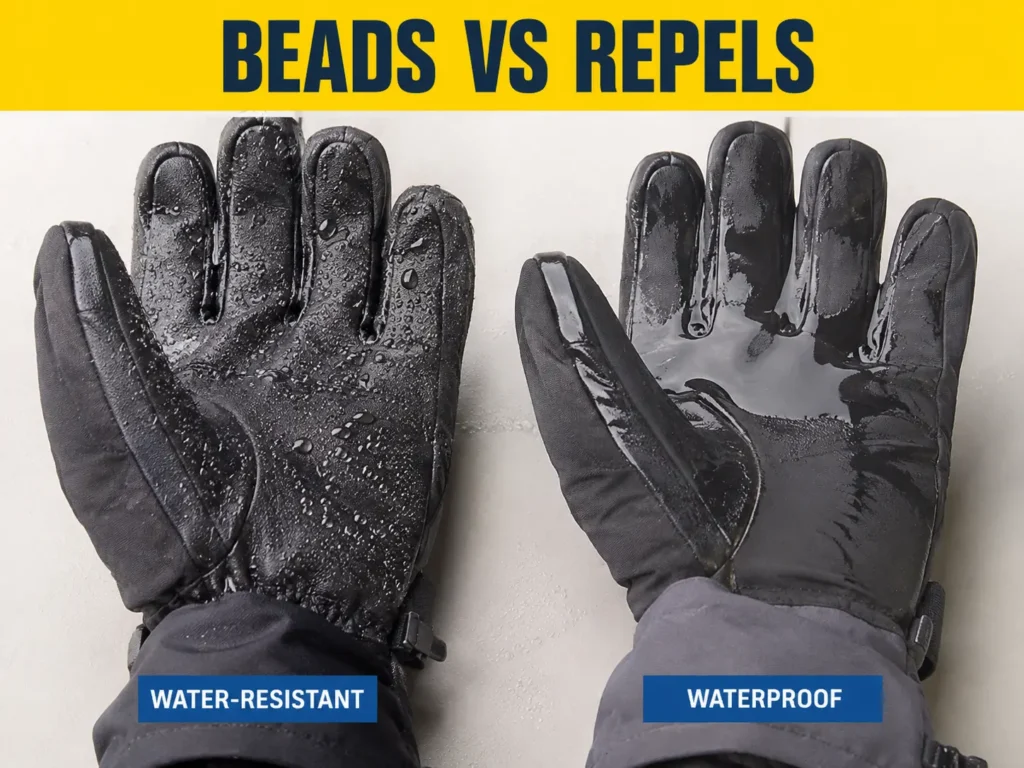
The biggest real difference across this list isn’t insulation weight — it’s how each glove actually keeps water out, and that’s not always obvious from the product title alone. Two products here use a TPU insert or membrane, which is a genuine physical waterproof layer rather than just a treated surface. Others rely on a water-resistant shell coating plus a separate liner system.
A TPU layer keeps blocking water even once the outer fabric is soaked through, which matters enormously for a kid who’s face-down in a snowbank rather than standing upright on a ski run. A coating-only glove can look identical on the shelf but lets water through faster once the outer surface saturates. This is worth understanding before comparing anything else on this list, the same way it’s worth understanding for adult waterproofing systems — the physics doesn’t change just because the hand inside the glove is smaller.
How These Gloves Were Compared
Each glove was evaluated on four things: insulation type and weight, waterproofing method, fit and ease-of-use features for kids specifically, and how the review volume and rating actually stack up against each other. Kids’ snow-play gloves were compared against each other, not against adult ski gloves — the two products solve different problems and a fair comparison stays inside the category a parent is actually shopping in.
OutdoorMaster Kids Ski Snow Gloves — Best Overall
OutdoorMaster Kids Ski Snow Gloves
– 3M C40 Thinsulate, 120g thickening cotton for consistent warmth
– Water-resistant shell with TPU inserts, adjustable wrist buckle
– Anti-lost buckle design — sizes from 4 to 9 years
~$26.99
★★★★★ (4.5/5 — 231 Amazon reviews)
Check Price on Amazon →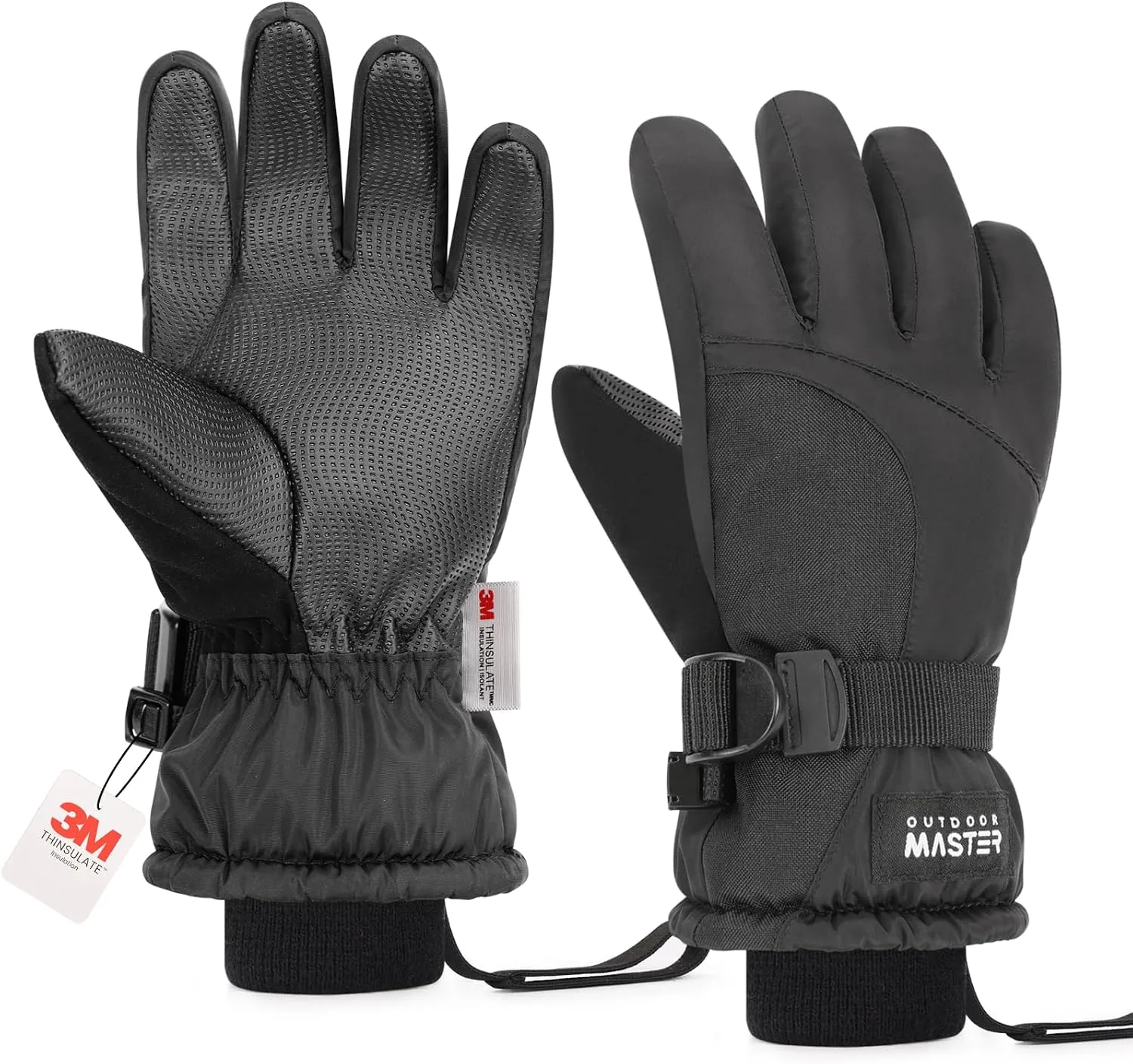
The 120g 3M Thinsulate fill here is genuinely the heaviest insulation weight across all five gloves in this comparison, which matters directly for kids who run cold or who’ll be outside for a long stretch rather than a quick 20-minute play session. According to 3M’s own product information, Thinsulate’s ultra-fine synthetic fibers trap warm air more efficiently per gram than thicker, bulkier fill materials, which is the actual mechanism behind why a relatively thin glove can still perform warm.
The TPU insert adds a real waterproof layer behind the outer shell, not just a treated surface, which matters once a kid has been packing snowballs for twenty minutes straight.
Who should buy this: Parents who want the most complete warmth-and-waterproofing package on this list and don’t mind paying the highest price here to get it.
Honest limitation: At ~$27, this is the most expensive glove on the list, and with 231 reviews it has a smaller sample size than the Tough Outdoors or Andake options — still a solid number, just not the deepest data set here.
Tough Outdoors Kids Snow Gloves — Best Budget Pick
Tough Outdoors Kids Snow Gloves
– SummitLoft insulation keeps hands warm in freezing temps
– Waterproof nylon shell with reinforced synthetic leather palm
– Adjustable elastic cuff and wrist strap — sizes 3 to 12 years
~$9.99
★★★★★ (4.6/5 — 2,965 Amazon reviews)
Check Price on Amazon →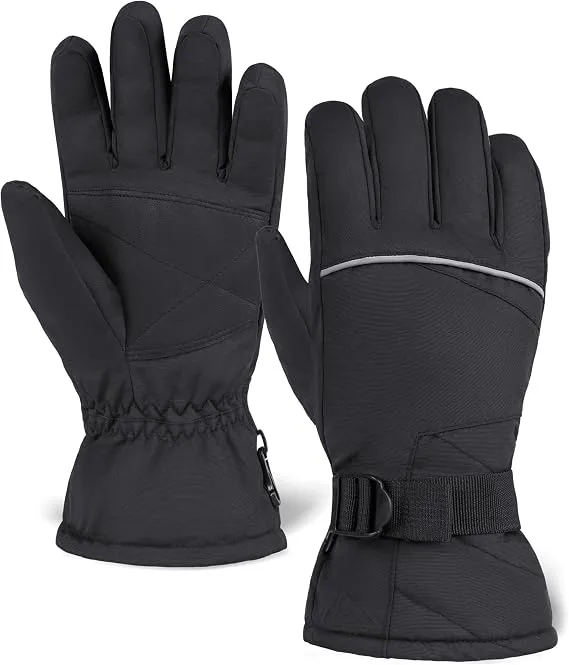
At under $10, this is the least expensive glove on the entire list, and 2,965 reviews at 4.6 stars is a genuinely strong volume-to-rating combination — more total reviews than every other product here except Andake. That combination of low price and high review count is unusual; a lot of budget kids’ gear either doesn’t sell in volume or sells in volume with a mediocre rating, and this one avoids both problems.
The synthetic leather palm specifically targets the kind of grip that matters for the exact activities in this guide’s title — packing snowballs, gripping a sled rope, climbing a snow fort — rather than the pole-grip focus a ski-specific glove would prioritize instead.
Who should buy this: Budget-focused parents, anyone buying multiple pairs for siblings, or families who lose gloves often enough that a $10 price point matters more than premium insulation.
Honest limitation: SummitLoft is Tough Outdoors’ own branded insulation rather than a named third-party material like 3M Thinsulate, so there’s less independently verifiable performance data on it specifically compared to the 3M-branded options on this list.
Andake Kids Ski Mittens — Best for Toddlers
Andake Kids Ski Mittens Gloves Waterproof
– Double-layer thick cotton + American cotton for superior warmth
– Peach skin fabric with waterproof splash layer and TPU membrane
– Zipper design for easy on/off — sizes from 1 to 14 years
~$19.99
★★★★★ (4.8/5 — 2,106 Amazon reviews)
Check Price on Amazon →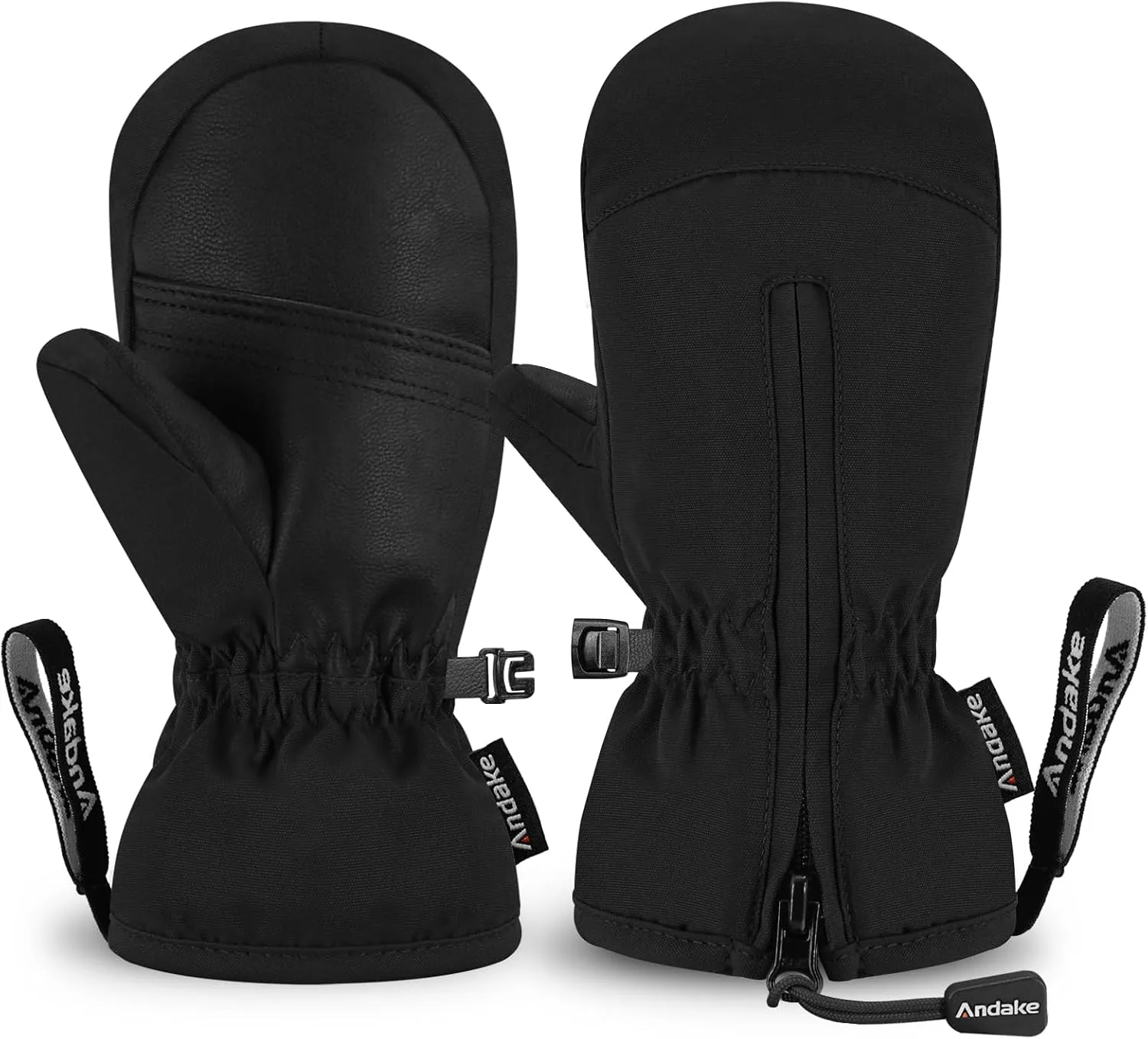
The 4.8-star rating here is the highest of any product on this list, backed by 2,106 reviews — a genuinely strong combination of sample size and score. The mitten format itself is worth calling out specifically for younger kids: keeping fingers together in one compartment traps more shared body heat than a five-finger glove does, which is part of why pediatric cold-weather guidance from the American Academy of Pediatrics specifically notes that mittens run warmer than gloves for the same insulation weight.
The zipper-entry design solves a real, separate problem: young kids typically don’t develop the fine motor coordination needed to manage a snug wrist buckle or a fiddly cuff closure until somewhere around age 3 to 4, according to child development research on fine motor milestones from the Cleveland Clinic. A zipper that a parent can operate quickly, without a struggling toddler fighting a stiff buckle, is a real practical advantage this specific age range benefits from.
Who should buy this: Parents of toddlers and younger kids who need a warm, easy-to-manage option, and anyone who wants one product that covers a wide age range as a child grows.
Honest limitation: As a mitten, it sacrifices the finger-by-finger dexterity a five-finger glove offers — fine for general outdoor play, less ideal if your kid wants to build detailed snow sculptures or handle small objects.
TRENDOUX Kids Winter Ski Gloves — Best for Touchscreen Use
TRENDOUX Kids Winter Ski Gloves
– TPU waterproof membrane + water-repellent outer shell
– 3M Thinsulate, sponge, and cotton multi-layer insulation
– Full palm touchscreen function with anti-loss buckle
~$14.99
★★★★☆ (4.3/5 — 40 Amazon reviews)
Check Price on Amazon →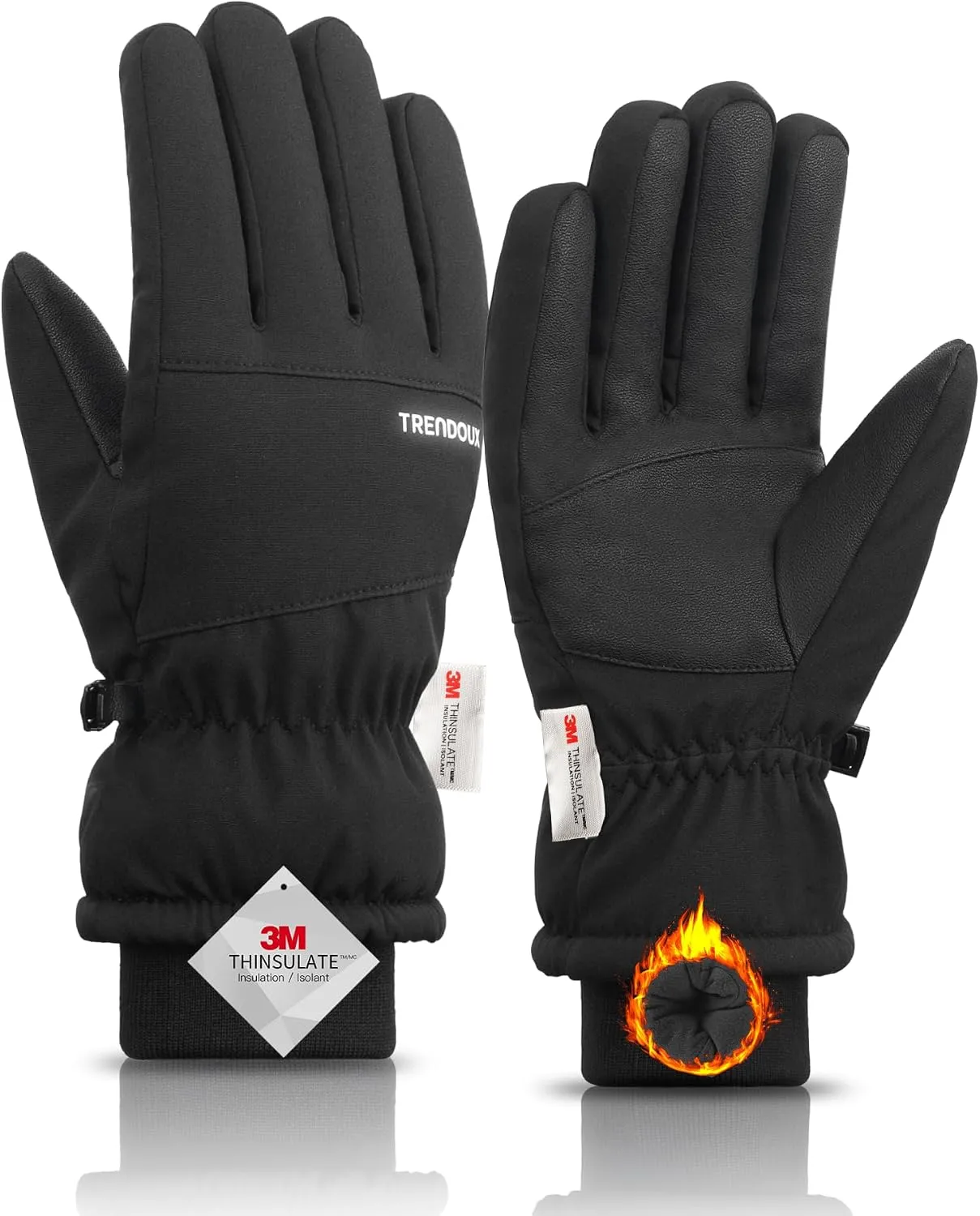
This is the only glove on the list with a full-palm touchscreen feature rather than just a fingertip patch, which matters for slightly older kids who want to use a phone or tablet without pulling a glove off entirely in the cold. It also uses genuine 3M Thinsulate, the same named insulation material found in the OutdoorMaster pick, layered alongside additional sponge and cotton fill.
The construction stacks a TPU membrane with a water-repellent outer shell, giving it a similar waterproofing approach to the OutdoorMaster and Andake picks rather than the coating-only approach used by Tough Outdoors.
Who should buy this: Families with older kids who want touchscreen access built in, and anyone who wants genuine 3M Thinsulate at a lower price point than the OutdoorMaster option.
Honest limitation: With only 40 reviews, this has by far the smallest sample size on this list. The 4.3-star average and Amazon’s Choice badge are reasonable early signals, but it’s a much thinner data set than the thousands of reviews backing Tough Outdoors or Andake.
SnowStoppers Long Cuff Mittens — Best for Sledding and Snow-Out Protection
SnowStoppers Kids Waterproof Long Cuff Mittens
– Extra long cuff keeps snow out between coat and mitten
– Waterproof outer shell with fully waterproof Drypel liner
– 40g Thinsulate + 100g Polyfill — sizes 1 to 12 years
~$19.79
★★★★★ (4.7/5 — 490 Amazon reviews)
Check Price on Amazon →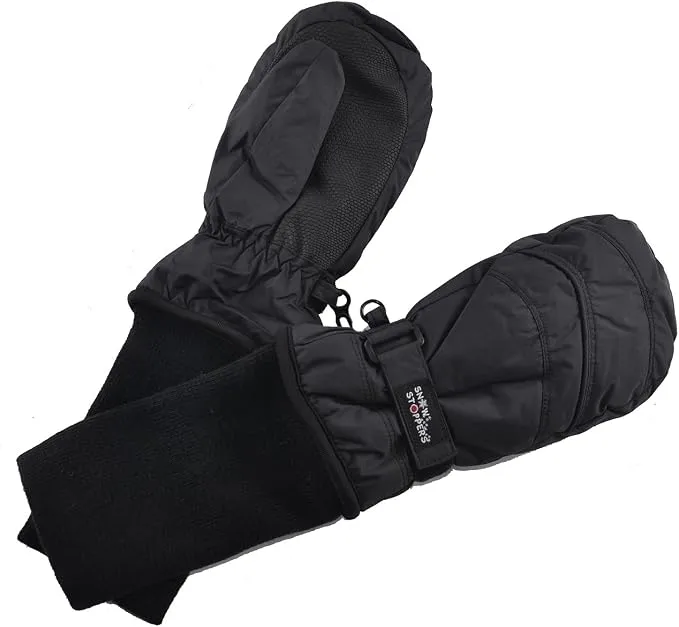
The standout feature here is the cuff length, and it’s worth explaining exactly why that matters more for kids than adults. Kids fall down, dig in snowbanks, and raise their arms overhead constantly during play — all of which push a normal-length cuff up and expose the wrist gap to snow. An independent gear-testing outlet, Treeline Review, specifically picked this exact product line as their tested “best affordable” mitten choice, citing the extra-long cuff as the reason it protects better than shorter designs during exactly this kind of rough, active play.
The Drypel Liner adds a second waterproof layer behind the outer shell, functioning similarly to the TPU approach used by other picks on this list but under a different brand name.
Who should buy this: Parents whose kids sled, build snow forts, or otherwise spend a lot of time with arms raised and hands buried in snow, where cuff length matters more than any other single spec.
Honest limitation: At 40g Thinsulate plus 100g Polyfill, the total insulation weight here is lower than the OutdoorMaster’s 120g Thinsulate, so it’s better suited to moderate cold than the most extreme temperatures this list covers.
What Nobody Tells You About Kids’ Snow Gloves
Review volume changes what a rating actually means. A 4.3-star rating from 40 reviews (TRENDOUX) and a 4.6-star rating from 2,965 reviews (Tough Outdoors) aren’t making the same strength of claim. The Tough Outdoors number is backed by enough data to be close to a settled result. The TRENDOUX rating is a reasonable early signal, not yet a large-sample guarantee.
“TPU insert,” “TPU membrane,” and “Drypel Liner” are describing a similar underlying idea using different brand language. Don’t assume a product without one of these specific terms in its listing has weaker waterproofing by default — check what the listing actually says rather than pattern-matching on buzzwords alone.
Mittens genuinely run warmer than gloves at the same insulation weight, which is a real, sourced point rather than a style preference — worth factoring in for younger kids or anyone who runs cold, even if it means giving up some finger dexterity.
Why These Five Were Picked
Each pick fills a distinct, real need rather than five variations on the same product: OutdoorMaster for the most complete warmth-and-waterproofing package, Tough Outdoors for the best price-to-review-volume ratio, Andake for toddlers and easiest on/off use, TRENDOUX for touchscreen access, and SnowStoppers for the specific cuff-length advantage that matters most during sledding and rough outdoor play. If a sixth product would just repeat one of these categories at a similar price and spec, it isn’t included here.
Decision Checklist — Pick in 60 Seconds
- Want the most complete warmth and waterproofing package? OutdoorMaster (~$27)
- Tightest budget, or buying multiple pairs? Tough Outdoors (~$10)
- Shopping for a toddler who needs to manage gloves independently? Andake (~$20)
- Older kid who wants phone access without removing gloves? TRENDOUX (~$15)
- Kid who sleds or builds forts and keeps getting snow up their sleeve? SnowStoppers (~$20)
- Actually skiing downhill, not just playing outside? None of these are ski-specific — check best ski gloves for kids instead, where pole grip and lift-specific features matter more.
Is It the Glove, or Is It Something Else?
Before assuming a glove has failed, it’s worth diagnosing what actually went wrong. If your kid’s hands were cold within the first thirty minutes on a dry, cold day, that’s an insulation-weight problem — look at named insulation like 3M Thinsulate with a stated gram weight rather than an unlabeled “warm lining” claim. If hands started warm but went cold and wet by the end of the play session, that’s usually a waterproofing failure specifically, not an insulation one — a TPU-layer product solves that more reliably than a coating-only shell.
If the glove itself seems fine but keeps coming off or letting snow in at the wrist, that’s a cuff-length and closure problem, which is exactly what the SnowStoppers pick above is built to solve regardless of insulation weight.
When These Aren’t the Right Choice
If your child is actually downhill skiing or snowboarding rather than general backyard or sledding-hill play, a ski-specific glove built around pole grip, cold-lift-ride performance, and often a certified temperature rating is the better purchase, even though the price point is usually similar to what’s on this list. General snow-play gloves are built and tested around a different activity pattern than repeated cold chairlift exposure.
If your child has a diagnosed circulation issue or a condition like Raynaud’s, a general consumer glove comparison like this one isn’t a substitute for guidance from your child’s pediatrician on appropriate cold-weather protection.
Honest Pros and Cons
| What Works Well Across These Five | What Genuinely Doesn’t |
| Real waterproofing layers (TPU or Drypel) on four of the five, not just surface coatings | The fifth (Tough Outdoors) relies on shell waterproofing alone, without a stated internal membrane |
| A strong toddler-specific option (Andake) with an unusually wide age range and high review volume | The mitten format trades away finger dexterity, which matters for some kids and activities |
| A genuine budget option (Tough Outdoors) that still holds a strong rating at real volume | None of these are built or marketed as ski-specific gear for downhill use |
| A named, verifiable insulation material (3M Thinsulate) used in two of the five | The TRENDOUX pick’s touchscreen feature comes with the smallest review sample on this list |
FAQ
Are mittens or gloves warmer for kids playing outside?
Mittens generally run warmer at the same insulation weight, since keeping fingers together in one compartment shares body heat more efficiently than separating them into individual finger sleeves. The trade-off is reduced dexterity for tasks like building detailed snow sculptures or handling small objects.
How can I tell if a kids’ snow glove is actually waterproof or just water-resistant?
Check the listing for a named internal layer — a TPU insert, TPU membrane, or a branded liner like Drypel — rather than just “waterproof” in the title alone. A glove relying only on a treated outer shell will let water through faster once that surface saturates, even if the listing still uses the word waterproof.
What insulation weight is warm enough for a full day of snow play?
There’s no single number that fits every climate or every kid’s cold tolerance, but among the gloves compared here, the 120g 3M Thinsulate fill in the OutdoorMaster pick is the heaviest, and it’s a reasonable target if your child will be outside for extended stretches in genuinely cold conditions rather than a quick 20-30 minute play session.
At what age can kids reliably manage their own gloves?
Fine motor coordination for tasks like buckles and zippers typically develops gradually starting around age 3 to 4, though it varies by child. A zipper-entry design, like the Andake pick above, tends to be more manageable for younger kids than a snug wrist buckle closure.
Final Thoughts
If you only take one thing from this comparison: match the glove to the actual activity, not just the age range on the label. The OutdoorMaster covers the widest range of genuinely cold, extended outdoor play at the best overall spec sheet here. The SnowStoppers earns its price specifically through cuff length if your kid sleds or builds forts. And if your child is heading to an actual ski resort rather than the backyard, none of these five is really the complete answer — that’s a ski-specific glove purchase, not a general snow-play one.
Affiliate Disclosure: This post contains affiliate links. If you buy through them, we may earn a commission at no extra cost to you. It never changes which gloves we recommend. Prices correct as of the publish date, subject to change.