As an Amazon Associate, I earn from qualifying purchases.
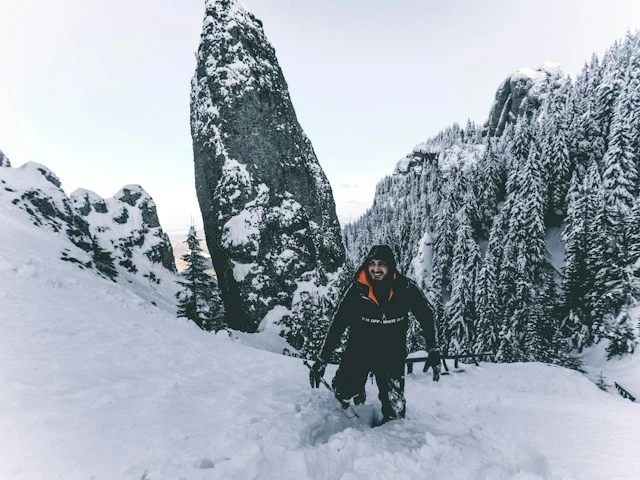
Quick Answer: On a winter trail, you need gloves that breathe on the climb and still keep you warm when you stop. Think in layers. The North Face Etip is a light fleece glove for the climb, and Outdoor Research Flurry Sensor adds wool and a snug fit for snowshoe walks. Black Diamond Midweight ScreenTap brings a Polartec back and a goat leather palm for pole grip, and Carhartt is the waterproof, insulated glove for wet snow and long breaks. Carry two pairs and swap as the day changes.
Want gloves for the ski days too? The Ski Glove Finder helps you pick a pair for your budget and weather in about a minute.
| Glove | Fabric | Weight of layer | Touchscreen | Listed price |
| The North Face Etip Recycled | 93% recycled polyester, 7% elastane fleece | Light | Yes | $50 (one option from $45) |
| Outdoor Research Flurry Sensor | 63% polyester, 26% wool, 11% nylon, fleece liner | Light to mid | Yes | $50 |
| Black Diamond Midweight ScreenTap | Polartec Power Stretch Pro back, goat leather palm | Mid | Yes | See the product page |
| Carhartt Waterproof Insulated Knit Cuff | Polyester shell, waterproof insert, polyester insulation | Warm and waterproof | Not stated | $33.08 |
Prices and details come from each product page when this was written. Check them again before you buy, since sellers change prices often.
- The Hiker's Glove Problem: Sweat Uphill, Cold at the Top
- A Simple Glove Kit for the Trail
- The North Face Etip Recycled Fleece: The Light Layer
- Outdoor Research Flurry Sensor: Wool Blend for Snowshoe Walks
- Black Diamond Midweight ScreenTap: Pole-Ready Mid Layer
- Carhartt Waterproof Insulated Knit Cuff: The Waterproof Warm-Up
- Match the Glove to the Hike
- Trekking Poles, Phones and Pack Zips
- Short Day or Long Day: How Many Pairs to Carry
- Hand Warmers and Other Small Helpers
- Dry Gloves Matter More Than Warm Gloves
- Start Cold, Add Layers at Breaks
- Cold Hands Can Be a Warning
- Cleaning and Caring for Trail Gloves
- Mistakes That Leave Hands Cold
- Questions Hikers Ask
- Which One to Buy
The Hiker’s Glove Problem: Sweat Uphill, Cold at the Top
A winter hike has two moods. On the climb, you work hard, and your hands get hot and damp. At the top, you stop for a snack and a photo, and that damp glove turns cold in minutes. A glove that is too warm for the climb is often too wet for the break.
That is why many winter hikers carry more than one pair. Wear a thin, breathable glove while you move. Put on a warmer, waterproof one when you stop. It sounds like extra work, but it keeps your hands dry, and dry hands stay warm.
The Washington Trails Association gives similar advice for the whole body: start out a little cold and add layers when you stop. Gloves follow the same rule. If your hands feel toasty at the trailhead, you will likely be sweating in ten minutes.
A Simple Glove Kit for the Trail
Think of your gloves as a small system. A light glove does most of the walking. A mid-weight glove handles cold, windy stretches. A waterproof, insulated glove waits in your pack for breaks, wet snow and the summit. Our guide to glove layering goes deeper on how liners and shells work together.
| Job | Glove type | Pick from this list |
| Moving uphill | Light, breathable fleece | The North Face Etip |
| Cool, windy walks and snowshoeing | Wool blend with fleece liner | Outdoor Research Flurry Sensor |
| Cold days with poles | Mid-weight with leather palm | Black Diamond Midweight ScreenTap |
| Breaks, wet snow, camp | Waterproof and insulated | Carhartt Waterproof Insulated |
You do not need all four. Two work for most day hikes: a light glove for walking and a warm waterproof one for stops. Pick the two that match your usual weather.
The North Face Etip Recycled Fleece: The Light Layer
THE NORTH FACE Etip Fleece Recycled Gloves
– Four-way stretch recycled fleece for lightweight warmth and mobility
– Etip touchscreen compatibility lets you use your phone with gloves on
– Silicone palm grippers and a pairing clip to keep gloves together
~$50.00
★★★★☆ (4.4/5 — 3,438 Amazon reviews)
Check Price on Amazon →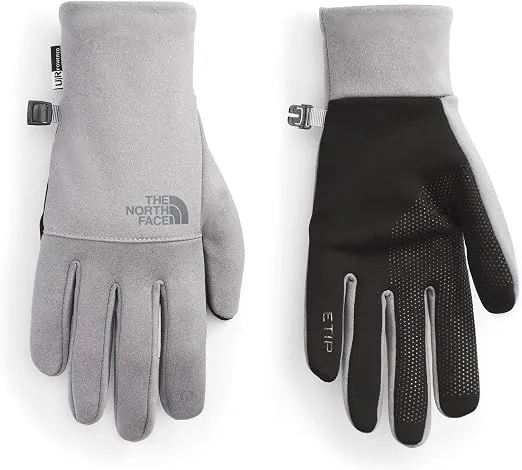
This is a double-knit fleece glove made from 93% recycled polyester and 7% elastane. The page says it has four-way stretch, touchscreen compatibility and silicone grippers on the palms. It is machine washable, and it comes in sizes from X-Small to XX-Large. The price is $50, with one color option listed from $45.
The page names hiking in brisk fall, winter and spring weather, which makes it a good fit for the climb. Fleece breathes well, so your hands do not steam up inside. Four-way stretch lets your fingers move as you hold poles, zip a pocket or check a map.
The fit details help on the trail. Radiametric Articulation keeps your hands in a relaxed position, and the 5-Dimensional Fit gives a steady size from pair to pair. A pairing clip keeps the gloves together when you take them off, which is handy when you swap pairs at a break.
It is a light glove, so plan on a warmer layer for the coldest stretches. Pick it if you want a simple, breathable glove for most winter walks, with a touchscreen for photos and maps. At $50, it is a fair price for a glove with a clear job.
Outdoor Research Flurry Sensor: Wool Blend for Snowshoe Walks
Outdoor Research Men’s Flurry Sensor Gloves
– Lightweight wool blend construction for warmth and moisture management
– Fleece liner adds extra softness and warmth
– Silicone patches provide grip and touchscreen compatibility
~$50.00
★★★★☆ (4.3/5 — 429 Amazon reviews)
Check Price on Amazon →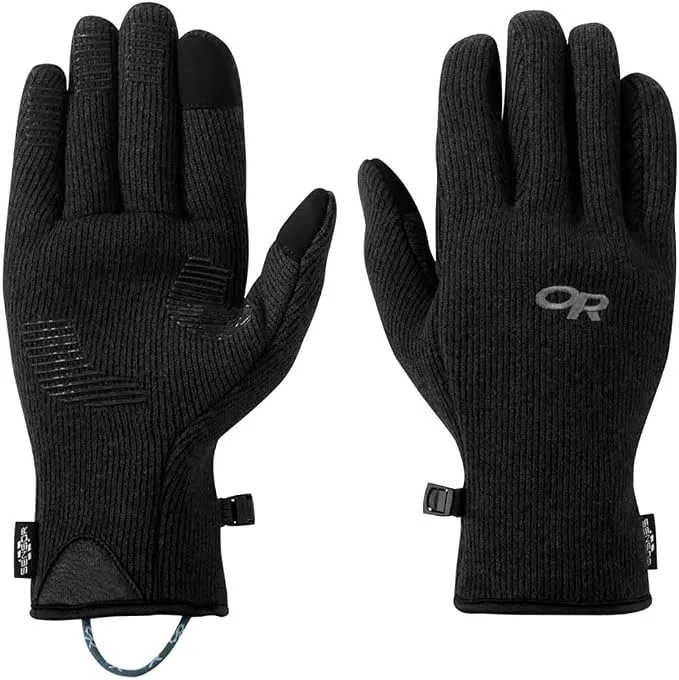
Outdoor Research lists the Flurry Sensor at $50, in Solid Black and Charcoal, in sizes from Small to X-Large. The fabric is 63% polyester, 26% wool and 11% nylon, with a fleece liner. The page calls these lightweight gloves, ideal for snowshoe hikes and winter walks.
The wool blend adds warmth and helps manage moisture, while the fleece liner adds softness against the skin. That mix suits a hike that swings between effort and rest. Wool is known for staying comfortable when it gets damp, which helps if your hands sweat a little.
MotionWrap construction gives a snug fit with few seams, so you feel less pressure in your fingers. Silicone patches help with grip and double as a touchscreen surface. That means you can hold a pole and tap your phone without stripping off a glove.
Snug gloves like this one fit best over a bare hand, so check your size with the chart. It is a good choice for cold, dry days when you want more warmth than a plain fleece glove but still want a light feel. If wet snow is in the forecast, bring a waterproof pair too.
Black Diamond Midweight ScreenTap: Pole-Ready Mid Layer
Black Diamond Midweight Screentap Gloves
– 241 g Polartec Power Stretch Pro on the back of the hand
– Goat leather palm with touchscreen-compatible material
– Midweight build for cold days when you still need dexterity
See current price on Amazon
★★★★★ (4.6/5 — 97 Amazon reviews)
Check Price on Amazon →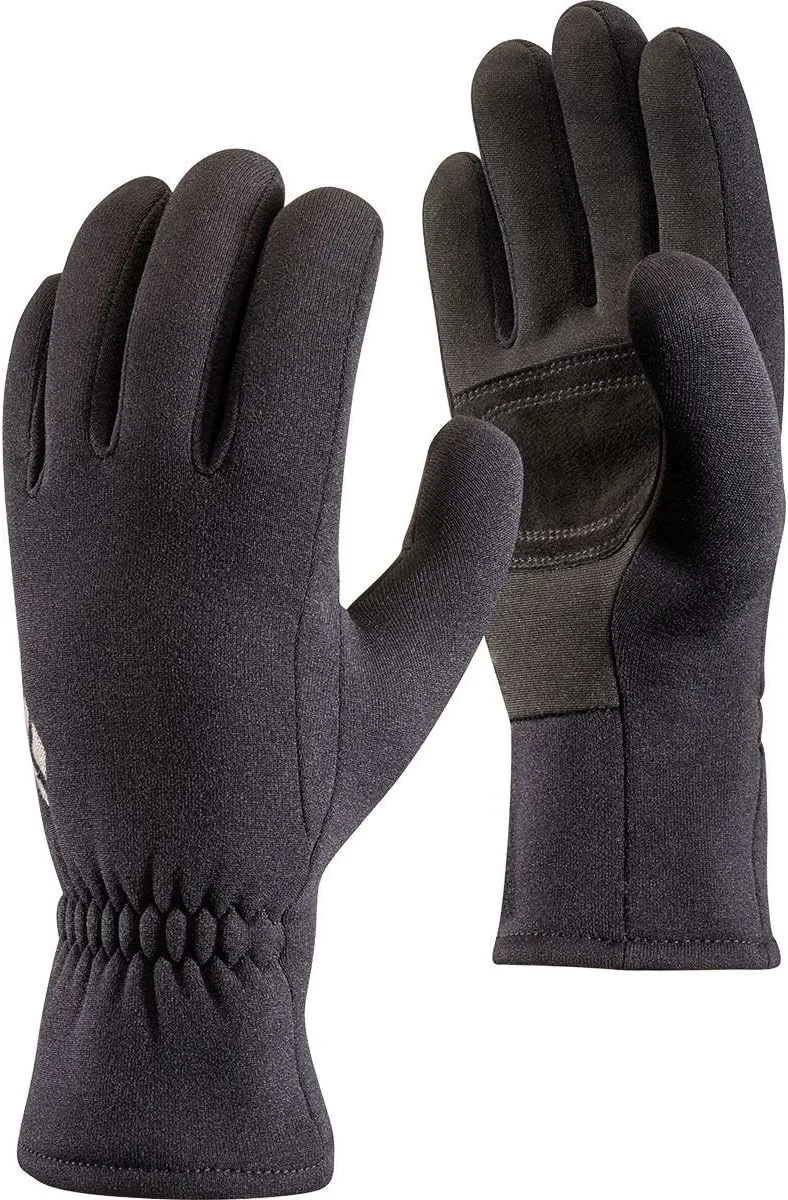
Black Diamond’s Midweight ScreenTap is a mid-weight glove with a Polartec Power Stretch Pro back of the hand, listed at 241 grams. The palm is goat leather, and the page says the palm material works with touchscreens. Check the product page for the current price and the size chart.
The mix of fabrics has a purpose. A stretchy Polartec back moves with your hand and breathes, while a leather palm gives a firm grip and holds up to rubbing. Trekking poles, a rock or a snowy handrail all scrape against the palm, and goat leather handles that well.
Polartec Power Stretch Pro is made to move sweat out and give stretch, which suits a hike with steady effort. The touchscreen-friendly palm lets you check a map app or take a photo with the glove on. That saves your fingers from the cold.
Black Diamond sells the ScreenTap in lightweight, midweight and heavyweight, so choose the weight that matches your cold. The midweight is a middle path: warmer than a liner, lighter than an insulated shell. Pick it for cool to cold hikes where you carry poles.
Carhartt Waterproof Insulated Knit Cuff: The Waterproof Warm-Up
Carhartt Men’s Waterproof Insulated Knit Cuff Glove
– Waterproof insert keeps hands dry while synthetic insulation holds in warmth
– FastDry lining wicks away sweat throughout the day
– Fleece cuff with adjustable wrist strap keeps snow and cold air out
~$33.08
★★★★★ (4.6/5 — 37,107 Amazon reviews)
Check Price on Amazon →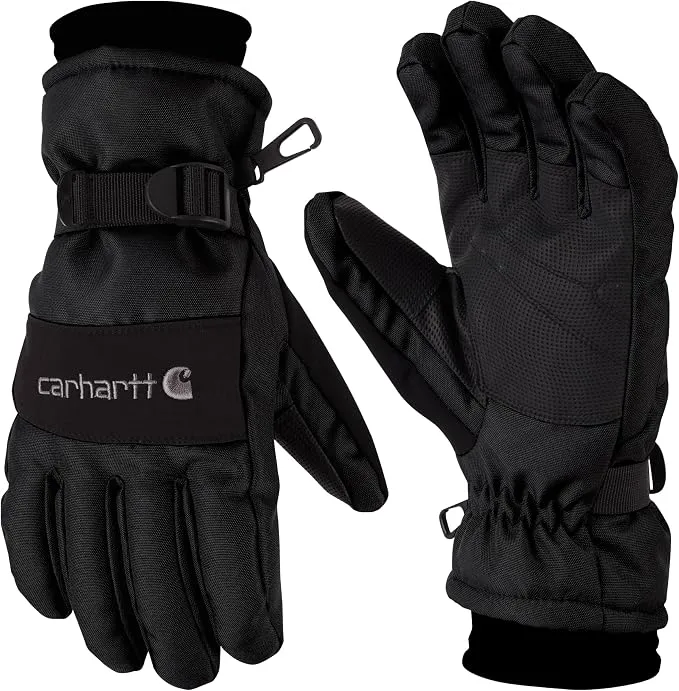
Carhartt costs $33.08 on sale, down from $34.99, in Black, Black/Grey and Dark Grey/Black. The shell is polyester and softshell, with a waterproof polyurethane insert and polyester insulation. The palm is polyurethane, and sizes run from Small to XX-Large. It is spot clean only.
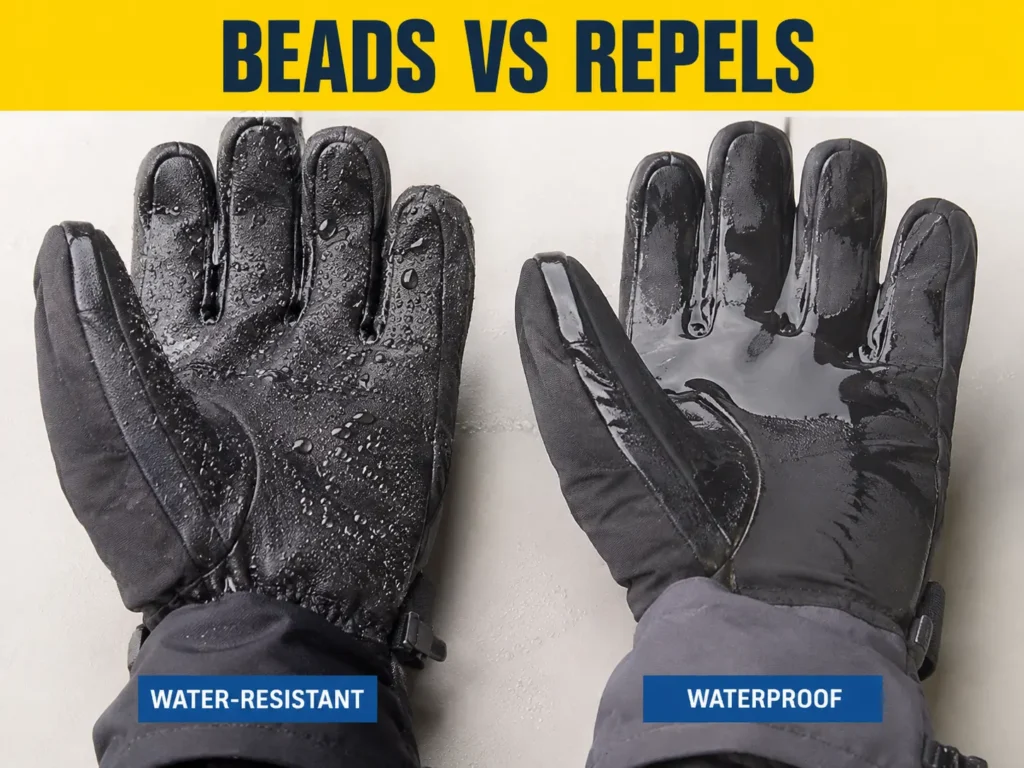
The page says the waterproof insert keeps hands dry in wet and snowy conditions, and FastDry lining pulls sweat away. For a winter hiker, that makes it the glove to put on at a snowy break or when the trail gets slushy. It holds heat while you stand still, which is when hands cool fastest.
The fleece cuff has an adjustable wrist strap that keeps cold air and snow out. The page says to loosen the strap before you put the glove on and tighten it after, so the fit stays comfortable and secure. Digital-grip palm and stick-grip fingers and thumb help you hold poles and gear.
At about $33, it is the lowest price here, which suits hikers who want a warm waterproof glove without spending much. It also works as a spare pair, so you always have a dry glove in your pack. Wipe it clean and let it dry fully after each trip.
Match the Glove to the Hike
Use this table as a starting point, then adjust for how warm your hands run.
| Hike | What it feels like | Gloves to carry |
| Cool day, steady climb, 30s | Warm while moving | The North Face Etip |
| Cold, dry snowshoe walk, 20s | Chilly breeze, little sweat | Outdoor Research Flurry Sensor |
| Cold day with poles, teens to 20s | Hands work hard and need grip | Black Diamond ScreenTap, plus Carhartt in the pack |
| Wet snow or slush | Melting snow soaks gloves | Carhartt |
| Long summit break | Cooling fast when you stop | Carhartt, put on at the top |
Switch early. When you stop, put on the warm glove before your hands cool down. It is easier to keep heat than to win it back. If you cannot decide between a breathable pair and a warm one, our guide on breathable or insulated gloves explains the trade-off.
Trekking Poles, Phones and Pack Zips
Hikers use their hands for small jobs all day. You grab poles, pull zippers, open snack bags, check a phone and read a map. A glove that makes those jobs hard leads you to take it off, and bare hands cool quickly.
Grip matters on poles. The North Face and Outdoor Research list silicone grip patches, Carhartt lists a digital-grip palm and Black Diamond uses goat leather. All four give you some way to hold a pole without a slip. Test your pair with your own poles before you go.
Touchscreen tips help too. The North Face, Outdoor Research and Black Diamond all list touchscreen-friendly fingers or palms. Use them to snap photos and check a map app, but keep your phone in a warm inner pocket. Cold drains a phone battery fast.
Short Day or Long Day: How Many Pairs to Carry
The length of your hike changes the plan. On a short loop of an hour or two, one light glove and one warm spare cover most days. On an all-day hike, hands go through more cycles of sweating and cooling, so a third pair gives you a dry one when the others are damp.
| Hike length | Pairs to carry | Why |
| One to two hours | Two | A light glove to wear, a warm one for stops |
| Half day | Two or three | One may get damp, so a spare helps |
| Full day or snowshoe trip | Three | Cycles of sweat and cold need a dry backup |
| Wet snow forecast | Three, with a waterproof pair | Melting snow soaks plain gloves fast |
Pack the spares in a zip bag at the top of your pack, where you can grab them without stopping for long. A wet pair goes in a separate bag, so it does not soak your dry gear. Label each bag if you carry several, so you can find the right pair fast with cold fingers.
Hand Warmers and Other Small Helpers
Small chemical hand warmers add comfort on very cold days. Tuck one in the back of a glove or a jacket pocket, and keep it away from bare skin. Most need air to work, so do not seal them in a tight pocket. They cost little and weigh almost nothing, so many hikers keep a pair in the pack for the summit break.
A warm drink helps your hands too. Hold a cup of something hot for a minute, and your fingers warm up quickly. And a snack keeps your body making heat, since your hands are the first part of you to cool when your energy runs low.
Finally, keep your core warm. When your body is cold, blood moves away from your fingers to protect your center. A warm jacket and a hat at breaks help your hands stay warmer, and they are as important as the gloves themselves.
Dry Gloves Matter More Than Warm Gloves
A wet glove loses its heat fast. That is why the National Park Service lists gloves for snow and rain on its winter hiking essentials and adds an extra set of dry clothing in case you get wet. Read its winter hiking tips before your first cold trip.
Keep a spare pair in a zip bag or a dry pocket. Swap when your hands feel damp, not when they feel cold. If one glove gets soaked by snow, switch both, and let the wet pair dry on a pack strap or inside your jacket.
Notice early signs. Numb fingers, clumsy hands and shaking are signals to warm up. Do not push on. Put on warm gloves, eat something and move out of the wind.
Start Cold, Add Layers at Breaks
Layering is the key to winter comfort, and it applies to hands too. The Washington Trails Association tells hikers to avoid cotton, since it holds sweat, and to add layers back on at breaks. Its guide on what to wear covers the whole body, and the same idea works for gloves.
Start the hike with a light glove, even if your hands feel a bit cold in the car. They warm up fast once you move. When you stop, change to warmer gloves before you cool off. The extra minute pays off.
If your hands still run hot, open the cuff, pull the gloves off for a minute and tuck them under a pack strap. A short break in the air dries sweat quickly. Put them back on before the cold sets in.
Cold Hands Can Be a Warning
Most chilly hands are just uncomfortable. But on winter trails, cold can be more serious. The Pennsylvania Parks and Forests Foundation says breathable, moisture-wicking gloves and a hat are critical, and it quotes the National Park Service on the early signs of hypothermia: slurred speech, trembling, exhaustion, stumbling and poor judgment. See its winter pack list before you go.
Hike with a friend, tell someone your route and turn back early if you feel cold and clumsy. Gloves help, but they cannot replace good planning. Carry a warm layer, water and snacks, and keep your phone warm.
Cleaning and Caring for Trail Gloves
Hike gloves get sweaty, so clean them often. Check each care label, since they differ.
| Glove | Care from the page | Tip |
| The North Face Etip | Machine wash | Wash after a few hikes and air dry |
| Outdoor Research Flurry Sensor | Not listed on the page | Check the tag before washing |
| Black Diamond ScreenTap | Not listed on the page | Check the tag, and keep leather away from heat |
| Carhartt | Spot clean only | Wipe, then air dry fully |
Dry gloves away from direct heat, such as a car heater or a campfire. High heat can crack leather and damage waterproof layers. Hang them up or stand them upright so air can move through.
Mistakes That Leave Hands Cold
The first is wearing one thick glove all day. It is too hot uphill and too damp at the top. Carry a light pair and a warm pair, and swap.
The second is waiting until your hands are cold to put on warm gloves. Change at the start of a break, while your hands still hold heat.
The third is skipping the size check. A glove that is too tight cuts blood flow, and one that is too loose lets in cold. Try each pair with your poles in hand.
The fourth is wearing cotton. A cotton liner holds sweat and chills fast. Pick fleece, wool or synthetic.
The fifth is leaving the spare pair at home. A dry spare weighs little and can save a hike. Keep it in a zip bag in your pack.
Questions Hikers Ask
What gloves do I need for winter hiking?
Most hikers carry a light glove for the climb and a warm, waterproof glove for breaks and wet snow. In a deep cold, add a mid-weight glove or a mitten.
Should hiking gloves be waterproof?
For wet snow and slush, yes. A waterproof insert keeps hands dry in melting snow. For dry, cold days, a breathable fleece or wool glove may be enough.
Can I use touchscreen gloves on a trail?
Yes. The North Face, Outdoor Research and Black Diamond list touchscreen-friendly materials. Keep your phone in a warm pocket so the battery lasts.
How do I keep my hands from sweating?
Choose a breathable glove for the climb, open the cuffs, and take gloves off for a minute at breaks. A fleece or wool glove helps pull sweat away from your skin.
Do I need liners?
Not always. A light fleece glove can act as a liner under a waterproof glove on very cold days. Check the fit first, since two layers add bulk.
How many pairs should I carry?
Two is a good number for a day hike. For longer trips or very wet days, bring a third pair as a spare.
Which One to Buy
Want a light, breathable glove for the climb? Choose The North Face Etip. Want wool-blend warmth for snowshoe walks? Choose Outdoor Research Flurry Sensor. Want a pole-friendly mid-layer with a leather palm? Choose Black Diamond Midweight ScreenTap. Want a waterproof warm-up for wet snow and breaks? Choose Carhartt.
A quick look at cost: Carhartt is $33.08, and The North Face and Outdoor Research are $50 each. A pair of two, such as a light glove and Carhartt, costs under $100 and covers most winter day hikes. Check your size, try the gloves with your poles and keep a dry spare in your pack.
Affiliate disclosure: Some links on this page may be affiliate links. If you buy through them, skiglovesusa.com may earn a small commission at no extra cost to you. Prices, fabric details and care instructions come from the manufacturers’ product pages and can change.