Quick answer: There’s no single temperature that’s universally too cold to ski, because wind matters more than the number on the thermometer. As a rough guide, air temperatures down to around 0°F are manageable for most skiers with proper gear, wind chill between roughly -20°F and -30°F is where frostbite risk becomes real within 30 minutes of exposed skin, and wind chill beyond -30°F is where most experienced skiers and ski patrols call it a day regardless of how good your gear is. If you’re not sure your current setup can actually handle the cold you’re planning to ski in, ski glove finder is a faster way to check than guessing.
- Why the Thermometer Alone Doesn't Answer This
- Real Temperature Thresholds Worth Knowing
- What Cold Does Before You Feel Endangered
- Dry Cold and Wet Cold Aren't the Same Risk
- Real Scenarios Where This Actually Plays Out
- What Gear Actually Extends, and What It Doesn't
- Hydration and Fuel Matter More Than Most Skiers Assume
- Common Mistakes Skiers Make in Extreme Cold
- Knowing Your Own Cold Tolerance
- Kids and Cold Tolerance Are a Different Calculation
- When to Actually Call It
- Acclimatization Changes the Picture Over a Season
- FAQ
Why the Thermometer Alone Doesn’t Answer This
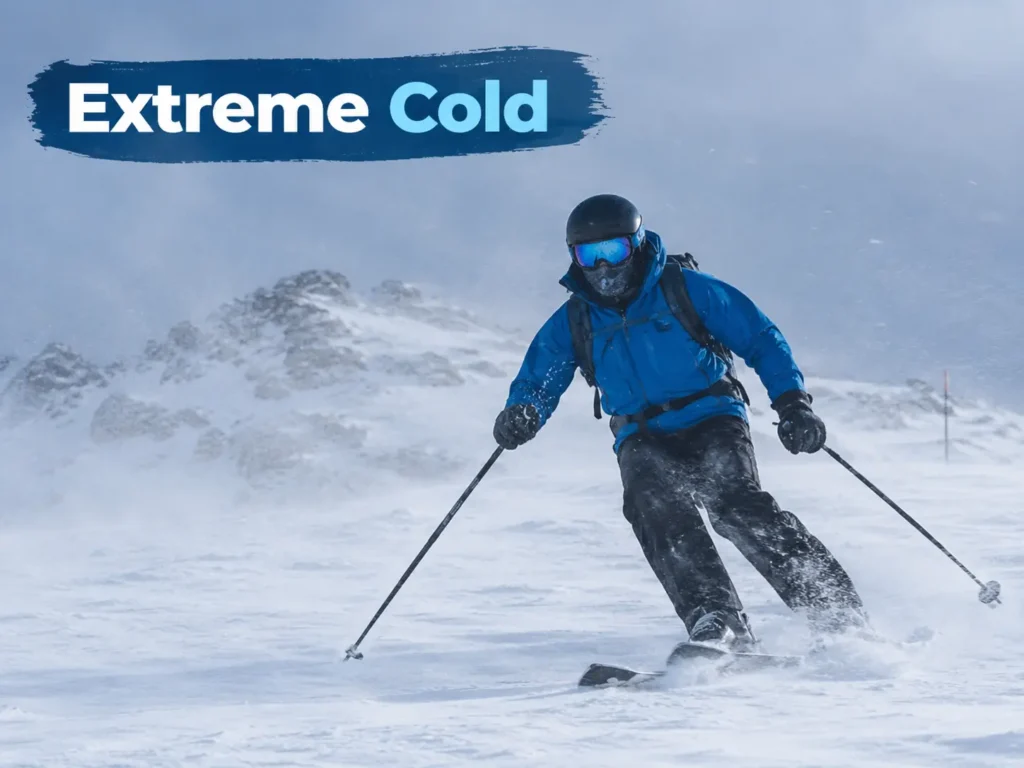
Air temperature and the temperature your skin actually experiences on a chairlift are two different numbers, and the gap between them is entirely about wind. According to the National Weather Service, a 0°F air temperature with a 15 mph wind produces a wind chill of -19°F, and at that wind chill, exposed skin can freeze in about 30 minutes.
That’s the whole reason “how cold is too cold” doesn’t have one fixed answer. A calm, sunny 5°F day and a windy, overcast 20°F day on an exposed ridge can present a similar or even worse actual cold-injury risk, even though the second day’s thermometer reading looks milder. Checking the forecasted wind chill specifically, not just the air temperature, is the first real decision point before you head out.
Real Temperature Thresholds Worth Knowing
The National Weather Service’s wind chill chart includes specific frostbite time estimates tied to wind chill values, and they’re worth internalizing rather than treating temperature as an abstract number. At a wind chill around -19°F, frostbite risk on exposed skin sits around 30 minutes. Between roughly -25°F and -30°F, that window drops to about 15 minutes. Beyond about -50°F wind chill, frostbite can occur in under 5 minutes.
| Wind Chill Range | Frostbite Risk on Exposed Skin | Practical Skiing Guidance |
| 0°F to -15°F | Low with proper gear | Standard cold-weather gear, normal skiing pace |
| -15°F to -25°F | Moderate, ~30 minutes | Cover all exposed skin, check face and fingers regularly |
| -25°F to -35°F | High, ~15 minutes | Minimize exposed skin entirely, frequent warm-up breaks |
| Below -35°F | Severe, 5-10 minutes | Most resorts limit lift operations; skiing not advisable |
These numbers describe skin exposure specifically, which is why face coverage and glove quality matter as much as your jacket’s insulation rating. A well-insulated core with exposed cheeks or wrists doesn’t avoid the actual injury risk these thresholds describe.
What Cold Does Before You Feel Endangered
The uncomfortable part isn’t the first thing to go wrong — your judgment is. A 2026 study published in Scientific Reports found that just 15 minutes of exposure to -10°C air measurably slowed reaction time and impaired decision-making, even in subjects wearing appropriate cold-weather clothing and before any drop in core body temperature was detected.
This matters directly for skiing because decision-making is exactly what keeps you safe on a mountain — reading terrain, judging speed, reacting to other skiers. A slower, less accurate version of that judgment is a real, measurable risk that shows up well before you’d describe yourself as “in trouble” from the cold. It’s also part of why cold-weather mistakes tend to compound: a skier whose judgment has already quietly degraded is less likely to correctly recognize that it’s time to head in.
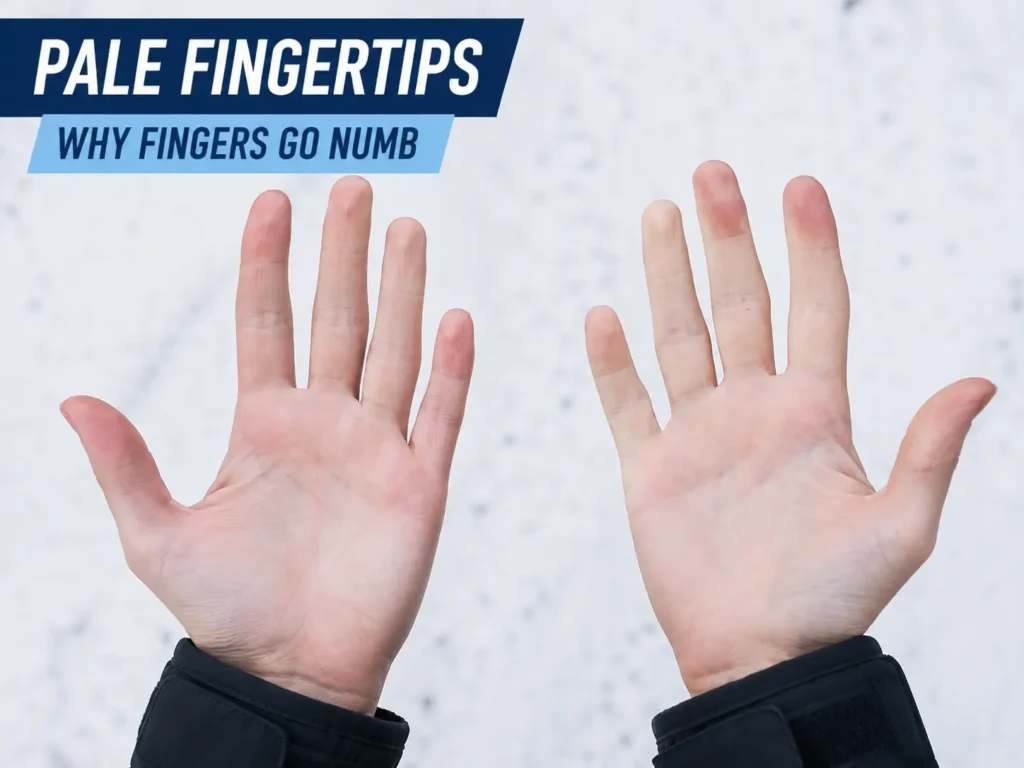
Numbness in your fingers is a related, more familiar version of the same problem. If you’ve noticed your hands losing feeling faster than expected on a cold day, that’s worth understanding as its own mechanism — why fingers go numb while skiing covers the circulation response behind it in more depth than fits here.
Dry Cold and Wet Cold Aren’t the Same Risk
A dry, cold day at altitude and a damp, cold day near sea level can carry the same air temperature and present genuinely different real-world danger. Moisture on skin or trapped in clothing pulls heat away from the body far faster than dry cold air does, which is why a “mild” 25°F day with wet, heavy snow can feel more dangerous than a drier 10°F day.
This is also where gear failure compounds the problem rather than causing it independently. A glove that’s lost its water resistance doesn’t just feel uncomfortable in wet snow — it actively accelerates heat loss at exactly the extremity most vulnerable to frostbite, turning a moderate-risk day into a higher-risk one through equipment failure rather than temperature alone.
Real Scenarios Where This Actually Plays Out
An early-morning first chair on a clear, calm day is close to the best-case cold scenario, even at a genuinely low air temperature. Without wind driving the chill down, a well-geared skier can reasonably handle temperatures that would look alarming on paper, since the actual heat-loss rate stays far lower than the same air temperature with any real wind behind it.
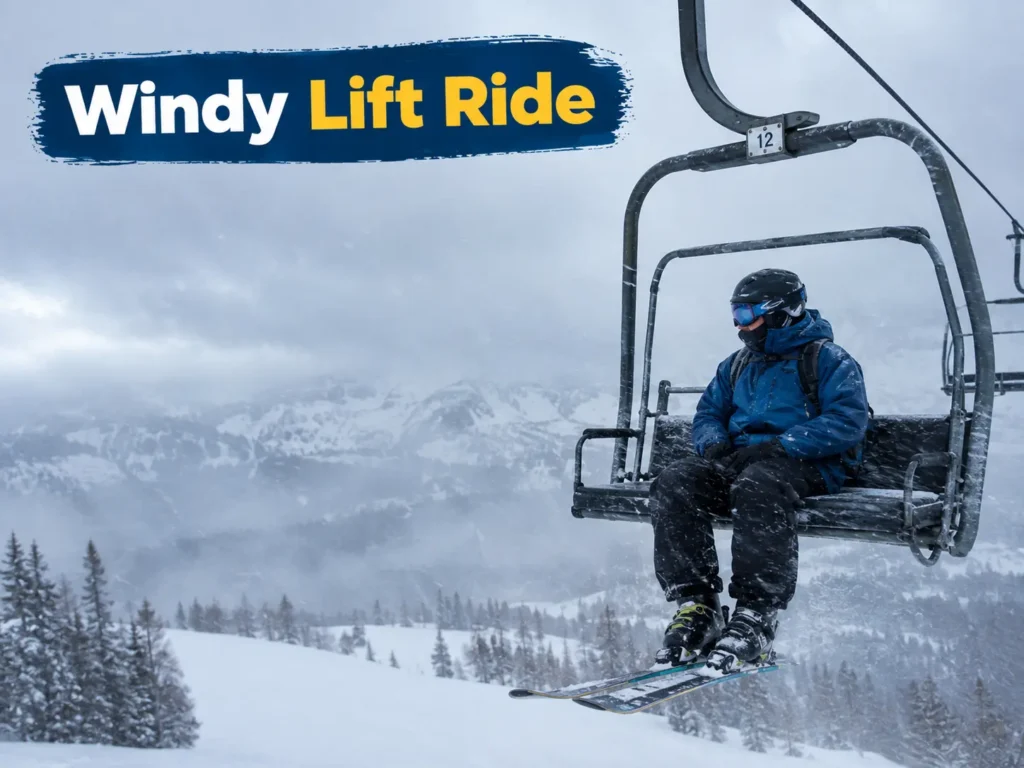
A ridge-top run exposed to sustained wind is close to the opposite case, and it’s the scenario most likely to catch skiers off guard. The base of the mountain can report a mild, manageable temperature while an exposed upper run sits well into a dangerous wind chill range, since wind speed typically increases with elevation and exposure.
A full day of lift-served skiing with repeated exposure between runs adds a cumulative dimension neither of the scenarios above fully captures on their own. Ten minutes of chairlift exposure repeated across a dozen laps adds up to real total cold exposure time, even if no single run felt dangerously cold in isolation.
Backcountry touring changes the picture again, since sustained physical effort on the way up generates real body heat that resort skiing’s lift-and-glide pattern doesn’t provide. That’s part of why a touring skier’s safe cold threshold can genuinely differ from a lift-served skier’s at the same reported temperature — the activity itself is supplying heat the lift-served day isn’t.
What Gear Actually Extends, and What It Doesn’t
Proper cold-weather gear shifts your safe window meaningfully, but it doesn’t eliminate the underlying physics. According to NOAA, hypothermia occurs once core body temperature drops below 95°F, and no amount of insulation changes the fact that sustained heat loss eventually outpaces what your body can generate, regardless of how good your jacket is.
What quality gear actually does is slow that heat loss rate and protect the specific extremities — fingers, toes, face — that lose heat fastest and show injury first. That’s a genuine, meaningful extension of your safe skiing window, not a false promise, but it’s an extension with a real ceiling rather than an unlimited one. Treating good gear as removing the temperature limit entirely, rather than pushing it further out, is where a lot of cold-weather mistakes start.
Hydration and Fuel Matter More Than Most Skiers Assume
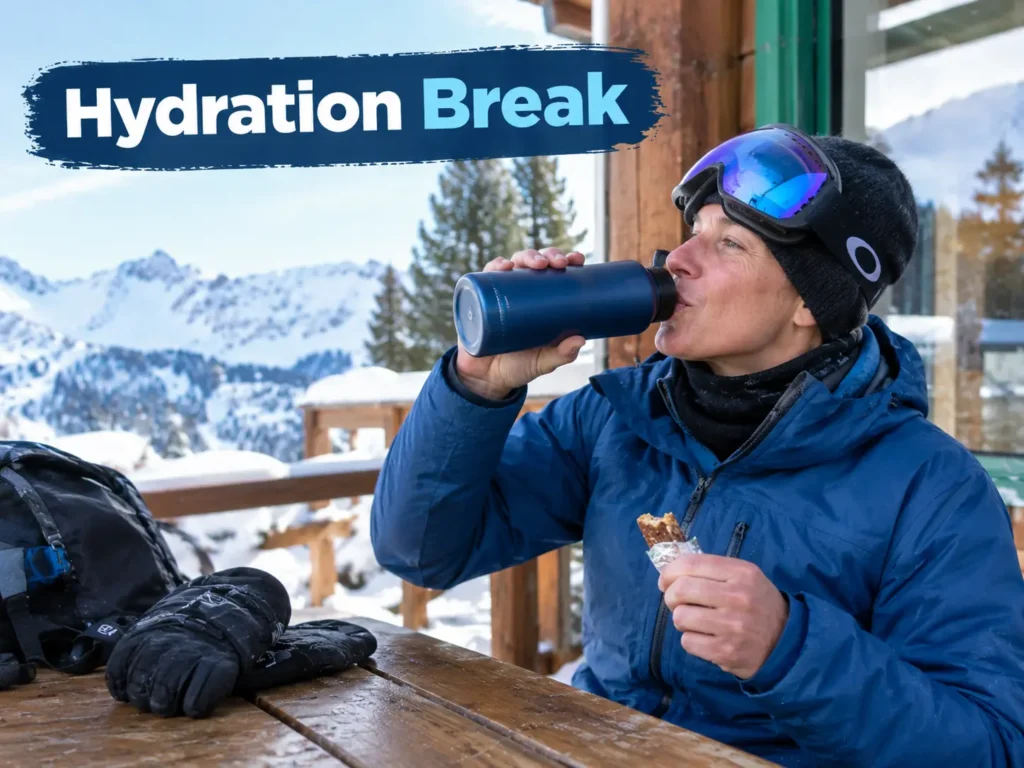
Dehydration happens faster in cold, dry mountain air than most people expect, partly because the thirst response itself is blunted in cold conditions compared to warm ones. A dehydrated body has a measurably harder time regulating its own core temperature, which means skipping water on a cold day doesn’t just risk normal dehydration symptoms — it actively works against your body’s ability to stay warm in the first place.
Caloric intake plays a similar, underappreciated role. Generating body heat is metabolically expensive, and a skier who’s skipped breakfast or is running low on fuel by early afternoon has less raw material available for their body’s heat-production response, regardless of how good their gear is.
This is part of why a cold day that starts fine can deteriorate faster than the temperature alone would predict — the skier’s own fuel and hydration reserves are quietly running down at the same time the cold is demanding more from their body’s heating system, and the two effects compound rather than stay separate.
Common Mistakes Skiers Make in Extreme Cold
Checking air temperature and skipping the wind chill forecast is the most common and most consequential mistake, since it’s specifically the gap between those two numbers that determines real frostbite risk on a given day.
Assuming yesterday’s gear performance predicts today’s is a related error. A glove that handled a calm 10°F day fine can perform very differently on a windy -10°F day, since wind chill — not just air temperature — is doing most of the actual work in that comparison.
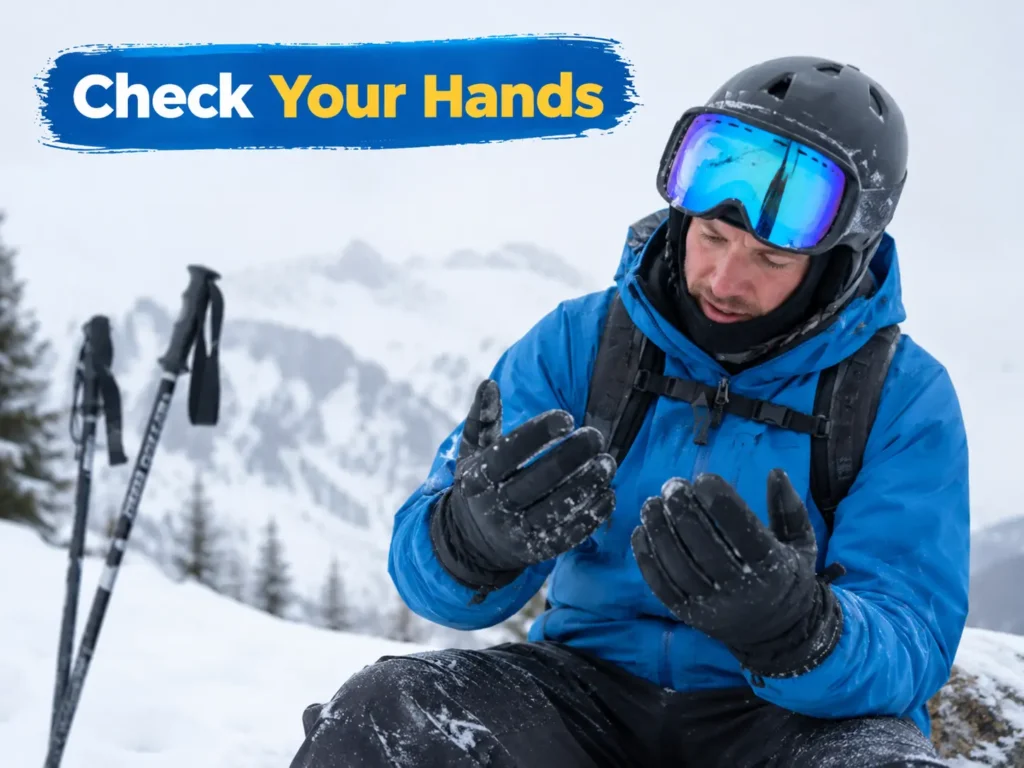
Ignoring early numbness or a “pins and needles” sensation as just an annoying but normal part of cold-weather skiing skips the actual warning signal your body is providing. Early numbness is your body’s cold-response system working as intended, not something to push through.
Underestimating how much faster fatigue and poor judgment set in during extreme cold — the cognitive research covered earlier — leads skiers to keep pushing through conditions they’d otherwise recognize as unsafe on a normal day, simply because the same cold that’s causing the risk is also dulling the judgment needed to notice it.
Knowing Your Own Cold Tolerance
Cold tolerance varies genuinely between individuals based on body composition, circulation, acclimatization, and simple day-to-day variation — there’s no universal personal threshold that applies to everyone equally. What’s more useful than a fixed personal number is tracking your own early warning signs across multiple ski days: at what wind chill do your fingers start going numb, at what point does your face start to hurt rather than just feel cold.
Building that personal baseline over a season gives you a genuinely more accurate decision tool than any general chart, since it accounts for your specific gear, your specific acclimatization, and your specific physiology rather than an average across a broad population.
If you’re already noticing your current gear reaching its limits sooner than you’d expect for the conditions, it’s worth a closer look at preventing frostbite specifically while skiing rather than assuming your tolerance alone explains the difference.
Kids and Cold Tolerance Are a Different Calculation
Children lose heat faster than adults at the same temperature, largely because they have a higher surface-area-to-body-mass ratio, meaning more of their body is exposed to cold air relative to how much heat-generating mass they actually have. This isn’t a minor difference — it means the general thresholds discussed throughout this piece, built primarily around adult physiology, are less conservative than what’s appropriate for a child on the same run.
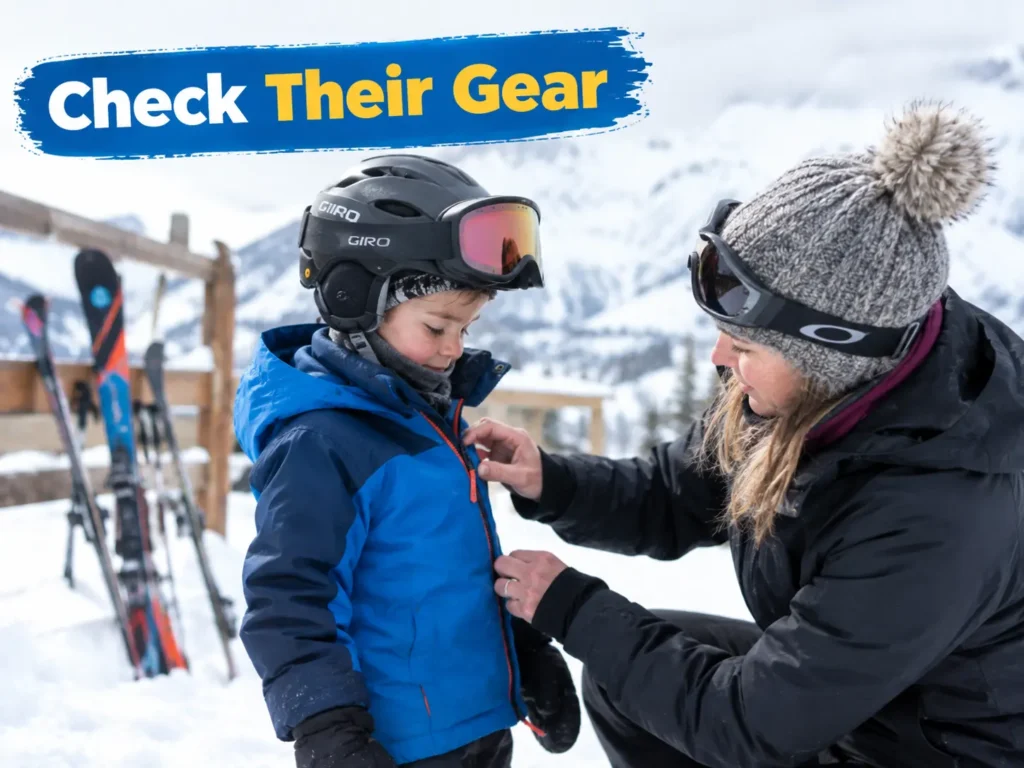
Kids are also less likely to proactively report early cold symptoms the way an adult would, sometimes because they’re absorbed in the activity and genuinely don’t notice, and sometimes because they don’t want to cut a fun day short. This makes proactive checking — actually inspecting fingers and cheeks rather than just asking “are you cold?” — a more reliable approach than relying on self-reporting the way you reasonably could with an adult.
Building in earlier, more frequent warm-up breaks for kids than you’d take yourself is a reasonable default given both of these factors, rather than assuming a child’s tolerance scales down proportionally from an adult’s.
When to Actually Call It
A useful, honest rule: if you notice a measurable change in your own decision-making — hesitating on calls you’d normally make instantly, feeling unusually indecisive about a line you’d normally just take — that’s worth treating as a cold-exposure symptom, not just fatigue or a bad run. The research on cognitive impairment covered earlier suggests this can show up before you’d describe yourself as dangerously cold.
Persistent numbness that doesn’t resolve after a warm-up break, or any skin that’s gone white, waxy, or hard, are unambiguous signals to get inside and seek warmth immediately rather than finishing the run first.
If lift operations themselves are suspended for cold — many resorts have their own wind chill thresholds for stopping chairs — that’s an external, independently-set signal worth respecting even if you personally feel capable of continuing.
Acclimatization Changes the Picture Over a Season
Your own cold tolerance genuinely shifts across a season, not just from day to day based on gear and conditions. A skier’s first cold day in November, before their body has had any repeated cold exposure that season, often feels harder to handle than a similarly cold day in February after weeks of regular exposure.
This happens partly through behavioral adaptation — learning your own gear’s limits, developing habits like proactive glove liner swaps or earlier warm-up breaks — and partly through genuine physiological adjustment, since repeated cold exposure produces measurable changes in how efficiently the body manages peripheral blood flow and heat conservation.
This is worth knowing specifically so you don’t judge your season’s coldest early-season day by the same personal standard you’d apply later in the season. A wind chill that feels genuinely difficult in November may feel entirely manageable at the same reading in February, and that’s a real adaptation, not just familiarity or overconfidence.
FAQ
Is there an official temperature at which resorts stop operating?
Most resorts set their own internal wind chill thresholds for suspending lift operations, commonly somewhere in the -20°F to -30°F wind chill range, though this varies by resort and by lift type (exposed high-speed quads are often more restrictive than sheltered gondolas).
Does altitude make colds more dangerous at the same temperature?
Altitude itself doesn’t change the physics of heat loss at a given temperature and wind speed, but higher-elevation runs are often windier and more exposed, which indirectly increases real risk even when the reported air temperature is similar to a lower, more sheltered run.
Can you get frostbite through gloves?
Yes, if the glove’s insulation and wind resistance aren’t adequate for the actual wind chill you’re skiing in, or if the glove has gotten wet and lost its insulating effectiveness. Glove quality shifts your safe window; it doesn’t remove the underlying temperature and wind chill math.
How quickly does cold actually affect skiing performance, not just comfort?
Based on the cognitive research covered earlier, measurable effects on reaction time and decision-making can appear within about 15 minutes of exposure to genuinely cold conditions, often before a skier would describe themselves as uncomfortably cold, let alone endangered.
If you’re building out your cold-weather kit based on what these thresholds actually require, it’s worth comparing affordable options that still handle real cold against what you’re currently skiing in, since gear quality is one of the few variables in this whole equation you actually control.