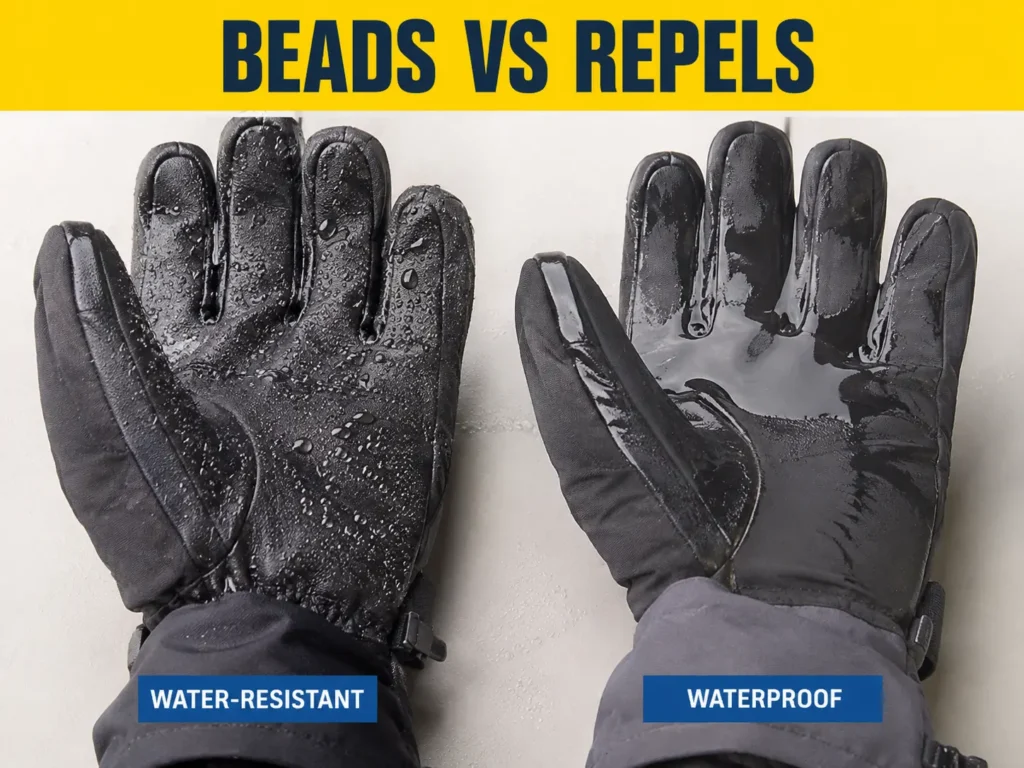

QUICK ANSWER: The Castle X Epic-G1 (~$80) is the strongest all-around pick — the highest review volume of the four, genuine racing-proven construction, and 3M Scotchlite reflective panels for visibility. If waterproofing is your top priority, the KLIM Klimate (~$110) uses genuine Gore-Tex with insulation weighted heavier on the back of the hand than the palm. And if grip on the bars matters more than anything else, the 509 Stoke uses Pittards Oiltac leather specifically engineered for wet-or-dry contact adhesion. Not sure whether your current gloves actually fit how you ride, or what to look for if you’re buying your first dedicated pair? Ski glove finder is a faster starting point than comparing spec sheets cold.
Riding a sled all day puts different demands on a glove than skiing does. Sustained wind at speed, hours of steady handlebar and throttle contact, and real vibration exposure through the bars all matter here in ways a chairlift ride never has to account for. That’s the lens this comparison uses, and every product below is genuinely built around those specific demands rather than borrowed from a different winter sport.
- Why Vibration Matters as Much as Cold Here
- All 4 — Quick Comparison
- How These Were Compared
- KLIM Klimate — Best Waterproofing
- Castle X Epic-G1 — Best Overall
- 509 Stoke — Best Grip
- Castle X Epic Plus — Best for Extreme Cold
- What Actually Separates These Four
- Decision Checklist — Pick in 60 Seconds
- Is It the Glove, or Something Else?
- Real Riding Scenarios Where the Differences Show Up
- When These Aren't the Right Choice
- Honest Pros and Cons
- Maintenance That Actually Extends These Gloves
- FAQ
- Final Thoughts
Why Vibration Matters as Much as Cold Here
This is a factor most winter glove buying guides skip entirely, and it’s specific to powered riding rather than skiing or general snow play. A peer-reviewed study measuring vibration on snowmobile handlebars found that riders experienced white finger syndrome — a circulation condition triggered by sustained vibration — at more than three times the rate of a non-riding control group, with close to half reporting hand numbness.
That’s a genuinely different risk profile than cold exposure alone. A glove built with real palm structure and grip material that reduces how much handlebar vibration transfers straight into your hand isn’t a luxury feature for long rides — it’s addressing a documented pattern specific to this exact activity.
All 4 — Quick Comparison
| Glove | Best For | Standout Feature | Rating | Price |
| KLIM Klimate | Best waterproofing | Genuine Gore-Tex, weighted insulation (100g palm / 200g top) | 4.3★ (198 reviews) | ~$110 |
| Castle X Epic-G1 | Best overall | 3M Scotchlite reflective, neoprene action panels | 4.6★ (692 reviews) | ~$80 |
| 509 Stoke | Best grip | Pittards Oiltac leather, merino wool liner | 4.3★ (15 reviews) | ~$100 |
| Castle X Epic Plus | Best for extreme cold | Heaviest insulation (200g top / 150g palm) | 4.5★ (93 reviews) | ~$90 |
How These Were Compared
Each glove was evaluated on waterproofing method, insulation weight and placement, palm grip material, and how its price and buyer feedback stack up against the others in this specific category. All four are genuinely built and marketed for riding, not borrowed from skiing, motocross, or another activity, which makes this a more direct comparison than mixing categories would allow.
KLIM Klimate — Best Waterproofing
KLIM Klimate Insulated Winter Snowmobile Gauntlet Gloves
– Gore-Tex membrane keeps hands dry in wet, heavy snow
– 3M Thinsulate insulation — 100g palm, 200g top of hand and fingers
– Leather palm for grip with moisture-wicking liner
~$109.99
★★★★☆ (4.3/5 — 198 Amazon reviews)
Check Price on Amazon →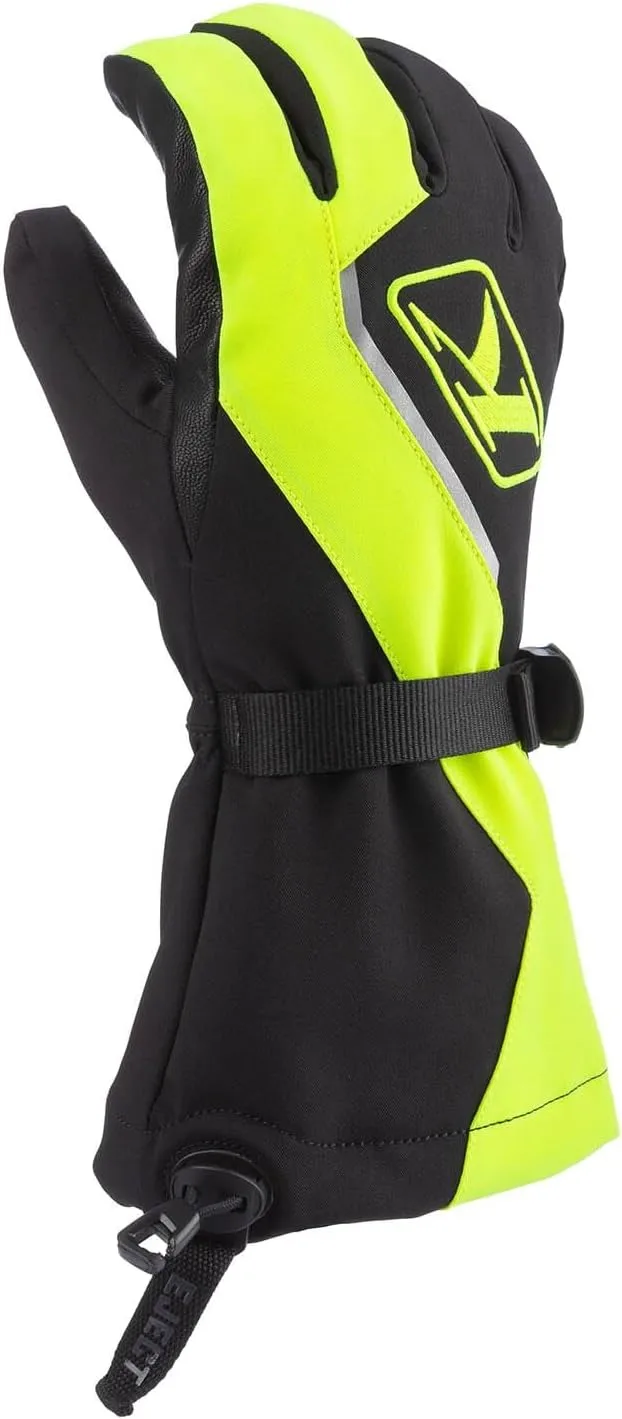
The insulation weighting here is worth understanding rather than skipping past. According to Gore-Tex’s own technical explanation, the membrane’s microscopic pores block liquid water while still letting sweat vapor escape — and KLIM pairs that with noticeably less insulation on the palm than the back of the hand, which keeps palm feel and grip more precise while still loading warmth where wind and exposure hit hardest.
Who should buy this: Riders prioritizing genuine waterproof performance above all else, and anyone who wants a thinner, more responsive palm without sacrificing overall hand warmth.
Honest limitation: At roughly $110, this is the most expensive glove on the list, and its review count, while solid, is the smallest sample of the four.
Castle X Epic-G1 — Best Overall
Castle X Epic-G1 Men’s Snowmobile Gloves
– Synthetic sure-grip palm with molded neoprene action panels
– 3M Scotchlite reflective materials for low-light visibility
– Ladder lock wrist closure with shock cord adjustable gauntlet
~$79.99
★★★★★ (4.6/5 — 692 Amazon reviews)
Check Price on Amazon →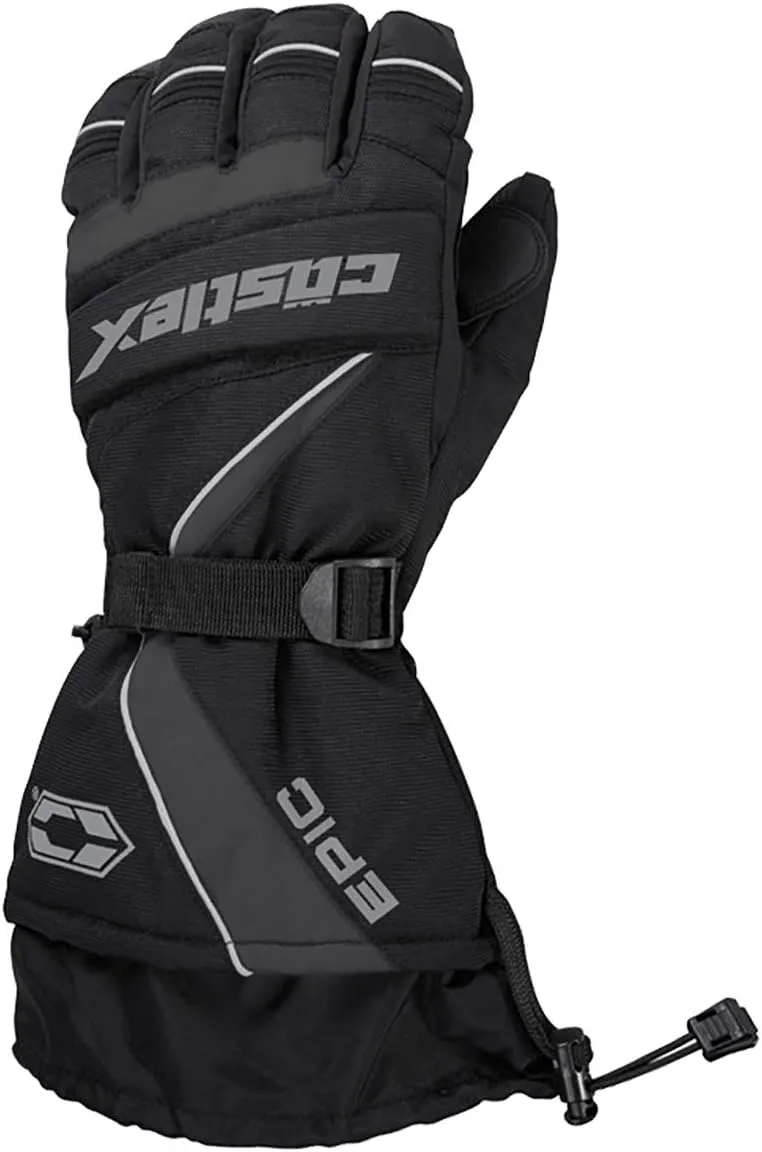
Nearly 700 pieces of buyer feedback at 4.6 stars is the strongest combination of volume and score on this entire list. The neoprene action panels flex specifically around the finger movements throttle and brake control actually require, and the reflective Scotchlite detailing adds a real visibility margin that none of the other three gloves here specifically call out.
Who should buy this: Riders who want the most-reviewed, best-rated option on this list at a mid-range price, with genuine racing-derived construction behind it.
Honest limitation: It doesn’t disclose a specific insulation weight the way KLIM and Epic Plus do, which makes it harder to directly compare raw warmth on paper alone.
509 Stoke — Best Grip
509 Stoke Snowmobile Glove
– Top grain goat leather with durable water repellency treatment
– Pittards oiltack laser-etched palm for grip on the bars
– Merino wool terry insulation liner manages moisture and warmth
~$99.95
★★★★☆ (4.3/5 — 15 Amazon reviews)
Check Price on Amazon →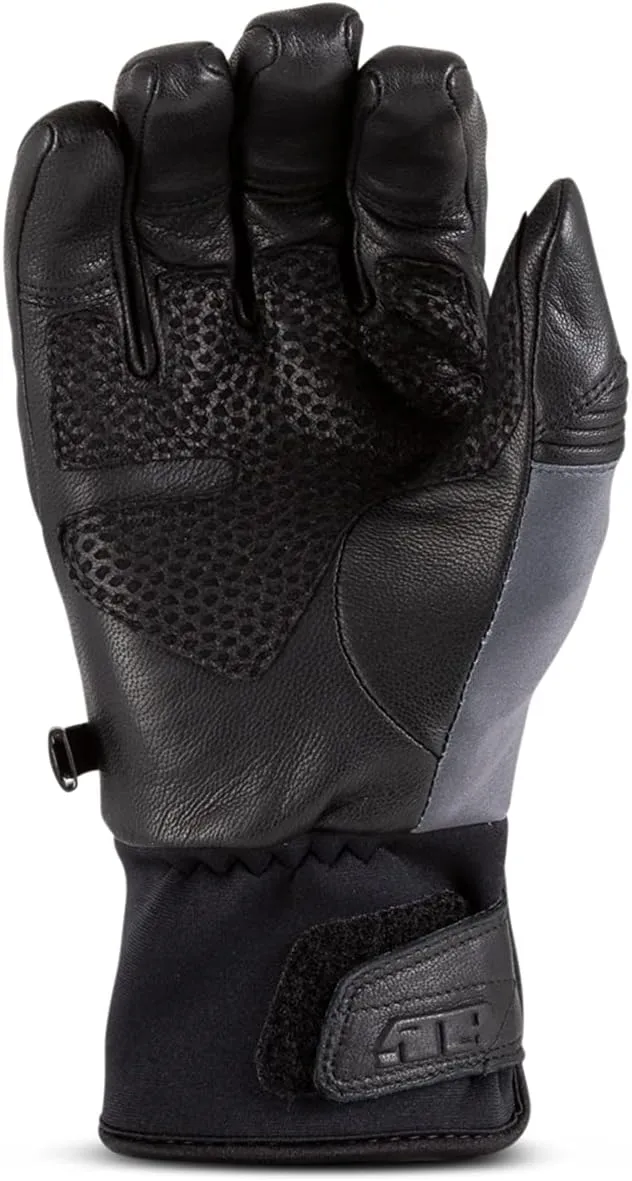
The palm material here is genuinely distinct from anything else on this list. According to Pittards, the leather manufacturer, Oiltac leather has specialized polymers built into its structure that rise to the surface as needed, maintaining grip in both wet and dry conditions rather than relying on surface texture alone. That’s a meaningfully different grip mechanism than a synthetic sure-grip palm, and it’s originally a technology developed for football receiver gloves before crossing into other grip-critical categories.
Who should buy this: Riders who prioritize bar feel and grip above all else, especially in variable wet-to-dry conditions across a single ride.
Honest limitation: With only 15 reviews, this has by far the smallest sample size on this list — a reasonable early signal, but not yet backed by the volume the Castle X or KLIM picks have.
Castle X Epic Plus — Best for Extreme Cold
Castle X Men’s Epic Plus Glove
– Strong high tenacity nylon outer shell with 3M Thinsulate insulation
– 200g top of hand, 150g palm for balanced warmth and dexterity
– Hipora windproof, waterproof, breathable membrane with DWR coating
~$89.99
★★★★★ (4.5/5 — 93 Amazon reviews)
Check Price on Amazon →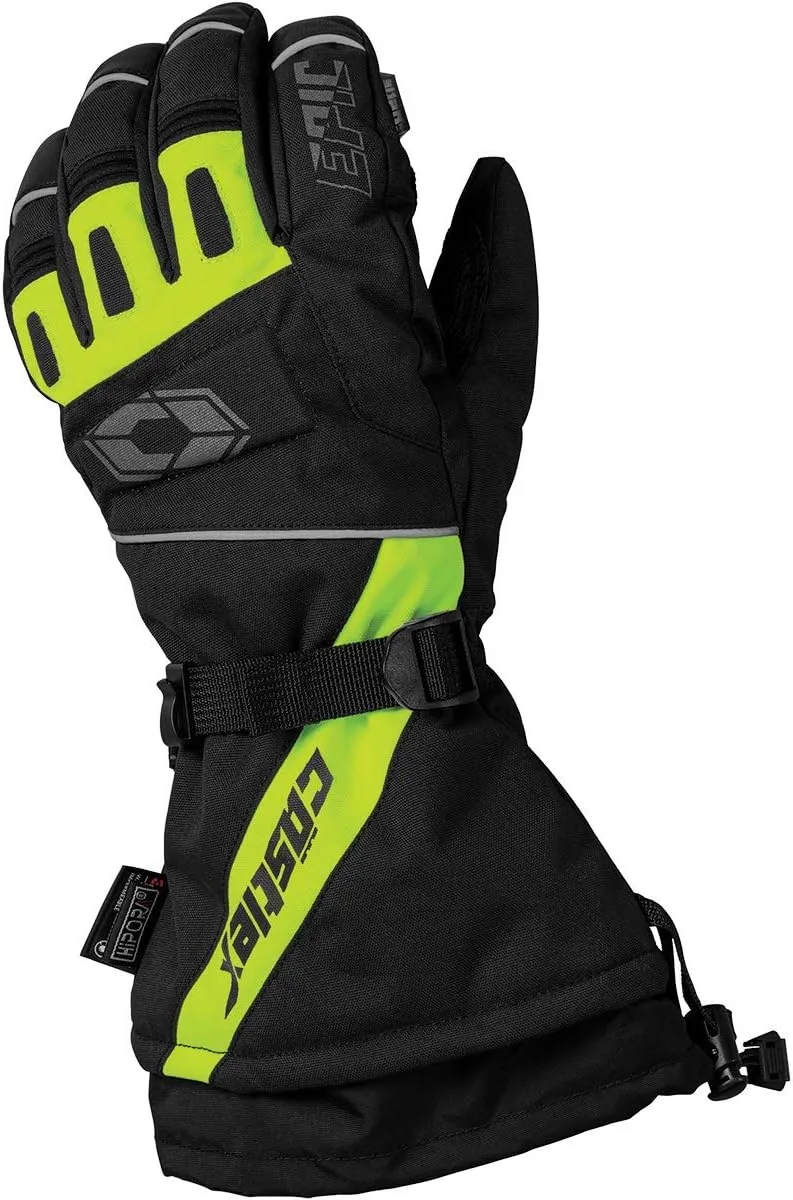
This is the heaviest insulation weight disclosed on this entire list, on both the top of the hand and, notably, the palm — 150g is a meaningfully heavier palm insulation than KLIM’s 100g. For riders who prioritize raw warmth over the most precise possible bar feel, that’s a genuine, disclosed difference rather than a marketing claim.
Who should buy this: Riders in consistently extreme cold who want maximum warmth and are willing to trade a small amount of palm sensitivity for it.
Honest limitation: Heavier palm insulation generally means slightly less precise throttle feel than a thinner-palmed option like the KLIM Klimate, which is a real trade-off worth weighing against how cold your typical rides actually get.
What Actually Separates These Four
Insulation weight and placement is the clearest real differentiator here, and three of the four gloves disclose exact gram weights rather than a vague “warm” claim. KLIM splits 100g palm and 200g top of hand; Epic Plus goes heavier on both at 150g and 200g. That’s a genuine, checkable difference in how each glove balances warmth against palm dexterity.
Grip technology varies more than “textured palm” descriptions suggest. A synthetic sure-grip palm, a leather palm, and a laser-etched Oiltac leather palm are three different physical approaches, and the 509 Stoke’s Oiltac treatment is doing something genuinely different at a material level than a textured synthetic surface.
Review volume still matters even among genuinely dedicated products. Castle X Epic-G1’s nearly 700 reviews represents far more real-world usage data than the 509 Stoke’s 15, even though both are legitimately purpose-built snowmobile gloves — worth factoring in alongside the spec comparison, not instead of it.
Decision Checklist — Pick in 60 Seconds
- Want the most-reviewed, best-rated option overall? Castle X Epic-G1 (~$80)
- Waterproofing is your top priority? KLIM Klimate (~$110)
- Bar grip and feel matter more than anything else? 509 Stoke (~$100)
- You ride in consistently extreme cold? Castle X Epic Plus (~$90)
- Actually skiing, not riding a sled? None of these are the right category — check best ski gloves for men instead.
Is It the Glove, or Something Else?
If your hands go numb specifically during or after riding rather than from cold alone, that’s worth taking seriously given the vibration research covered earlier — a glove with genuine palm structure, like the Castle X’s neoprene action panels or the Stoke’s catenary-cut palm, addresses this more directly than added insulation would. If hands stay warm but end up wet, check whether your current glove actually uses a real membrane like Gore-Tex or Hipora rather than a surface coating alone. If grip feels inconsistent between dry mornings and slushy afternoons, that’s exactly the scenario Oiltac leather is built to solve, and a synthetic palm may be underperforming for that specific reason.
Real Riding Scenarios Where the Differences Show Up
A cold, dry trail day at moderate speed is the easiest condition to buy for here — all four of these gloves handle that reasonably well, and the decision mostly comes down to personal grip and warmth preference rather than one glove clearly outperforming another.
Deep backcountry riding with long stretches of sustained speed changes the calculation. Wind exposure compounds at speed in a way a groomed-trail cruise doesn’t, and this is where the KLIM Klimate’s genuine Gore-Tex construction and heavier top-of-hand insulation earns its higher price relative to the others.
A day that starts well below freezing and climbs into slush by afternoon tests grip more than warmth. This is exactly the scenario Oiltac leather is built around — a synthetic palm that grips fine on a dry, cold morning can lose some of that confidence once conditions turn wet, while the 509 Stoke’s palm treatment is specifically engineered to hold contact adhesion through that transition.
Multi-day trips add a durability dimension the single-day comparison doesn’t fully capture. Repeated flexing at the same finger joints and repeated palm contact with the same handlebar surface is where component-level construction — neoprene action panels, catenary-cut palms, reinforced stitching — starts to separate a genuinely built-for-riding glove from one that just looks the part.
When These Aren’t the Right Choice
If you’re managing a diagnosed circulation condition or have already noticed numbness or white-finger symptoms after riding, this comparison isn’t a substitute for a physician’s guidance — it’s worth mentioning the vibration exposure specifically at your next visit rather than assuming a better glove alone resolves it.
If you’re shopping for downhill skiing or general snow play rather than riding, a dedicated ski glove is a better and often less expensive match, since you won’t need the handlebar-specific grip or vibration-dampening construction these four are built around. It’s worth comparing against genuinely budget-friendly ski glove options if riding is only occasional for you.
Honest Pros and Cons
| What Works Well Across These Four | What Genuinely Doesn’t |
| All four are legitimately purpose-built for riding, not borrowed from another sport | Two disclose exact insulation weights; two don’t, making direct comparison harder |
| A genuinely distinct grip technology (Oiltac leather) most competitors don’t offer | The Stoke’s tiny review sample means its real-world track record is still thin |
| Real, checkable differences in insulation placement between palm and top of hand | The heaviest-insulated option trades away some palm dexterity for warmth |
| A wide price range from $80 to $110 within genuinely comparable products | None of these are appropriate substitutes for a dedicated ski glove on the slopes |
Maintenance That Actually Extends These Gloves
Leather-palmed gloves specifically need periodic re-treatment to keep their water repellency working, and the 509 Stoke’s own construction notes recommend a leather treatment product to maintain the Oiltac palm’s performance over time — skipping this step lets the palm dry out and lose some of its grip characteristics faster than it otherwise would.
Membrane-based waterproofing, like KLIM’s Gore-Tex or Epic Plus’s Hipora insert, holds up differently — the membrane itself doesn’t need re-treatment, but the outer DWR coating on top of it does wear down with repeated wet exposure and benefits from periodic reapplication to keep water beading off the surface fabric.
Checking stitching at the high-flex points — finger joints and the base of the thumb — at the start of each season catches early wear before it becomes a full seam failure mid-ride. This matters more for a snowmobile glove than a casual winter glove specifically because of how much repeated flexing happens against a handlebar and throttle over a full season of regular riding.
FAQ
Does more insulation always mean a warmer glove?
Generally yes for raw warmth, but placement matters as much as total weight. A glove with heavy palm insulation, like the Epic Plus, trades some throttle feel for that warmth, while a glove like the KLIM Klimate keeps the palm thinner specifically to preserve grip sensitivity.
Is leather or synthetic better for a snowmobile glove palm?
Both work, but they solve the grip differently. A treated leather like Pittards Oiltac uses polymers built into the material itself to maintain grip wet or dry, while a synthetic sure-grip palm relies more on surface texture. Neither is universally superior — it comes down to which grip mechanism you personally prefer under your hands.
Should I size up if I plan to wear a liner underneath?
Check the specific glove’s own sizing guidance rather than assuming a universal rule, since insulation placement and palm thickness vary enough between these four that a liner-compatible size on one may not translate directly to another.
How long should a dedicated snowmobile glove actually last?
With reasonable care, a well-built pair from an established snowmobile brand can reasonably last several seasons of regular riding, though palm-area grip material is typically the first component to show wear given how much direct handlebar contact it takes on.
Final Thoughts
All four of these are genuinely built around what riding actually demands, not adapted from a different sport’s design. If you want the broadest track record backing your purchase, Castle X Epic-G1 has it. If bar feel is everything to you, the Stoke’s Oiltac leather is doing something the others simply aren’t. And if you’re weighing whether you need a dedicated riding glove at all versus what you already own for skiing, it’s worth checking how ski gloves should genuinely fit before assuming one glove can do both jobs well.
Affiliate Disclosure: This post contains affiliate links. If you buy through them, we may earn a commission at no extra cost to you. It never changes which gloves we recommend. Prices correct as of the publish date, subject to change.