QUICK ANSWER: The Glacier Glove Ice Bay (~$45) is the strongest overall pick — the deepest buyer feedback of the five at over 1,700 reviews, sharkskin-textured grip, and blind-stitched, glued seams for real waterproofing. If waterproofing is your single top priority, the KastKing IceRiver (~$33) uses 2.2mm neoprene with bound, stitched, and glued seams specifically engineered against water intrusion. And on a tight budget, the Striker Trekker (~$23) is explicitly built and labeled as dedicated ice fishing gear. Not sure whether a general winter glove covers what ice fishing actually needs? Ski glove finder is a faster starting point than guessing from a product photo.
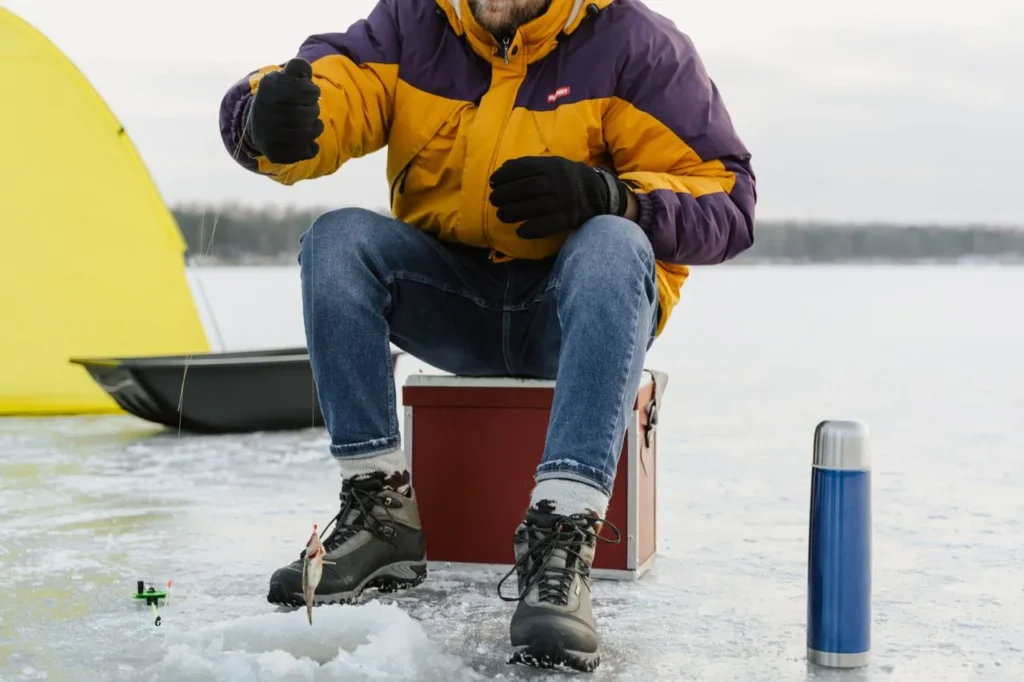
Sitting on a bucket over a hole in the ice for hours puts different demands on a glove than skiing does. Your hands are alternating between staying warm in still, dry air and getting genuinely wet handling line, bait, and fish. That’s the specific problem this comparison is built around, not general winter warmth alone.
- Why Wet-Cold Is a Different Problem Than Dry-Cold
- All 5 — Quick Comparison
- How These Were Compared
- Glacier Glove Perfect Curve — Versatile Everyday Use
- Striker Trekker — Best Budget, Purpose-Built
- KastKing IceRiver — Best Waterproofing
- Glacier Glove Ice Bay — Best Overall
- ICEARMOR Edge X — Best Insulation Mapping
- What Actually Separates These Five
- Decision Checklist — Pick in 60 Seconds
- Is It the Glove, or Something Else?
- When These Aren't the Right Choice
- Honest Pros and Cons
- FAQ
- Final Thoughts
Why Wet-Cold Is a Different Problem Than Dry-Cold
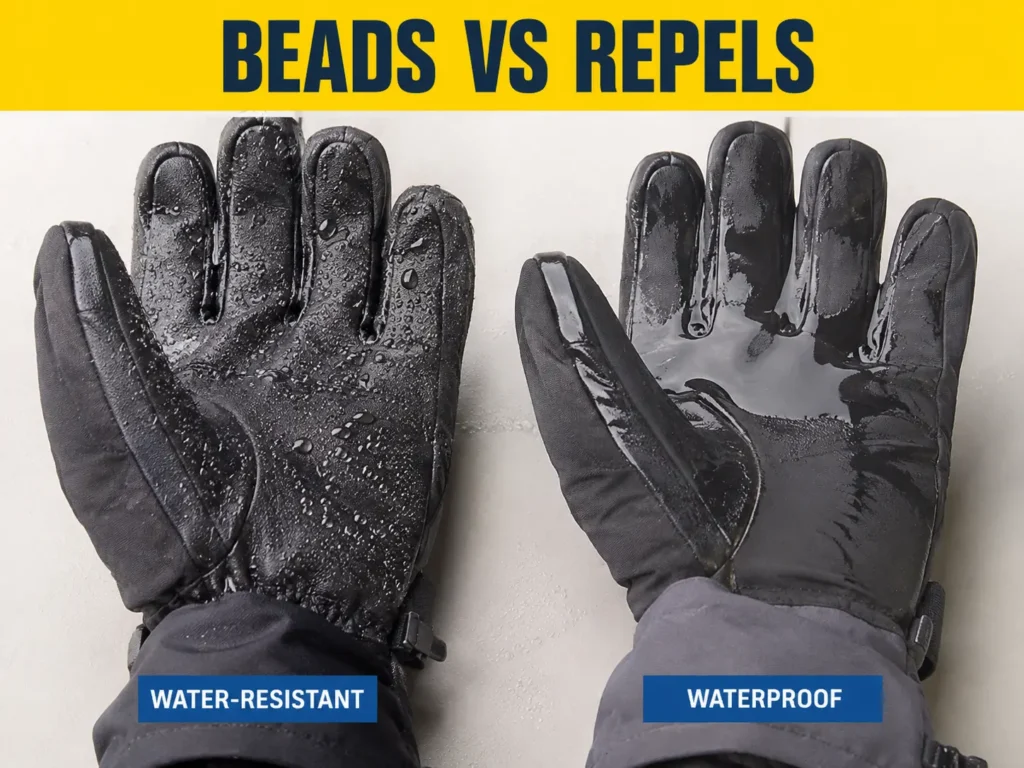
This is the detail that separates a good ice fishing glove from a good ski glove, even though both deal with genuinely cold temperatures. According to the Appalachian Mountain Club, neoprene’s insulating ability comes from millions of tiny, sealed nitrogen bubbles trapped inside the material itself, which is why it keeps insulating even when the outer surface gets wet — a very different mechanism than a dry insulation layer like Thinsulate, which needs to stay dry to keep trapping warm air effectively.
That’s exactly why neoprene shows up across most of the dedicated picks on this list. Ice fishing means your hands are in direct, repeated contact with wet line, wet fish, and wet gear — a fundamentally wetter activity than most skiing, where snow contact is more incidental.
All 5 — Quick Comparison
| Glove | Best For | Insulation/Waterproofing | Rating | Price |
| Glacier Glove Perfect Curve | Versatile everyday use | 2mm TechLine neoprene, fleece-lined | 4.3★ (849 reviews) | ~$58 |
| Striker Trekker | Best budget, purpose-built | 200g/150g insulation, Hipora membrane | 4.1★ (20 reviews) | ~$23 |
| KastKing IceRiver | Best waterproofing | 2.2mm neoprene, glued/stitched seams | 4.4★ (1,541 reviews) | ~$33 |
| Glacier Glove Ice Bay | Best overall | 2mm neoprene, sharkskin grip texture | 4.4★ (1,752 reviews) | ~$45 |
| ICEARMOR Edge X | Best insulation mapping | 3M Thinsulate, 150g palm/200g back | 4.5★ (23 reviews) | ~$50 |
How These Were Compared
Each glove was evaluated on insulation type, waterproofing method, palm grip material, and how its price and buyer feedback stack up against the others in this specific category. Most of these are explicitly built and marketed for ice fishing; one is a genuinely versatile neoprene glove that anglers commonly use even though it isn’t marketed around ice fishing specifically, and that distinction is noted honestly below.
Glacier Glove Perfect Curve — Versatile Everyday Use
Glacier Glove Men’s Perfect Curve Waterproof Gloves
– TechLine neoprene with 2mm fleece lining for warmth and comfort
– Seamless palm design minimizes friction and boosts dexterity
– Pre-curved fingers with Pro Strap adjustable fit
~$57.70
★★★★☆ (4.3/5 — 849 Amazon reviews)
Check Price on Amazon →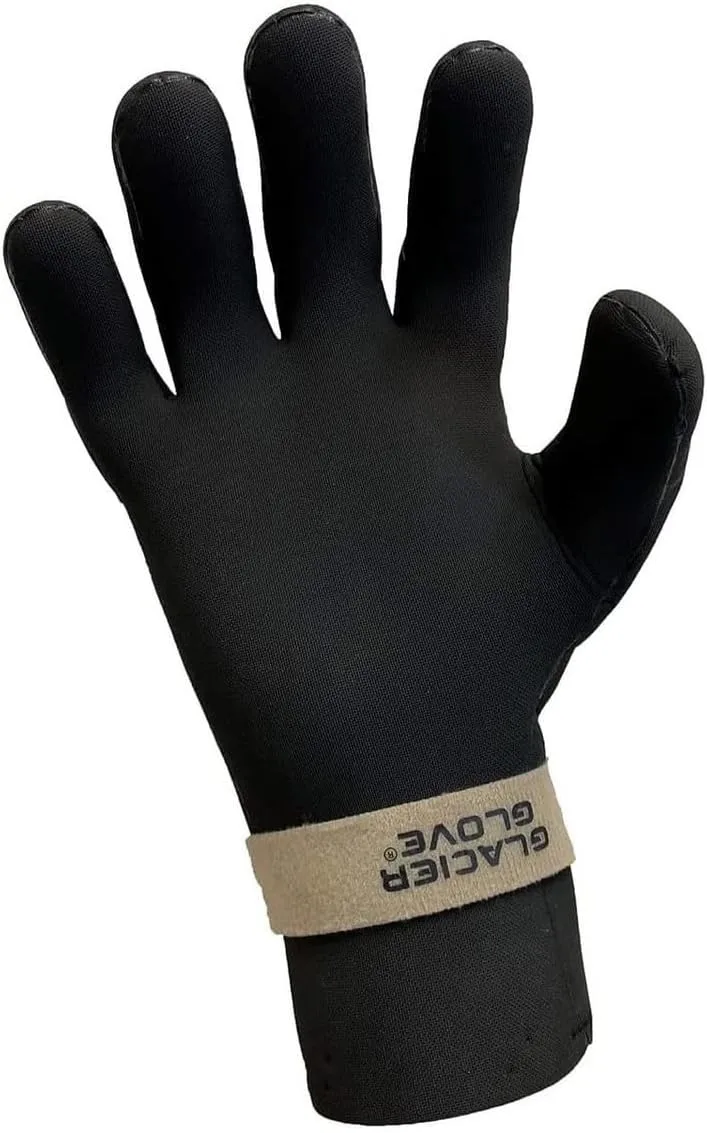
This glove’s own listing frames it as a general-purpose outdoor glove for skiing, kayaking, cycling, and fishing rather than an ice-fishing-specific product, and that’s worth stating plainly. What it does have going for it on the ice is genuine: real neoprene construction, a seamless palm, and pre-curved fingers designed to reduce hand fatigue over long stretches of use — all of which translate reasonably well to a day spent jigging over a hole.
Who should buy this: Anglers who want one versatile glove that also works for other cold-weather activities, rather than a single-purpose ice fishing product.
Honest limitation: It isn’t marketed or reinforced specifically around ice fishing the way the other four picks on this list are, so features like abrasion resistance near a fishing hole or specific palm grip texture for wet lures aren’t part of its design brief.
Striker Trekker — Best Budget, Purpose-Built
Striker Trekker Ice Fishing Gloves
– Rugged 300D shell with synthetic palm for easy on/off
– 200g back and 150g palm insulation with Hipora waterproof insert
– Seamless wraparound fingertips for abrasion resistance and grip
~$22.99
★★★★☆ (4.1/5 — 20 Amazon reviews)
Check Price on Amazon →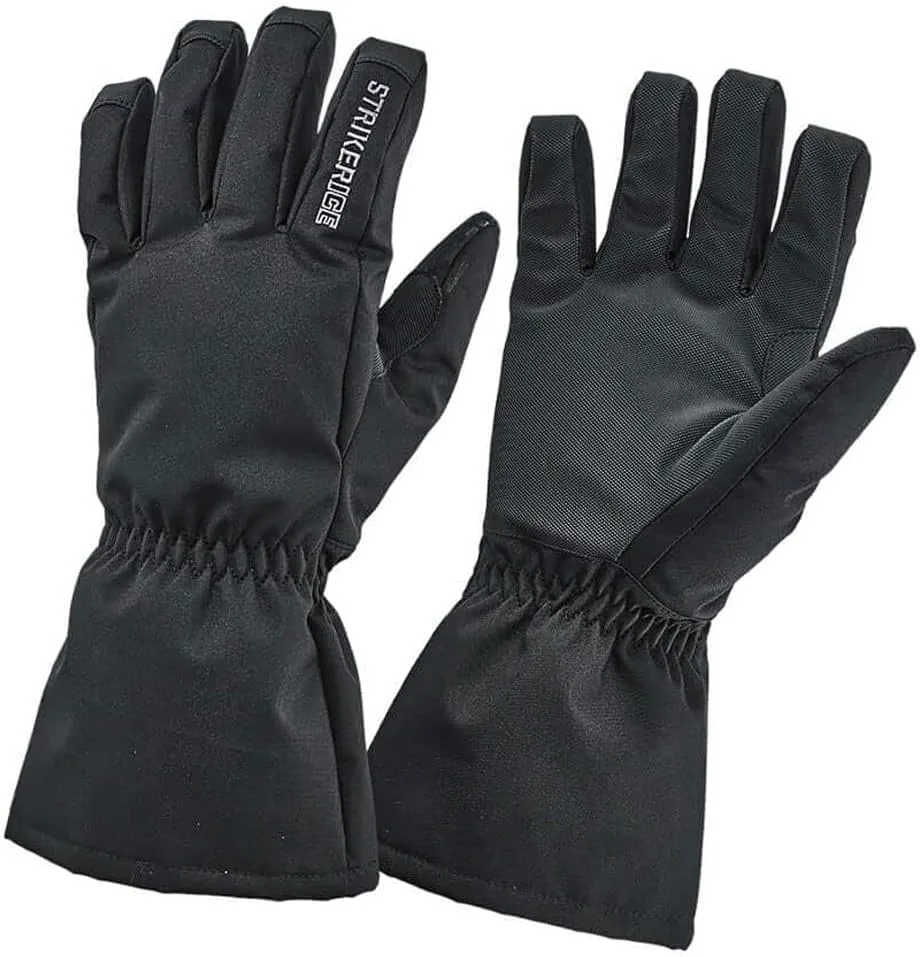
This is the least expensive glove on the list, and it’s explicitly tagged and marketed as ice fishing gear rather than a general crossover product. The insulation mapping — heavier on the back of the hand, lighter on the palm — is a real, deliberate design choice that trades a little raw palm warmth for better feel when handling line and bait.
Who should buy this: Budget-focused anglers who still want a glove purpose-built for the activity rather than a repurposed general winter glove.
Honest limitation: With only 20 reviews, this has the smallest sample size on the list — a reasonable early signal, but the thinnest real-world track record here.
KastKing IceRiver — Best Waterproofing
KastKing IceRiver Fishing Gloves
– 100% waterproof with 2.2mm neoprene and bound, glued seams
– Fleece-lined for warmth, stays pliable in extreme cold
– Anti-slip embossed palm for extra gripping strength
~$32.99
★★★★☆ (4.4/5 — 1,541 Amazon reviews)
Check Price on Amazon →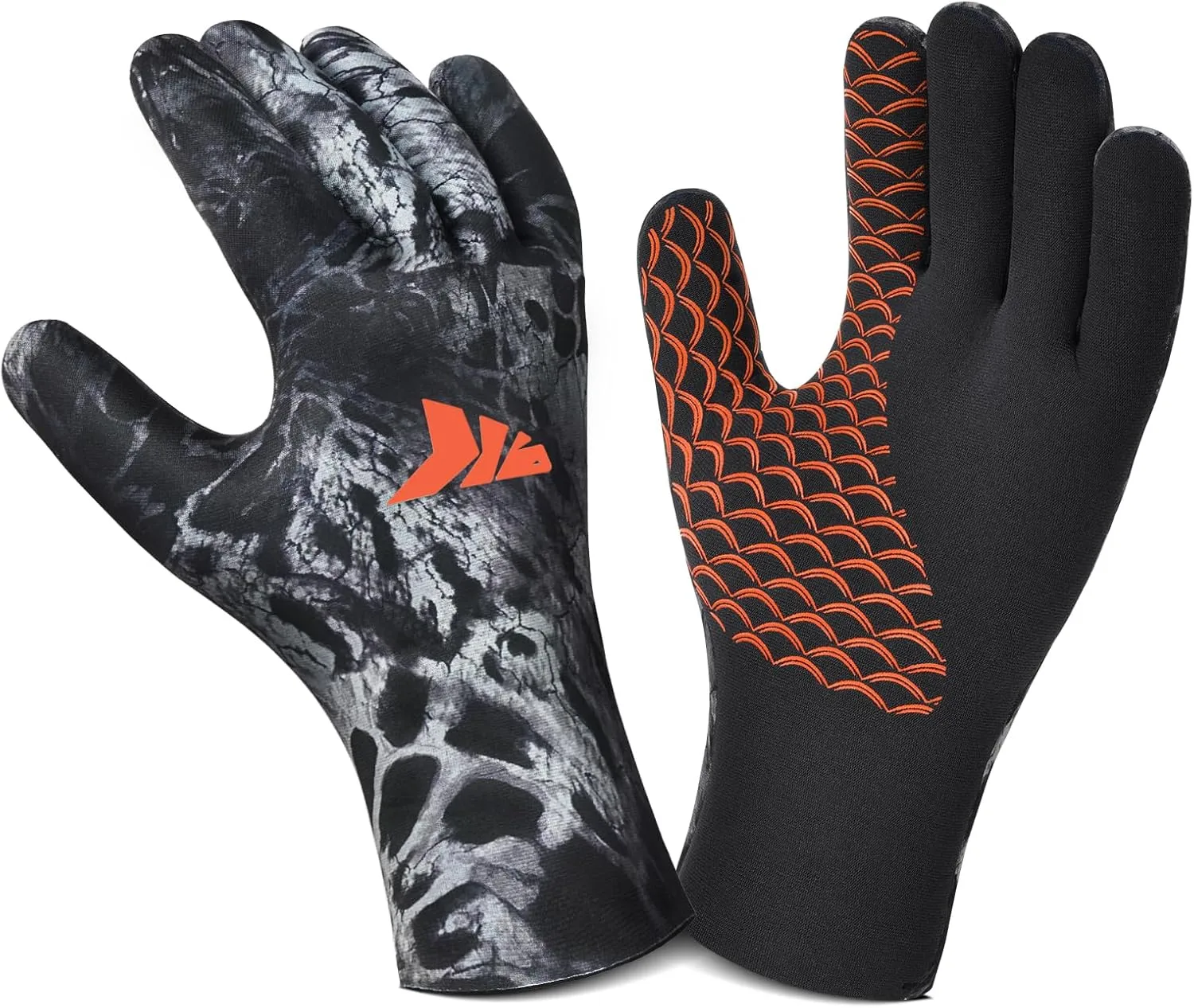
The seam construction here is worth calling out specifically. Bound, stitched, and glued seams is a more thorough waterproofing approach than stitching alone, and it directly addresses the most common failure point on a wet-condition glove — water working its way in through the seams rather than through the material itself.
Who should buy this: Anglers who prioritize keeping water out above all else, especially on days with slush or standing water near the fishing hole.
Honest limitation: At 2.2mm, the neoprene here is slightly thicker than some competitors, which can mean a small trade-off in fine dexterity compared to a thinner-palmed option.
Glacier Glove Ice Bay — Best Overall
Glacier Glove Men’s Ice Bay Waterproof Gloves
– 2mm fleece-lined TechLine neoprene traps heat while staying waterproof
– Sharkskin texture palm and fingers for secure grip on wet gear
– Blind stitched and glued seams for a watertight seal
~$44.98
★★★★☆ (4.4/5 — 1,752 Amazon reviews)
Check Price on Amazon →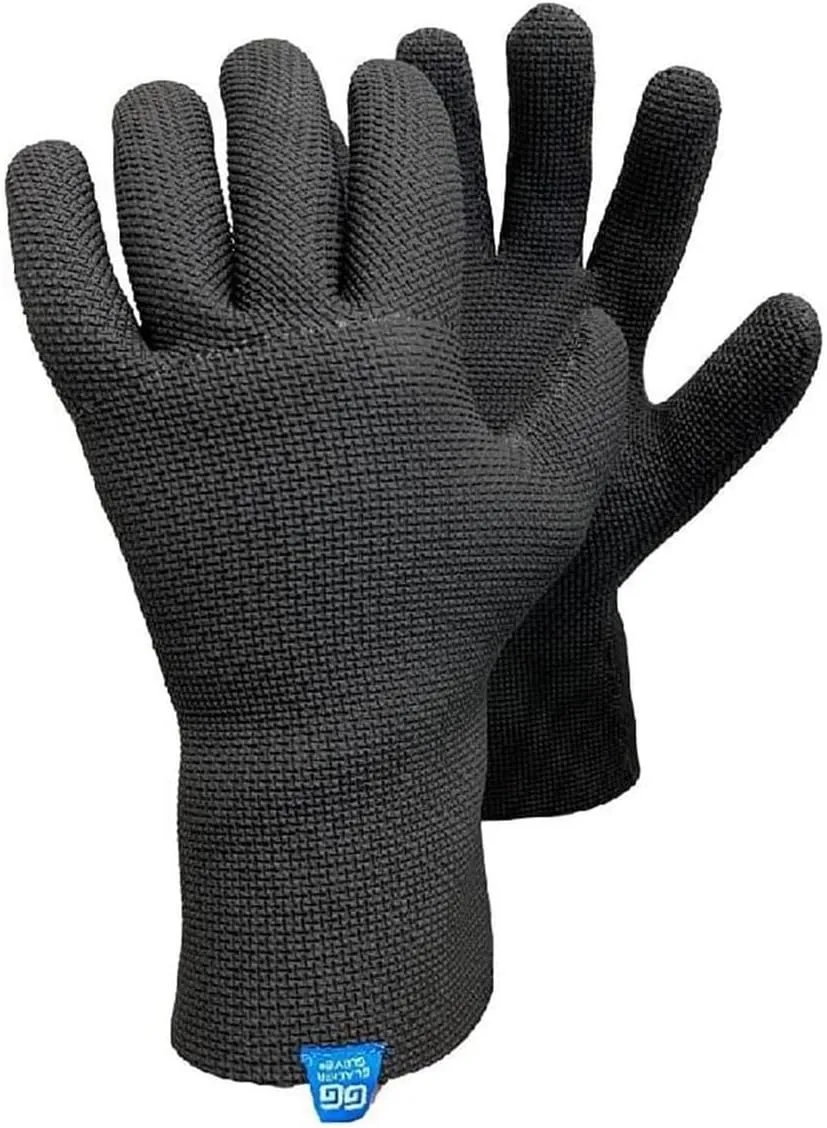
This is the deepest buyer feedback of any glove on this list, and it’s backed by real-world recognition beyond online reviews alone — Glacier Glove’s Ice Bay line has been independently recognized by outdoor gear publications as a top waterproof ice fishing pick. The sharkskin texture is a genuinely distinct grip surface compared to a smooth or embossed palm, aimed specifically at holding onto wet gear and slippery fish.
Who should buy this: Anglers who want the most-reviewed, best-recognized option on this list, with genuine grip performance for handling wet tackle and fish.
Honest limitation: At roughly $45, it sits in the middle of this list’s price range — not the cheapest option, though the review depth and grip performance justify the gap over the budget pick.
ICEARMOR Edge X — Best Insulation Mapping
ICEARMOR Edge X Ice Fishing Gloves
– 3M Thinsulate: 150g palm and 200g back insulation, mapped for warmth
– Dri-Vent membrane locks out water while letting moisture escape
– Textured polyurethane palm with Polysuede overlays for durability
~$49.92
★★★★★ (4.5/5 — 23 Amazon reviews)
Check Price on Amazon →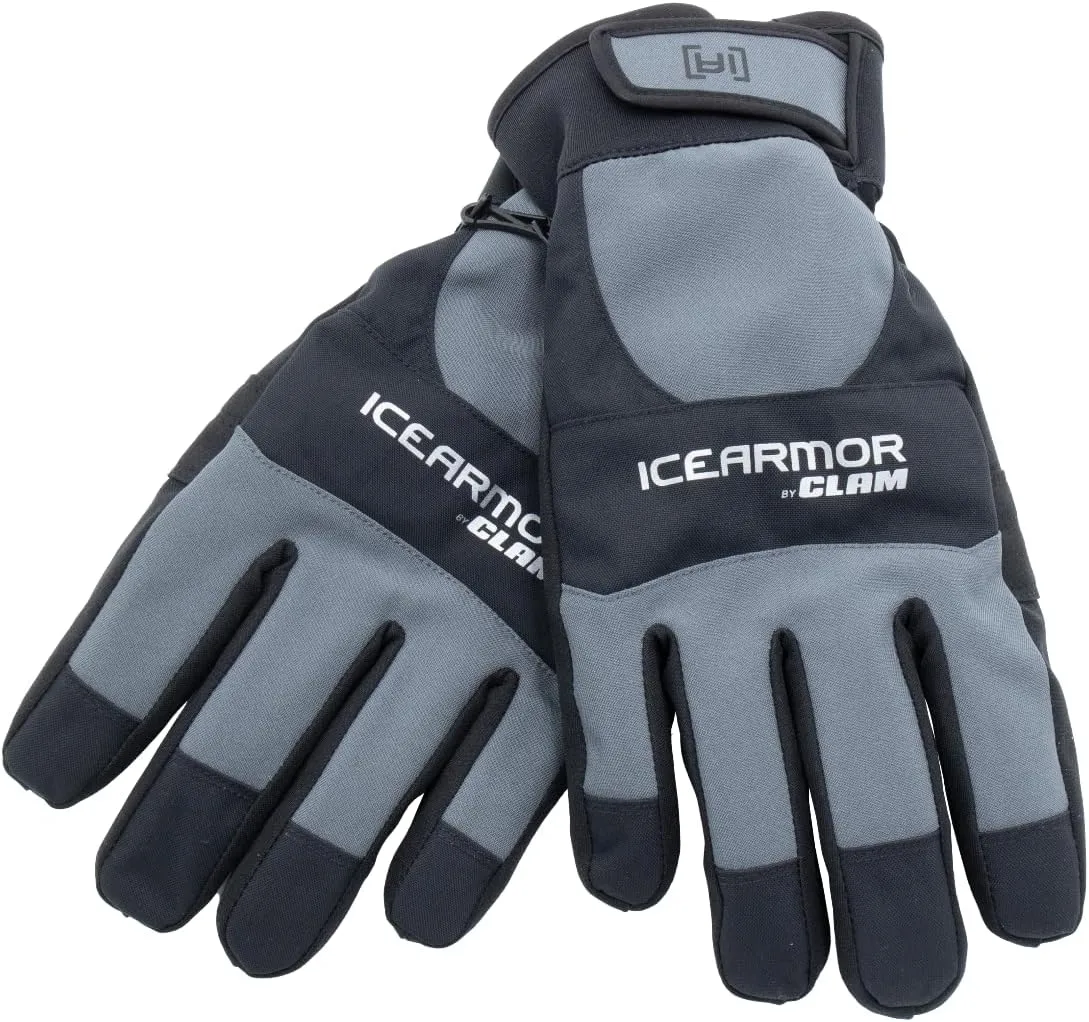
This is the highest-rated glove on the list, and it’s built by Clam Outdoors specifically for ice fishing rather than adapted from another category. The insulation mapping mirrors the logic behind the Trekker’s design — more warmth where you need it most, less bulk where dexterity matters — but pairs it with a genuine waterproof membrane rather than relying on the shell fabric alone.
Who should buy this: Anglers who want the most purpose-engineered option here, with insulation specifically distributed for the demands of handling gear in the cold.
Honest limitation: At 23 reviews, the sample size is small, though the rating and the brand’s established reputation in this specific category offset that somewhat.
What Actually Separates These Five
Neoprene and mapped synthetic insulation solve the wet-cold problem differently. Neoprene keeps insulating even when wet because of its sealed-bubble structure, while a Thinsulate-and-membrane approach like the ICEARMOR pick relies on the waterproof membrane holding up to keep the dry insulation actually dry.
Seam construction is where waterproofing claims actually get tested. A glove described as “waterproof” that only relies on the base material, without reinforced seams, is more likely to leak at the stitching than through the material itself — which is exactly what KastKing’s bound-stitched-glued approach and Ice Bay’s blind-stitched-glued approach are both built to prevent.
Purpose-built and genuinely versatile aren’t the same claim, and it’s worth knowing which one you’re actually buying. Four of these five are built and marketed specifically around ice fishing. The Perfect Curve is a genuinely capable neoprene glove that many anglers use successfully, but its own design brief is broader than this one activity.
Decision Checklist — Pick in 60 Seconds
- Want the most-reviewed, best-recognized option? Glacier Glove Ice Bay (~$45)
- Waterproofing is your single top priority? KastKing IceRiver (~$33)
- Tight budget, still want purpose-built gear? Striker Trekker (~$23)
- Want the most engineered insulation mapping? ICEARMOR Edge X (~$50)
- Want one glove that also works for other cold-weather activities? Glacier Glove Perfect Curve (~$58)
- Actually skiing, not ice fishing? None of these are the right category — check best ski gloves for men instead.
Is It the Glove, or Something Else?
If your fingers go numb specifically while handling line or bait rather than just sitting still, that’s worth understanding as a real, documented effect rather than just personal cold sensitivity. A controlled study on hand and finger dexterity found that dexterity and grip strength decline measurably as skin temperature drops, independent of overall body warmth — which is exactly why a well-insulated glove with a poor palm design can still leave you fumbling with a hook. A thinner, more mapped-insulation option like the Trekker or ICEARMOR addresses that better than simply adding bulk.
If hands stay dry but still feel cold, check whether your glove’s insulation is adequate for your actual wind chill, since even a fully waterproof glove doesn’t guarantee sufficient warmth on its own. If water is getting in despite a “waterproof” label, the seams — not the base material — are the most likely failure point, and that’s specifically what the glued-seam construction on KastKing and Ice Bay is built to prevent.
When These Aren’t the Right Choice
If you’re managing a diagnosed circulation condition, or you’ve already experienced concerning numbness during past cold-weather outings, this comparison isn’t a substitute for a physician’s guidance on appropriate cold and wet-weather hand protection.
Ice fishing carries real risks beyond glove choice, and it’s worth taking those seriously alongside gear decisions. According to the Minnesota DNR, cold water immersion requires immediate rewarming and, in moderate to severe cases, real medical attention — a reminder that ice safety and cold water awareness matter as much as what’s on your hands. If wind and general cold exposure are as much a concern for you as the wet-ice-specific conditions, it’s worth checking how cold is genuinely too cold to be outside skiing or fishing for the broader temperature and wind chill thresholds involved. It’s also worth comparing against affordable ski glove options if you split time between ice fishing and general winter activities and want gear that reasonably covers both.
Honest Pros and Cons
| What Works Well Across These Five | What Genuinely Doesn’t |
| Four of five are explicitly purpose-built for ice fishing, not adapted from another sport | The fifth is a genuinely capable but general-purpose neoprene glove |
| Two use reinforced, glued seam construction specifically to prevent water intrusion at the weakest point | Thicker neoprene options trade some fine dexterity for that waterproofing margin |
| A real insulation-mapping approach (lighter palm, heavier back of hand) appears on two picks | Smaller-sample picks (Trekker, ICEARMOR) have thinner real-world review data than the two Glacier Glove options |
| A wide price range from roughly $23 to $58 within genuinely comparable products | None of these substitute for broader ice safety practices beyond hand protection |
FAQ
Is neoprene or synthetic insulation better for ice fishing gloves?
Both work, but they solve the wet-cold problem differently. Neoprene keeps insulating even when its surface gets wet, since its insulating property comes from sealed air bubbles in the material itself. A synthetic insulation and membrane combination, like 3M Thinsulate with a waterproof insert, relies on that membrane staying intact to keep the dry insulation actually dry.
Why do some ice fishing gloves use less insulation on the palm than the back of the hand?
This mapped approach trades a small amount of raw palm warmth for better feel and dexterity when handling line, bait, and tackle, while keeping the back of the hand — which does less fine motor work — more heavily insulated for overall warmth.
Can a general winter glove work for occasional ice fishing?
For occasional, shorter outings, a well-made general winter or neoprene glove can reasonably work. For regular ice fishing, a purpose-built option with mapped insulation and reinforced waterproof seams addresses the specific wet-cold demands of the activity more directly.
How do I know if a glove’s waterproofing will actually hold up?
Check specifically how the seams are constructed, not just whether the base material is described as waterproof. Bound, stitched, and glued seams — the approach used by both the KastKing and Ice Bay picks here — address the seams directly, which are typically the first place a “waterproof” glove actually starts to leak.
Final Thoughts
Match the glove to how you actually fish, not just the general “ice fishing” label. If you want the deepest track record backing your purchase, the Glacier Glove Ice Bay has it. If keeping water out is your single biggest concern, KastKing’s seam construction is built specifically around that. And if you split your winter between ice fishing and other cold-weather activities, a genuinely versatile option like the Perfect Curve is worth the trade-off in ice-fishing-specific features for that flexibility.
Affiliate Disclosure: This post contains affiliate links. If you buy through them, we may earn a commission at no extra cost to you. It never changes which gloves we recommend. Prices correct as of the publish date, subject to change.