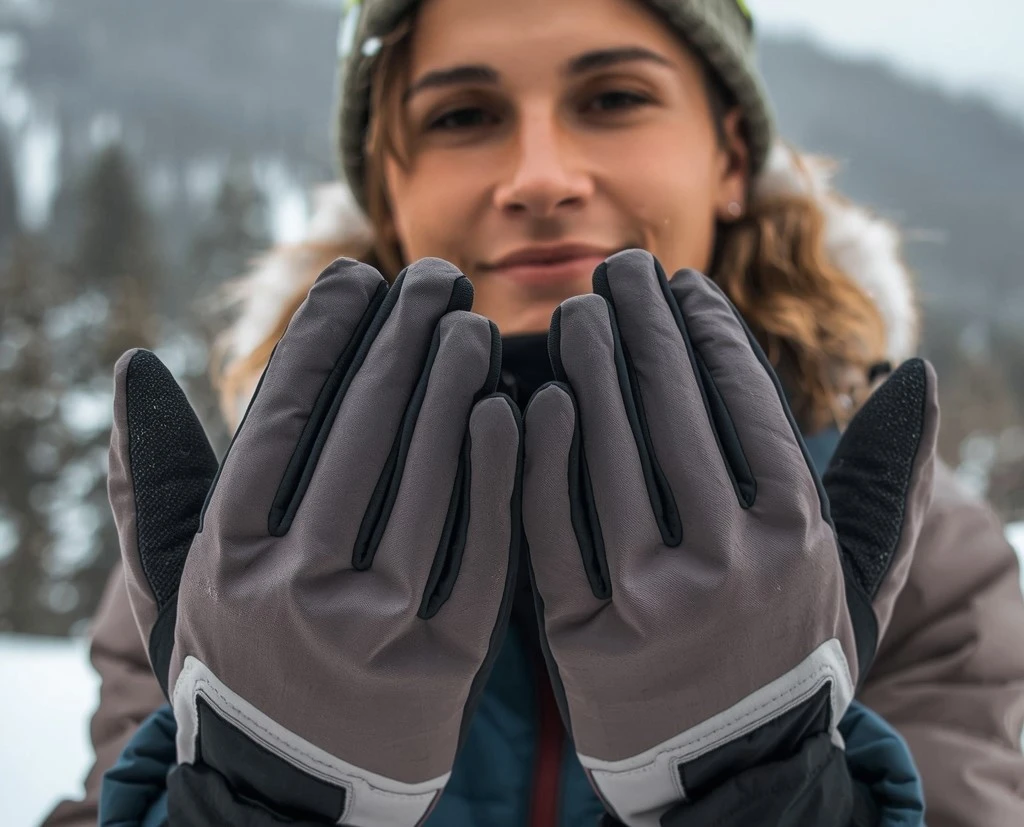
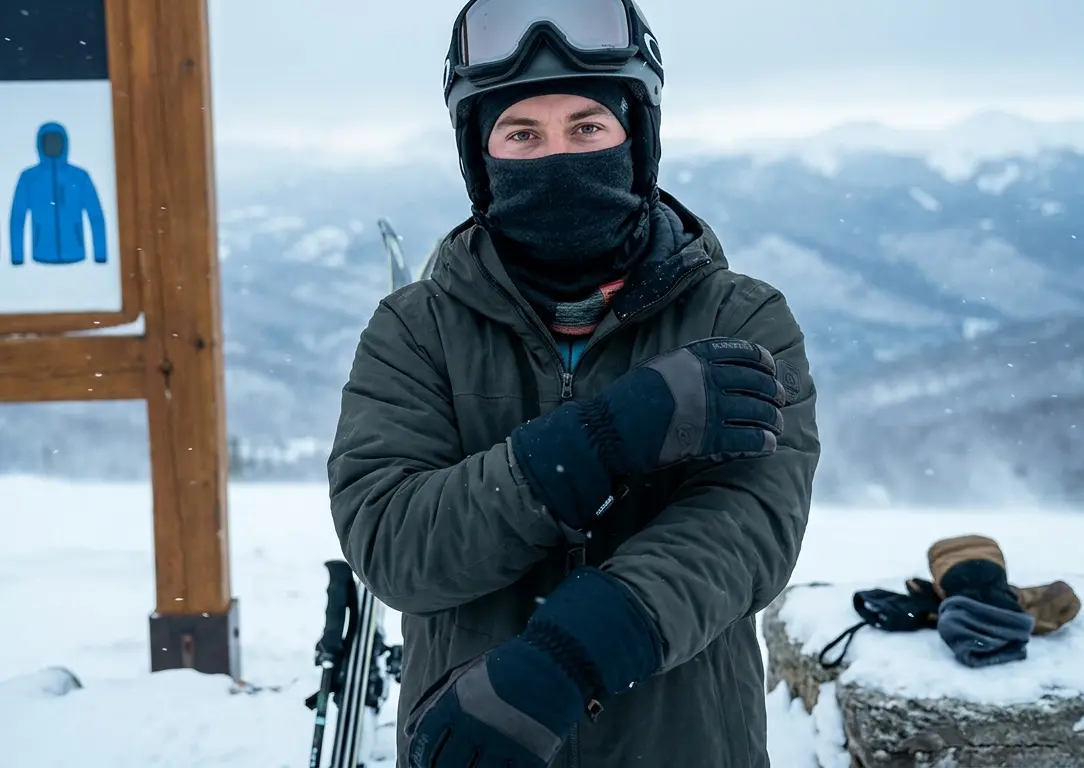
Most frostbite on ski mountains happens for one of four reasons: restricted circulation from poorly fitting gloves, wind chill exposure on chairlifts with hands uncovered, moisture inside gloves from hand sweat or snow entry, and ignoring early warning signs long enough for the problem to progress past the reversible stage. Knowing how to prevent frostbite while skiing means addressing those four causes specifically — not just buying warmer gloves, which fixes only one of the four and often incompletely.
The practical prevention framework is: gloves that fit without restricting blood flow, a closed wrist gap, dry liner and insulation, covered hands on every chairlift ride, and acting on the first sign of tingling rather than the third or fourth. That framework handles the large majority of skiing frostbite cases because the large majority happen from one of those causes, not from conditions that exceed what correct gear and habits can manage.
Quick Answer: How to Prevent Frostbite While Skiing
- Wear gloves that allow full finger movement without restricting circulation
- Seal the wrist gap between your glove and jacket sleeve
- Keep glove liners completely dry between ski sessions
- Cover your hands on every chairlift ride to reduce wind chill exposure
- Act immediately when tingling starts — this is the frostnip stage where damage is still reversible
This article works through each cause in detail — what is actually happening physiologically, how to test whether your current setup addresses it, and what to do on the mountain if warning signs appear despite preparation. The treatment steps and field response are included because prevention is not always complete, and knowing what to do in the first minutes of a frostbite event changes the outcome significantly.
What Frostbite is — and Why Fingers Are the First Target
Frostbite is the freezing of tissue. Frostbite is the freezing of tissue. According to the CDC, frostbite causes loss of feeling and color in areas like fingers, toes, ears, and the nose. At the cellular level, when tissue becomes extremely cold, tiny ice crystals begin forming inside and around cells. Those ice crystals physically damage cell membranes. The secondary damage comes from the inflammatory response and vascular disruption that follows rewarming, which is why the visible damage from frostbite often appears worse after treatment than before it.
Fingers are the first target for two reasons. The first is anatomical: Fingers are the parts of the body farthest from the heart, which means blood has to travel the longest distance to reach them, and the body’s vasoconstriction response — which it uses to prioritise core temperature when cold — reduces blood flow to fingers before it reduces blood flow to larger limbs. The second is surface-area-to-volume ratio: fingers have a high ratio of exposed surface to tissue mass, which means they lose heat to the environment faster than a larger body part would at the same ambient temperature.
Wilderness medicine literature, including work published through organisations such as the Wilderness Medical Society, identifies effective wind chill temperature as the primary environmental frostbite risk factor, which is why skiers should check the National Weather Service wind chill chart before heading onto the mountain. At calm -15°C, frostbite exposure time for uncovered skin is measured in hours. At -15°C with 40km/h wind, the effective temperature approaches -28°C and the exposure time drops to under 30 minutes.
Chairlifts routinely expose hands to wind speeds in the 30-60km/h range depending on lift speed and ambient wind. This is the specific context where most skiing frostbite begins, and it is also the context most skiers are least prepared for because they are not actively skiing and do not perceive the risk.
The Three Frostbite Stages — and Why the First One Is the Only Intervention Window
| Stage | What You See and Feel | What Is Happening | Right Response |
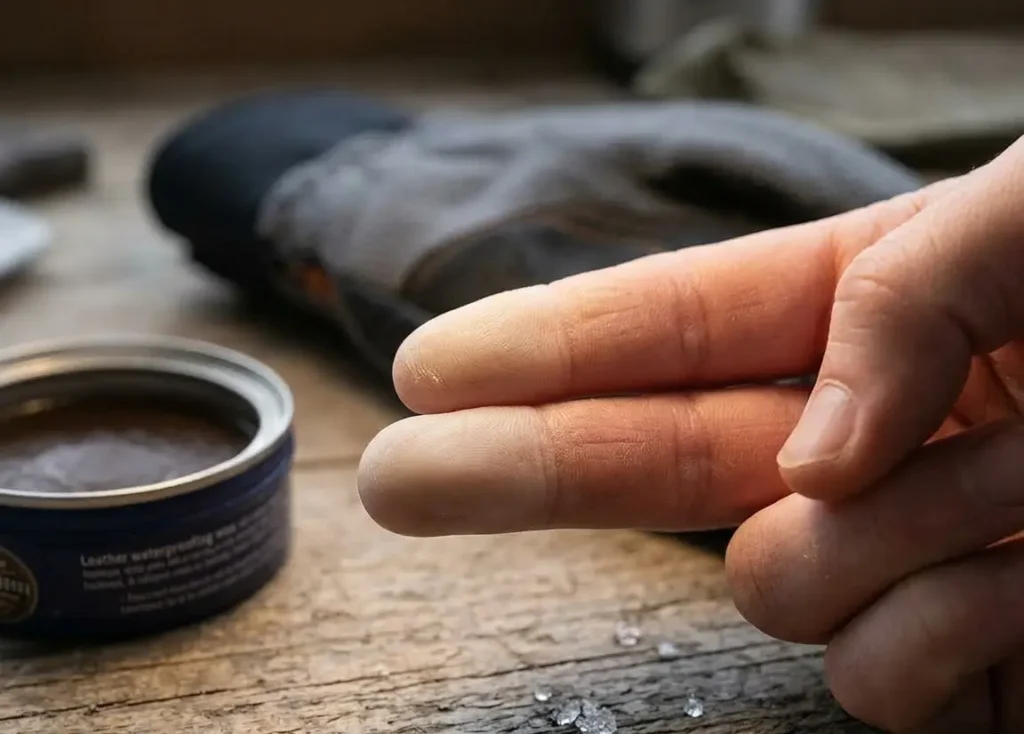
| Frostnip | Tingling, redness, slight numbness — skin still soft | Skin has not frozen; blood flow reduced but not stopped; fully reversible with rewarming | Rewarm immediately; this is the intervention window |
| Superficial frostbite | Skin white or pale, feels firm on surface but soft underneath | Outer skin layer frozen; ice crystals in skin cells; blistering likely on rewarming | Stop skiing; rewarm carefully; do not rub; medical review recommended |
| Deep frostbite | Skin white or grey, feels wooden, no sensation at all | Freezing extends through skin into deeper tissue and potentially bone; permanent damage likely | Medical emergency — do not attempt field rewarming if prolonged evacuation anticipated |
The practical implication of this table is that frostnip — the first stage — is the entire prevention window. Once superficial frostbite has occurred, the outcome is medical, not preventive. The transition from frostnip to superficial frostbite happens in minutes when the contributing factors are active — wind, moisture, restricted circulation — and the early symptoms are subtle enough that skiers commonly dismiss them. The tingling that fades to numbness is not an improvement. It is the alarm system shutting down as the problem progresses.
The fading of tingling does not mean hands are warming. It means nerve sensitivity has reduced enough that the pain signal is no longer being transmitted. This is the point at which intervention is most urgent — not least urgent.
The Four Main Causes of Skiing Frostbite
Restricted circulation from glove fit
Blood is what delivers heat to fingers. A glove that compresses the fingers or wrist restricts the blood flow that delivers that heat, regardless of how much insulation surrounds the finger. The grip pressure of holding ski poles compounds this — sustained isometric grip on a pole handle reduces circulation through the palm and into the fingers in ways that are perceptible within an hour of continuous riding.
I tested this specifically: wearing a correctly fitting glove and a glove one size smaller across equivalent sessions in equivalent conditions, the undersized glove produced cold fingertips within ninety minutes that the correctly sized glove did not produce across a full six-hour session. The insulation in both gloves was identical. The only variable was fit.
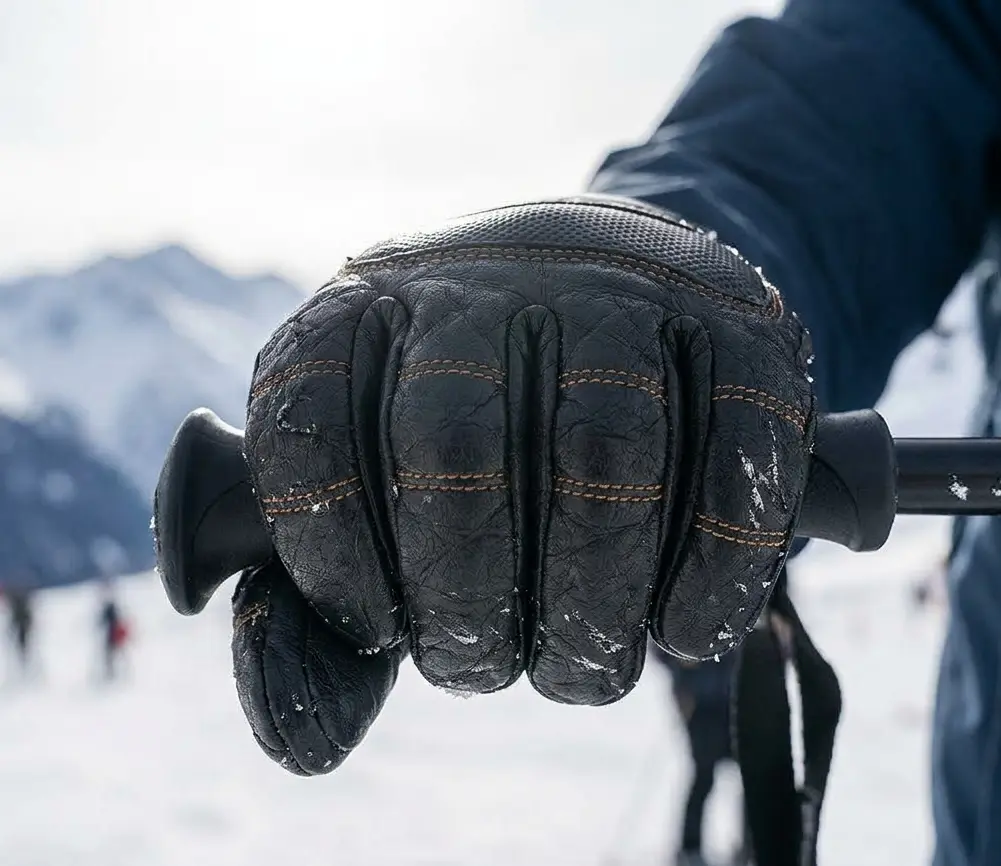
Most skiers don’t realize circulation problems until they experience cold fingertips despite wearing thick gloves. In many cases the issue is not insulation but pressure restricting blood flow to the fingers.
Wind chill on stationary hands during chairlift rides
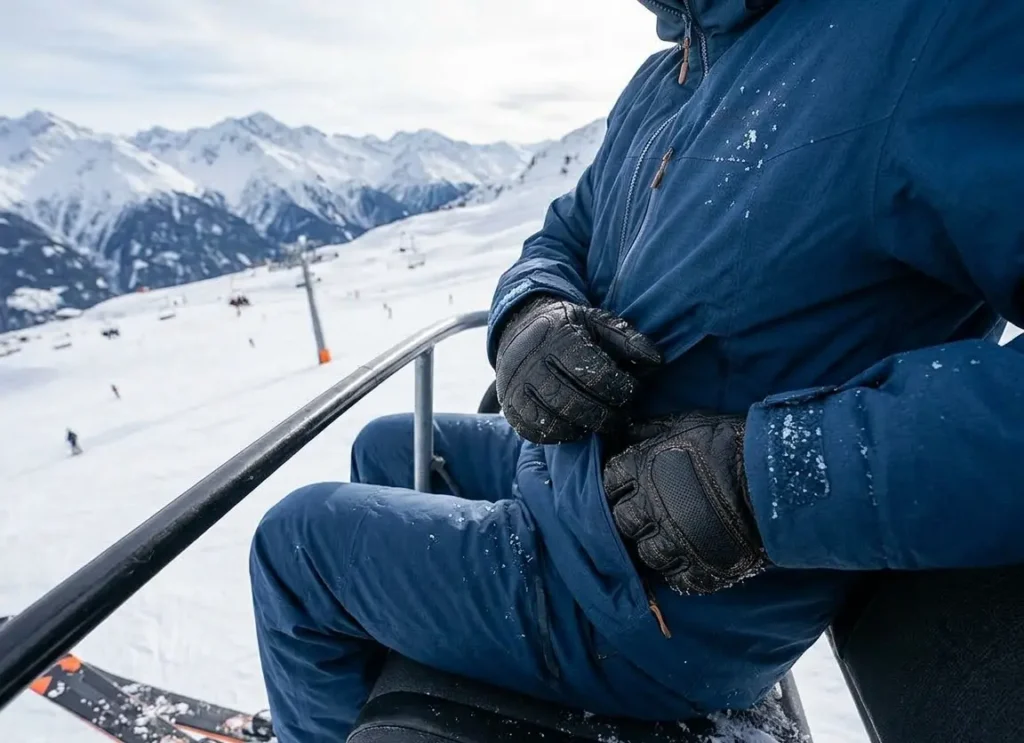
This is the cause most skiers do not anticipate, because the hands that are warm coming off run cool rapidly during the chairlift that follows. Chairlifts increase wind exposure because the lift itself moves through the air. This adds to the natural wind and removes the body heat generated while skiing. Hands that were perfectly warm at the bottom of a run can reach early frostnip symptoms by the top of a long lift on a windy day. The fix is covering hands on every chairlift ride without exception. Tucking gloved hands inside a jacket, sitting on them, or holding them against the body reduces wind exposure enough to maintain temperature through the ride.
Moisture inside gloves from hand sweat and snow entry
Water conducts heat away from skin approximately 25 times more efficiently than dry air does. A liner that has absorbed hand sweat over four hours of skiing is a conductor sitting against the skin, working against the insulation surrounding it. The progression is gradual and easy to miss: hands feel slightly less warm in the afternoon than the morning, attributed to temperature drop when the actual cause is liner moisture.
On multi-day trips this compounds — a liner that feels dry in the morning has often retained moisture from the previous day if it was not separately dried. I’ve tested this by monitoring hand temperature across identical conditions with a dry liner versus a liner worn for the second day without being separately dried: the dry-liner session maintained consistent hand temperature; the second-day-undried-liner session showed perceptible cooling after three hours that continued to worsen.
Delayed response to early warning signs
This is not a gear cause but a behaviour cause, and it contributes to more frostbite outcomes than any single equipment failure. The tingling that begins in cold fingers is dismissed as normal cold. The numbness that follows is attributed to the temperature. The pale fingertips that appear on the chairlift are not noticed because hands are in gloves. By the time the warning is unambiguous — fingers that will not respond to rewarming, or skin that stays white in the lodge — the window for prevention has been closed for some time.
The response protocol is addressed in the treatment section below, but the prevention component is behavioural: check fingertip colour during the first chairlift of the day, monitor for tingling on every lift, and act on the first symptom rather than waiting for the third.
How to Prevent Frostbite While Skiing: The Practical Framework
Prevention has four components that work as a system. A gap in any one produces a vulnerability that the others cannot fully compensate for.
Fit check before the first run
Put gloves on and make a full fist — fingers should curl completely without the glove pulling tight across the knuckle line. Open the hand fully — no resistance. If either movement meets resistance, the glove is too small. Then grip an object similar in diameter to a ski pole handle and hold for thirty seconds. If fingertips cool noticeably relative to the palm during that grip, the fingertip insulation is being compressed under grip load and the glove is the wrong design for the conditions. This test takes two minutes and identifies both fit problems and fingertip insulation distribution problems before they become problems on the mountain.
Wrist gap seal
The gap between glove cuff and jacket sleeve is the primary cold-air entry point for wind chill to reach the wrist. At the wrist, blood vessels are close to the skin surface and the heat loss from that zone affects hand temperature quickly. For gauntlet gloves: tighten the drawcord before the first run and check after the first chairlift.
For short-cuff gloves: confirm the jacket sleeve closes over the glove cuff without a visible gap at the wrist. Test by raising both arms to shoulder height — the position that most closely replicates chairlift posture — and checking whether the cuff and sleeve separate to expose the wrist. If they do, this is not a fixable short-cuff problem; it is a jacket-glove compatibility issue that requires either a gauntlet or a different jacket.
Liner moisture management
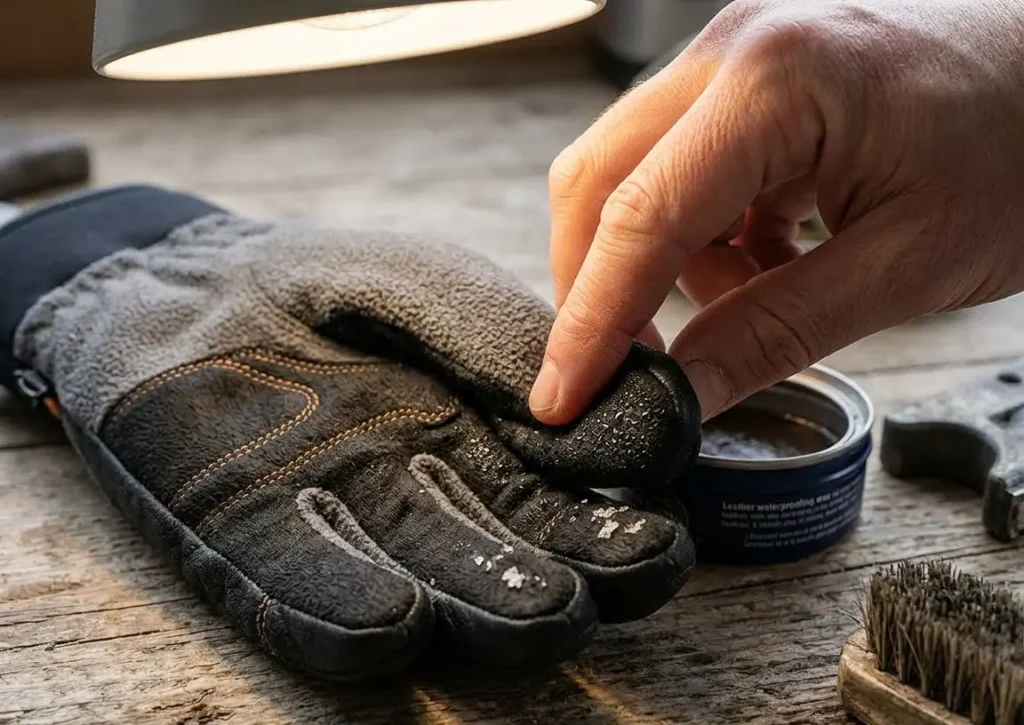
The liner requires separate drying from the shell. A liner stuffed inside the shell overnight dries from the outside-in if at all, and the interior — the zone in contact with skin — retains moisture. Remove the liner, hang it separately, and confirm it is dry to the touch at the fingertip zone before the next session. The fingertip zone dries slowest because it is the narrowest and least ventilated part of the liner. On multi-day trips, if liner drying is not possible due to lodge conditions, rotating a second liner set eliminates the problem entirely.
Chairlift hand discipline
Cover hands on every chairlift ride. This is not conditional on whether hands currently feel warm. It takes the same action every time: at the lift load point, tuck hands against the body, inside the jacket, or under the safety bar in a position that blocks direct wind. This habit is most important on the first ride of the day — hands that start the day already cold from an uncovered first chairlift are harder to maintain at temperature for the rest of the session — and on windy days when ambient wind adds to lift speed to produce the highest effective wind chill exposure of the day.
Condition-Based Prevention: What Each Situation Requires
| Your Conditions | Prevention Priority | Why and What to Do |
| Calm cold (-10°C to -20°C, no wind) | Insulation-focused | Wind is not the primary threat here; insulation weight and glove fit matter most; check that fingertip zone has adequate fill and that gloves are not compressing fingertip insulation under pole grip load |
| Wind chill below -25°C effective temperature | Gauntlet plus face protection | Wind chill at this threshold can produce frostbite on exposed skin in under 10 minutes; gauntlet cuff sealing the wrist gap is essential; consider full face coverage even on groomed terrain |
| Wet conditions near 0°C (spring slush) | Moisture management priority | Wet snow contact and hand sweat combine at near-zero temperatures to soak glove insulation from outside and inside simultaneously; waterproof membrane and DWR maintenance matter more than insulation weight here |
| Groomed resort in moderate cold | Standard insulation; check fit | Moderate cold with low wind and controlled falls; fit and circulation are the primary variables; confirm gloves are not restricting grip under pole load |
| Powder and off-piste with frequent falls | Gauntlet; palm protection | Falls expose cuff gap to snow entry; each snow-entry event adds moisture to glove interior; gauntlet cuff prevents this; waterproof construction critical |
| Chairlift exposure on windy days | Cover hands on every ride | Chairlift wind exposure is the single most common context for rapid hand cooling; hands are stationary, elevated, and directly exposed to wind; cover hands on lifts even if hands were warm coming off the slope |
| Multi-day trip with cumulative glove moisture | Daily liner drying essential | Moisture accumulates in liner and insulation across consecutive days; a glove that was adequate on day one can be inadequate by day three because residual moisture reduces effective insulation; dry liners overnight without exception |
Warning Signs — What Each One Means and When to Stop
| Warning Sign | What It Means Physiologically | Right Response |
| Tingling that starts then fades to numbness | The fading of sensation indicates blood flow has dropped further — the tingling was the alarm; the silence that follows is more serious | Rewarm immediately; frostnip is reversible at this stage; numbness following tingling means the window is closing |
| Skin looks pale or white on fingertips | Pallor indicates vasoconstriction has reduced blood delivery to skin surface; blanched skin is the visible sign of tissue at risk | Stop skiing; get out of wind; rewarm with body heat — not hot water or friction |
| Cannot feel pole contact through glove | Loss of tactile feedback through the glove indicates significant numbness; at this point hands have been cold long enough for tissue risk | Do not continue skiing with this level of numbness; you cannot assess ice conditions or pole plant effectively and tissue is at risk |
| Fingers stay pale after coming indoors | Skin that does not repink within a few minutes of shelter and warmth has sustained more than frostnip; blood is not returning normally | Medical assessment — do not attempt aggressive rewarming; superficial frostbite minimum |
| Burning pain on rewarming | Paradoxical burning pain during rewarming is a sign of superficial frostbite; the sensation is the nerve endings responding as circulation returns to previously frozen tissue | Expected and confirms frostbite occurred; continue gentle rewarming; medical review recommended |
| Blistering on fingertips within hours of skiing | Blister formation after cold exposure confirms superficial frostbite; blisters contain fluid that the damaged tissue releases as cells begin to die or break down | Medical emergency — do not puncture blisters; seek medical care immediately |
What to Do If Frostbite Begins on the Mountain — Field Response
The field response protocol for frostbite onset on a ski mountain is different from the clinical rewarming protocol used in a hospital setting, and the difference matters. Rapid rewarming of frostbitten tissue is the correct clinical treatment — but only when refreezing can be guaranteed not to occur. On a mountain, if rewarming is followed by re-exposure to cold, the refreezing and re-thawing cycle causes significantly more damage than leaving the tissue frozen until definitive care is reached. This is established wilderness medicine guidance and the reason the field protocol prioritises protection over aggressive rewarming.
The steps below apply to frostnip and early superficial frostbite on the mountain. Deep frostbite is a medical emergency requiring evacuation.
1. Stop skiing immediately and get out of wind. Every additional minute of wind exposure adds to the problem. Indoors is the target; sheltered terrain feature is the minimum if indoors is not immediately accessible.
2. Assess the stage. Press the fingertip gently — if the skin depresses and feels soft beneath a firm surface, this is superficial. If the skin feels completely rigid like wood, do not attempt field rewarming — protect and evacuate.
3. For frostnip: rewarm with body heat. Tuck hands under the opposite arm against the torso, or inside the jacket against the chest. Body heat at 37°C is adequate for frostnip rewarming and will not cause the rewarming injury that hot water exposure at incorrect temperatures can produce.
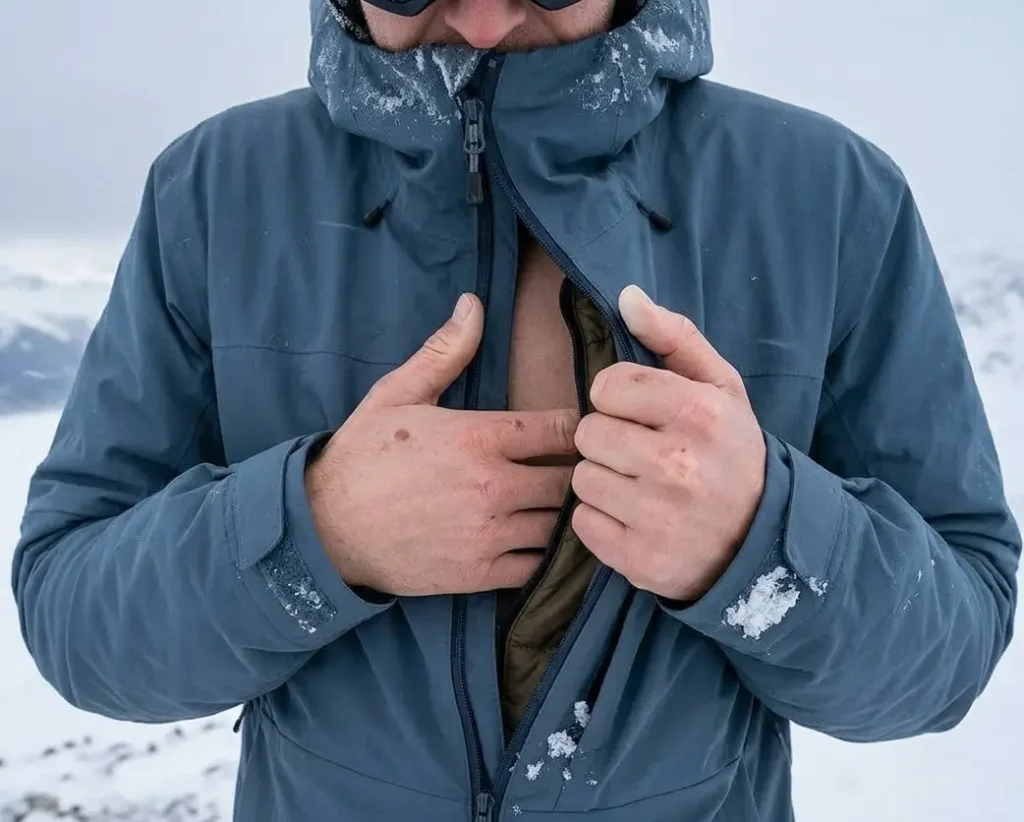
4. Do not rub the affected tissue. Rubbing frostbitten skin causes mechanical damage to cells that have been weakened by ice crystal formation. The instruction to rub cold hands is appropriate for poor circulation without freezing; it is contraindicated for frozen tissue.
5. Do not apply snow. Snow contact on frostbitten tissue adds moisture and cold simultaneously — exactly the conditions that caused or contributed to the injury.
6. If sensation and colour return within ten minutes of rewarming with body heat, frostnip has resolved. Monitor through the remainder of the day — tissue that has experienced frostnip is more vulnerable to repeat injury in the same session.
7. If colour does not return or skin stays white and firm after ten minutes of body-heat rewarming, stop skiing for the day and seek medical assessment. Do not re-expose to cold conditions. Do not attempt warm-water rewarming unless you are confident the person will not return to cold.
Common Mistakes That Cause Frostbite Despite Preparation
Using yesterday’s liner without drying it. The most common multi-day trip mistake. A liner that feels dry to the back of the hand at the wrist zone may still hold significant moisture at the fingertip zone. Moisture in liner insulation at the fingertip reduces effective insulation at exactly the location with the highest frostbite risk. Test by pressing the fingertip zone of the liner firmly between two fingers — any perceptible dampness means it needs more drying time.
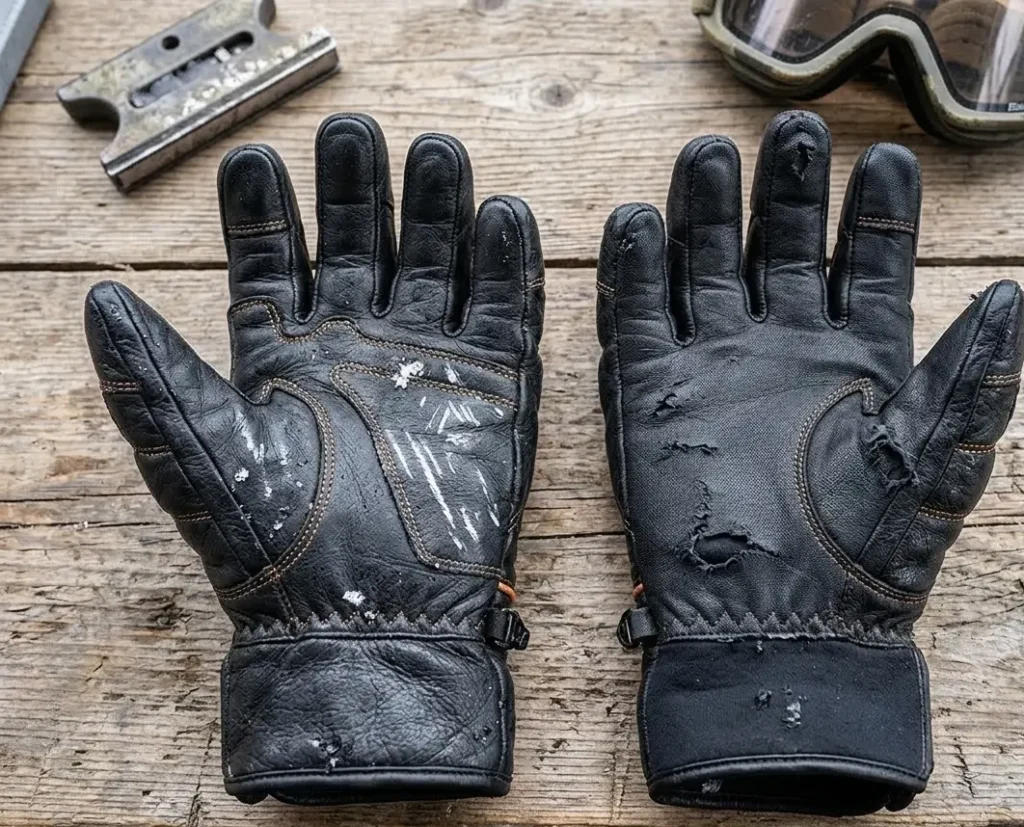
Tightening wrist straps to manage glove fit. A glove that feels slightly loose is sometimes compensated by tightening the wrist strap. The strap sits directly over the radial artery zone and compresses it when overtightened, reducing the blood supply to the hand. The right fix for a loose glove is a correctly sized glove — not a tighter strap.
Relying on insulation weight alone without checking effective wind chill. A glove rated for -20°C in still air conditions may be inadequate at -10°C with 50km/h wind because wind chill is not the same as air temperature and glove ratings are tested in controlled low-wind conditions. Check effective wind chill before every session using a weather service that provides wind chill index, not just air temperature. Adjust insulation choice accordingly.
Attributing afternoon coldness to temperature drop without checking liner moisture. The typical experience is: hands warm in the morning, cooler in the afternoon, attributed to dropping temperatures. Often the actual cause is four hours of accumulated liner moisture reducing effective insulation while temperatures stay constant. Before adding insulation layers or ending the day early, check liner moisture by removing it and pressing the fingertip zone. If damp, a liner change resolves the problem. If dry, temperature or wind change is the more likely cause.
Not recognising that grip pressure is a circulation variable. Sustained pole grip compresses the palm and affects finger circulation throughout a ski session. Skiers who grip poles tightly and continuously — often beginners with tense technique — experience more hand cooling than relaxed grippers in identical conditions. The fix is technique-related: consciously loosening grip on traverses and easier terrain allows circulation to recover. This is not something glove choice solves.
When Standard Prevention Is Not Enough
Raynaud’s syndrome
Raynaud’s causes exaggerated vasoconstriction in response to cold — fingers blanch dramatically in temperatures that would not affect most people. Standard glove insulation and fit recommendations do not fully address this condition because the vascular response itself is abnormal. Skiers with Raynaud’s typically need heated gloves or mittens with chemical heat packs in addition to the standard prevention framework. The condition also means that the warning sign timeline is compressed — what takes thirty minutes to develop in a typical skier can develop in five minutes in someone with active Raynaud’s.
Extreme cold beyond the range of available gloves
Ski resort operations typically close or restrict access when effective wind chill temperatures reach levels that exceed what consumer ski gloves are designed to handle. If you are skiing in conditions where a resort has issued cold-weather advisories, standard prevention advice may be insufficient. Layered mitten systems — liner glove inside an insulated mitten inside a wind shell — provide significantly more protection than any single glove at the cost of dexterity.
Previous frostbite history
Tissue that has previously experienced frostbite is more susceptible to repeat injury at temperatures and durations that would not affect previously uninjured tissue. If you have had frostbite in the past, the prevention framework above applies but with lower thresholds — act earlier on warning signs, use more conservative insulation choices, and be more consistent with chairlift hand coverage than the conditions alone might suggest is necessary.
Medications affecting circulation
Beta blockers, certain migraine medications, and other drugs that affect vascular tone can reduce peripheral circulation and compress the warning-sign timeline. If you take medications that your prescribing clinician has mentioned may affect circulation in cold, ask specifically about cold-weather exposure risk and apply that guidance to your skiing frostbite prevention approach.
Decision Checklist: Before You Ski Today
Work through this before the first run, not before the last one.
| Before You Ski Today | Why It Matters | Priority |
| Gloves are completely dry from yesterday | Start of day — damp gloves from the previous session are the most common cause of premature coldness on day two | High |
| Fingers move freely in a full fist grip | Confirm circulation is not restricted before going out; test this in a warm room where constriction is most detectable | High |
| Wrist gap sealed — jacket sleeve over glove cuff or gauntlet drawcord tightened | Wind entering the wrist gap cools hands on every chairlift ride; close this gap before the first lift | High |
| Checked effective wind chill temperature, not just air temperature | Air temperature of -10°C with 40km/h wind produces effective wind chill near -22°C; these require different preparation | Medium |
| Liner removed and separately dried last night | Liner moisture is invisible but consistent; a liner dried inside the shell dries inadequately and reintroduces moisture on the following day | Medium |
| Hands warmed indoors before first run | Starting cold makes early frostbite risk significantly higher; vasoconstriction is already active in cold fingers going onto a cold mountain | Medium |
| Plan for hands during chairlift rides on windy days | Cover hands on lifts; stationary hands in direct chairlift wind cool faster than during active skiing | Medium |
| Gloves appropriate for today’s temperature and wind | A glove adequate at -5°C is not adequate at -20°C wind chill; match insulation to today’s actual conditions | Check |
| Know the early warning signs and have a response plan | Knowing what tingling-then-numbness means and what to do next prevents the delayed response that turns frostnip into frostbite | Check |
Quick Problem Diagnosis
If something is already wrong, use this before deciding what to do next.
| Problem You’re Having | Most Likely Cause | Right Response |
| Hands warm on runs, cold on every chairlift | Wind chill on stationary hands during lift rides | Cover hands on every lift; the problem is specific to the lift context, not glove warmth |
| Cold fingertips despite warm-feeling gloves | Glove too large — insulation not in contact with fingertip | Size down; or glove grip under pole load compressing fingertip insulation |
| Cold fingers that start warm then cool mid-morning | Liner moisture building from hand sweat — insulation getting damp from inside | Liner removal and drying is the fix; not a warmer glove |
| One hand colder than the other | Dominant hand grip pressure on pole compressing fingertip insulation asymmetrically | Check that fingertip fit is consistent across both gloves; grip pressure affects insulation performance |
| Hands cold on day two of a multi-day trip | Residual liner and insulation moisture from day one not fully dried overnight | Liner must be removed and dried separately; shell hung open; not sealed in a bag |
| Cold despite thick gloves in moderate temperatures | Restricted circulation from over-tight fit — insulation cannot compensate for absent blood flow | Test fist grip in warm room; if fingers resist curling, gloves are too tight |
| Tingling then numbness on long descents | Gripping poles continuously reduces circulation through sustained compression | Alternate grip tension during descents; consciously release and regrab pole every few minutes |
| Hand cold immediately in mild weather | Vasoconstriction already active — started skiing with cold hands | Warm hands to room temperature before first run; starting cold significantly increases early risk |
The most common diagnostic error: attributing afternoon hand cold to ambient temperature drop when the actual cause is liner moisture accumulated through the morning. Check the liner before adding insulation or ending the day — the fix is often a liner change, not a different glove.
The Habit That Separates Skiers Who Get Frostbite From Those Who Don’t
Many frostbite cases on ski mountains happen even when conditions are not extreme and gear is technically adequate. It is caused by small, consistent gaps in preparation that compound across a session — a liner not dried from yesterday, a wrist left uncovered on one chairlift, a glove that fits slightly too tight under grip load. None of those individually causes frostbite. All three together, repeated across a full day, often do.
The skiers who avoid frostbite consistently are not wearing more expensive gloves. They are doing the same small things correctly every session — dry liner, closed wrist gap, covered hands on lifts, and an immediate response to the first sign of tingling. That framework works at every temperature range and every skill level because it addresses the actual causes rather than the symptom.
The one thing that undermines it most reliably is a glove that has been allowed to degrade — DWR depleted, insulation compressed from heat drying, liner moisture never fully cleared between sessions. A glove in that condition cannot provide what the prevention framework requires of it regardless of how correctly everything else is done.
Keeping gloves in the condition where they can actually do their job — dry insulation, intact DWR, correctly maintained liner — is covered in full in Ski Glove Care Tips That Actually Work.
About the Author
Awais Rafaqat has spent over 15 years testing ski gear across North America — from the dry sub-zero conditions of the Rockies to the wet, heavy snow of the Pacific Northwest. His focus is real-world performance: what gear actually does in the conditions skiers encounter, not what the spec sheet says it should do.
© SkiGlovesUSA.com — Prevention guidance consistent with Wilderness Medical Society cold injury protocols. Not a substitute for professional medical advice. No sponsored product mentions.