QUICK ANSWER: Most “ski glove allergies” aren’t allergies at all — they’re irritant contact dermatitis caused by trapped sweat softening the skin, then friction from gripping poles and adjusting gear rubbing that softened skin raw. A true allergic reaction to glove material is real but far less common. The difference matters because the fix is completely different: irritation responds to drying and better liner choice, while an actual allergy means avoiding the specific material entirely.
Not sure if fit or glove choice is part of your problem? The Ski Glove Finder matches you to gloves based on your hand type and conditions, which can rule out a poor match as a contributing factor.
- Why This Distinction Actually Matters
- What's Really Happening to Your Skin
- Allergy vs. Irritation — The Actual Signs
- The Simple Test That Actually Tells You Which One It Is
- Why Some Liner Materials Cause More Trouble Than Others
- Common Mistakes People Make
- What Actually Helps
- Decision Checklist
- Frequently Asked Questions
- Final Thoughts
Why This Distinction Actually Matters
Calling every reaction an “allergy” leads people to the wrong fix. Someone with irritant contact dermatitis who assumes it’s an allergy might replace an otherwise fine glove with an expensive hypoallergenic one and still have the same problem, because the real cause — trapped moisture and friction — never got addressed. Someone with an actual allergic reaction who assumes it’s “just irritation” might keep wearing the same material and have the reaction get worse with repeated exposure. Getting the diagnosis right changes what you should actually do about it.
What’s Really Happening to Your Skin
Dermatology research on hand dermatitis consistently identifies physical friction as an under-recognized irritant that contributes to skin breakdown — not just chemical exposure, which is what most people assume causes contact dermatitis. Inside a ski glove, that friction combines with something specific to winter sports: sustained moisture from sweat that has nowhere to go.
When skin stays damp for hours, it softens — a process called maceration. Softened skin has a much higher coefficient of friction than dry skin, meaning the same amount of rubbing from a glove liner causes far more damage once your skin has been damp for a while. That’s why a liner that feels completely fine at 9 AM can feel like sandpaper by 2 PM: the liner hasn’t changed, your skin has.
There’s a second factor working alongside moisture: as sweat evaporates from fabric, it leaves behind microscopic salt residue. That residue sits against skin and adds a mild abrasive quality to a liner that felt smooth when both the liner and your skin were dry. This is a big part of why irritation often shows up on day two of a ski trip rather than day one — the liner never fully dried overnight, so day two starts with residual dampness and salt buildup that day one didn’t have.
Allergy vs. Irritation — The Actual Signs
The American Academy of Family Physicians draws a clear clinical distinction between irritant contact dermatitis and allergic contact dermatitis, and the practical signs map onto what you’d notice with ski gloves specifically.
Irritation from friction and moisture shows up as redness concentrated where pressure and rubbing actually happen — fingertips, knuckles, the sides of fingers. It tends to improve once hands are dry and rested, and by the next morning skin usually looks normal again. It’s tied directly to activity and moisture, not to a specific material reacting with your skin.
A true allergic reaction behaves differently. Itching can continue well after you’ve taken the gloves off and skiing has stopped. Redness may spread beyond the areas that actually experienced friction, which is a meaningful tell — an allergic response isn’t limited to contact points the way irritation is. Reactions can also appear faster, sometimes within the first hour of wearing a glove, rather than building gradually over a full day like friction irritation does.
| Sign | Friction/Moisture Irritation | Allergic Reaction |
| Location | Contact points — fingertips, knuckles | Can spread beyond contact areas |
| Timing | Builds over hours of wear | Can appear within the first hour |
| Resolves | Usually clear by next morning | May persist after gloves are off |
| Pattern | Worse on day 2+ of consecutive use | Can happen on first exposure |
The Simple Test That Actually Tells You Which One It Is
Ski one day using the exact same outer glove but without the liner you normally wear — same conditions, same activity level, as close to identical as you can get. If the irritation disappears or is noticeably reduced, the liner material is the trigger, whether that’s friction, moisture, or an actual sensitivity to that fabric. If symptoms persist or get worse even without the liner, something else is going on — possibly the outer glove’s inner lining, a broader skin sensitivity unrelated to gloves specifically, or a reaction worth mentioning to a doctor rather than solving with a different glove.

Why Some Liner Materials Cause More Trouble Than Others
Fleece feels soft initially but holds onto moisture once damp, and damp fleece pressed against skin for hours is a common source of the friction-plus-moisture combination described above. It tends to cause problems later in a ski day rather than early.
Wool varies enormously by grade. Fine merino wool manages moisture well and causes far less irritation than coarser wool blends, which can scratch or itch regardless of moisture level — this is a genuine material difference, not just personal sensitivity, since coarser wool fibers are physically stiffer against skin.
Synthetic liners start smooth and low-friction, but synthetic fabric that isn’t dried properly between ski days becomes a place where bacteria accumulate, and that buildup itself can trigger redness and itching independent of any friction issue.
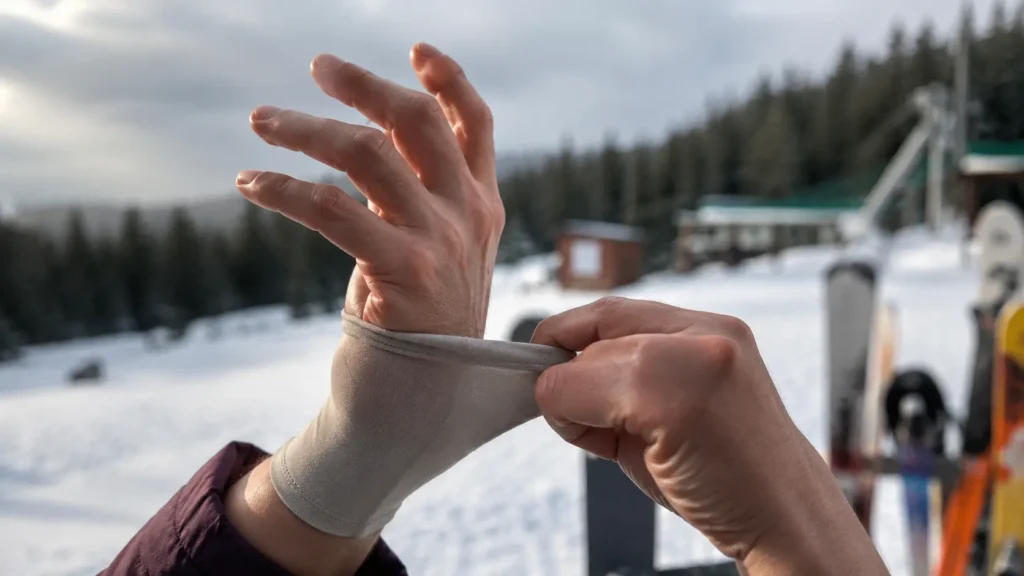
Silk is naturally smoother than the alternatives above and wicks moisture away from skin rather than holding it. It’s commonly recommended for people with generally sensitive skin, though “hypoallergenic” in this context means lower irritation potential, not a guarantee against every possible reaction — no fabric offers that.
Common Mistakes People Make
Assuming any redness or itching means a genuine allergy
Most of the time it’s irritation from moisture and friction, which responds to different fixes than an actual allergy does — treating irritation like an allergy (switching to expensive hypoallergenic materials) without addressing the moisture problem often doesn’t solve anything.
Not drying liners fully between ski days
This is the single most common cause of the “fine on day one, irritated by day two” pattern. A liner that feels dry to the touch can still hold enough residual moisture to restart the maceration process the next morning.
Sizing gloves too tight to feel “secure”
A snug fit increases pressure and friction at exactly the points where irritation already tends to start — knuckles and fingertips. Tight isn’t the same as well-fitted.
Switching glove brands repeatedly without changing the liner
If the liner material is the actual cause, a new outer glove with the same liner habits won’t fix anything — the trigger was never the shell.
What Actually Helps
Choosing a liner material that manages moisture well — fine merino wool or silk are the two most consistently recommended for sensitive skin — addresses the root cause rather than masking symptoms. Beyond material choice, the practical habits matter just as much: dry liners fully between days rather than assuming a few hours is enough, avoid oversizing insulation and overheating your hands (sweat is the actual enemy here, not cold), and make sure gloves aren’t compressing knuckles, since restricted circulation and increased friction tend to show up together.
If you’re dealing with what looks like a genuine allergic reaction rather than friction irritation — spreading redness, symptoms that persist after gloves come off, reactions appearing quickly — that’s worth mentioning to a dermatologist rather than working through by trial and error with different glove materials. Contact dermatitis affects a substantial portion of the general population, and a proper diagnosis can identify the specific trigger rather than leaving you guessing.
Decision Checklist
- Redness limited to contact points, worse by afternoon, gone by morning: Friction/moisture irritation — focus on drying liners fully and choosing smoother materials
- Itching continues after gloves are off, or redness spreads beyond contact areas: Possible allergic reaction — worth a dermatologist visit rather than more glove-swapping
- Fine on day one, worse on day two of a multi-day trip: Liners not fully drying overnight — this is a drying/rotation problem, not necessarily a material problem
- Reaction happens within the first hour of putting gloves on: Faster than typical friction irritation — lean toward getting it checked rather than assuming it’s just rubbing
Frequently Asked Questions
Can you actually be allergic to ski glove material?
Yes, though it’s less common than friction-based irritation. True allergic contact dermatitis involves an immune response to a specific substance — sometimes a dye, treatment chemical, or the fiber itself — and tends to produce symptoms that persist or spread beyond simple contact points.
Why do my hands itch after skiing even when my gloves felt fine all day?
Delayed itching after activity stops is common with irritant dermatitis — the skin damage from friction and moisture doesn’t always announce itself until circulation and skin temperature return to normal. It doesn’t necessarily mean anything different is wrong; it can just be the same irritation process showing up on a delay.
Are silk liners actually worth it for sensitive skin?
For genuinely sensitive skin or a history of irritation, yes — silk’s smoothness and moisture-wicking properties address both major contributors to glove-related skin problems (friction and trapped moisture) at once, more directly than most synthetic alternatives.
How do I know if it’s my gloves or something else causing the reaction?
The liner-removal test above is the most direct way to isolate gloves as the cause. If symptoms show up on hands but also elsewhere on skin not in contact with ski gear, that points away from gloves being the specific trigger.
Should I see a doctor about this, or can I just try different gloves first?
If the pattern matches friction/moisture irritation — contact-point redness, resolves overnight, worse on consecutive ski days — trying better liner materials and drying habits first is reasonable. If symptoms spread, persist after gloves are off, or appear very quickly after putting gloves on, see a dermatologist rather than continuing to experiment with different products.

Final Thoughts
Most glove-related skin reactions are your body’s honest response to hours of trapped moisture and friction, not a mysterious allergy — which is actually good news, because moisture and friction are fixable with the right liner material and better drying habits between ski days. The cases that genuinely need medical attention are the ones where symptoms don’t follow that pattern: reactions that spread, persist, or show up fast. Knowing which category you’re in is the difference between solving the problem and just replacing gear that was never actually the issue.
This post is for general information and isn’t a substitute for medical advice. If you have a persistent or severe skin reaction, see a dermatologist.