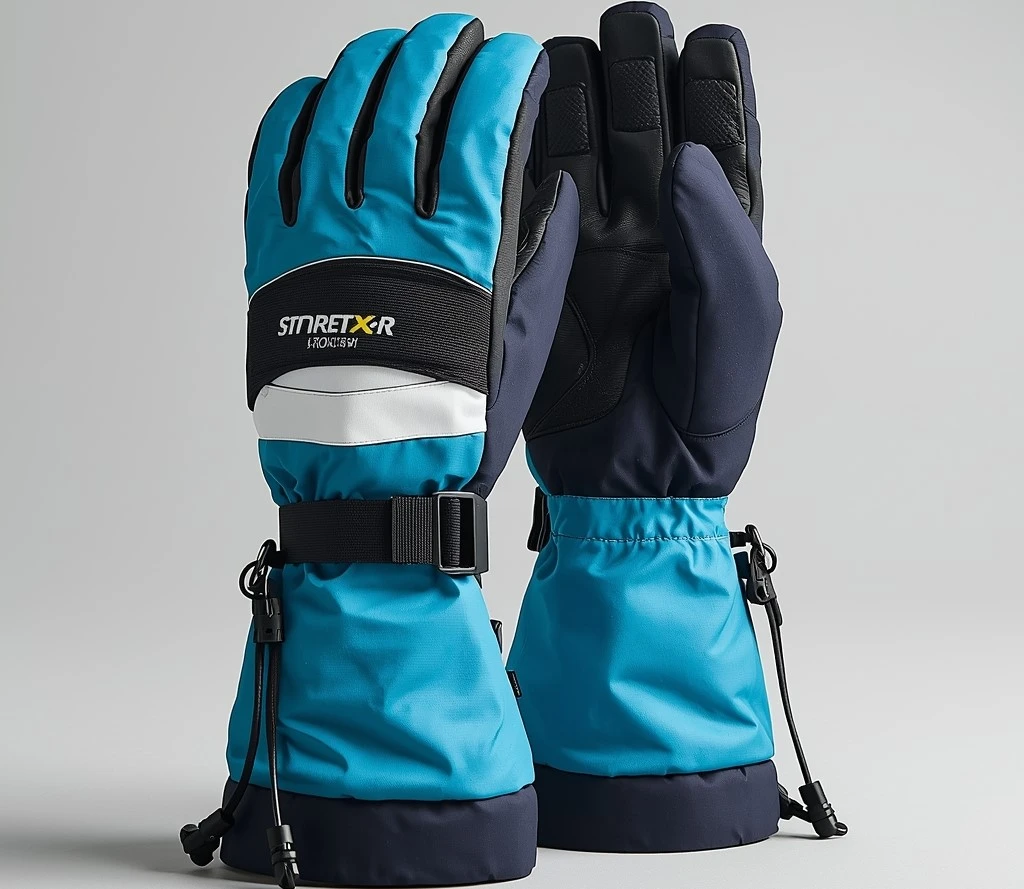
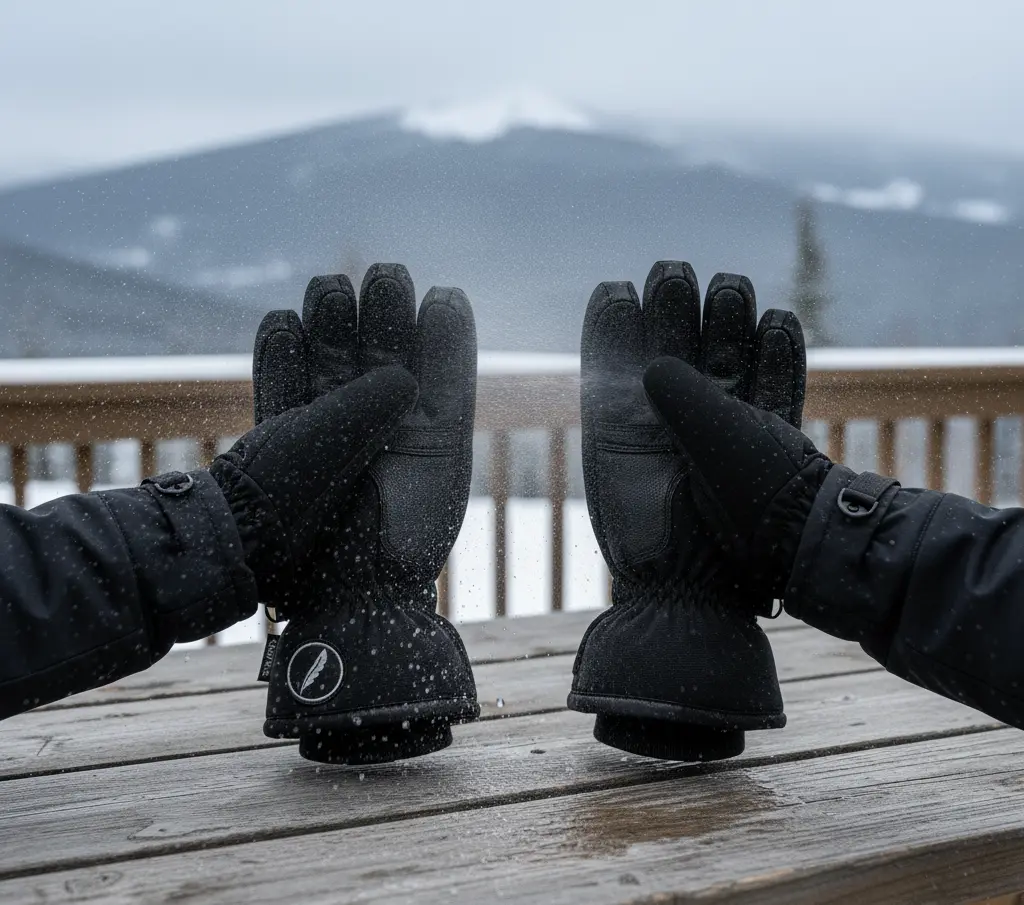
If you ski in wet snow, slush, or conditions that change during the day, you need waterproof gloves. If you ski exclusively in dry cold powder and you are confident that forecast holds, water-resistant gloves are adequate and offer a genuine breathability advantage. The decision between waterproof vs water-resistant ski gloves comes down to one question: how certain are you that the snow will stay dry?
Waterproof gloves use a membrane layer — a thin physical barrier bonded inside the glove shell — that stops water molecules from passing through regardless of how long the glove is in contact with snow. Water-resistant gloves use a surface coating that causes water to bead off in light contact but saturates and fails when contact is sustained or snow is wet. The difference is not a matter of degree — it is a structural difference in how moisture is blocked, and that structural difference determines how each type fails and when.
This article covers exactly what that difference means in practical skiing conditions, how to identify which type your situation requires, and what the warning signs are when the wrong choice has been made. Materials, washing, and DWR re-treatment are covered in separate guides — the focus here is the waterproof vs water-resistant decision itself.
This guide is for recreational and intermediate skiers who want to choose the right glove type for real on-mountain conditions, not just product specs.
Waterproof vs Water-Resistant Ski Gloves: Which Is Better?
Waterproof gloves are better for most skiers because they handle wet, changing, and unpredictable conditions.
Water-resistant gloves are only better in consistently dry, cold environments where breathability matters more than moisture protection.
What Waterproof and Water-Resistant Actually Mean — the Mechanism
The term waterproof, when applied to ski gloves, means the glove contains a membrane layer between the outer shell fabric and the insulation. This membrane has pores small enough to block liquid water molecules but large enough to allow water vapour — hand sweat — to pass through in the opposite direction. The result is that no matter how long the glove is submerged in snow or exposed to wet conditions, the membrane physically prevents liquid from reaching the insulation. The protection does not degrade over the course of a ski day the way a surface coating does.
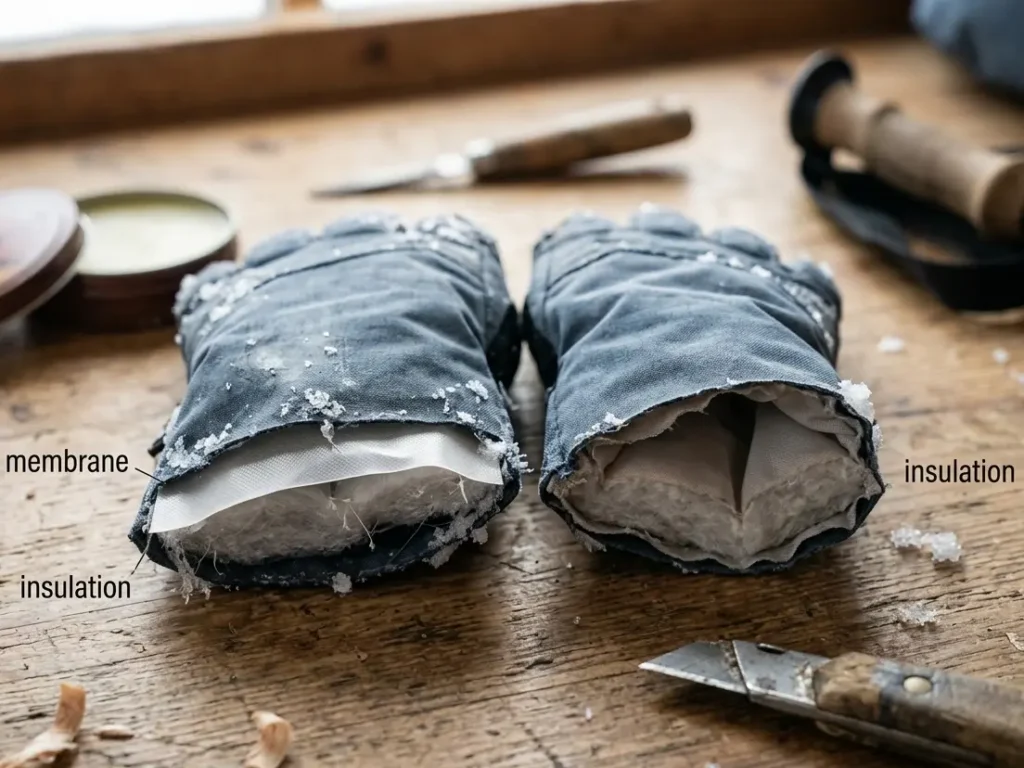
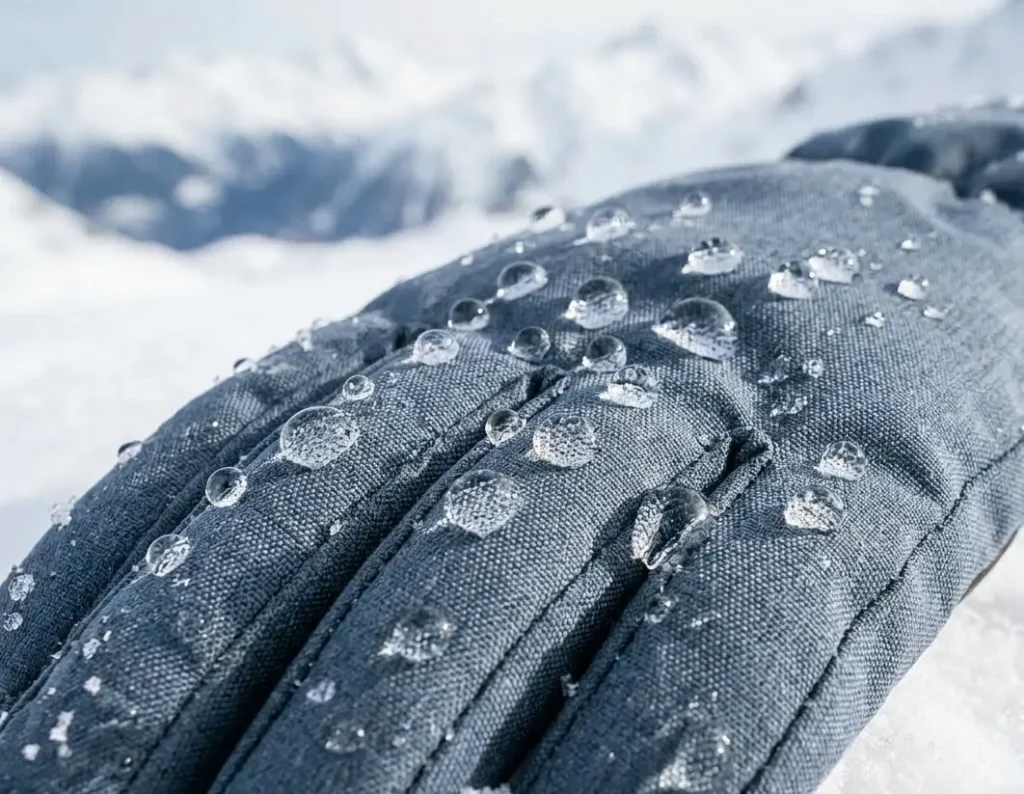
Water-resistant means the outer shell fabric has been treated with a DWR coating — a chemical treatment applied to the surface of the fibres that causes water to bead up and roll off rather than soaking in. This works well when contact is brief and snow is dry and cold. It fails when contact is sustained, when snow is wet and heavy, or when the coating degrades through use and washing. The critical point is the failure mode: water-resistant gloves do not gradually reduce in protection — they fail relatively suddenly once the coating saturates, which means hands that were dry in the morning can be wet by lunch without an obvious transitional warning.
The practical difference is therefore not about which type is better in general. It is about which type’s failure mode is acceptable in your specific conditions. A waterproof membrane’s failure mode is gradual over seasons as the membrane delaminate from the shell fabric — a slow decline visible over many days of use. A water-resistant coating’s failure mode is rapid saturation in conditions that exceed its capacity — a sudden failure mid-session. In predictable dry conditions, the coating’s failure mode may never be triggered. In wet or variable conditions, it will be.
The membrane in a waterproof glove does not wear out across a ski day. The coating on a water-resistant glove does. That single difference determines which type belongs in which conditions.
How I Tested Both Types — the Setup and What I Measured
The most informative test I ran was a direct side-by-side comparison in wet spring snow — the conditions that expose the difference most clearly. I wore a waterproof glove on one hand and a water-resistant glove of equivalent insulation weight on the other, both with intact outer shells and freshly treated DWR. I skied for four hours in wet conditions that were approximately -2°C with heavy snow and multiple falls.
The water-resistant glove showed the first signs of moisture penetration to the insulation zone at approximately forty-five minutes. By the end of the second hour, the insulation in the wrist area was perceptibly damp and the hand was meaningfully colder than the waterproof hand despite identical insulation weight. By hour four, the difference was significant — the waterproof hand was dry and comfortable; the water-resistant hand had wet insulation across the palm and wrist zones. The coating had not failed entirely — the outer fabric still beaded water in the areas with least contact — but the zones with sustained contact had saturated completely.
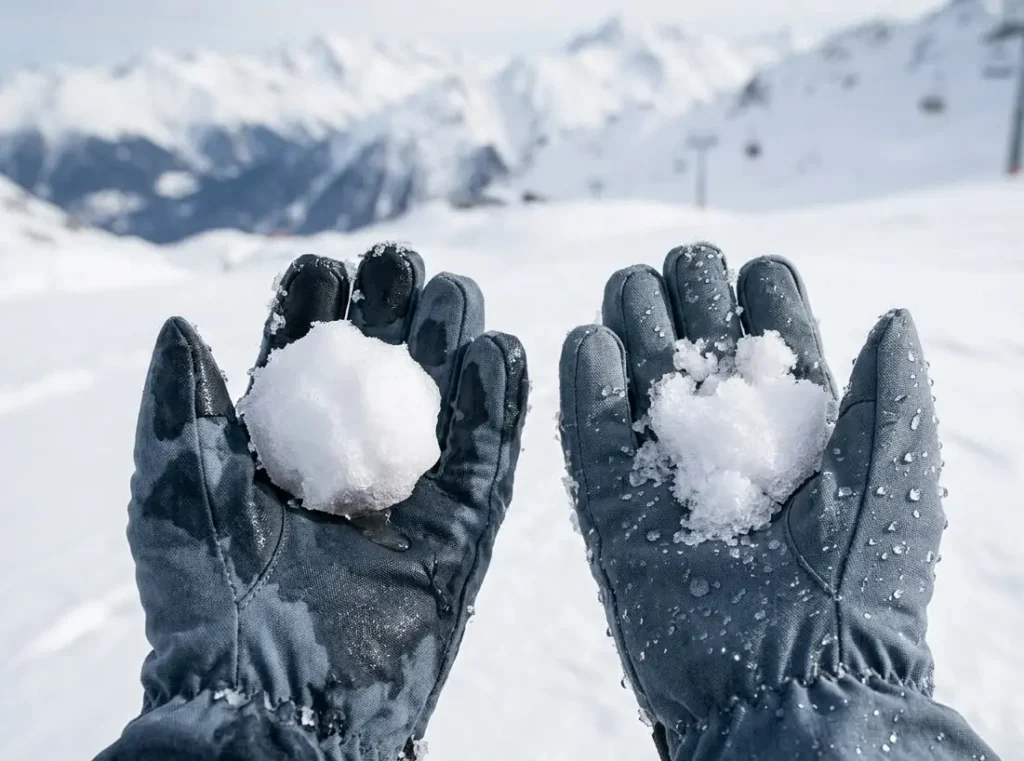
I repeated a version of this test in dry cold conditions at approximately -12°C with dry powder and no falls. In those conditions, the water-resistant glove performed equivalently to the waterproof one across a full six-hour session. The coating was never challenged enough to saturate. The breathability advantage of the water-resistant glove was perceptible — slightly less hand sweat across the session. In those specific conditions, the water-resistant glove was the better choice on that day.
The conclusion from both tests was consistent with what the mechanism predicts: waterproof is the right choice when conditions include any wet snow contact or sustained exposure; water-resistant is adequate when conditions are confirmed dry and cold. The breathability advantage of water-resistant is real but only relevant when the coating is not being challenged — in challenging conditions, the advantage disappears because the coating fails.
Waterproof vs Water-Resistant Ski Gloves: The Direct Comparison
| Factor | Waterproof | Water-Resistant |
| How moisture is blocked | Membrane layer stops water molecules passing through regardless of contact duration | Surface coating causes water to bead off — fails once coating saturates |
| Performance in wet snow / slush | Maintains dry hands throughout; unaffected by prolonged snow contact | Fails within 30–60 minutes of sustained wet contact; moisture reaches insulation |
| Performance in dry cold powder | Adequate — slight breathability reduction vs water-resistant but hand stays dry | Adequate — dry conditions mean coating rarely saturated; lighter feel is genuine advantage |
| Breathability | Membrane allows some vapour escape but less than water-resistant shell | Higher breathability; less hand sweat in active conditions on dry days |
| Performance after falls | Cuff-sealed glove survives falls in deep snow without moisture entry at wrist | Single fall in wet snow can saturate wrist area; repeated falls accelerate failure |
| Durability of protection | Protection level consistent until membrane physically degrades — typically 3–5 seasons | Protection degrades with each ski day; re-treatment needed every 5–10 sessions |
| Weight and bulk | Heavier and slightly stiffer due to membrane layer | Lighter and more flexible; better dexterity in controlled dry conditions |
| Cost | Higher upfront — membrane construction more expensive to manufacture | Lower upfront — coating is cheaper than membrane; replacement cost higher long-term |
| Failure mode | Membrane delamination after extended heavy use — gradual performance loss over seasons | Coating saturation — sudden failure mid-session when conditions exceed coating capacity |
When Waterproof Gloves Are the Right Choice
Waterproof gloves are the correct choice in three situations: when conditions include any wet or heavy snow, when fall frequency is high enough to produce sustained snow contact, and when conditions across the ski day are unpredictable. These three situations cover the majority of skiing scenarios outside of known dry-climate resorts on confirmed dry-weather days.
Wet snow and slush conditions
Wet snow has a higher liquid water content than dry powder, which increases the risk of cold-related skin exposure issues such as frostbite in prolonged wet conditions. A water-resistant coating in contact with wet snow saturates faster than in dry conditions because the snow itself is already partially liquid. At temperatures near 0°C — typical of spring skiing, Pacific Northwest skiing, and European resort skiing in variable weather — snow is consistently wet enough to challenge water-resistant coatings within the first hour of contact. Waterproof membrane gloves maintain protection throughout because the membrane’s blocking mechanism is independent of snow moisture content.
High fall frequency
Each fall in snow exposes the glove’s palm, wrist, and cuff zones to sustained snow contact. A beginner who falls ten times in a morning session is applying ten sustained snow-contact events to their gloves across a few hours. A water-resistant coating that would last a full groomed day of upright skiing saturates much faster under this pattern. Waterproof gloves are the appropriate choice for any rider who falls regularly — which includes beginners, intermediate skiers pushing into new terrain, and park riders whose sport involves routine snow contact.
Variable or unpredictable conditions
Ski mountain conditions can change significantly across a day — cold and dry in the morning, warming and wetter in the afternoon as temperature rises, wet and heavy by the time snow gets tracked out. A water-resistant glove that was adequate at 9am may be failing by 2pm in these conditions. Waterproof gloves cover both states without requiring a glove change mid-day.
The trade-off with waterproof gloves is breathability and weight. A membrane adds a layer to the glove construction, which slightly reduces breathability compared to a water-resistant shell and adds some bulk. In high-activity skiing on dry days, this means slightly more hand sweat. This is the waterproof glove’s limitation, and it is worth acknowledging: for a skier doing hard, active runs in dry cold conditions, the water-resistant glove may feel better throughout the day. The waterproof glove’s breathability limitation only becomes a practical issue when conditions do not require its protection.
If any of these conditions apply to your typical ski day, waterproof gloves are the correct choice — not an upgrade, but a requirement.
When Water-Resistant Gloves Are the Better Choice
Water-resistant gloves are the correct choice in a narrower set of conditions than most skiers assume — specifically, when snow is confirmed dry and cold, falls are infrequent, and the ski day takes place within a predictable weather window. These conditions describe a specific type of skiing: experienced skiers on familiar groomed terrain at high-altitude resorts in mid-winter dry spells.
Confirmed dry cold powder
At temperatures well below freezing — -10°C and colder — snow has very low liquid water content. A water-resistant coating on snow at these temperatures takes much longer to saturate than at near-zero temperatures because the snow contact is dry rather than wet. In these specific conditions, a water-resistant glove’s coating may last an entire ski day without saturation. The breathability advantage is genuinely useful here: dry cold active skiing generates hand sweat, and a more breathable water-resistant shell manages that moisture more comfortably than a membrane glove.
Short sessions with controlled conditions
A skier doing a two-hour groomed ski on a dry cold day with a reliable forecast and minimal falls is in the conditions where water-resistant gloves perform adequately. The coating will not saturate within two hours of controlled upright skiing in dry snow. For this specific use case, a water-resistant glove is a reasonable and cost-effective choice.
The limitation of water-resistant gloves is the speed and suddenness of failure when conditions exceed the coating’s capacity. There is no gradual transition from protected to unprotected — once the coating saturates at a given zone, that zone is wet and stays wet until the glove dries. A skier who chose water-resistant gloves for expected dry conditions and encounters an unexpected weather change mid-day has no recourse. The glove that was adequate at 10am is failing at 1pm and there is nothing to do about it without a second pair. This is the risk the water-resistant choice carries, and it should be weighed honestly against the breathability and cost advantages.
If all of these conditions are consistently true for your skiing, water-resistant gloves are a valid choice — otherwise, they introduce avoidable risk.
Common Mistakes Skiers Make With This Choice
Assuming water-resistant is good enough because it worked last time. Conditions vary significantly between ski days and between seasons. A water-resistant glove that performed well last March does not confirm it will perform well next March — it confirms it performed well in those specific conditions. If conditions were dry last time and are wet this time, the outcome will be different. The choice should be made based on expected conditions, not last season’s experience.
Treating waterproof as a solution for cold hands. Waterproof gloves keep hands dry. They do not keep hands warm if insulation is insufficient for the temperature, and moisture combined with cold exposure can actually increase heat loss from the body. Cold hands on a dry day in a waterproof glove are an insulation or circulation problem, not a waterproofing problem. Switching from water-resistant to waterproof does not address cold that is caused by inadequate insulation weight.
Treating internal moisture as external moisture failure. A common complaint is wet hands inside waterproof gloves on days when no external moisture entered the glove. This is hand sweat — the membrane’s breathability is insufficient for the activity level or conditions, and vapour is condensing inside. This is not a waterproofing failure. Switching to water-resistant gloves in this situation does improve breathability but removes the moisture protection that may be needed for other parts of the ski day.
Buying water-resistant gloves because they are cheaper without accounting for conditions. The cost advantage of water-resistant gloves is real but conditional. In dry conditions, it is a genuine saving. In wet conditions, a water-resistant glove that fails mid-session means a ski day cut short or conducted with wet cold hands. The cost of one ruined ski day — in lost enjoyment, in potential equipment issues, in the practical problem of wet hands in cold conditions — is higher than the price difference between glove types for most skiers who ski in variable conditions.
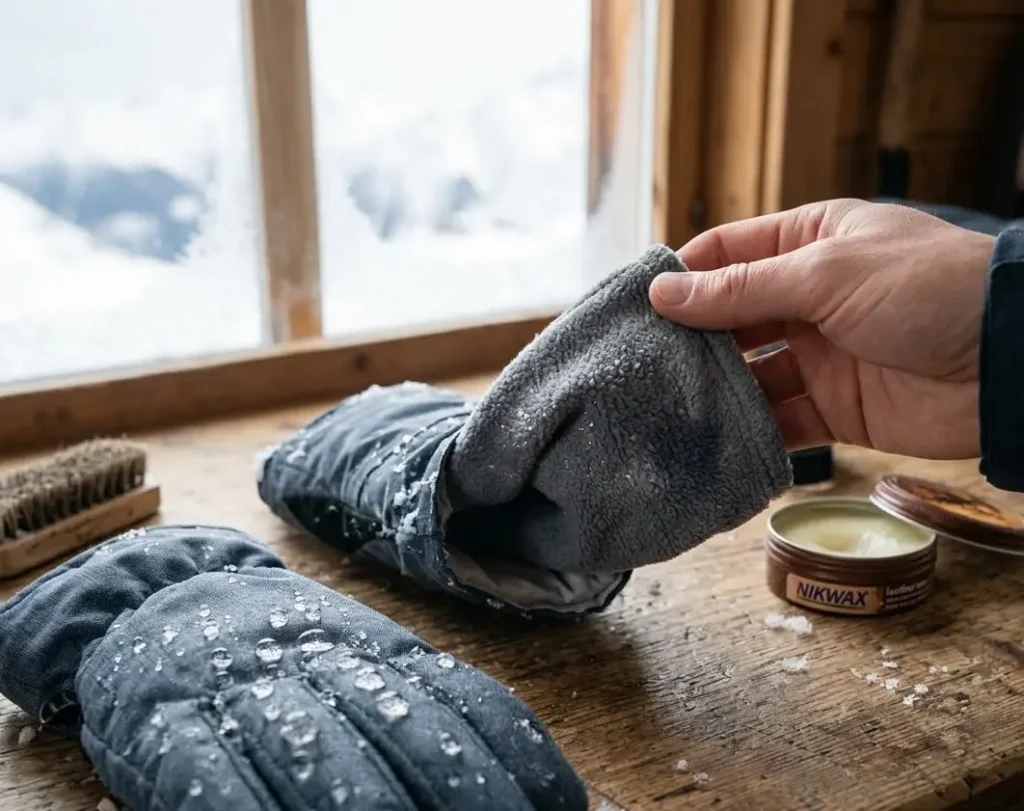
Not recognising that coating degrades with use. A water-resistant glove purchased this season may not perform the same way by mid-season. The DWR coating degrades through skiing, washing, and compression storage. A glove that beads water on day one may not bead it on day fifteen. Regular re-treatment extends the coating’s life, but many skiers are not aware the coating degrades at all and attribute mid-season glove failure to other causes.
How Long Waterproof vs Water-Resistant Gloves Last
Waterproof gloves typically last 3–5 seasons before membrane performance degrades.
Water-resistant gloves require frequent DWR re-treatment and may lose effective protection within a single season depending on usage.
If you ski regularly in mixed conditions, waterproof gloves provide better long-term value despite higher upfront cost.
Condition-Based Recommendations: Match Choice to Conditions
| Your Conditions | Choose | Why |
| Wet heavy snow — Pacific Northwest, Alps, Northeast US spring | Waterproof | Water-resistant coating saturates within the first hour in these conditions; membrane is the only reliable option |
| Dry cold powder — Utah, Colorado, Alberta | Either works | Coating rarely saturates in dry cold; water-resistant saves money here; waterproof still fine but breathability advantage of water-resistant is real |
| Spring slush conditions near 0°C | Waterproof | Wet melting snow is the fastest way to saturate a water-resistant glove; near-zero temperature means more liquid water contact than at -15°C |
| Backcountry touring with temperature variation | Waterproof | Cannot predict conditions across a full touring day; membrane provides consistent protection when conditions shift mid-trip |
| Resort groomed runs, consistent dry weather forecast | Water-resistant | Controlled conditions, minimal fall risk, known dry forecast — water-resistant performs adequately and breathability advantage is useful in active groomed skiing |
| Park and freestyle riding | Waterproof | Repeated snow contact from rail hits, box slides, and falls saturates water-resistant coating quickly; membrane holds across a park session |
| Beginner skiers with frequent falls | Waterproof | Each fall exposes more glove surface to snow contact; fall frequency determines how fast water-resistant coating saturates — beginners saturate it fast |
| Multi-day ski trips with unpredictable weather | Waterproof | Weather changes mid-trip are not predictable; water-resistant is adequate only when conditions are confirmed dry; waterproof covers both cases |
Self-Check Tests to Run Before Buying
The bead test on your current gloves
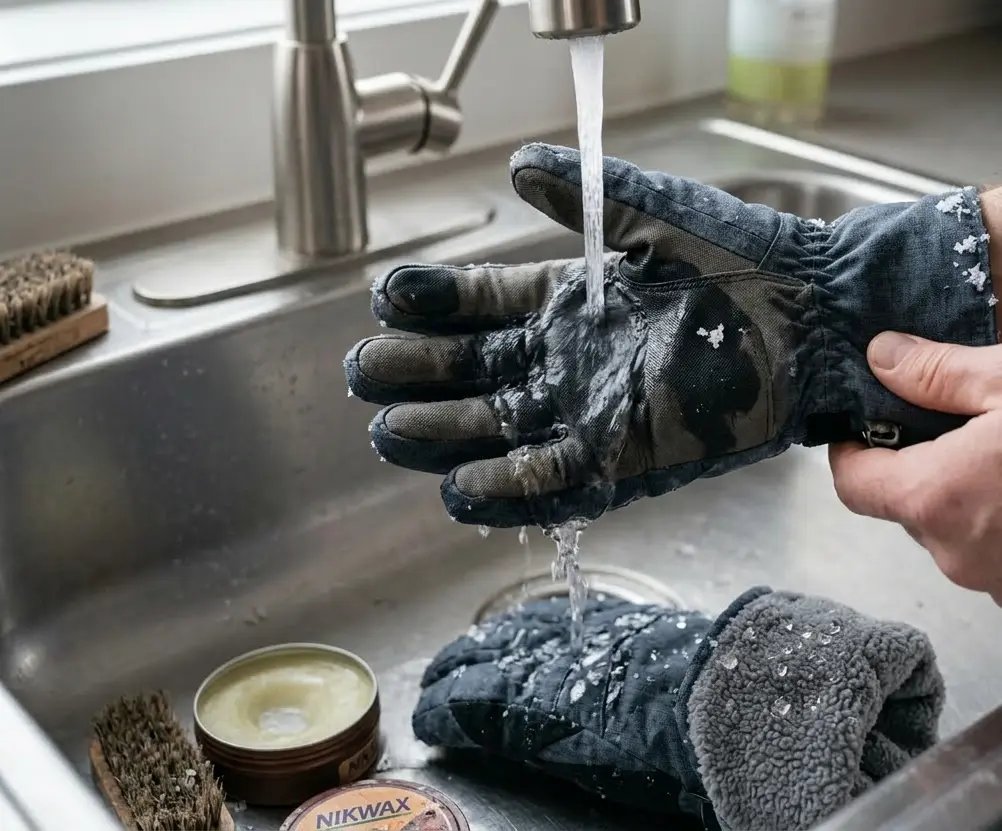
Pour cold water on the palm of your current gloves. If it beads and rolls off immediately, the DWR coating is active. If it soaks in within a few seconds, the coating is depleted. This test tells you whether a water-resistant glove’s coating is currently functional — and if your current waterproof gloves are tested the same way, it tells you whether the outer DWR layer is still intact on top of the membrane.
The conditions honesty test
Write down the last three occasions your hands were cold or wet while skiing. For each one, identify whether the moisture came from inside the glove (hand sweat) or outside (snow contact). External moisture on more than one of those three occasions means you need waterproof. External moisture on zero of those three occasions means water-resistant may be adequate for your specific skiing pattern.
The fall frequency test
Estimate honestly how many times you fall per ski day on typical terrain. More than three falls per day means sustained snow contact across the session. Water-resistant coatings in this pattern saturate faster than in upright skiing. More than three falls per day is a clear indicator for waterproof regardless of snow conditions.
The forecast reliability test
How reliably can you confirm the weather forecast for the ski days you are planning? If you ski at one familiar resort on day trips with checked forecasts, reliability is high. If you ski multi-day trips to unfamiliar mountains with variable elevation weather, reliability is low. Low forecast reliability means conditions may exceed what water-resistant can handle — waterproof is the safer default.
Warning Signs That Your Current Choice Is Wrong
| Warning Sign | What It Actually Means |
| Hands wet inside gloves by midday in dry conditions | Not a waterproofing failure — this is hand sweat from insulation or fit; neither waterproof nor water-resistant gloves prevent internal moisture; the problem is insulation weight or liner management |
| Water-resistant gloves wet within 30 minutes | Coating has degraded to the point of offering no meaningful protection; re-treatment will help temporarily but indicates the coating is near end of useful life |
| Waterproof gloves showing internal moisture on wet days | Membrane has delaminated or a seam has failed; this is structural failure, not a minor issue — the glove’s waterproof function is compromised and will not improve |
| Hands cold despite dry gloves | Waterproofing is not the cause; insulation, fit, or circulation is the issue — switching glove type does not address this |
| Water-resistant gloves performing well for a full season | Conditions have been consistently dry; this does not mean water-resistant is sufficient for all conditions — it means conditions have been favourable |
| Waterproof gloves feeling clammy in low-activity periods | Normal membrane behaviour in low-breathability conditions; not a defect; switch to water-resistant only if conditions genuinely do not require membrane protection |
When Neither Standard Choice Is Enough
Circulation conditions affecting hand warmth
Waterproof and water-resistant gloves both address external moisture. Neither addresses reduced blood flow from conditions like Raynaud’s syndrome or other circulatory issues. Cold hands from circulation problems are not solved by either glove type — they require heated gloves or other interventions that go beyond shell construction.
Extreme cold below -25°C effective wind chill
At extreme temperatures, waterproofing becomes secondary to insulation and wind protection, as staying dry and protected from cold exposure becomes critical for safety. Neither waterproof nor water-resistant gloves rated for moderate conditions are adequate here — the insulation and shell construction requirements change significantly, and a different glove category is needed entirely.
Backcountry touring with major temperature swings
A full backcountry day can start at -15°C at 6am and reach near-zero in afternoon sun. A waterproof glove is correct for descents in variable conditions. For the uphill sections in warming temperatures with high physical output, a liner system that allows adjustment is more practical than either waterproof or water-resistant as a fixed shell.
Decision Checklist: Work Through This Before You Buy
| Your Situation | What It Points To | Priority |
| I ski in wet snow, slush, or unpredictable weather at least occasionally | Waterproof — water-resistant will fail in these conditions regardless of quality | High |
| I ski exclusively in confirmed dry cold powder conditions | Water-resistant is adequate; waterproof is not wrong but breathability advantage is real | Lower |
| I fall frequently — beginner or pushing new terrain | Waterproof — fall frequency determines how quickly water-resistant coating saturates | High |
| I ride park with repeated snow contact | Waterproof — rail and box contact saturates coatings faster than groomed skiing | High |
| I ski 10+ days per season in varied conditions | Waterproof — extended use across varied conditions exceeds water-resistant reliability | Medium |
| I ski 5 or fewer days in consistently dry conditions | Water-resistant may be adequate; confirm weather pattern before committing | Lower |
| I need one pair to cover all conditions across a full season | Waterproof — it covers every condition; water-resistant does not | High |
| Budget is the primary constraint | Water-resistant if conditions are dry; waterproof if conditions include any wet snow — wet hands mid-trip cost more than the price difference | Medium |
| I have had wet hands mid-session with my current gloves | Diagnose first — internal moisture from sweat is not a waterproofing issue; external moisture entry is | Diagnose |
Quick Problem Diagnosis
If something is already going wrong with your current gloves, use this before buying a replacement.
| Problem You’re Having | Most Likely Cause | What It Means for Your Choice |
| Hands wet inside despite waterproof gloves on dry days | Internal moisture from hand sweat — not external water entry | Not a waterproofing issue; insulation weight or liner management is the cause |
| Water-resistant gloves wet within 30–45 minutes | Coating degraded or conditions exceed coating capacity | Re-treat or replace; water-resistant cannot be relied on in these conditions |
| Waterproof gloves allowing moisture on wet snow days | Membrane delaminated or seam failure | Structural failure — glove cannot be restored; replacement needed |
| Both glove types feel cold in same conditions | Temperature mismatch — insulation not matched to conditions | Not a waterproofing decision; insulation weight needs to increase |
| Water-resistant gloves performing well for a full season | Conditions have been consistently dry — coating not being challenged | Glove is fine for those conditions; do not assume it will hold in wet snow |
| Hands dry but clammy inside waterproof gloves | Membrane breathability limited — vapour not escaping fast enough | Normal in low-activity or warm conditions; not a defect; liner moisture management helps |
| Waterproof gloves feel stiff in cold conditions | Membrane and shell materials stiffening at low temperature | Expected behaviour; not a failure; warm gloves to room temperature before first run |
| Water beads on glove but hands still cold | DWR active but insulation insufficient for conditions | Waterproofing is working correctly; cold hands are an insulation or circulation problem |
The most common diagnostic error: attributing internal hand sweat to waterproof membrane failure, or attributing cold hands to insufficient waterproofing. Before changing glove type, confirm whether the moisture is coming from inside or outside the glove — the two problems have completely different solutions.
Final Decision
The choice comes down to risk.
Waterproof gloves eliminate the risk of wet hands in changing conditions.
Water-resistant gloves only work when conditions stay within a narrow, predictable range.
If your conditions are not fully controlled, waterproof is the safer choice.
Once you have confirmed that waterproof is the right choice for your conditions, the next decision is which construction and insulation combination actually holds up across a full season of use. The gloves that perform consistently in wet conditions — and the specific features that separate reliable waterproof construction from gloves that are marketed as waterproof but fail early — are covered in Waterproof Ski Gloves: What Actually Keeps Your Hands Dry.
About the Author
Awais Rafaqat has spent over 15 years testing ski gear across North America — from the dry sub-zero conditions of the Rockies to the wet, heavy snow of the Pacific Northwest. His focus is real-world performance: what gear actually does in the conditions skiers encounter, not what the spec sheet says it should do.
© SkiGlovesUSA.com — Comparisons drawn from direct multi-season testing across glove types and conditions. No sponsored product mentions.