As an Amazon Associate, I earn from qualifying purchases.

Quick Answer: Ice skating gloves aren’t really about warmth first. They’re about what happens to your palm and wrist the moment you go down, which is a different design problem than a regular winter glove is built to solve. Most rinks only get down to the mid-50s in the air, so the gloves below earn their place through padding and grip, not thick insulation. If you’d rather skip five product write-ups and just get matched to one pick, our ski glove finder asks a couple quick questions and does that for you.
- Five Options, Side by Side
- SARIUROS Padded Gloves
- Kami-So Figure Skating Gloves
- Skating Spirit Gel Palm Gloves
- CRS Cross Padded Gloves
- IceDress Thermal Gloves
- Why Your Hands Get Cold at 55 Degrees, Not 20
- What That Palm Padding Is Actually Doing
- The Injury Data Behind the Padding
- Matching the Glove to How You Actually Skate
- What a Real Session Actually Puts These Through
- Sizing These Correctly the First Time
- Mistakes People Make Buying These
- Keeping These Working Through a Season
- Quick Answers
- Rink vs. Outdoor Ice: Does the Glove Choice Change?
- Bottom Line
Five Options, Side by Side
| Glove | Price | Rating | Best Suited For |
| SARIUROS Padded Gloves | ~$18 | 4.6★ (192) | Budget practice pair |
| Kami-So Figure Skating Gloves | ~$20–$25 | 4.3★ (501) | Competition and style |
| Skating Spirit Gel Palm Gloves | ~$26 | 4.4★ (201) | Grip on catch-foot spins |
| CRS Cross Padded Gloves | ~$25 | 4.6★ (158) | Overall pick |
| IceDress Thermal Gloves | ~$28 | 3.7★ (23) | Warmth over padding |
SARIUROS Padded Gloves
SARIUROS Figure Skating Gloves
– Ergonomic three-piece 5mm anti-shock pads cushion falls while skating
– Breathable cotton material, soft and warm against the skin
– Touchscreen-friendly fingertips on thumb and index finger
~$17.81
★★★★★ (4.6/5 — 192 Amazon reviews)
Check Price on Amazon →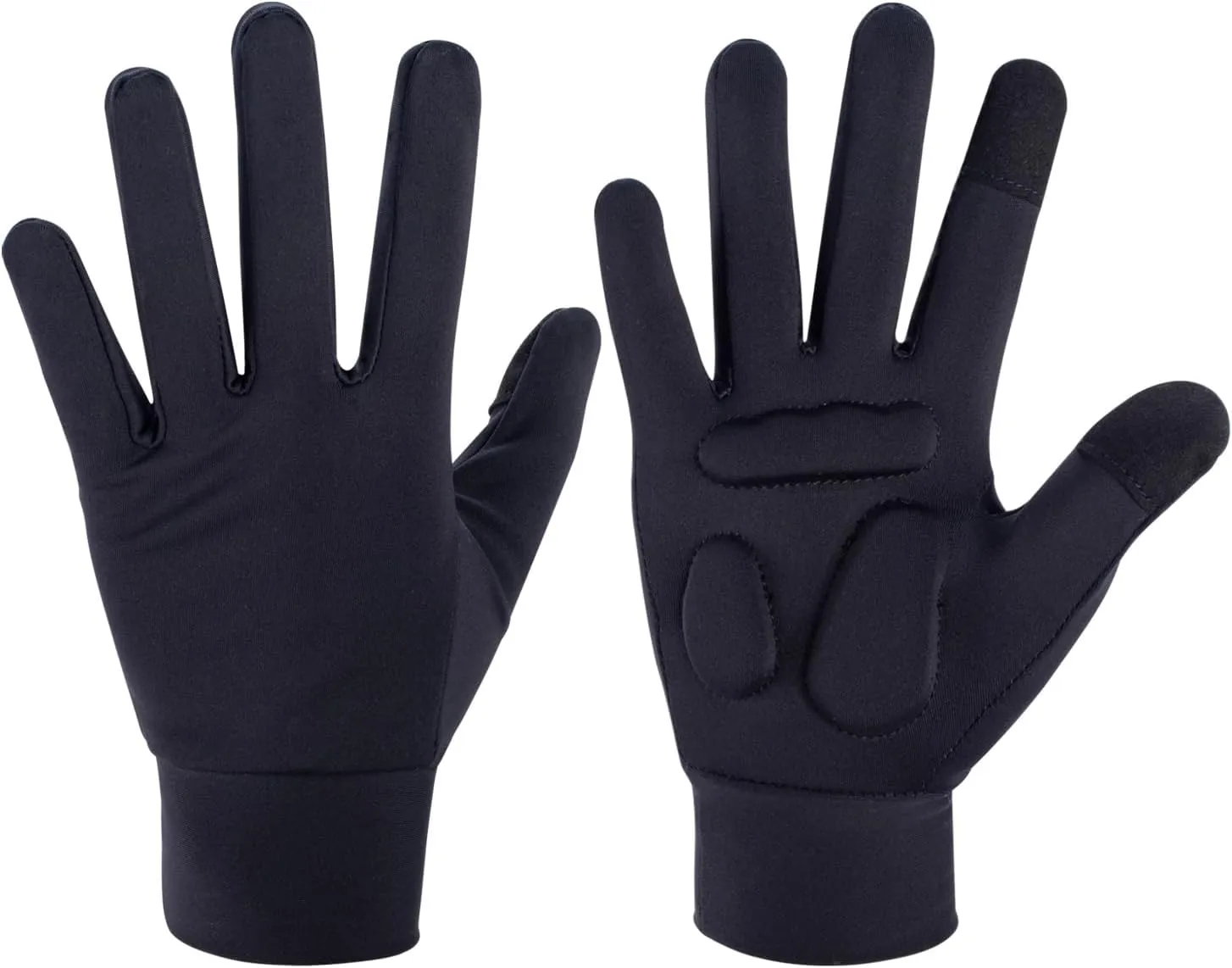
At under $20, this is the cheapest pair here, and it doesn’t cut the one corner that actually matters — it still has a three-piece 5mm anti-shock pad at the palm. The rest of the build is simple cotton, which breathes well but won’t do much against wet ice spray on a longer session.
It comes in youth and ladies sizing with touchscreen tips on the thumb and index finger, and at 192 reviews holding 4.6 stars, the feedback backs up the price. This is the pair to grab for a kid just starting lessons, where you don’t yet know if skating is going to stick.
Kami-So Figure Skating Gloves
Kami-So Figure Skating Gloves for Competition & Practice
– Integrated gel wrist support reduces shock from falls during spins
– Breathable 87% polyester, 13% spandex blend stretches for full range of motion
– Thermal lining, quick-drying and easy to maintain between sessions
~$19.99
★★★★☆ (4.3/5 — 501 Amazon reviews)
Check Price on Amazon →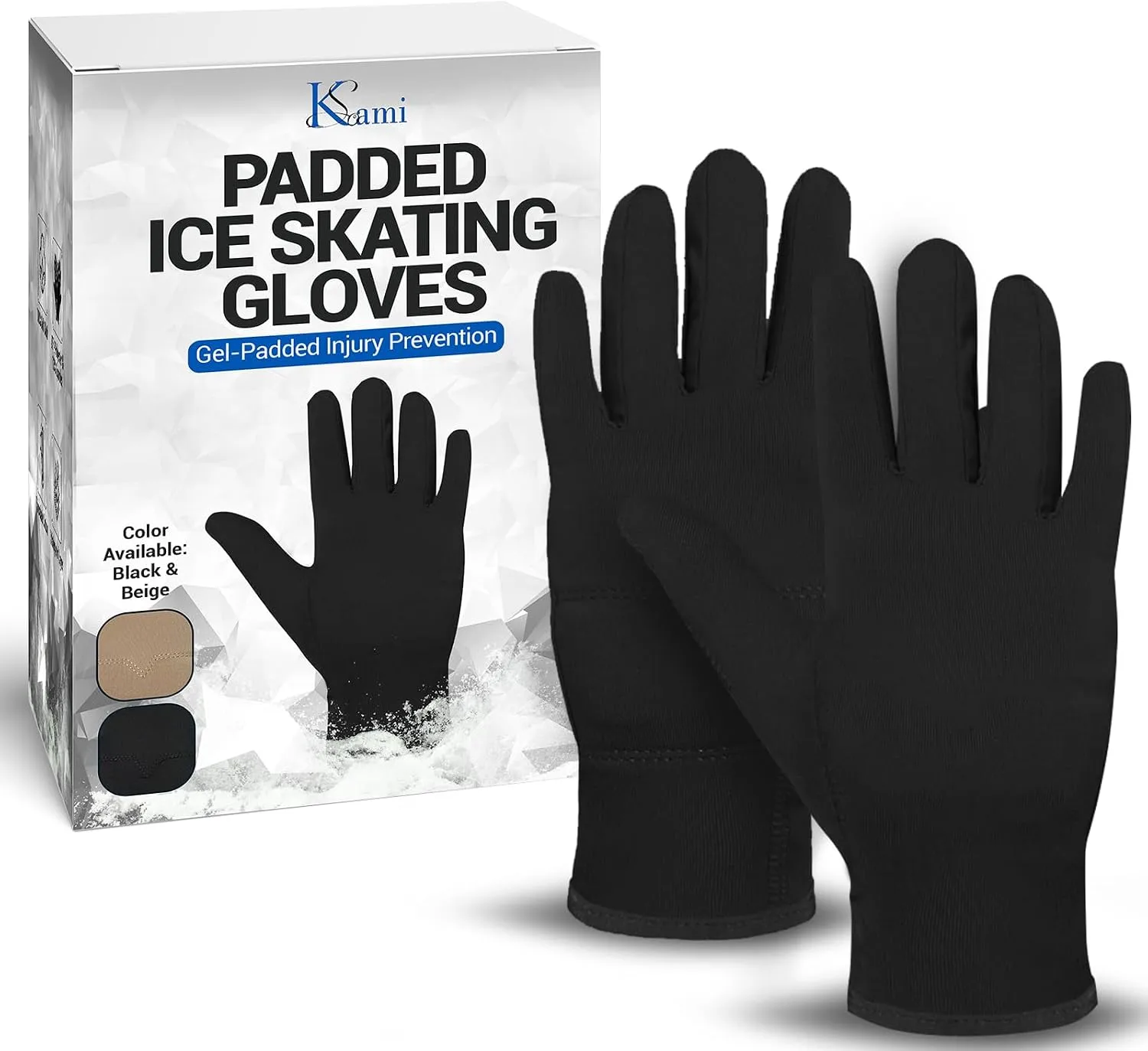
Kami-So was started by skaters, and it shows in a couple of small details — a gel wrist support built specifically to cushion the kind of fall that happens mid-spin, and a cut that’s noticeably closer-fitting than the others on this list rather than boxy. The fabric blend, 87% polyester and 13% spandex, stretches with the hand instead of resisting it.
It’s also the only glove here sold with rhinestone versions for performance, alongside plain black and beige for practice. At 501 reviews and 4.3 stars, it has the deepest feedback pool on this list, even if the rating sits a touch below CRS Cross and SARIUROS.
Skating Spirit Gel Palm Gloves
Skating Spirit Gel Padded Palm Protection Gloves
– 3 pieces of 5mm thick shock-absorbing gel pads cushion falls
– Silicone coating on index and middle fingers for a firm grip on skates
– Water-resistant, fleece-lined fabric keeps hands warm and dry
~$25.99
★★★★☆ (4.4/5 — 201 Amazon reviews)
Check Price on Amazon →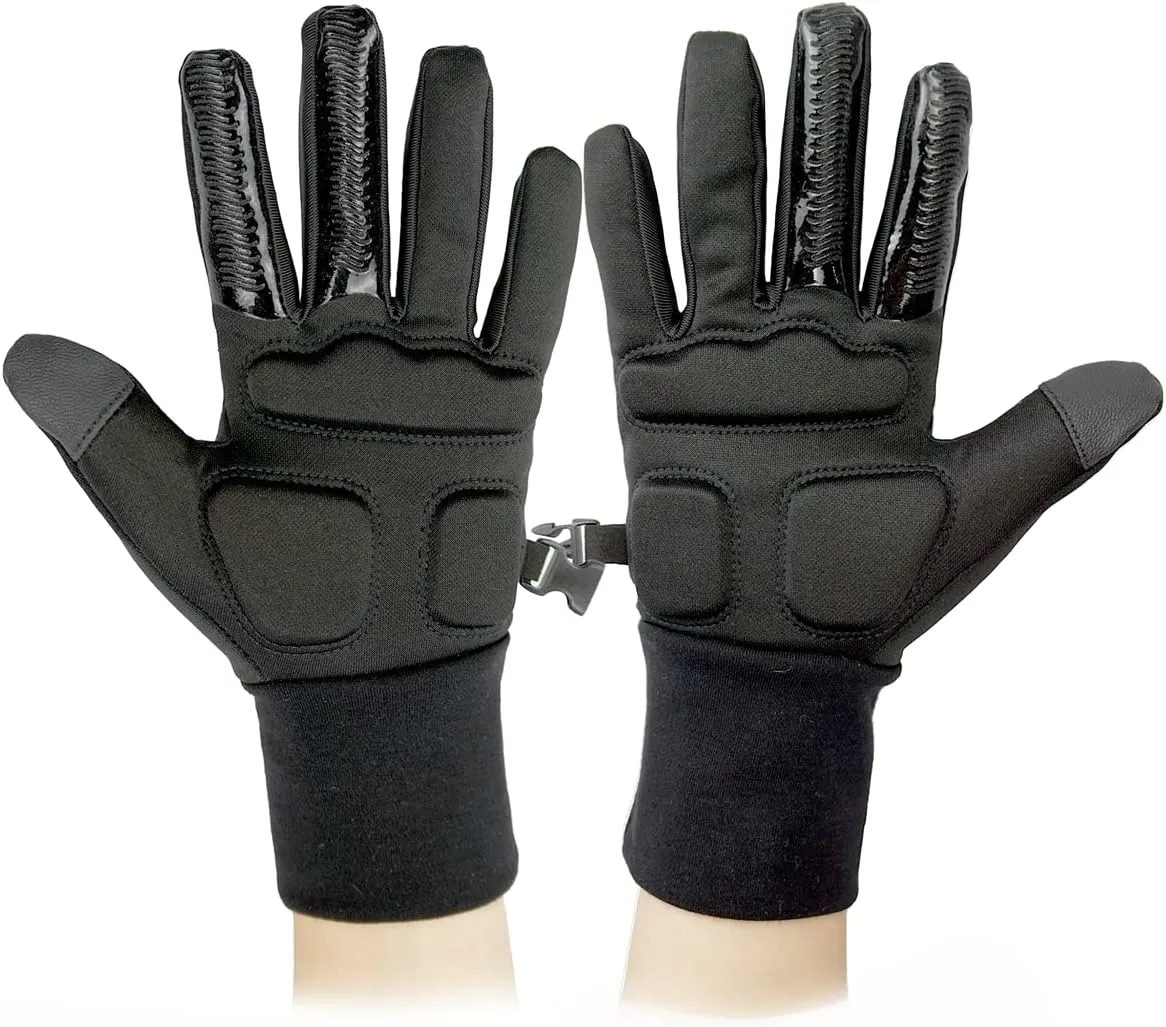
The standout feature here isn’t the padding — every glove on this list has that — it’s the silicone coating laid specifically over the index and middle fingers. That’s a direct answer to catch-foot spins and grabs, where a skater needs to actually hold the blade or boot with real friction, not just cushion a fall.
Three 5mm gel pads handle the impact side, and the shell is water-resistant with a fleece lining underneath. Sizing here runs by palm length and circumference rather than the usual small/medium/large guesswork, which is worth checking before you order since a loose glove undermines the whole point of the grip coating.
CRS Cross Padded Gloves
CRS Cross Padded Ice Skating Gloves
– Three custom impact-resistant pads absorb the shock of falls
– Fleece-lined, water-resistant fabric keeps hands warm without bulk
– Touchscreen fingertips on forefinger and thumb (black colorway)
~$24.99
★★★★★ (4.6/5 — 158 Amazon reviews)
Check Price on Amazon →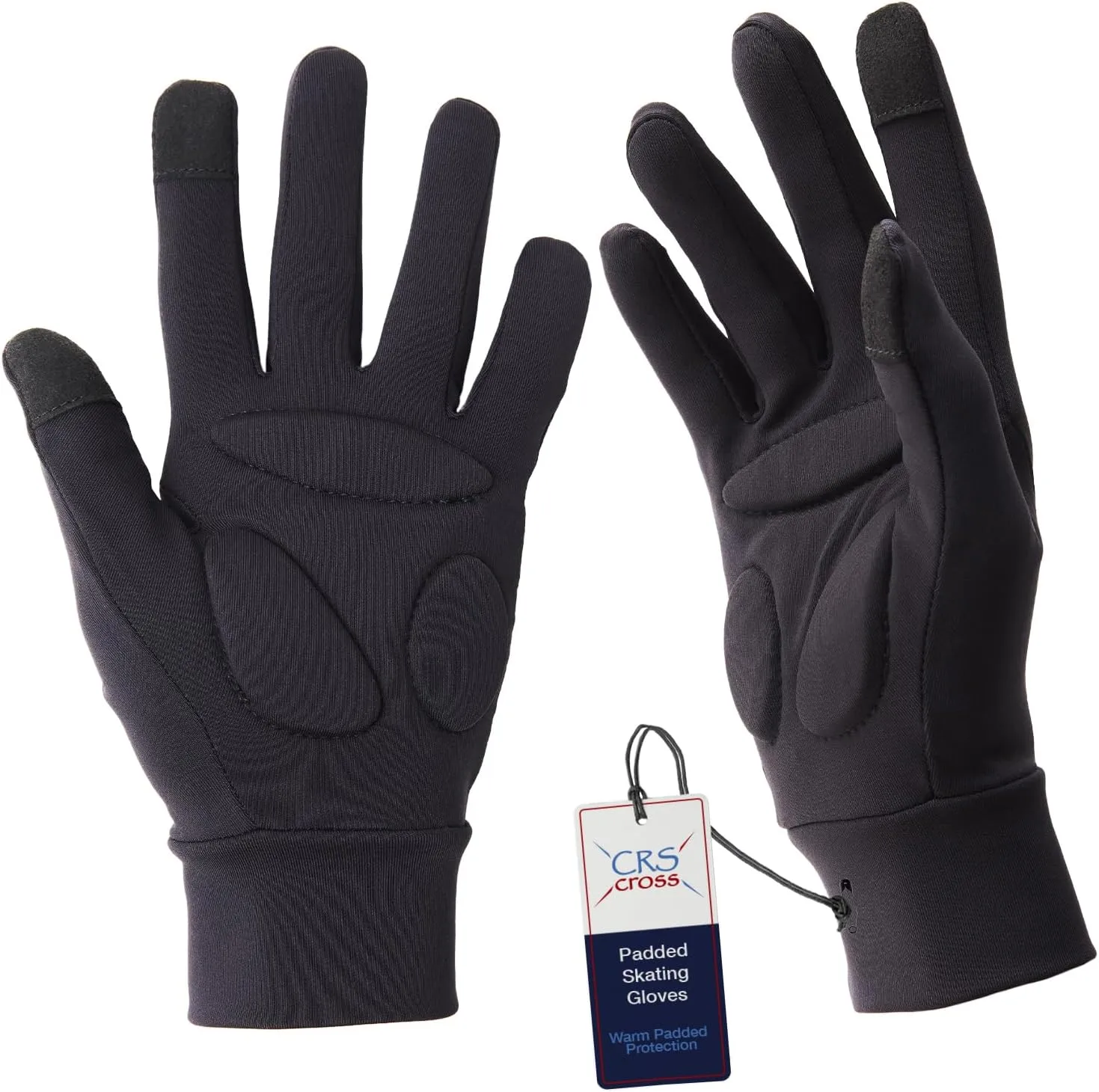
CRS Cross was built by a former US professional skater, coach, and skating parent, and the glove reads like it — three impact pads placed at the actual contact points from a real fall rather than evenly spread across the palm for the sake of symmetry. The shell is water resistant, fleece lined underneath, and the black colorway adds touchscreen fingertips the tan version skips.
It carries a bestseller badge in its category, and at 158 reviews and 4.6 stars, it’s tied with SARIUROS for the highest rating on this list. Sizing runs youth-small through ladies small/medium, based on fingertip-to-palm length rather than a generic glove chart.
IceDress Thermal Gloves
IceDress Thermal Figure Skating Gloves
– Two-color thermal design pairs easily with matching skating outfits
– Lightweight pull-on construction for quick, easy wear
– Available in multiple color combinations for adult sizing
~$27.59
★★★★☆ (3.7/5 — 23 Amazon reviews)
Check Price on Amazon →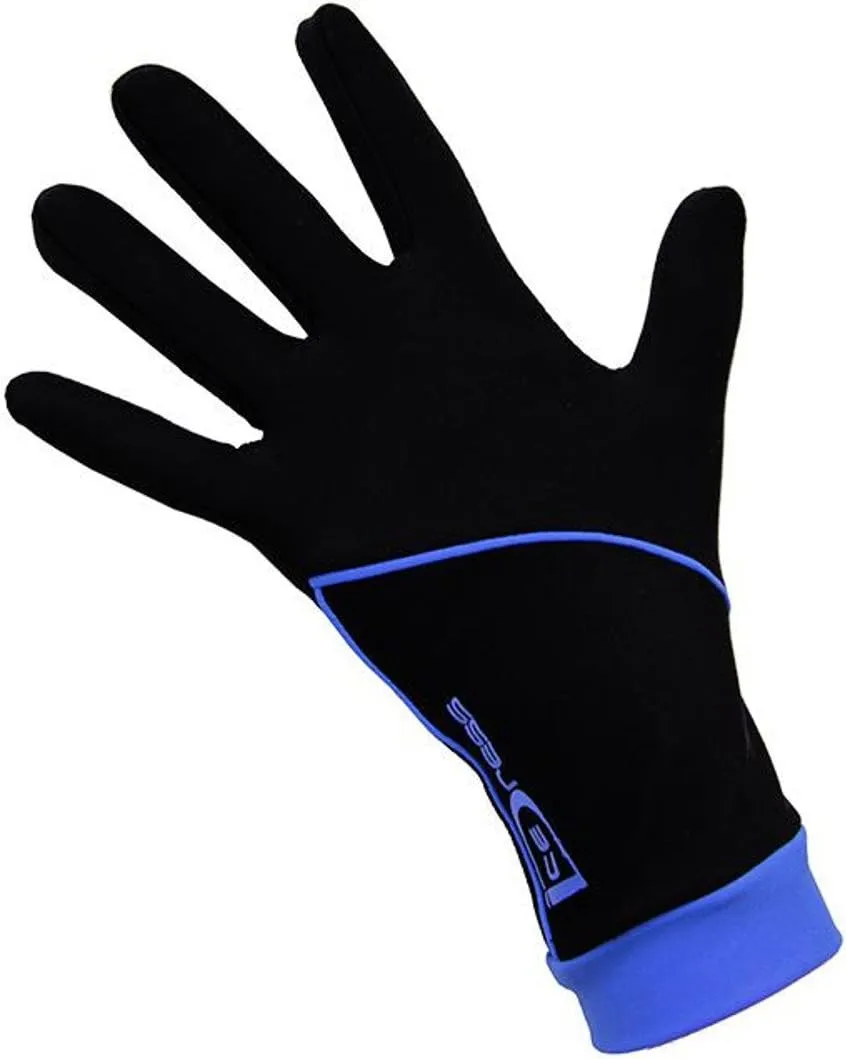
This one is worth including specifically because it’s different from the other four, not despite it. There’s no padding described in the listing at all — it’s a straightforward thermal glove for skaters who’ve already got their falling technique down and just want warm hands, not fall protection.
At $27.59, it’s the priciest pair here for the least documented feature set, and with only 23 reviews at 3.7 stars, the feedback is thin and mixed. It’s a reasonable pick for an experienced adult skater doing recreational laps rather than working jumps, but it’s not the pair to start a beginner in.
Why Your Hands Get Cold at 55 Degrees, Not 20
This trips people up constantly. According to Riedell Ice, a skate manufacturer, most indoor rinks keep the air itself around 50 to 65°F specifically to stop condensation from forming on the ice — it’s the ice surface underneath that actually sits in the 17 to 29°F range, not the room you’re standing in.
That gap explains why a glove that feels fine standing at rinkside can still leave your fingers stinging twenty minutes into a session. You’re not fighting the air temperature on the thermometer by the door. You’re fighting sustained contact with cold ice through falls, hand-on-boot moments, and the general chill that radiates off a sheet of ice a few feet below you the whole time you’re skating.
What That Palm Padding Is Actually Doing
Gel padding isn’t just soft filler — it’s doing a specific mechanical job. According to Taica, a manufacturer of gel shock-absorption materials, gel pads work by converting the impact energy of a fall into deformation energy inside the material itself, which is why a thin gel layer can meaningfully reduce the force that actually reaches your hand.
This is also why pad placement matters more than total padding volume. A glove with padding spread evenly across the whole palm isn’t necessarily better than one with three targeted pads at the exact points where a hand actually lands, which is the approach CRS Cross takes specifically.
The Injury Data Behind the Padding
The padding on every glove in this comparison exists because of a well-documented pattern. A 20-year epidemiologic analysis published in PMC found that the wrist accounted for 14.1 percent of all ice skating injuries treated in emergency departments, right behind head and shoulder injuries as one of the most common sites hurt.
That’s not a niche risk you’re padding against — it’s one of the top few places skaters actually get hurt, and it lines up directly with the instinct to put a hand out during a fall. A padded palm doesn’t eliminate that risk, but it’s addressing a real, measured injury pattern rather than a theoretical one.
Matching the Glove to How You Actually Skate
| If You’re… | Go With | Because |
| Just starting lessons | SARIUROS | Cheapest way to find out if it sticks |
| Working spins and grabs | Skating Spirit | Silicone grip panels for catching the blade |
| Competing or performing | Kami-So | Rhinestone options, closer performance fit |
| Falling often while learning jumps | CRS Cross | Pads placed at real fall-contact points |
| An experienced recreational skater | IceDress | Warmth without the bulk of padding |
What a Real Session Actually Puts These Through
A typical hour on the ice isn’t one continuous skate — it’s a series of short attempts broken up by falls, restarts, and standing around the boards catching your breath. Each of those phases stresses a glove differently, which is worth understanding before you assume one spec matters more than another.
The standing-around phase is where cold actually gets to you, since you’re not generating heat through movement and you’re stationary long enough for the chill off the ice to work through a thin glove. This is where the air-versus-ice temperature gap covered earlier actually shows up as discomfort, not during the active skating itself.
The fall itself is a fraction of a second, and it’s entirely about whether the padding is positioned where your hand actually lands. A beginner tends to fall backward or straight down, landing flat on the palm; a skater working jumps tends to fall forward or to the side, which puts more load on the heel of the hand and the outer edge. That’s part of why a glove with padding spread evenly, rather than shaped around a specific fall pattern, can leave a gap exactly where a more experienced skater’s falls actually land.
The recovery — getting back up, brushing off, trying again — is where grip matters, briefly but repeatedly. A glove that’s gone slick from moisture makes pushing back up off the ice harder than it needs to be, which is a small but real annoyance that compounds over a session full of falls.
Sizing These Correctly the First Time
Skating gloves size differently than regular winter gloves, and treating them the same way leads to returns. Several of the brands above measure by palm length and circumference specifically, rather than the generic small/medium/large used for ski gloves, because a skating glove needs to sit snugly enough that the padding stays exactly over the palm through a fall rather than shifting.
A glove that’s even slightly too large defeats its own purpose here in a way that matters more than it would for a ski glove. Loose material bunches at exactly the point where padding is supposed to cushion an impact, which means a too-big “safety” glove can genuinely offer less real protection than a correctly-sized one with less total padding.
If you’re ordering for a kid and unsure which size chart to trust, measuring the actual hand — length and circumference, the same two numbers most ski glove brands use too — gives you a number you can check against any brand’s chart rather than guessing from an age range alone.
Mistakes People Make Buying These
Sizing by age instead of an actual palm measurement is the most common one. Kids’ hands vary enough at the same age that a glove sized by birthday rather than by the size chart on the listing ends up either sliding around or cutting off circulation at the wrist.
Buying the padded version for a skater who’s past the falling-constantly stage, and the plain thermal version for someone brand new to the ice, is a mismatch that shows up fast. Padding matters most exactly when someone’s still learning to fall safely, not after.
Assuming any glove marked “water resistant” handles a full session the same way is another one. A light coating sheds a few splashes of ice spray fine; it won’t hold up the same way through an hour of falls onto wet ice the way a genuinely treated fabric does.
Keeping These Working Through a Season
Padded skating gloves see more repeated impact than almost any other glove category, and that wears on the pads specifically, not just the fabric shell. Gel and foam padding compresses a little more each time it absorbs a fall, and after a season of regular use, a pad that once cushioned a hard landing can be doing noticeably less than it did when new.
Most of these are hand-wash only, and that’s not a minor label detail — a machine wash cycle can break down gel padding or cause it to shift inside the glove, leaving an uneven, less protective layer even though the glove still looks fine from the outside. A quick rinse and air dry after sessions that involve a lot of falling keeps the padding in better shape longer than tossing it in with regular laundry.
Checking padding thickness at the start of each season, the same way you’d check a bike helmet after a hard hit, is a reasonable habit once a skater is working jumps regularly. A visibly flattened pad isn’t doing the job it did when the glove was new, even if nothing looks broken. For general guidance on when any glove has genuinely reached the end of its useful life rather than just needing a wash, these signs apply across categories, padded skating gloves included.
Quick Answers
Do I need padded gloves if I’m just doing recreational skating?
Not necessarily. If you’re gliding rather than working jumps or spins, a thermal glove without padding, like IceDress, covers the actual risk you’re facing. Padding earns its cost once falls become a regular part of your sessions.
How should these fit if I’m buying for a kid whose hands are still growing?
Snug, not roomy. A glove with extra room “to grow into” shifts around during a fall instead of staying over the palm where the padding is supposed to sit, which defeats the purpose of buying a padded glove in the first place.
Can I use regular winter gloves instead of ones made for skating?
You can, but you’ll be trading away the palm padding and fitted cut that this whole category exists for. A bulky winter glove also makes it harder to feel the boot and blade during spins, which matters more in figure skating than it does just standing around a rink.
Does the touchscreen feature on some of these actually work well?
For basic taps, yes — checking a phone between sessions works fine. Fast typing or detailed navigation is harder through fabric fingertips, same as touchscreen gloves in any other category.
Rink vs. Outdoor Ice: Does the Glove Choice Change?
Everything above assumes an indoor rink, which covers most skaters most of the time, but outdoor ice adds a variable none of these gloves are specifically built around: genuinely cold outside air on top of the cold ice itself, rather than a 50-to-65-degree room surrounding it.
A padded glove built for indoor rink temperatures can leave hands genuinely cold on an outdoor pond or municipal rink on a 20-degree day, since the padding itself isn’t doing much insulating — it’s doing impact protection, and those are two different jobs a single thin glove wasn’t necessarily built to do at once.
For occasional outdoor skating, layering a thin liner glove underneath one of the padded options above is a reasonable workaround rather than buying an entirely separate pair. For skaters who regularly skate outdoors through a real winter, a genuinely insulated glove takes priority over palm padding, since the fall-injury math is the same either way but the cold-injury risk goes up substantially outside a climate-controlled rink.
Bottom Line
If you’re outfitting a beginner and don’t know yet whether skating is going to stick, start with SARIUROS. If falls are still a regular part of your sessions, CRS Cross puts its padding exactly where a fall actually lands. And if you’re past that stage and just want warm hands for recreational laps, IceDress covers that without extra bulk — just go in knowing its review base is thin compared to the other four.
For anything more specific to grip or performance, checking your actual hand measurements first will save you a return shipment regardless of which one you pick.
This post contains affiliate links. If you buy through them, we may earn a commission at no extra cost to you. It doesn’t change which gloves we recommend.