Quick answer: Getting your ski glove size right takes two numbers: the circumference of your hand around your knuckles, and the length from your wrist crease to your middle fingertip. Circumference tells you the base size; length tells you whether a brand’s cut actually matches your hand shape, since two people with the same circumference can have very different finger lengths. Skip either measurement and you’re guessing, which is exactly why so many ski gloves get returned or end up feeling wrong all season. If you’d rather skip the math and get matched to a glove built for your hand and your conditions, ski glove finder does that step for you.
- The Two Measurements That Actually Matter
- How to Measure Correctly
- Why Your Hands Aren't Always the Same Size
- Reading a Size Chart Correctly
- Accounting for Liners, Layering, and Hand Shape
- Common Measurement Mistakes
- Why Fit Actually Matters Beyond Comfort
- Real Examples of Sizing Mismatches
- When to Size Up or Down From Your Measurement
- Measuring for a Gift or Someone Else's Gloves
- FAQ
The Two Measurements That Actually Matter
Most people only measure one thing when sizing a glove, and it’s usually the wrong one to rely on alone. Hand circumference — wrapped around your palm just below the knuckles, excluding your thumb — is the standard measurement almost every glove brand builds its size chart around. According to Ansell, a hand-protection manufacturer, this measurement is taken at the widest part of the palm just below the knuckle, using your dominant hand, since most people’s hands differ slightly in size from one side to the other.
Hand length is the measurement people skip, and it’s the one that explains why a glove can match your circumference perfectly and still feel wrong. Length runs from the crease at your wrist to the tip of your middle finger. Two people can have identical 8-inch circumference measurements and completely different hand lengths, which means the same size label can leave one person with roomy, correctly-fitted fingers and leave the other person with fingertips jammed against the end of the glove.
Width alone tells a brand which numeric size to print on the box. Length tells you whether that specific brand’s cut actually fits your specific hand. Both matter, and relying on just one explains a lot of the “this is my size but it doesn’t fit right” complaints you’ll find in glove reviews.
How to Measure Correctly
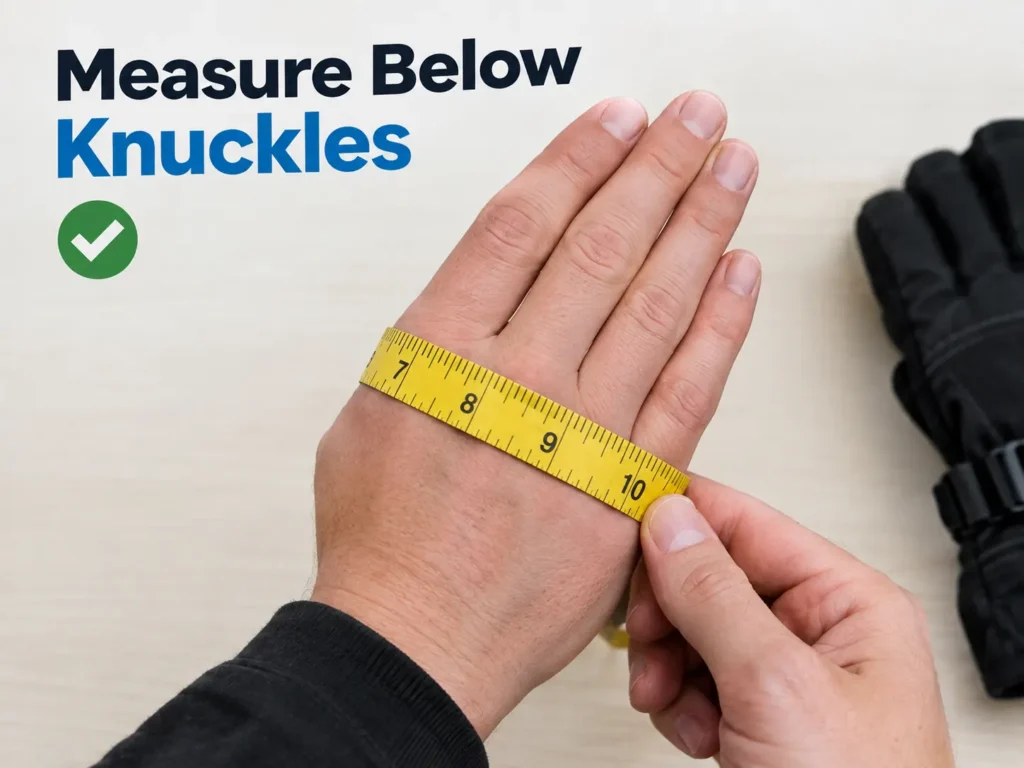
Use a flexible cloth tape measure if you have one. A strip of paper wrapped around your hand and then measured flat against a ruler works nearly as well if you don’t.
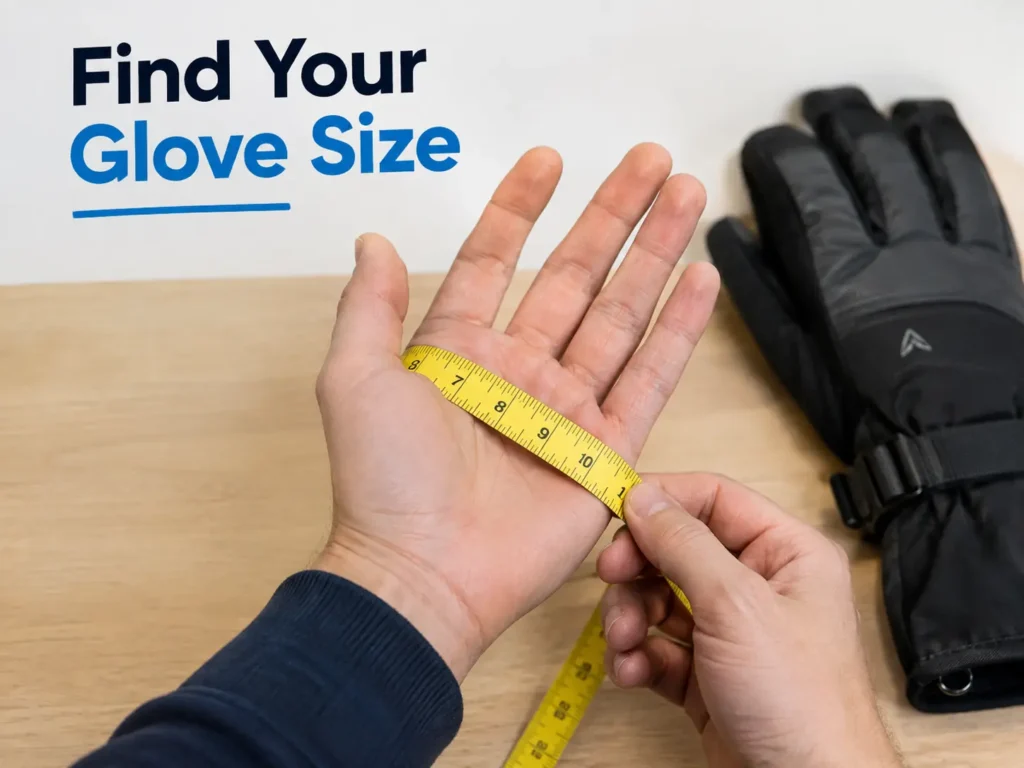
For circumference, open your hand fully with your fingers together and your thumb relaxed to the side. Wrap the tape around your palm at the widest point, just below where your fingers meet your palm, and pull it snug without compressing your hand. Read the number in inches — that’s your circumference measurement.
For length, keep your hand flat and fingers extended. Measure in a straight line from the crease where your wrist meets your palm up to the tip of your middle finger. Don’t measure along the curve of your palm; a straight line gives a more accurate, repeatable number.
Measure both hands separately rather than assuming they match. Most people have a small difference between their dominant and non-dominant hand, and for glove sizing purposes, working from your slightly larger hand’s measurement avoids ending up with a glove that’s a touch too snug on one side.
Take both measurements at a normal, relaxed body temperature rather than right after a workout or after being outside in the cold. Blood flow to your hands genuinely changes your hand’s size slightly depending on temperature and activity, which is worth knowing before you assume a single measurement is permanently fixed.
Why Your Hands Aren’t Always the Same Size
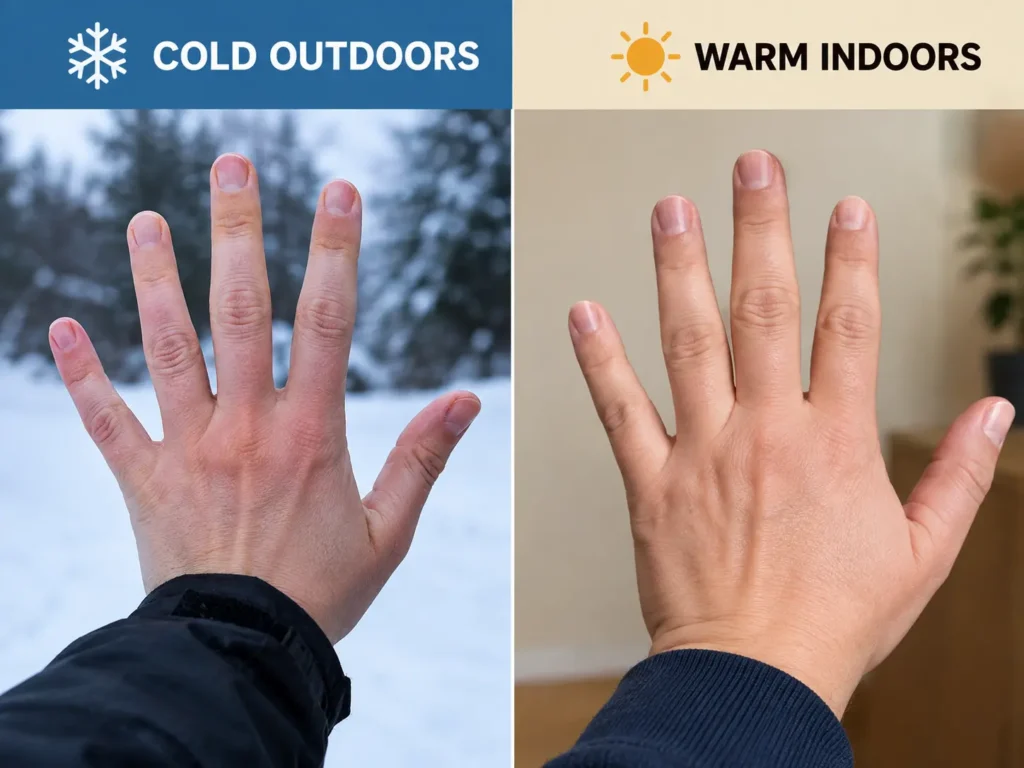
This sounds strange the first time you hear it, but it’s real and worth understanding before you trust a single measurement taken at a random moment. When your body gets cold, blood vessels in your hands constrict to preserve core temperature, which is your body’s normal priority system working exactly as intended.
According to a review published in Temperature, a peer-reviewed physiology journal, cold exposure triggers strong vasoconstriction in the hands and feet, reducing blood flow to the extremities as a protective response — and this can be followed by a cyclical rewarming pattern in the fingers as blood flow periodically returns. In practical terms, a hand that’s been out in the cold or gripping something cold measures slightly smaller than the same hand at rest indoors.
This is exactly why measuring your hand right before a ski trip, after handling cold gear or stepping outside briefly, can give you a slightly smaller number than your true baseline size. Measuring indoors, at a normal comfortable temperature, gives the more reliable number to size around — you want your glove sized for your hand’s normal state, not its temporarily-constricted cold state.
If you already know your gloves tend to fit fine at the shop but feel tight by the second run, this is often part of the explanation, alongside simple fit-quality factors covered in more detail in how ski gloves should actually fit once you’re wearing them rather than just on paper.
Reading a Size Chart Correctly
Most ski glove brands use a numeric sizing system tied directly to your circumference measurement in inches or centimeters, though plenty still print S/M/L/XL labels instead or alongside the numeric size. The numeric system is more precise and worth using when a brand offers both, since “Large” can mean a different actual circumference from one brand to the next.
According to WC Safety, a safety equipment retailer, the international sizing standard EN 420 maps numeric hand sizes 6 through 11 onto letter sizes from extra-small through double-extra-large, which is the same basic logic most winter sports glove brands build their own charts around even when they don’t explicitly reference the standard. Knowing this mapping exists helps explain why a size 9 in one brand’s numeric system and a “Large” in another’s letter system usually line up, even though the actual measurements printed on each brand’s own chart can drift slightly.
| Circumference (inches) | Typical Letter Size | Notes |
| 6.5–7 | XS / Small (often women’s range) | Common mismatch zone for narrow-handed adults sized into kids’ large |
| 7–8 | Small / Medium | Women’s gloves in this range are usually cut narrower than a men’s equivalent label |
| 8–9 | Medium / Large | Widest range of overlap between brands; length measurement matters most here |
| 9–10 | Large / X-Large | Common size for adult men; check finger length separately |
| 10+ | X-Large / XX-Large | Fewer brands stock this range consistently; expect to check specific brand charts individually |
Women’s and men’s charts aren’t interchangeable at the same label. A women’s Medium and a men’s Medium typically represent different actual circumference ranges, since women’s gloves are generally cut with a proportionally narrower palm and shorter fingers at the same letter size, not just a smaller version of the same shape.
Accounting for Liners, Layering, and Hand Shape
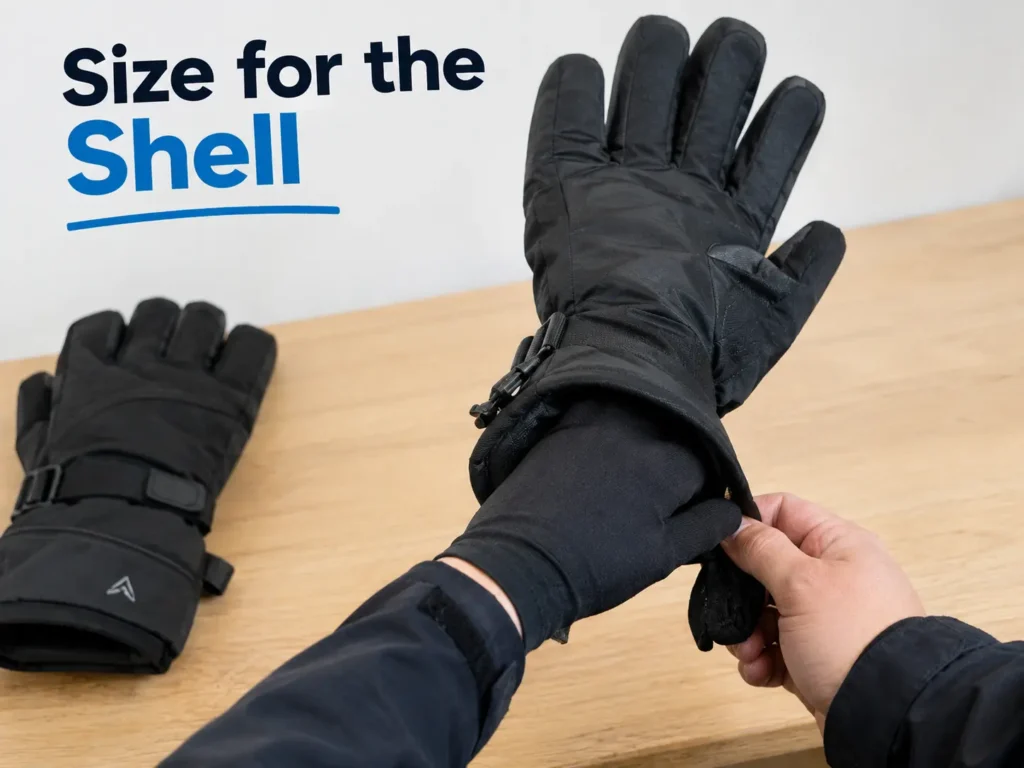
If you plan to wear a liner glove underneath your shell, measure your hand bare first, then check whether the brand’s chart already accounts for liner thickness or expects you to size up. Some ski glove brands build a small amount of extra room into their cut specifically for a thin liner; others assume a bare hand and expect you to go up half a size if you’re layering.
Wide hands relative to length are a common mismatch that a single circumference number doesn’t capture well. If your circumference measurement puts you at a Large but your hand length is shorter than average for that size, the fingers on a Large glove often run too long, leaving extra material at the fingertips that reduces dexterity even though the width fits correctly.
The reverse — long fingers relative to a narrower palm — creates the opposite problem: a glove sized correctly for circumference can feel tight and short in the fingers specifically, even though the overall size label is technically correct. This is the scenario where checking a brand’s specific length measurement, not just its letter size, actually matters.
If you’re deciding between two close sizes and don’t want to commit to a premium pair while you sort out fit, it’s worth starting with an affordable option in your likely size range rather than guessing on an expensive pair you might need to exchange.
Common Measurement Mistakes
Measuring over a bunched fist instead of a flat, open hand is the most common technique error, and it produces a circumference reading that’s noticeably smaller than your hand’s actual relaxed size. Keep your fingers together but not clenched, and your hand fully flat, for an accurate number.
Relying on age or general assumptions instead of an actual measurement is a mistake that specifically shows up with gifts and with kids’ gloves, where “he’s about a medium build for his age” replaces a thirty-second measurement that would give a real answer.
Measuring only one hand and assuming symmetry ignores the real, small size difference most people have between their dominant and non-dominant hand, covered earlier. It’s a small effect, but it’s the difference between a snug, correct fit and a glove that’s just slightly off on one side all season.
Trusting a single brand’s chart to apply universally across every other brand you shop from causes more return-and-reorder frustration than almost any other sizing mistake. Your actual hand measurements stay constant; it’s the brand’s chart that changes, so always check the specific chart for the specific glove you’re buying rather than assuming your “usual size” transfers automatically.
Why Fit Actually Matters Beyond Comfort
A glove that’s too tight does more than feel uncomfortable — it compresses the insulation layer against your skin, which reduces the trapped air that actually provides warmth. Insulation works by holding still air, and a glove sized too small squeezes that air out, meaning a “warm enough” glove on paper can perform noticeably colder in practice just from being sized wrong.
A glove that’s too loose creates a different problem: excess material bunching in the palm reduces your grip on a pole and reduces the fine control needed for buckles, zippers, and other small tasks throughout a ski day. Loose material also traps more cold air inside the glove than a properly fitted one, working against the insulation rather than protecting it.
Circulation is the safety angle underneath both extremes. A glove sized too tight restricts blood flow to your fingers directly, which is the same mechanism that makes fingers go numb faster in a too-small glove than in a properly sized one, regardless of how much insulation the tight glove has. Getting the measurement right at the start avoids introducing this problem before you’ve even hit the slopes.
Real Examples of Sizing Mismatches
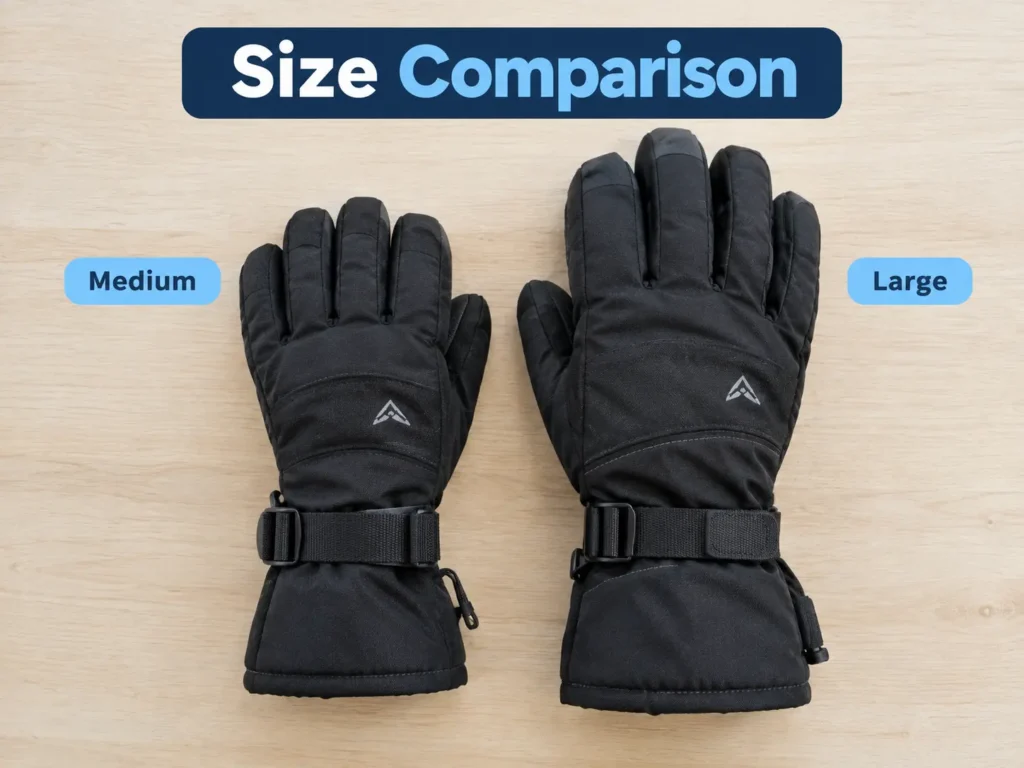
Consider two skiers who both measure an 8.5-inch circumference — a size that lands most brands in a Medium to Large range. One has proportionally long fingers and a hand length toward the top of that range; the other has shorter fingers and a hand length toward the bottom. Both order the same size Large from the same brand, and both get genuinely different results: the long-fingered skier gets a glove that fits well through the fingers, while the shorter-fingered skier ends up with noticeable extra material at each fingertip.
Now consider a parent measuring a ten-year-old’s hand at 7 inches and simply ordering a “kids Large” based on age rather than the actual number. If that child’s hand runs smaller than average for their age — which is common and not unusual — they end up in a glove sized for a bigger hand than they actually have, with the same insulation-compression and loose-material problems adults run into from guessing rather than measuring.
A third scenario: someone who measured their hand once, years ago, and has ordered the same size from every brand since. Hands don’t typically change dramatically in adulthood, but a brand’s own chart absolutely can shift between product lines or seasons, and the “my usual size” habit is exactly the assumption that leads to a surprise fit issue when a favorite brand quietly adjusts its cut.
When to Size Up or Down From Your Measurement
Size up half a size if you’re planning to wear a liner underneath and the brand’s chart doesn’t already account for it, if you have wide hands relative to your circumference measurement, or if you tend to run cold and want extra room for extra insulation or a hand warmer packet.
Stick with your exact measured size if you’re buying a shell-only glove with no liner planned, if your hand shape is proportional (average length for your circumference), or if the specific activity calls for precise dexterity where extra room would actually work against you, like technical pole work or handling small buckles.
Consider sizing down only in the rare case where a specific brand is known to run unusually large across its whole line — check user reviews mentioning fit before assuming this applies to the glove you’re looking at, since assuming a brand runs large without checking is its own common mistake.
Measuring for a Gift or Someone Else’s Gloves
Measuring a hand that isn’t your own comes with an obvious problem: you usually can’t do it in person if it’s meant to be a surprise. The workaround is comparing against something you can measure discreetly — tracing an existing glove they already wear onto paper, or checking the circumference of a well-fitting pair they’ve left lying around, rather than guessing from their general build.
If you genuinely have no reference item to measure from, sizing toward the larger end of your best estimate is the safer gift-giving choice. A slightly loose glove is a minor annoyance the recipient can work around; a glove that’s genuinely too tight to comfortably wear usually just doesn’t get worn at all.
Asking directly, if the surprise element isn’t essential, beats guessing every time. “What size gloves do you wear” is a fast, low-stakes question, and it avoids the return-and-reorder cycle that a wrong guess usually creates during the exact part of the season when exchanges are hardest to process quickly.
FAQ
Should I measure my hand for gloves before or after eating a meal or drinking caffeine?
It’s a minor factor, but caffeine can cause mild vasoconstriction similar to cold exposure, potentially giving a very slightly smaller reading. It’s not significant enough to plan around specifically, but if you want the most neutral baseline measurement, take it at a relaxed moment rather than right after coffee or a workout.
Do kids’ hands need to be measured differently than adult hands?
The same two measurements — circumference and length — apply, but kids’ hands grow quickly enough that it’s worth re-measuring each season rather than assuming last year’s size still fits. A glove sized precisely to a current measurement with no growth room often gets outgrown mid-season.
What if my measurement falls exactly between two sizes on a chart?
Sizing up is usually the safer choice for winter gloves specifically, since a slightly loose glove with a liner or an extra layer underneath performs better than a slightly tight one that restricts circulation and reduces the insulation’s effectiveness by compressing it.
Does hand measurement matter as much for mittens as it does for gloves?
Less precisely, since mittens don’t need to account for individual finger length the way gloves do. Circumference and overall hand length still matter for a mitten’s palm and overall length, but the finger-by-finger fit precision that matters most for gloves is simply not a factor in mitten construction.